





 Portuguese
  English
  Spanish
  7 min of reading
  0 comments


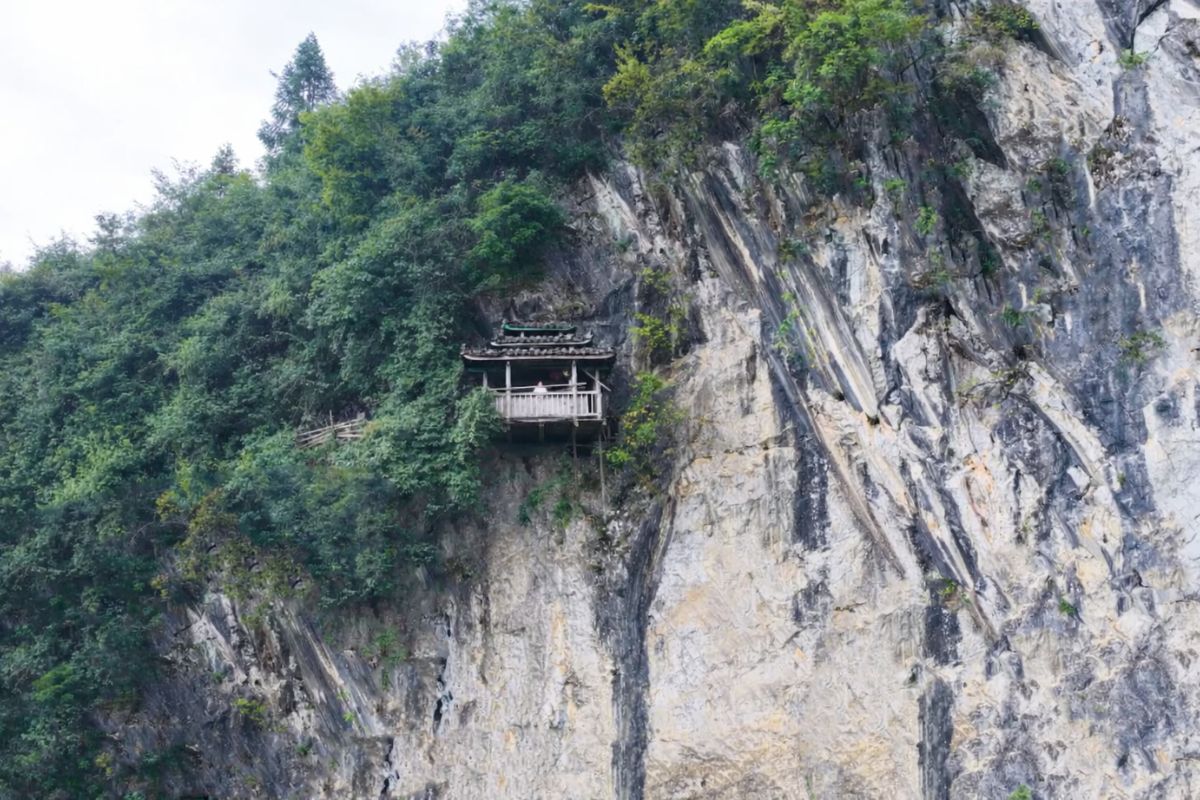
Hanging House On A 100-Meter Cliff Hides The Ancient Guanyin Pavilion, A Monumental Cave Full Of Stalactites, Dangerous Walkways, And Mysteries In The Youyang Mountains In Chongqing.
Right behind an apparently impossible wooden house, embedded in the rock and supported by only two thin beams, lies a hidden world. There, a house hanging on a 100-meter cliff marks the entrance to a gigantic cave, an ancient temple, stone-carved stairs, suspended walkways, and structures that defy any notion of safety. It’s as if someone had hung an entire sanctuary on the brink between the sky and the abyss.
Along the deep mountains of Youyang in Chongqing, the scene appears invented: an almost vertical cliff, a wooden loft projected into the void, steel cables holding the structure, weathered solar panels, and, just behind, an immense cave that opens into an underground hall.
The house hanging on a 100-meter cliff is not just an architectural curiosity. It is the portal to a little-documented temple, recognized only by the oldest residents and practically absent from official records.
-
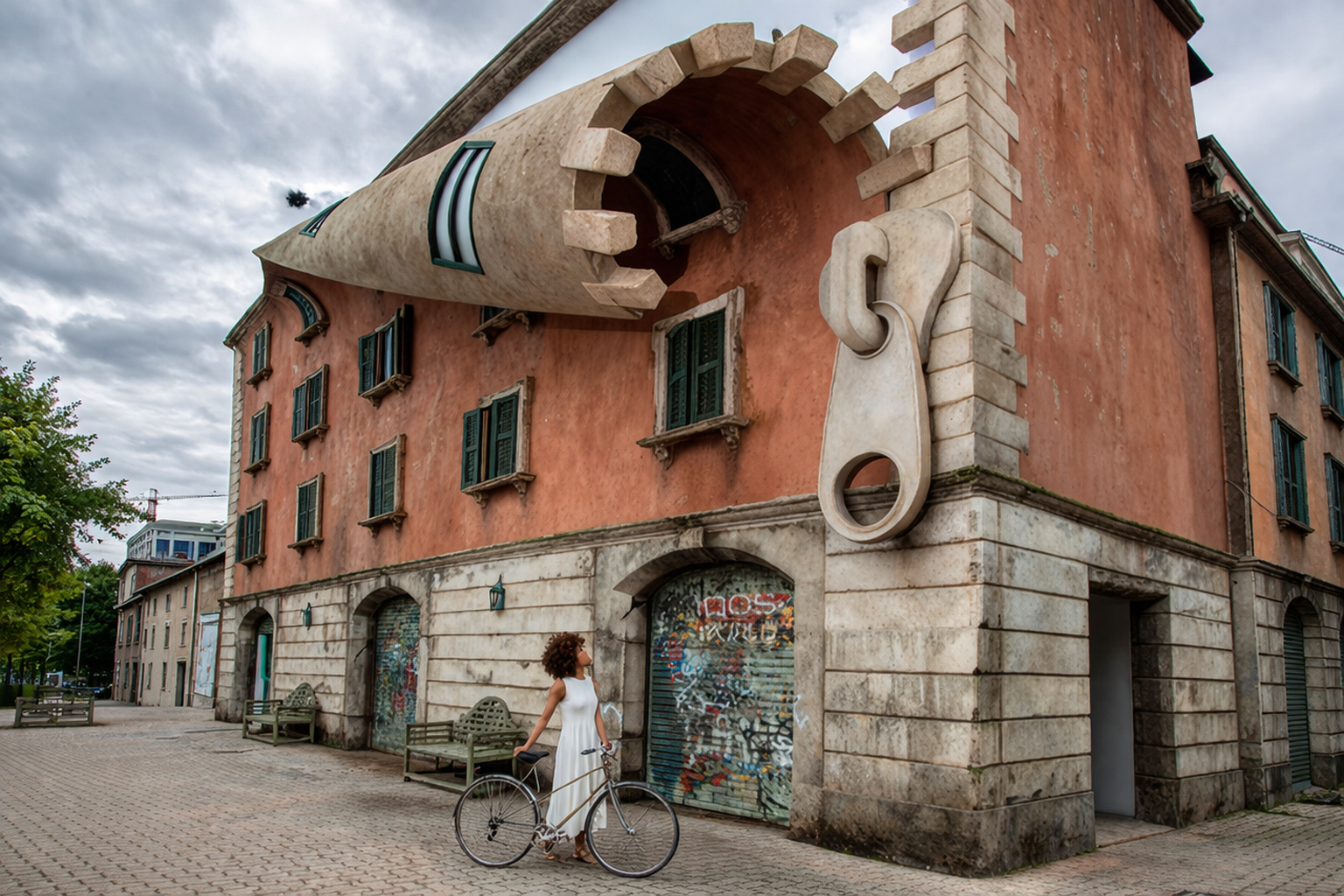
With a façade that resembles a giant zipper, the building in Milan creates a sense of strangeness, featuring lighting that transforms engineering and attracts the attention of residents and tourists.
-
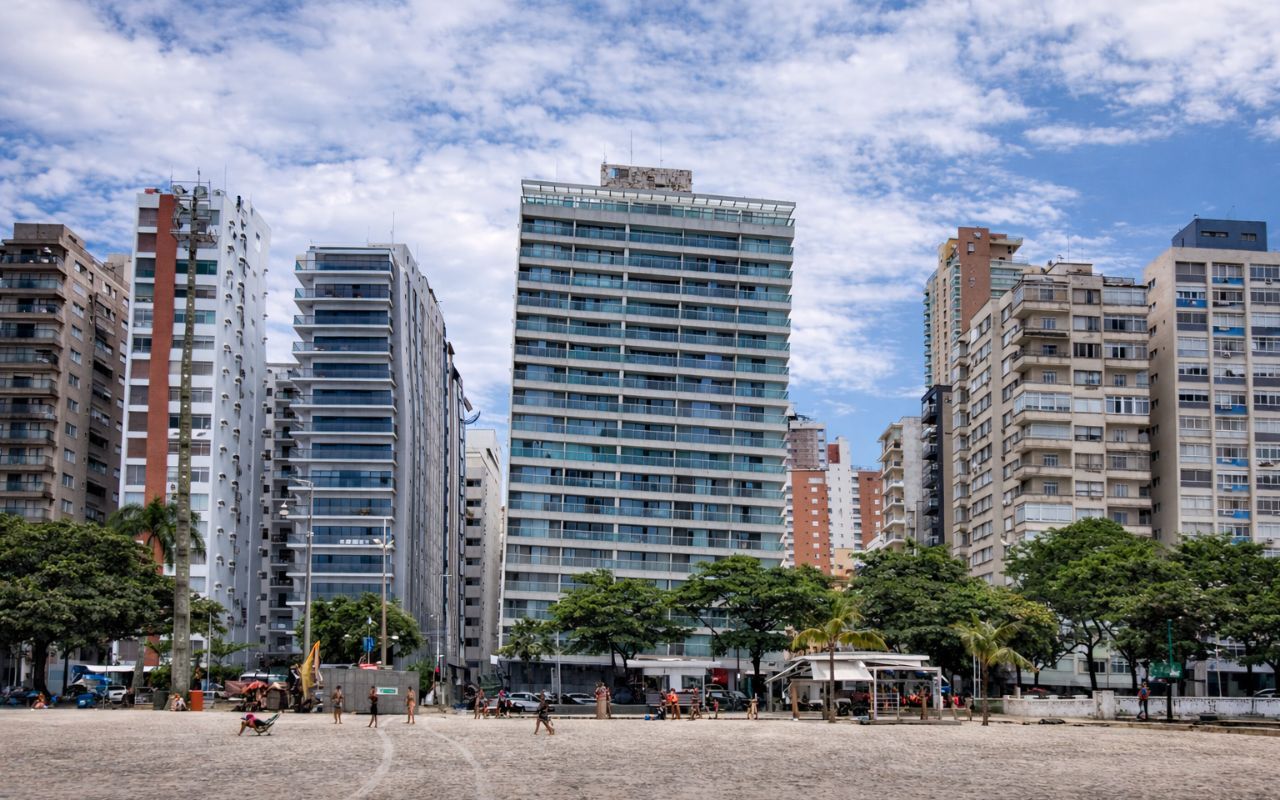
The Brazilian city has 319 crooked buildings built on sandy soil without proper deep foundations, houses the largest beach garden in the world, with over 5 km, and is still considered the birthplace of surfing — meet Santos, in São Paulo.
-
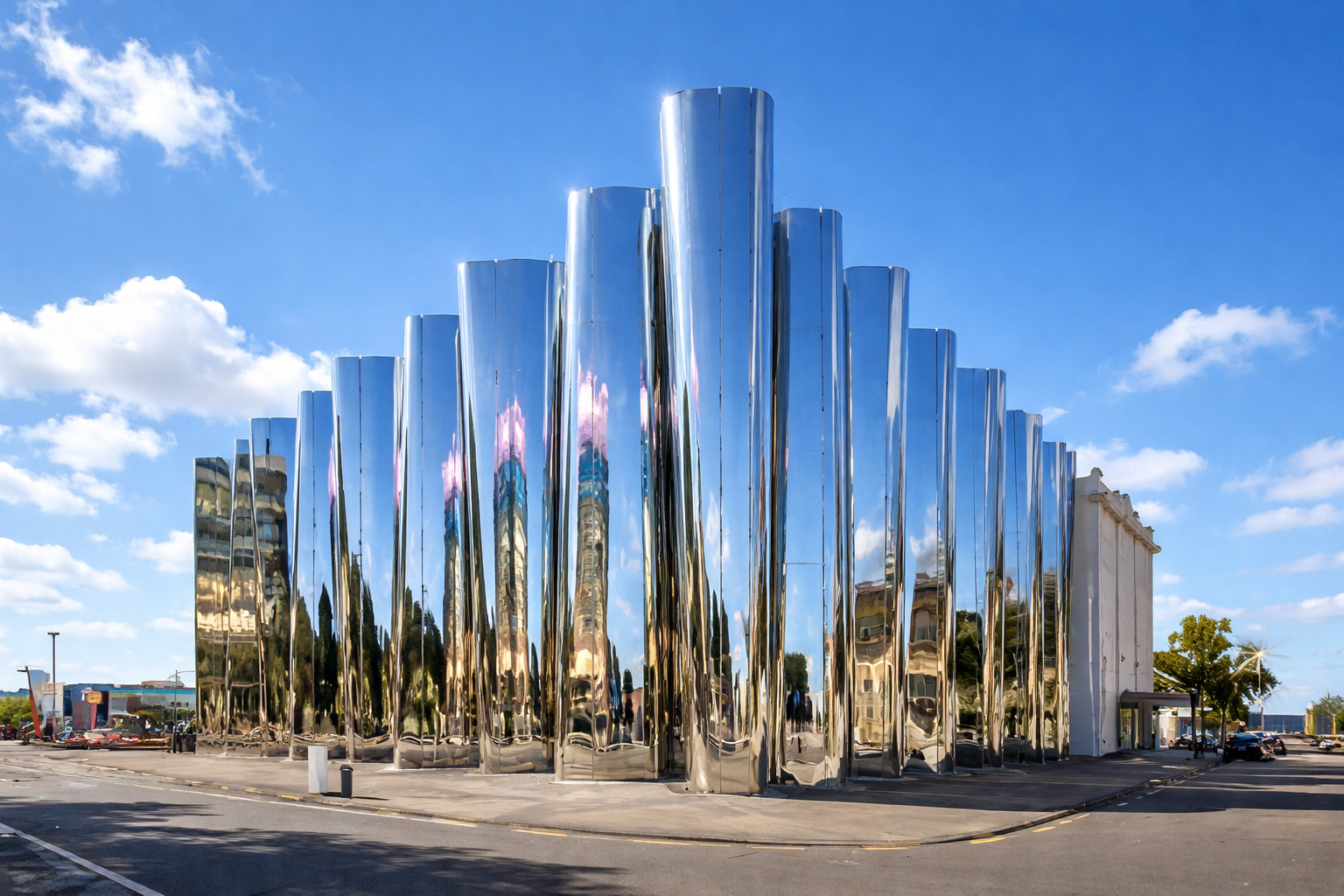
New Zealand builds a shimmering building that vibrates, featuring a 62-seat cinema, moving sculptures, and an environment where sound, light, and energy are felt in the body.
-
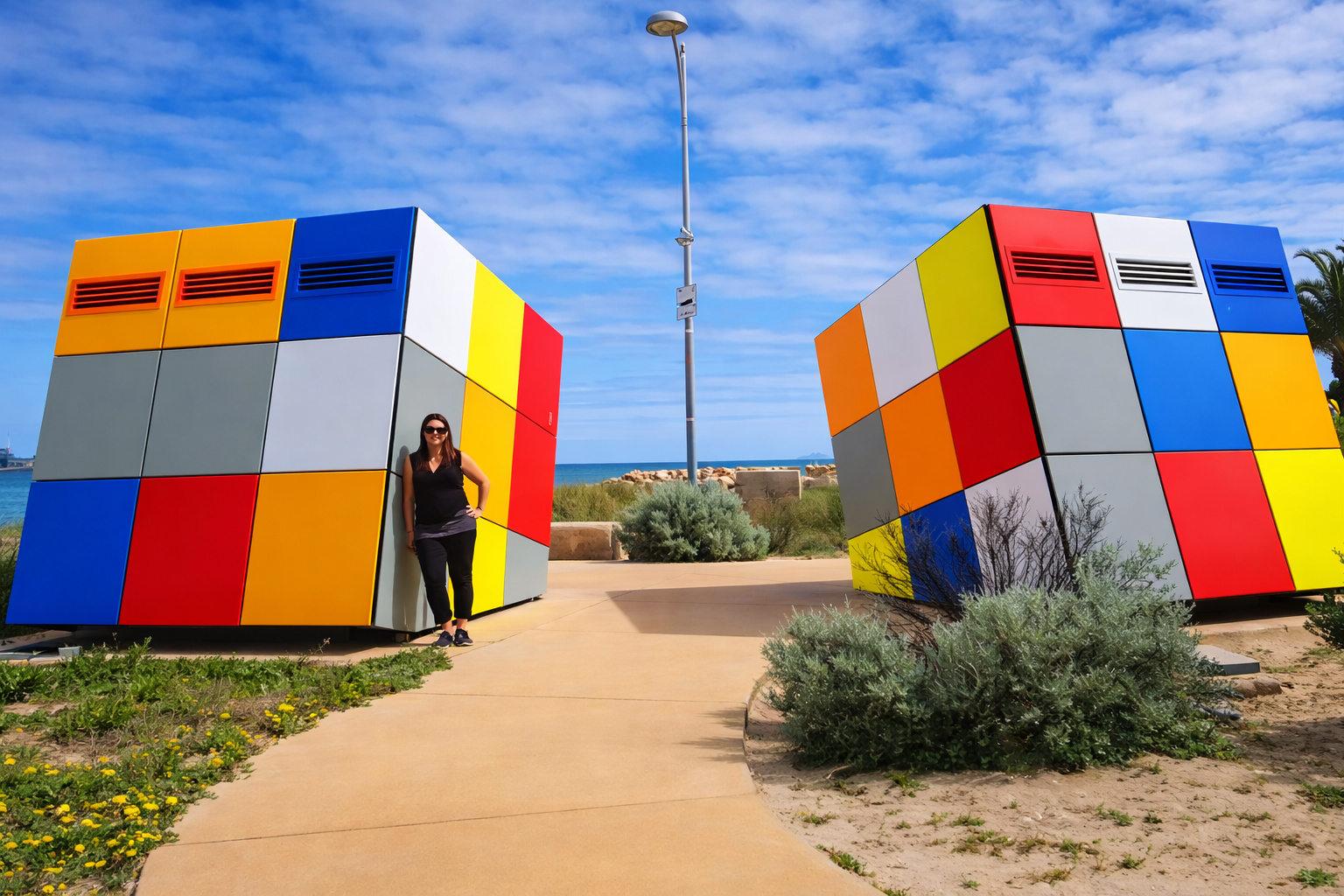
Two colored cubes of 2.5 m transform a public bathroom into a selfie spot in Western Australia, costing up to 75% less than traditional construction and helping to reduce vandalism in public spaces.

An Impossible Cliff In The Youyang Mountains

To reach there, you need to climb the roads that lead to the deep mountains of Youyang, in the Chongqing region, to the outskirts of Taiping Village. At a certain point, the car stops, and the path continues on foot.
The trail is simple but clearly forgotten: irregular stones, no reinforced flooring, and the underbrush taking over the original path.
Next to it, some wooden blocks indicate what was once an improvised guardrail. Part of the material has already rotted, transforming the route into a mix of country trail and suspended corridor without any safety pattern. This is not just any walk, it’s a hike over remnants of a decomposing structure.
In this setting, the house hanging on a 100-meter cliff finally appears in full view. Viewed from the front, it looks almost ordinary, a wooden attic, simple roof, discreet facade. Viewed from below, the story changes entirely.
What holds everything together are essentially two wooden beams projected out from the rock, reinforced by a steel cable anchored in the mountain.
The Guanyin Pavilion Suspended In The Void
When asking the locals, the first secret emerges: that house hanging on a 100-meter cliff is not just an ancient residence. It is a temple, locally known as the Guanyin Pavilion.
Outside, some stone monuments help to piece together part of the puzzle. A plaque mentions the ancient Jiulong Mountain, now renamed Lion Rock.
Another lists names of donors and amounts offered for the construction or maintenance of the site, with inscriptions dated 2011. These are relatively recent records, contrasting with the old appearance of the main wooden structure.
Inside, the Guanyin Pavilion houses three statues. Two small figures of Guanyin flank a central image that, by the name of the place, must also represent the goddess of compassion.
The sculptures seem to have been carved from wood by local artisans, with typical finishing of interior temples. The attic uses a traditional joinery structure, with wood pieces shaped without visible nails, in a technique that requires precision and experience.
There are still signs of modern use: power outlets, cut wiring, and a solar panel outside, already stained by time, suggest that the temple had electricity at some point. Today, however, everything indicates partial abandonment.
Suspended Walkways, Decayed Stairs, And The Constant Risk

Accessing the Guanyin Pavilion is, in itself, a boundary experience. Before entering the temple, you must cross a narrow wooden bridge mounted directly on the cliff. Below, the void.
The feeling is like walking in a suspended corridor without a safety net, with planks creaking with every step.
The old wooden staircase, just below, helps to imagine what circulation was like years ago. Today, it is severely deteriorated, with broken parts and evident signs of rotting, a result of constant humidity and exposure to wind and rain.
In some places, new wooden structures, more recent and in better condition, reveal attempts at reinforcement and maintenance.
Outside the temple, steel cables complement the support of the wooden structure hanging on the cliff.
Seen from a specific angle, they further clarify the absurdity of local empirical engineering: two large trunks serve as pillars projected into the void while the rest of the house appears simply to hover over the abyss.
The impression is that any stronger gust of wind could shake the entire structure.
The Giant Cave Hidden Behind The Temple

Behind the wooden loft comes the second part of the mystery. A small passage leads to a narrow cave entrance, almost timid.
Just cross the portal to feel the impact: a cold breeze, a strong contrast with the external heat, gives the sensation of a sudden change in environment. Outside it seems like summer, inside the temperature drops and the air becomes humid, dense, almost wintry.
Right at the beginning, a stone staircase carved directly into the rock leads into the cave. The floor is slippery, a result of constant humidity and water dripping from the stalactites. Step by step, the space opens up.
What was a narrow tunnel transforms into a spacious, flat hall, with an incredibly high ceiling and stalactites scattered everywhere.
Some formations catch the eye due to their shape. One resembles the silhouette of Sun Wukong, the Monkey King of Chinese mythology, crouching as if guarding within the cave. Drops of water continuously fall from the tips of the stalactites, feeding puddles on the ground and reinforcing the ambiance of extreme humidity.
A Temple Inside The Cave


In the midst of this underground setting, another surprise emerges. Inside the cave, on a stone base built block by block, a small additional temple has been erected.
It’s as if the Guanyin Pavilion hanging on the cliff were merely the aerial facade of an even deeper sanctuary, embedded in the heart of the mountain.
In this inner temple, various statues of gods and Buddhas are consecrated, aligned on simple tables.
The images follow a local style, with striking features and proportions typical of traditional carvings. In front of the altar, tables store tablets, incense, and paper, signaling that even with little movement, some pilgrims still visit the site for discreet rituals.
There is also a reservoir made of brick and cement, connected to a simple water capture system.
The water that drips from the walls and ceiling is channeled through a pipe to this storage, forming a small internal reservoir. Like all cave water, it is rich in minerals and should not be consumed without proper filtration.
At another point, a narrower hole leads to an even deeper cavity, practically inaccessible without equipment.
Some old wooden beams suggest that at some point, it may have been possible to descend further, but today the access is too dangerous to attempt without technical safety.
The feeling is like being in a maze within another maze: first the cliff, then the suspended house, followed by the cave, and finally, a hidden sanctuary within the cave itself.
Time, Abandonment, And Mystery In Chongqing
Despite so many impressive elements, there are almost no formal records about the Guanyin Pavilion. Younger residents are not sure when the temple was built.
The stone monuments outside are recent and only record donations and names of benefactors, failing to tell the complete story of the origin of the place.
The hanging house on a 100-meter cliff carries this mix of devotion, improvisation, and forgetfulness.
The marks of time are everywhere: stained wood, decayed planks, broken benches, unused bamboo piled up, cut wiring, abandoned solar panels.
The cave, meanwhile, remains alive, with water flowing, minerals depositing, and stalactites growing millimeter by millimeter.
From a cultural and landscape perspective, the ensemble is unique. A temple suspended in the void, linked to a monumental cave, on the sheer cliff of the Youyang mountains, holds a type of spirituality deeply connected to the extreme landscape.
At the same time, the site exposes real risks to unsuspecting visitors, with unstable walkways, slippery floors, and unprotected stretches.
This duality between fascination and danger is precisely what makes the house hanging on a 100-meter cliff so symbolic.
It represents a border architecture, made more of faith, local effort, and adaptation to the terrain than of formal calculation.
In the end, the visitor leaves the cave with a feeling hard to explain. After so much time inside the mountain, the light outside seems stronger, almost aggressive.
The contrast between the humid, dark interior and the open cliff exposes how this place lives between two worlds: that of silent devotion and that of modern curiosity arriving with drones, cameras, and online videos.
And there lies the unanswered question: would you have the courage to visit a temple hidden behind a house hanging on a 100-meter cliff, walking on suspended walkways over an abyss to see this monumental cave up close?








-

-

-

-

11 pessoas reagiram a isso.