





 Portuguese
  English
  Spanish
  5 min of reading
  4 comments


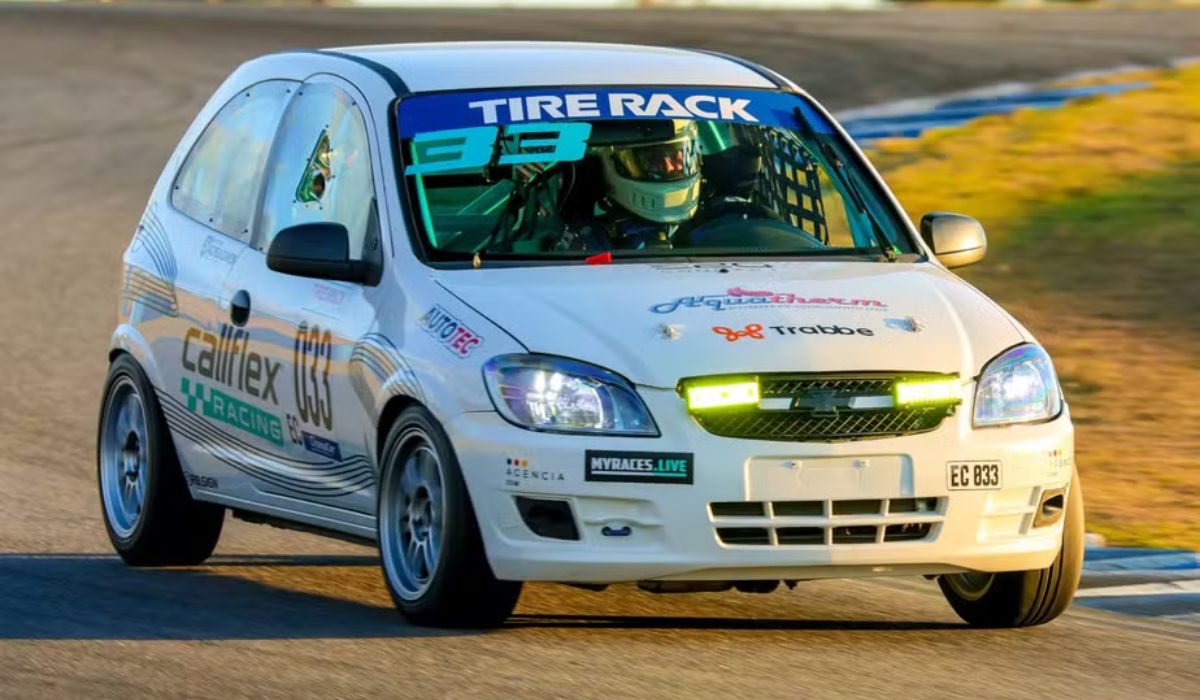


A Brazilian popular car prepared in the country is confirmed for a long-duration race in the United States, on a grid with traditional brands of international motorsport, after years of technical development, logistical adaptation, and regulatory negotiations to compete outside Brazil.
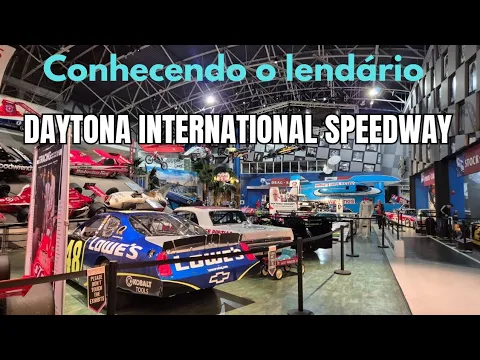
A 2012 Chevrolet Celta prepared in Brazil is registered to participate in “The Daytona 14-Hour” event of the ChampCar Endurance Series, scheduled for April 11, 2026, at the Daytona International Speedway in the United States.
The car appears on the official entry list for the event under the name of the São Paulo team Callflex Racing and number 33, on a grid limited to 100 vehicles.
-
The Toyota Hilux is R$ 75.5 thousand cheaper and bets on the 2.8 turbodiesel engine with up to 204 hp and 50.9 kgfm to catch up with the VW Saveiro, which leads with 4,472 sales.
-
The new Renault Koleos has a screen exclusively for the passenger that is invisible to the driver, heated rear seats, and 29 assistance systems, but its Chinese competitors cost R$ 40,000 less and deliver more power.
-
The car stored for 38 years: when opening the barn door, what appears is breathtaking and looks like a scene from a movie!

-
Fiat works miracles in the Brazilian market, lowers the price of its 0 km hatch to R$ 69,990, reestablishes the model as the cheapest car in the country, and reignites the battle against Kwid and C3.

The presence of the Brazilian model occurs in a context of strong technical diversity.
The list released by the organization indicates the participation of cars such as Ford Mustang, Chevrolet Camaro, BMW, Mazda, and Porsche.
According to official data, there are 13 Mustangs and five Camaros registered, in addition to 32 BMW vehicles and 16 from Mazda, mainly of the Miata model, as well as different generations of Porsche.
The race will take place on the mixed layout of Daytona, which combines the inner circuit with the oval.
According to the supplementary regulations of the event, the oval curves have a tilt of up to 31 degrees, a characteristic that imposes specific demands for setup, mechanical endurance, and pace management throughout the 14 hours of racing.
Celta Registration and the Brazilian Team’s Project
Callflex Racing states that participation in Daytona with a proprietary car is part of a strategy for consolidating the project outside Brazil.
Founded in 2018, the team emerged in the amateur motorsport environment and began to structure its activities based on experiences in track days and production car competitions adapted for racing.
Alexandre Azzoni, a technology sector entrepreneur, driver, and one of the founders of the team, states that the journey did not follow a closed plan from the beginning.
According to him, the group advanced gradually, prioritizing technical learning and organization.
In a statement to the press, Azzoni says that the goal has always been to understand the limits of the project based on the available resources.
The team also includes Alex Benedetti and Leandro Justo, who are responsible for different aspects of the work.
Benedetti reports previous experience in amateur motorsport modalities, such as drag racing, slalom, and touring races.
Justo, in turn, emphasizes the importance of transforming sporting practice into a structured operation capable of sustaining long-term commitments.
Endurance and Learning in Long Races in Brazil
Callflex points to participation in endurance races in Brazil as a turning point in the development of the team.
Until then, most of the experience came from shorter competitions, where specific errors had limited impact.
In long-duration races, according to team members, failures in preparation or strategy can compromise the entire outcome.
The debut in this type of challenge took place at the Mil Milhas, with an independently prepared Voyage.
At the time, the available structure was limited, without a support truck or a large stock of parts.
Alex Benedetti states that this scenario helped the team gauge the difference between short races and endurance racing.
Based on this experience, Callflex decided to maintain the use of production cars as a guideline.
According to the team, this choice was motivated not only by budget but also by technical identity.
Leandro Justo asserts that working with originally street vehicles directly influences project, maintenance, and strategy choices.
Volkswagen up! as a Technical Development Stage
Before the Celta, the team developed a project with the Volkswagen up!.
This model was used in endurance races in Brazil and, according to Callflex, became the first production car with a three-cylinder turbo engine to compete in this type of race in the country.
In the 2024 Mil Milhas, the up! completed the race and finished in second place in its category.
According to the team, the result was due to consistent pace and mechanical reliability.
The experience reinforced the internal assessment that the next step could involve an international challenge.
Why the Chevrolet Celta Was Chosen for Daytona
After an international participation in 2023 with a rented car, Callflex determined that a possible return to the United States would be made with its own vehicle.
The choice of the Chevrolet Celta was made in this context.
According to the team, the decision considered technical, logistical, and symbolic factors, but also involved additional risks.
Leandro Justo states that choosing a model without a competitive history in the United States required negotiations with the ChampCar organization.
The car was authorized to compete in a special class, a procedure provided for in the regulations but less common within the category.
The development of the Celta took about two years, a period that included mechanical preparation, testing, and adaptation to the technical requirements of the race.
Alexandre Azzoni highlights that the complexity was not limited to the car itself, but also to planning operations outside the country.
International Logistics and Preparation in the United States
The Chevrolet Celta was fully prepared in Brazil and sent to the United States by maritime transport in a container.
According to information released by the team itself, the crossing took about 40 days.
The shipping took place at the terminal in Rio Grande, in Rio Grande do Sul.
The unloading was conducted at the port of Everglades, in Florida.
Upon arrival, the car went to the workshop of MapGreen, responsible for the final adaptation support to ChampCar regulations and for operations during the race.
Callflex states that the option for maritime transport was adopted for financial viability reasons, despite the longer timelines.
Race, Broadcast, and Team Expectations
The race “The Daytona 14-Hour” is confirmed for April 11, 2026 and is part of the official calendar of the ChampCar Endurance Series.
The organization reports that the event will have live broadcast on YouTube, a common practice in the championship stages.
Callflex also plans to use its own onboard camera and social media coverage during the race.

Internally, team members report that the project has an impact that goes beyond the sporting result.
Leandro Justo states that the idea is to demonstrate that there is a possible path based on initial track experiences, provided there is organization and continuity.
Alex Benedetti asserts that the goal has never been to reproduce established models, but to develop solutions within the group’s reality.
With the race start scheduled in Daytona, the Chevrolet Celta from Callflex Racing will become part of a large and technically diverse grid.
Over 14 hours, factors such as reliability, strategy, and team management tend to be decisive.





Já estou na torcida pelo CELTÃO ! ! !
Estaremos torcendo pelo nosso Celtinha 🚦🚀🚀🚀
Parabéns aos envolvidos!