






 Portuguese
 Spanish


New Captiva PHEV pairs a gasoline engine with a rechargeable battery, offers 60 km of electric range and is assembled in Ceará
Chevrolet has begun selling an SUV in Brazil that can travel up to 1,069 kilometers with a full tank and a charged battery, based on figures certified by Inmetro, Brazil’s metrology and quality agency. The new Captiva PHEV pairs a gasoline engine with an electric motor, produces 227 horsepower and accelerates from 0 to 100 km/h in 8.3 seconds. The model is priced at R$199,990, R$20,000 less than the announced price of its all-electric version.
In an official launch announcement, Chevrolet said the Captiva PHEV marks its entry into Brazil’s plug-in hybrid segment. These vehicles run on gasoline and electricity, and their batteries can be recharged from an outlet. Sales began on November 23, 2026. The SUV is assembled at the Ceará Automotive Plant in Horizonte, in northeastern Brazil, expanding the automaker’s electrified lineup, which already includes the Spark EUV and Captiva EV.
Hybrid Captiva starts at R$199,990, R$20,000 less than the electric version
The Chevrolet Captiva PHEV went on sale for R$199,990, the launch price reported by automotive news outlets. The Brazilian market version comes with a plug-in hybrid powertrain.
-
For Fiat Strada owners and buyers, the Betim-built pickup tops 150,000 sales in Brazil before December 1, as Fiat cuts the Freedom double-cab price to R$108,690 during Black Month

-
XPeng introduces L03 and L05 electric SUVs to Brazil, opens job opportunities and considers local assembly to compete in the automotive market
-
Foton prepares a 560-hp truck for Brazil in 2027, aims for 100 dealerships

-
ZF develops 30,000-rpm electric motor that weighs 25% less, uses half the magnet material and promises to cut costs by 13%


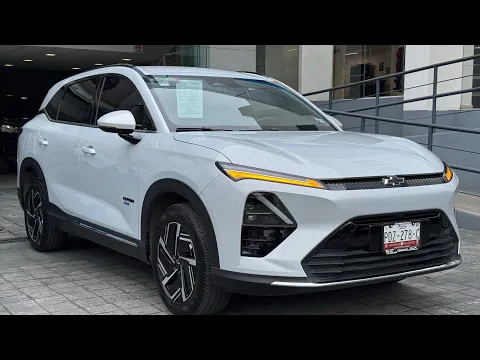

The Captiva EV costs R$20,000 more, based on the reported price of R$219,990 for the all-electric version. The two models serve different purposes, although they share some design and structural elements.
The Captiva EV needs to be recharged to continue a trip. The PHEV, by contrast, can use gasoline when needed, allowing it to cover longer distances without relying solely on a charging station.
1.5-liter engine and electric motor produce 227 hp
The new SUV pairs a 1.5-liter gasoline engine with an electric motor mounted at the front. Together, the two systems produce 227 hp and 31.6 kgfm of torque, according to figures released by Chevrolet.
Torque is the force available to move the vehicle, particularly when pulling away or accelerating to pass. The electric motor helps deliver quick throttle response.
The transmission was designed specifically for hybrid vehicles and is known by the acronym DHT. It manages how the motors operate based on speed, battery charge and power demand.
Unlike some competitors sold in Brazil, the Captiva PHEV does not have a flex-fuel engine. Its internal combustion engine runs on gasoline.
SUV accelerates from 0 to 100 km/h in 8.3 seconds
Chevrolet’s claimed performance puts the Captiva PHEV among the quicker SUVs in the price range around R$200,000.
The automaker says the vehicle takes 8.3 seconds to reach 100 km/h from a standstill. Its stated top speed is 170 km/h.
The powertrain’s response depends on the combined operation of the electric motor and combustion engine. In some situations, the system uses both to deliver more power.
In city traffic, electricity can do most of the work. On longer trips, the gasoline engine kicks in as needed.
Combined range reaches 1,069 kilometers under Inmetro testing
Range is one of the new model’s main selling points. The Captiva PHEV has a certified combined range of 1,069 kilometers, taking into account the energy stored in the battery and the gasoline in the tank.

The vehicle has a 53-liter fuel tank. When the battery is charged, the system can combine both energy sources to extend the distance traveled.
Chevrolet’s figures follow Brazil’s Vehicle Labeling Program, administered by Inmetro, the country’s national standards and metrology institute. Real-world range depends on usage, speed, traffic and driving style.
The 1,069-kilometer figure is therefore a benchmark measured under standardized conditions. It is not a guarantee that the vehicle will cover the same distance on every trip.
20.5-kWh battery enables 60 kilometers of driving without gasoline
The Captiva uses a 20.5-kWh battery made with lithium iron phosphate (LFP) technology. The battery stores the electricity used by the electric motor.
Under Brazilian certification, the SUV can travel up to 60 kilometers on electricity alone. During that time, the gasoline engine can remain off, depending on operating conditions.
This electric range makes some urban trips possible without using gasoline. To take advantage of it regularly, the owner needs to keep the battery charged.
When the stored energy runs low, the system continues operating as a hybrid. The driver can keep going using the combustion engine, without having to stop immediately to recharge.
Fast charging can restore half the battery in about 30 minutes
The battery can be charged from an external electricity source. The model supports alternating-current charging and can also use fast direct-current chargers.
Quatro Rodas reports that maximum fast-charging power reaches 24.6 kW. Under these conditions, the charge can rise from 30% to 80% in about 30 minutes.
For alternating-current charging, the publication reports power of up to 3.3 kW. This type of charging is commonly used at homes and at facilities with compatible equipment.
Charging time depends on available power, temperature and battery condition. The technology makes it possible to replenish some energy during a stop, but charging is not as fast as in electric vehicles that support higher power levels.
Hybrid system has five operating modes
Chevrolet developed an automatic management system that switches among different ways of using the motors. The system can move the vehicle on electricity alone, combine the two powertrains or use the gasoline engine to generate electricity.
The combustion engine can also drive the wheels directly. During deceleration and braking, the system recovers some of the energy that would otherwise be lost.
This energy recovery helps keep the battery charged while driving. However, it does not fully replace the external charging needed to take advantage of the maximum electric range.
Transitions happen automatically, without requiring the driver to manage each step. The goal is to adapt the system’s operation to traffic conditions and power demand.
Chevrolet offers a 15.6-inch screen and digital instrument cluster
Inside, the Captiva PHEV has a 15.6-inch infotainment system, paired with an 8.8-inch digital instrument cluster. The system supports Apple CarPlay and Android Auto.
The cabin also has a 360-degree camera to help drivers spot obstacles while maneuvering and parking. The vehicle also features a panoramic sunroof and a power-operated liftgate.
The driver’s seat has power adjustments, while rear passengers get a reclining backrest. These features reinforce the SUV’s family-oriented design.
The model has an interior with soft-touch surfaces and several storage spaces.
532-liter cargo area accommodates luggage for five passengers
The Captiva PHEV is approximately 4.74 meters long, 1.89 meters wide, with a 2.80-meter wheelbase.
The wheelbase helps provide room for passengers. The five-seat configuration has a rear bench that can be adjusted to suit occupants’ needs.
The cargo area offers 532 liters of capacity, expanding to 1,690 liters when the rear seats are folded down. That space can accommodate suitcases and other items needed for trips.
The body retains features similar to those of the Captiva EV. One difference is the presence of two side ports: one for gasoline and the other for electric charging.
Safety package includes automatic braking and adaptive cruise control
The new model has six airbags and electronic systems designed to protect occupants. The package includes stability control, driver-assistance features, and ISOFIX anchors for child seats.
Features include adaptive cruise control, forward collision alert, and automatic emergency braking. The SUV also offers lane-keeping assistance.
Adaptive cruise control helps maintain speed and distance from the vehicle ahead. Automatic braking can intervene when the system detects certain hazardous situations.
These features assist with driving but do not replace the driver’s attention. The person behind the wheel remains responsible for controlling the vehicle.
Captiva PHEV is assembled in Horizonte, Ceará
The hybrid Captiva is assembled at the Ceará Automotive Plant (PACE), located in Horizonte, in the northeastern state of Ceará. The facility also builds the electrified Spark EUV and Captiva EV.
The operation uses the SKD system, in which sets of components arrive pre-prepared for assembly. This differs from manufacturing all parts and structures entirely at the Brazilian facility.
The Captiva originated as a project developed in China through a partnership among General Motors, SAIC, and Wuling. The Brazilian version received the specifications Chevrolet announced for the domestic market.
Assembly in Ceará allows the automaker to expand its lineup of electrified vehicles offered in Brazil. The launch also intensifies competition with hybrid models from brands such as BYD and GWM.
New SUV intensifies competition among hybrids in the R$200,000 range
With a launch price of R$199,990, the Captiva PHEV enters a segment attracting new electrified vehicles. Competitors include models from BYD, GWM and other automakers that have expanded their offerings in Brazil.
Chevrolet is counting primarily on the combination of 227 hp, a certified range of 1,069 kilometers and the ability to travel up to 60 kilometers without gasoline. The setup allows drivers to use electricity in the city and rely on the combustion engine for longer trips.
The model went on sale on November 23, 2026, and will share dealership space with the Captiva EV. The differences between the versions involve price, fueling method and the need for recharging.


