





 Portuguese
  English
  Spanish
  8 min of reading
  0 comments


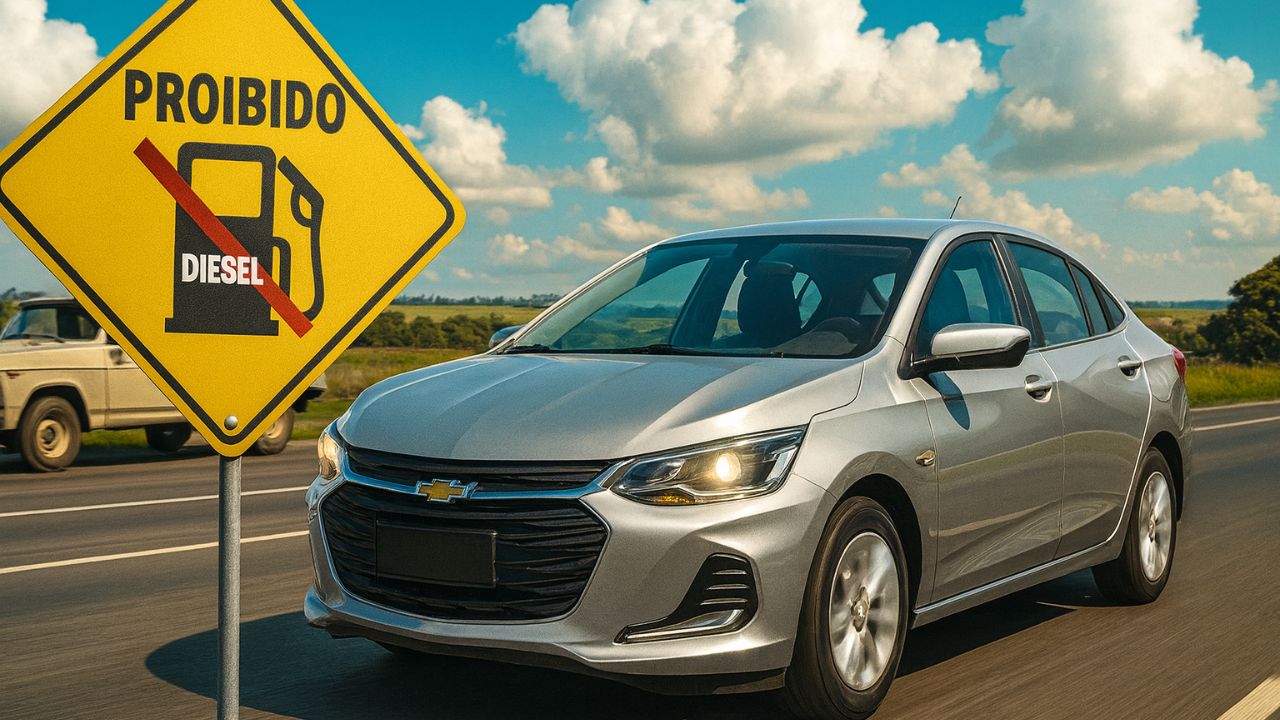
While The Chevrolet Onix Plus Stands Out As The Most Fuel Efficient Car In Brazil, The Ban On Diesel Cars Keeps Diesel Passenger Cars Off The Streets Of Brazil.
The Chevrolet Onix Plus is presented by official numbers as a champion of fuel efficiency among passenger cars sold in Brazil. Fueled with gasoline, the Chevrolet Onix Plus can travel more than 17 kilometers on just 1 liter, allowing one to leave Brasília with a full tank and arrive in Belo Horizonte without needing to stop for gas. With a tank of 44 liters, and considering the average gasoline price, the cost of this trip amounts to hundreds of reais, still offering a good cost-benefit ratio for those who drive a lot.
When ethanol comes into play, the Chevrolet Onix Plus remains competitive: the price per liter drops, the total cost of the trip decreases, but fuel consumption increases and the range shrinks. In practice, the driver needs to plan the route better and include stops for refueling, especially on longer trips. However, shortly after doing this math, the inconvenient question arises: if Brazil allowed diesel passenger cars, a vehicle similar to the Chevrolet Onix Plus could travel much further, consuming less, thanks to cheaper fuel and lower consumption. So why does this option simply not exist for the average Brazilian driver?
Chevrolet Onix Plus And The Mathematics Of Economy On The Road

In a scenario of expensive fuel, the Chevrolet Onix Plus has become a reference when it comes to road consumption. On the road, the sedan manages to deliver a range that, in practice, positions the car as a “marathoner” among flexible fuel options. With the 44-liter tank filled with gasoline, one can cross states without significant worries about the nearest gas station.
-
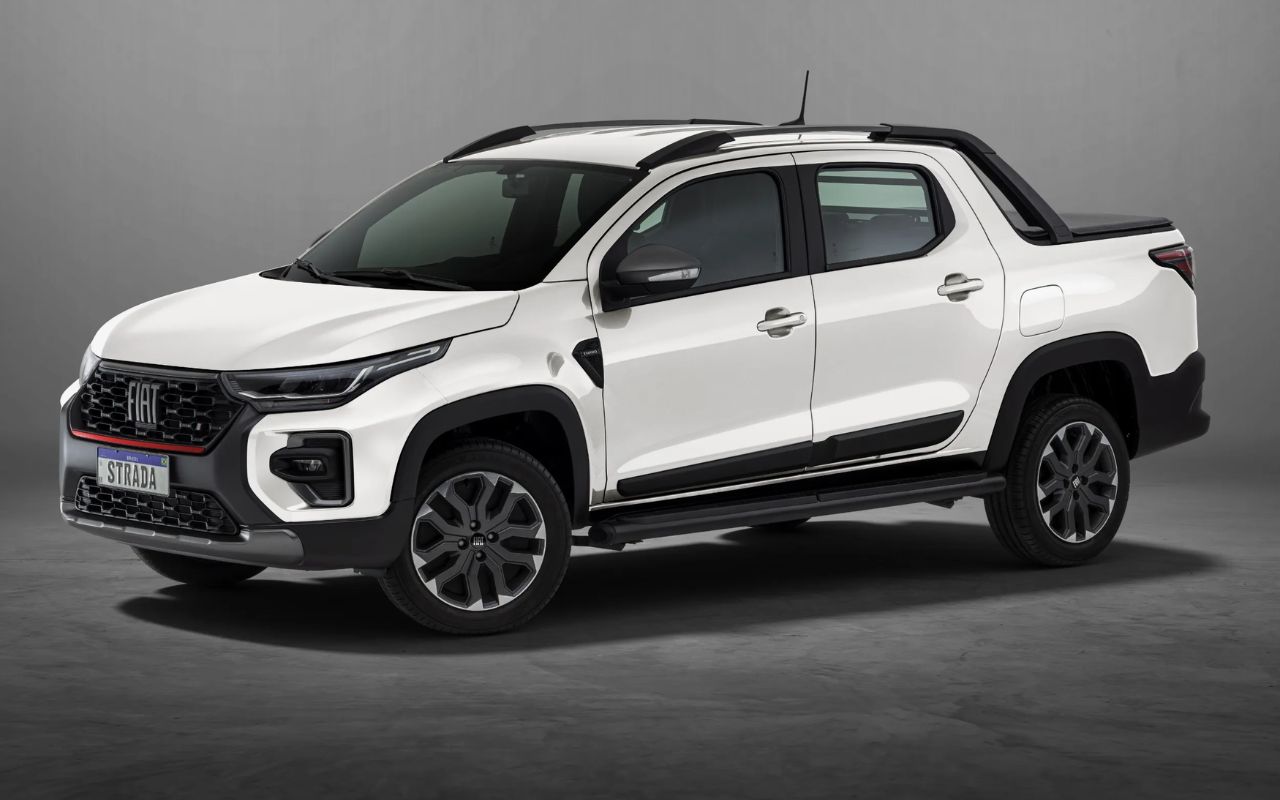
It surpassed the Polo, the Toro, the Hilux, and the Saveiro: with almost 17 thousand units sold, the Fiat Strada was the best-selling car in March 2026.
-
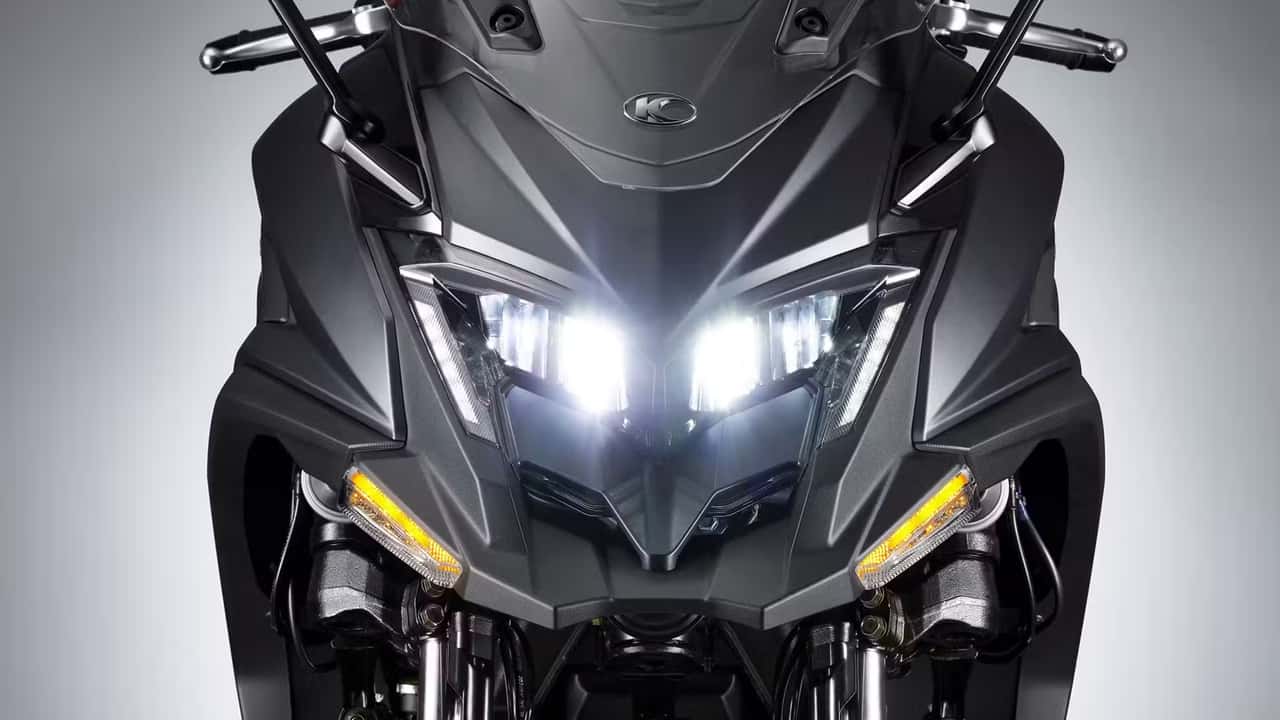
Kymco launches a 3-wheeled scooter with a 52 hp engine, a tilting front, and an audacious proposal to address one of the biggest fears of those who want to ride a motorcycle but still do not trust two wheels.
-
Most drivers make a big mistake on the road without knowing: there is an exact speed that makes the engine work with minimal effort and saves much more fuel, and it is neither 80 km/h nor 100 km/h as many imagine.

-
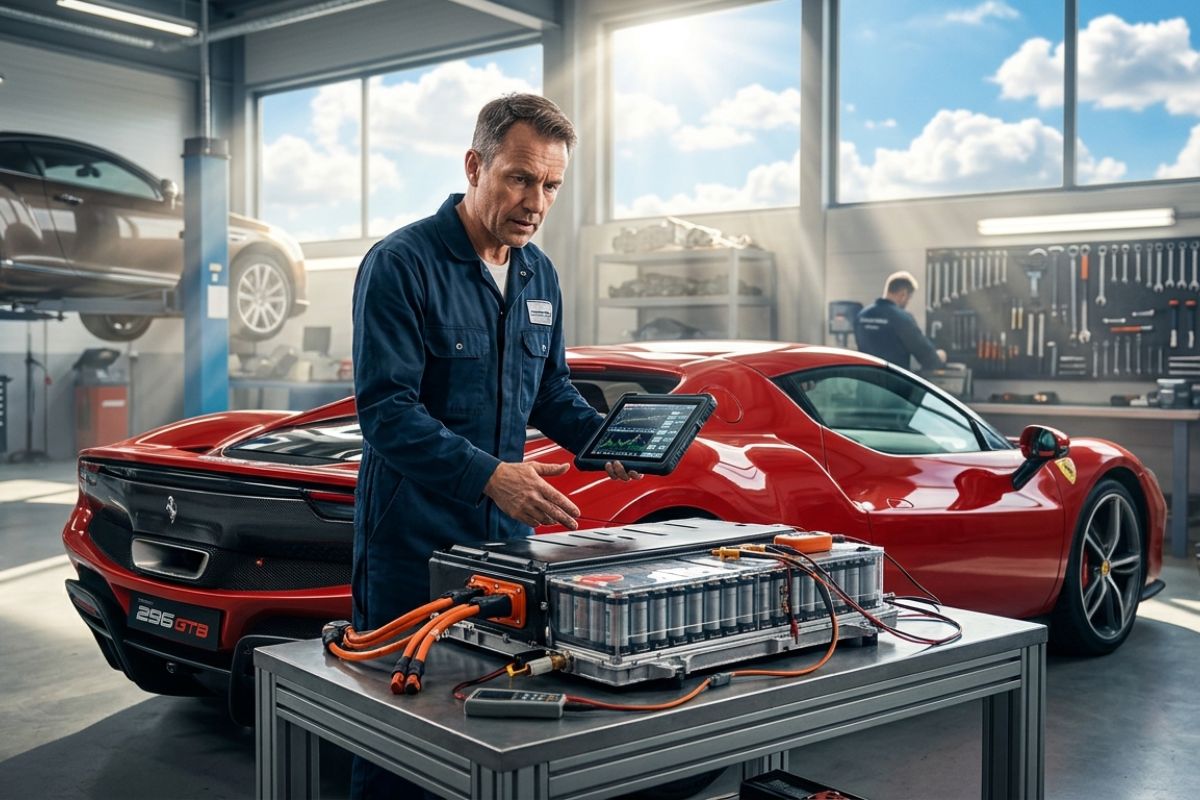
Mechanic explains: Ferrari 296 has a hybrid system management failure that can drain the high-voltage battery to an “irrecoverable” point in the car; recovery requires charging cell by cell on a bench, is risky, and the battery can cost R$ 250,000 imported.
When the driver opts for ethanol, the situation changes: the price per liter is generally lower, which reduces the trip’s cost, but the range decreases. On a route like Brasília to Belo Horizonte, running solely on ethanol, the Chevrolet Onix Plus requires at least one stop for refueling, simultaneously showing the advantages of the cheaper fuel and its limitations in terms of range.
Even so, the two options currently available for the owner of a Chevrolet Onix Plus are gasoline and ethanol. And this is precisely where the hypothesis that stirs the imagination of drivers comes into play: if there were a diesel version of the model, or an equivalent compact sedan, the range would be even greater, with a tank going much further than one can achieve with gasoline or ethanol, at an even lower cost per kilometer.
What Would A Diesel Chevrolet Onix Plus Be Like
The theoretical comparison is simple: a car similar to the Chevrolet Onix Plus, fueled with 44 liters of diesel, would cover a much greater distance than the gasoline or ethanol version, with a lower fuel consumption. Since diesel is traditionally cheaper at the pump than gasoline, the driver would fill the tank for less and could travel a longer route without stops.
In practice, this diesel sedan would be a dream for those who do a lot of highway driving: low cost per kilometer, high range, and a robust engine, with durability that can easily reach hundreds of thousands of kilometers. The math makes so much sense that the question arises almost automatically: if a car with the proposal of the diesel Chevrolet Onix Plus is so advantageous, why simply is this option not available in Brazilian dealerships?
The answer involves a decision made back in the 1970s, in a world in crisis, with expensive oil, a pressured economy, and a Brazil extremely dependent on fossil fuel imports.
Oil Crisis And The Birth Of The Ban


To understand why Brazilian drivers primarily drive a Chevrolet Onix Plus flex and not a diesel compact sedan, one must go back a few decades. In the 1970s, the world was shaken by the oil crisis, when producing countries reduced supply and caused the price of crude oil to skyrocket in a few months.
During that period, Brazil imported most of the oil it consumed. The impact was direct: the fuel costs exploded, the trade balance was thrown off, and the so-called economic miracle began to lose strength. Faced with this scenario, the government found itself obliged to act on two fronts.
On one side, it created a program to promote ethanol as an alternative fuel, paving the way for the flex fuel culture that, decades later, benefits models such as the Chevrolet Onix Plus today. On the other side, it decided to restrict the use of diesel. The logic was simple and harsh: diesel oil had to be reserved for trucks, buses, pickup trucks, and 4×4 vehicles, essential for the transport of goods and people, not for passenger cars.
A regulation published in the mid-1970s began to limit the vehicles authorized to use diesel engines. Passenger cars were excluded from this group, and the door for a “diesel Chevrolet Onix Plus” was never opened.
Chevrolet Onix Plus, Ethanol And The Economic Interest Behind The Veto
The decision to ban passenger cars from using diesel was not only technical but also political and economic. While the government protected diesel for heavy transport, it needed to ensure a market for the ethanol being developed at the cost of public investment.
Vehicles like the Chevrolet Onix Plus are now direct heirs of this strategy. The ability to choose between gasoline and ethanol at the pump, making calculations for cost per kilometer and adapting fuel to budget, originated from a program that, back then, needed protection against competitors like diesel.
Reopening the market for passenger diesel cars now would mean, among other things:
- increasing the consumption of a fuel that the country still partially needs to import
- pressuring foreign currency reserves
- and creating a direct competitor for gasoline and, mainly, for the ethanol fueling sedans like the Chevrolet Onix Plus
In a country with a fleet numbering in the tens of millions of vehicles, any mass migration to diesel would completely change the equation of fuel consumption and importation. It is no surprise that, decades later, the ban remains in place.
Pollution, Particles And The Villainous Reputation Of Diesel Cars
If at first the focus was primarily economic, over time another important argument emerged to maintain the ban on diesel passenger cars: the environmental one. Diesel used during much of the last century had a high sulfur content and generated a lot of particulate matter, contributing to worsened air quality, especially in large urban centers.
Compared to gasoline from earlier times, diesel emitted many more fine particles, associated with respiratory issues and cardiovascular diseases. This reinforced the idea that expanding diesel use in cities like São Paulo and Rio de Janeiro would be a risky choice for public health.
In recent decades, the scenario has changed: more modern emission control technologies and diesel formulas with much less sulfur have reduced the direct environmental impact of the fuel. Still, the villain label remains strong enough to fuel resistance to a larger fleet of light diesel vehicles, especially when there are other priorities such as buses, trucks, and essential fleets.
Meanwhile, flex sedans like the Chevrolet Onix Plus benefit from advancements in more efficient combustion engines, electronic injection, and the combination of gasoline and ethanol, delivering competitive consumption without entering the diesel debate.
The World Reassesses Diesel, And Brazil Is In No Hurry To Change
Interestingly, what began as a defensive measure in Brazil anticipated a movement that many countries only started to recognize decades later. In markets where diesel cars dominated the passenger segment, like Europe, the tide began to turn after emissions scandals and the popularization of hybrid and electric vehicles.
European countries have already announced dates to restrict or end the sale of combustion cars, both gasoline and diesel. The share of diesel engines in sales, which once was majority in some markets, has been declining year after year. Meanwhile, manufacturers are redirecting investments towards electrification and new propulsion systems.
In this scenario, the chance of Brazil reassessing the ban on diesel passenger cars seems even lower. Suddenly releasing compact diesel sedans, direct competitors to models like the Chevrolet Onix Plus, would require importing more fuel and could pressure the price per liter at the pump, affecting freight transport, buses, and the entire logistics chain.
Therefore, the most likely path is the continuation of the current model: ethanol and gasoline for the average driver, diesel concentrated in trucks, buses, higher-capacity pickups, and 4×4 vehicles, while discussing, little by little, the broader arrival of electric and hybrid vehicles in the country.
Chevrolet Onix Plus, Future Of Ethanol And The Cost That Drivers Need To Calculate
Amid all this history, the Chevrolet Onix Plus acts almost as a thermometer for what Brazil has decided to prioritize. It symbolizes a country that has bet on the combination of gasoline and ethanol, created incentives for flex engines, and has kept the path to diesel passenger cars closed.
For the driver, the concrete calculation continues to be made at the pump and on the road:
- with gasoline, the Chevrolet Onix Plus offers good range and predictability
- with ethanol, it reduces the cost of the trip, even requiring additional stops on longer routes
- without a diesel option, discussions about extreme consumption, non-stop trips, and super durable engines remain limited to the realm of simulations and heavy vehicles
At the same time, the world is transitioning to an energy model where electric and hybrid vehicles are beginning to gain traction, especially in developed markets. Meanwhile, Brazil balances its dependence on fossil fuels with the intensive use of ethanol and discusses, step by step, how it will have to adapt to global pressures for lower emissions.
In the end, the Chevrolet Onix Plus demonstrates that it is possible to be economical with the current rules of the game, but it also raises the question that remains unanswered: does it make sense to keep diesel passenger cars banned in a scenario of cleaner technology and a search for efficiency?
And you, if you could choose today, would you prefer to stick with a Chevrolet Onix Plus flex just as it is, or would you have a similar diesel sedan if this type of car were allowed in Brazil?






-

-

-

4 pessoas reagiram a isso.