





 Portuguese
  English
  Spanish
  3 min of reading
  0 comments


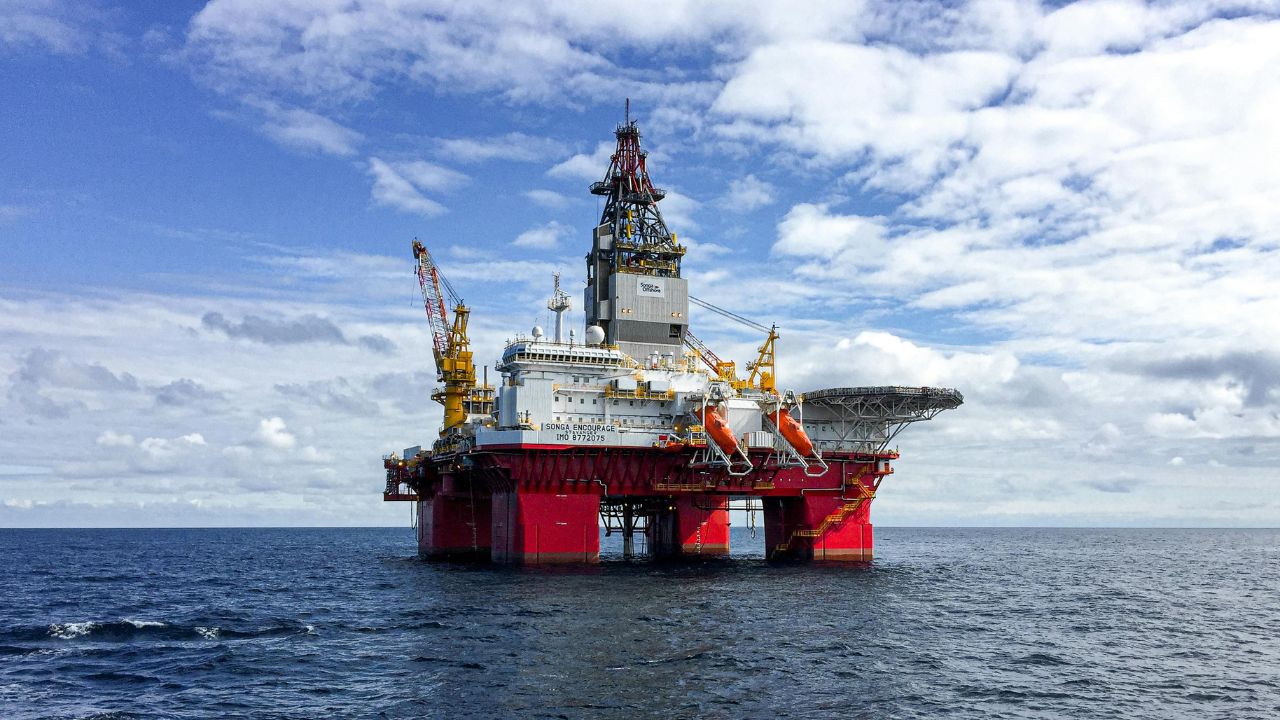
Chevron Announces Acquisition of Interests in Blocks 9 and 10 in Suriname Under Production Sharing Agreement, Reinforcing Its Global Strategy for Exploration and Investment in Promising Offshore Blocks.
On November 5, 2025, Chevron signed production sharing contracts to acquire interests in Blocks 9 and 10 in Suriname, marking a new phase in its shallow water exploration strategy in the region. The purchase involves the licenses granted in the “Post SHO2” round and expands Chevron’s activities in exploration blocks under a production sharing agreement.
The operation takes place in offshore blocks located in Suriname, in areas recognized for high hydrocarbon potential.
The company justifies this movement as part of its goal to “expand our exploration area in promising basins around the world.”
-
The rise in oil prices could ensure an extra revenue of R$ 100 billion for the Federal Government, indicates a recent economic study.

-
Naturgy begins an investment of R$ 1.6 million to expand the gas network in Niterói and benefit thousands of new residences and businesses.
-
A major turn in the Justice system suspends tax increases and directly impacts oil and gas companies in Brazil by affecting costs, contracts, and financial planning, leaving uncertain what could happen to the sector if these costs had increased.

-
Brava Energia begins drilling in Papa-Terra and Atlanta and could change the game by reducing costs in oil while increasing production and strengthening competitiveness in the offshore market.


Acquisition of the Blocks: Participation and Details
Chevron, through its subsidiary Chevron Suriname Exploration, now holds a 30% interest in Block 10, where it takes on the role of operator.
In the same block, Petronas Suriname (30%), Qatar Energy (30%), and Paradise Oil Company – affiliated with the state-owned Staatsolie – participate with 10%.
In Block 9, Chevron holds a 20% interest, while Petronas is the operator with 30%; POC has 30% and Qatar Energy 20%.
The combined area of the two blocks totals approximately 5,456 square kilometers and is strategically positioned between deep-water discoveries and onshore producing fields.
Why Is This Acquisition Strategic?
Firstly, the acquisition of this interest shows that Chevron is reinforcing its presence in the Guyana-Suriname Basin, an area increasingly targeted by major oil companies.
In a statement, the company emphasized that “this new position strengthens our focus on the Guyana-Suriname Basin and our broader goal of expanding our exploration area in promising basins around the world.”
Moreover, the nature of the deal — acquiring blocks under a production sharing agreement — is significant because this type of contract allows the company to partner with the local government, sharing production and risks.
In offshore exploration contexts, this can lead to more balanced agreements between company, government, and community.
On the other hand, for Suriname, this operation places it on the international radar of major players and may accelerate hydrocarbon exploration, with economic and geopolitical impacts for the region.
Impacts for Suriname and the Region
For Suriname, Chevron’s expanded entry means investments and expected exploratory activities in previously less developed blocks.
The company’s presence as an operator in Block 10 and participant in another block indicates that drilling initiatives and technical studies in the area may surface soon.
For the Guyana-Suriname Basin region, these movements are likely to attract more attention, capital, and competitors in the oil and gas sector — which could accelerate the discovery and development of new resources.
Additionally, neighboring countries and even Brazil are observing this movement with interest, as discoveries in Suriname, as well as in neighboring Guyana, have driven the search for oil in Brazil’s Equatorial Margin and raised hypotheses about reservoir extensions.
Challenges and Points of Attention
Even with all the opportunities, there are significant risks. Offshore exploration, especially in shallow and deep waters, requires high investments and involves geological and regulatory uncertainties.
Chevron will need to conduct studies, exploratory drilling, and fulfill contractual obligations that accompany the production sharing agreement.
Moreover, Suriname – being a smaller country and at a stage of greater dependency on external investments – may face infrastructure, regulatory, and environmental impact challenges as it promotes exploration.
Therefore, the acquisition of Blocks 9 and 10 does not guarantee immediate success; it is merely the first step toward potential future production.
Broader Context of Chevron in Suriname
The acquisition of these two blocks comes after Chevron already held interests in Blocks 5, 7, and 42 in Suriname.
The company’s own data indicates that, in both shallow and deep waters of Suriname, it is present as an investor and operator in various assets.
With information from the website Eixos.







-

Uma pessoa reagiu a isso.