





 English
  Francês
  Alemão
  Italiano
  Japonês
  Norueguês
  Portuguese
  Spanish
  4 min of reading
  0 comments


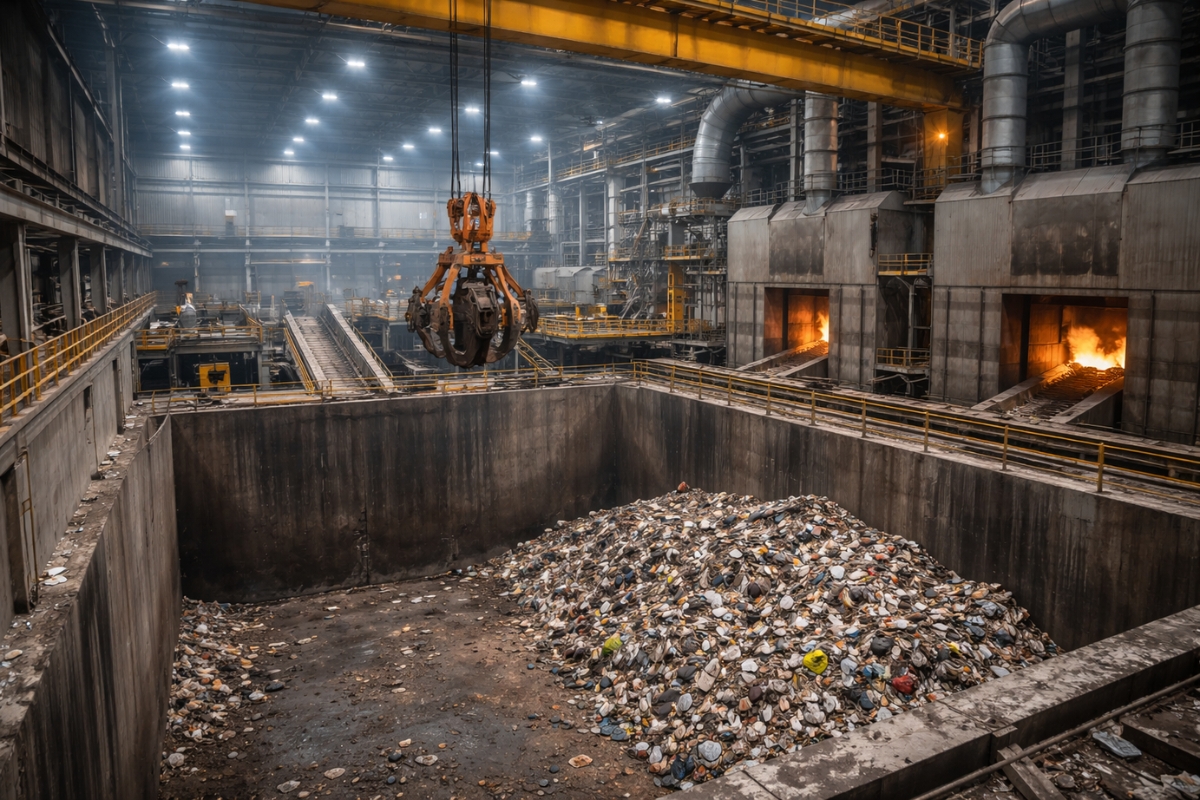
The expansion of power plants created excess capacity, forced operation below ideal levels, and led companies to seek waste where there was previously surplus
China heavily invested in incinerating waste to generate electricity and relieve pressure on overcrowded landfills. The strategy advanced rapidly and became one of the largest structures on the planet for this type of energy.
Now, the scenario has changed. With over 1,000 plants, part of the system has begun to face lack of waste to keep the furnaces operating at a steady pace, and some operations are even resorting to old landfills.
What happened and why it caught attention
Incineration plants in the country operate below 80% in many cases, even with a gigantic structure already installed. The volume of waste does not match the size of the industrial park.
-
Kawasaki surprises by revealing a 140-ton aircraft capable of winning wars without a single shot and bets on ultra-secret technology to protect Japan by 2027.

-
A trick with a fan and a PET bottle goes viral in the extreme heat of 2026 and promises to cool the environment while using almost no electricity.
-
A 176,000-hectare farm in the Northeast is up for sale for R$ 1.2 billion, featuring a runway, fuel station, river, schools, and warehouses, and has become a phenomenon on social media due to its size, which surpasses that of Brazilian capitals.
-
Finding a 3.9 mm larva of the lionfish in the Amazon raises maximum alert and indicates that the invader may already be reproducing in the region.


Daily capacity reached 1.1 million tons. This level exceeded targets set in recent years and made clear a mismatch between the supply of furnaces and the availability of urban waste.
The result is evident on the factory floor. There are idle lines, short operating periods, and a fixed cost that weighs heavily when the furnace has nothing to burn.
Why there is less urban waste available

The generation of waste has decreased due to a combination of economic slowdown, population reduction, and improvements in domestic management. Less consumption tends to generate less disposal.
In 2022, the capacity of the plants was 333 million tons per year, while the collection of household waste was 311 million tons. Even so, capacity continued to grow after that.
This setup leaves the system vulnerable. When the input of waste decreases, the plants lose volume to dilute costs, and the financials become challenging.
How the plants are trying to feed the furnaces
Some facilities have started paying to obtain waste, something unthinkable at the height of disposal crises. Others are trying to supplement the load with industrial waste and construction debris.
There have also been cases of excavating old landfills to find material that can still be burned. This is a solution that avoids shutting down equipment, as completely stopping can increase losses.
In Anhui and Hebei, operators admit to working well below nominal capacity. In certain cases, one in three lines remains closed all year due to lack of waste, not due to technical failure.
Excess capacity becomes an economic risk

The problem has shifted from technology to structure. When there are more furnaces than waste, competition for material increases and profitability declines.
Lines that operate only a few months a year indicate a model under pressure. The parallel expansion, without considering the trend of declining urban waste, increases the risk of underutilized assets.
The industry faces a direct dilemma: keeping furnaces running requires a constant flow of waste, but the available volume no longer guarantees this supply.
Points of attention regarding health, emissions, and generated waste
Emissions have been reduced with improvements in filtration, gas control, and environmental standards. Nevertheless, incineration continues to produce materials that require careful treatment.
In 2024, the plants produced 13 million tons of fly ash and 63 million tons of leachate. Only 15% of the ash was reused, mainly in construction materials.
The remainder remains as complex waste, expensive to treat, and with limited disposal options. The environmental debate remains alive, especially when the management of these by-products fails.
Mandatory separation reduces the waste that reaches the furnaces
Mandatory waste separation has advanced since 2017 in several cities. Where the rule has been strictly applied, the waste profile has changed, and part of it no longer goes to incineration as before.
In Shenzhen, with 18 million inhabitants, there is no sending of household waste to landfills. Management occurs with valorization and advanced separation systems.
Five facilities cover a daily capacity of 20,000 tons, adjusted to the current volume. For the environment, less waste is a gain, even if it complicates the financial operation of the plants.
China built a huge network of incineration, but the country has started generating less waste than it can burn, creating excess capacity and forcing adaptations.
The practical consequence is already evident in the routine of the plants, with operation below 80%, seeking new types of waste, and even excavating landfills to keep the furnaces running.





Seja o primeiro a reagir!