






 Portuguese
  Spanish
  5 min of reading
  0 comments


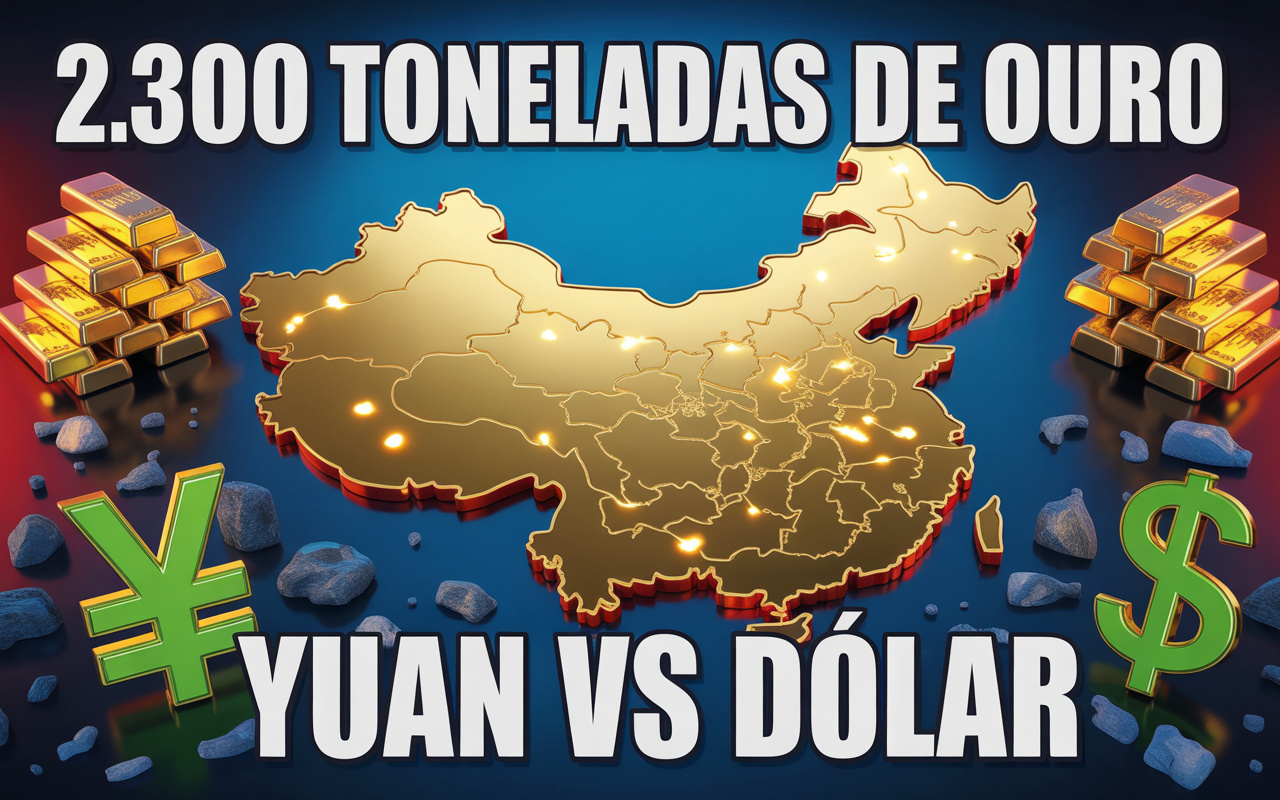
China Integrates Strategic Mining, Gold Reserves, and Yuan Internationalization into a Long-Term State Policy That Expands Economic Power and Reduces Dependence on the Dollar.
The economic rise of China in recent decades is often explained by accelerated industrialization, mass exports, and infrastructure investments. However, behind these visible factors lies a less discussed but increasingly decisive strategy: the deliberate integration of mineral supply chain control, strengthening of physical reserves, and monetary policy. This arrangement connects mining, gold, and yuan within the same axis of power, built over decades and executed gradually, without abrupt breaks or spectacular announcements.
The result is a type of influence that does not depend exclusively on military force or diplomatic prominence, but on structural capacity. By controlling industrial bottlenecks, accumulating physical assets, and expanding the use of its currency, China reduces external vulnerabilities and increases its maneuvering space in a historically dollar-centric international financial system.
Strategic Mining as the Basis of Industrial Power
The first pillar of this strategy lies in China’s dominance over mineral supply chains considered critical to the modern economy.
-
Ukraine launches largest drone attack on Moscow since 2022, Russia claims to have intercepted nearly 200 aircraft near the capital, Kapotnya refinery targeted again, and offensive reignites alert about war reaching the Russian energy heart just a few kilometers from the Kremlin.

-
Truck drivers, freight, and fines from 2022 take center stage in politics: Chamber approves MP with amnesty, mandatory tracking by CIOT, million-dollar penalties, and new minimum wage for those who spend more than 24 hours on the road.

-
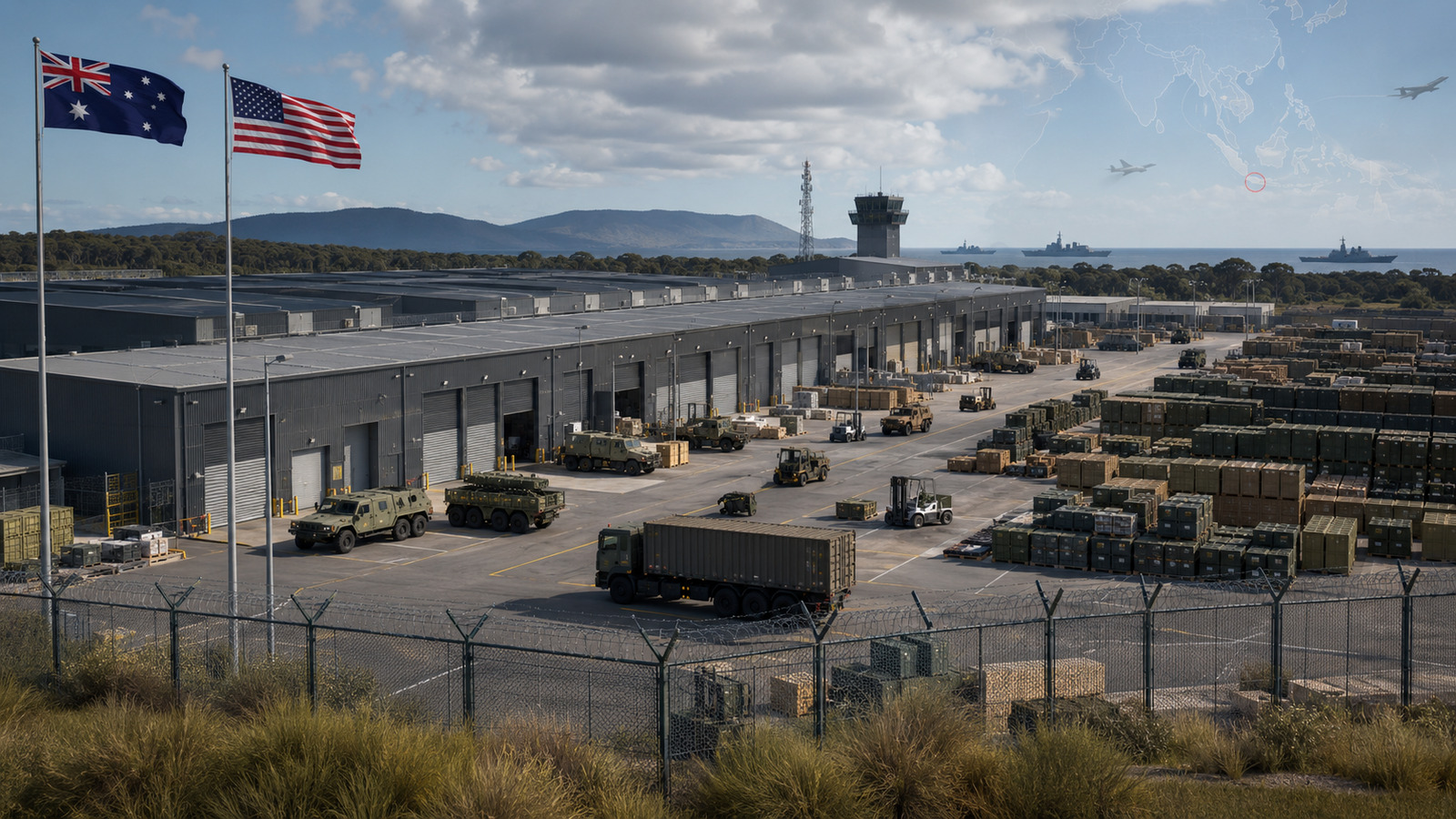
China off the radar: US plans mega $30 million weapons depot in Australia, out of reach of most Chinese missiles, with full capacity expected by 2028

-
Trump’s wall advances at a rapid pace: government promises to complete a barrier of over 3,000 km by 2027 while drones and cartels turn the US border into a new field of technological dispute



China not only extracts strategic minerals but also controls, above all, the most sensitive stages of the supply chain: refining, separation, processing, and intermediate manufacturing.


In the case of rare earths, for example, consolidated data from organizations such as the International Energy Agency and the United States Geological Survey indicate that China accounts for about 60% of global production but more than 80% of refining and separation capacity.
In industrial stages such as the manufacturing of permanent magnets — essential for electric motors, wind turbines, hybrid vehicles, advanced electronics, and military systems — China’s participation exceeds 90%.
This dominance is not just the result of geological abundance. Since the 1990s, the Chinese state has adopted policies that restricted raw ore exports, incentivized joint ventures with technology transfer, and consolidated national companies capable of operating complete supply chains, from extraction to the final product. Thus, mining has come to be treated not as an isolated sector but as strategic infrastructure for industry and defense.
Gold as Systemic Insurance and a Tool of Sovereignty
The second pillar is gold. Unlike many countries that have reduced the importance of the metal in their reserves over the past decades, China has maintained a consistent policy of gradual accumulation. Data from the World Gold Council shows that China’s official reserves exceed 2,300 tons, placing the country among the largest gold holders in the world.

More important than absolute volume is the role attributed to the metal. For the Chinese central bank, gold acts as a neutral asset, with no sovereign issuer, immune to direct financial sanctions, and capable of preserving value in scenarios of instability.
In a world marked by asset freezes, trade disputes, and financial fragmentation, this characteristic gains strategic weight.
China also occupies a unique position by being simultaneously a large producer, large importer, and large consumer of gold. This allows the country to retain a significant amount of the metal within its borders, strengthening physical reserves without solely relying on external flows. Gold, in this context, is not just a financial reserve but a tool of resilience.
Yuan and the Pursuit of Gradual Monetary Autonomy
The third element of the tripartite structure is monetary policy aimed at strengthening the yuan in international trade. China does not seek to abruptly replace the dollar but to reduce its structural dependence on a single international currency.
This strategy manifests itself in bilateral trade agreements settled in yuan, in the increasing use of the Chinese currency in energy and commodity contracts, and in the expansion of financial mechanisms linked to infrastructure projects abroad.
Initiatives such as the Belt and Road Initiative have started to incorporate financing and payment clauses in yuan, expanding its circulation outside China. Meanwhile, the development of the digital yuan creates an alternative payment infrastructure that may, in the long run, facilitate cross-border transactions outside traditional systems dominated by Western institutions.
In this arrangement, gold acts as a implicit anchor of trust, while the control of mineral supply chains ensures that the Chinese economy remains indispensable to global industry. The yuan, in turn, gains ground incrementally, supported by physical assets and real productive capacity.
State Planning as an Element of Coherence
The factor that connects mining, gold, and currency is long-term state planning. Unlike economies that respond to crises reactively, China has built this architecture over several planning cycles.
Successive five-year plans have incorporated goals of resource security, technological self-sufficiency, financial strengthening, and reduction of external vulnerabilities.

This coherence explains why seemingly distinct policies — mining, international reserves, foreign trade, and technological innovation — operate complementarily. It is not a strategy declared in a single document, but an accumulative logic, visible when observing the continuity of decisions over time.
Silent Power
The practical result of this integration is a type of power that is less visible but profound. China has become difficult to economically isolate without causing global impacts.
The control of industrial bottlenecks, possession of large physical reserves, and the gradual expansion of the yuan create a protective system against external shocks, sanctions, and financial crises.
This power does not depend on direct confrontations or abrupt breaks with the existing system. It is built on indispensability: global supply chains depend on minerals processed in China; financial markets recognize the value of physical reserves; and trading partners find incentives to accept the Chinese currency in specific transactions.
A Model That Redefines the Logic of Economic Power
The Chinese strategy reveals a broader shift in the logic of global economic power. Instead of relying solely on financial flows and institutional trust, countries have started to value physical assets, supply chains, and planning capacity. Gold, critical minerals, and currency cease to be separate spheres and become integrated into the same sovereignty architecture.
By connecting mining, gold, and yuan in a long-term strategy, China has built a model of influence that operates outside the spotlight but with lasting effects.
This is not a spectacular move but a structural transformation that is likely to shape the international economic balance in the coming decades.






-

-

-

-

8 people reacted to this.