





 Portuguese
  English
  Spanish
  3 min of reading
  0 comments


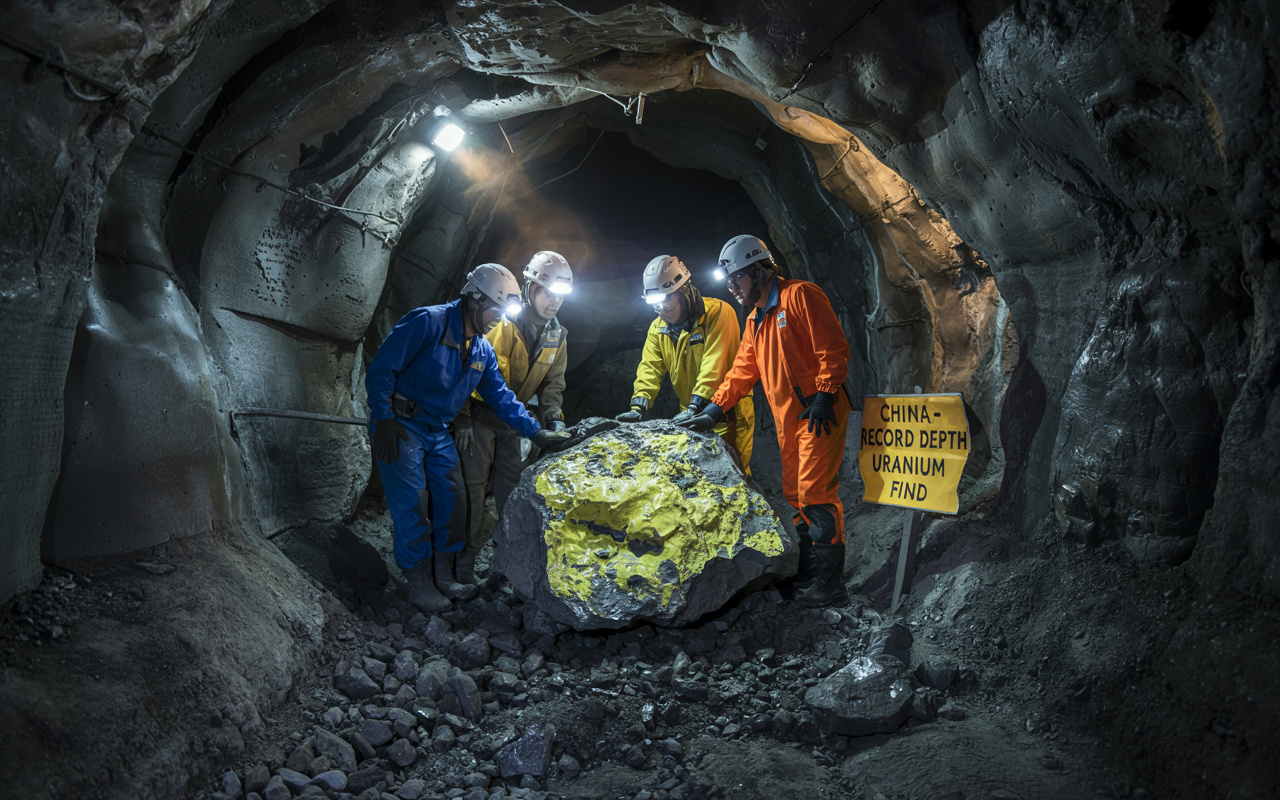
China Discovers Uranium Deposit at 1,820 Meters Deep — the Deepest in the World. Breakthrough Marks a New Era in Nuclear Mining in Extreme Areas.
The global race for strategic energy resources has just gained a new chapter — and China has inscribed its name at the top. A recent announcement from the China National Nuclear Corporation (CNNC) revealed the discovery of a uranium deposit at a depth of 1,820 meters in the Tarim Basin, a remote desert region in Xinjiang, northwest of the country. This is the deepest industrial-grade sandstone uranium deposit ever recorded in the world, according to the Chinese government. Furthermore, this achievement represents an unprecedented technical and geological milestone.
A Leap in Deep Nuclear Mining
The CNNC stated that this advancement places China in the global lead for deep uranium exploration, surpassing technical limits that, until recently, seemed insurmountable. The deposit was identified in deep and complex geological layers beneath the desert of the Tarim Basin, one of the most inhospitable regions on the planet. The site was previously considered to have low geological potential — until now.
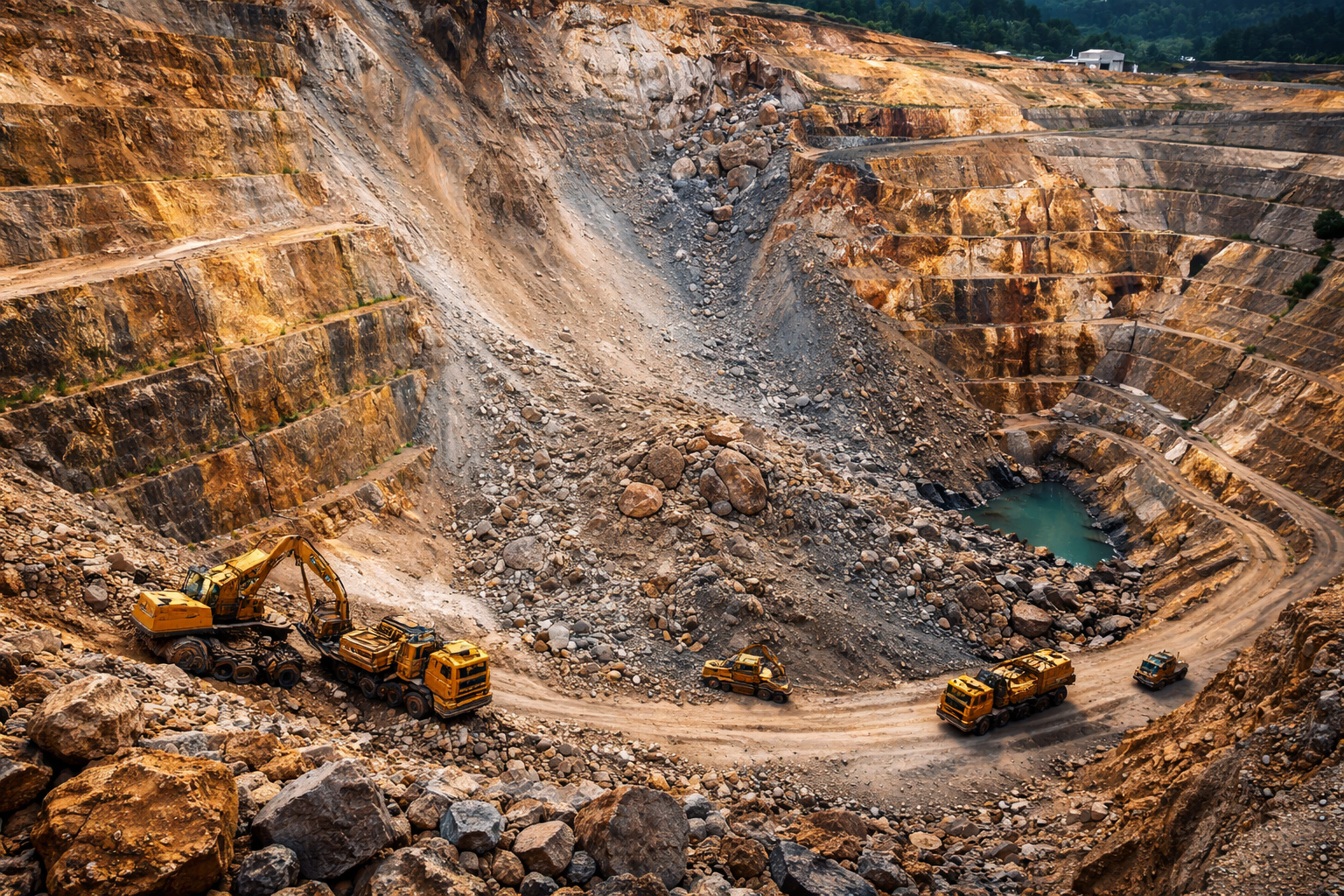
Uranium extraction at depths exceeding 1,500 meters poses a logistical and technological challenge, requiring specialized equipment and precise drilling in unstable terrain.
-
After China, it’s now the turn of the USA to ‘secure’ a share of Brazil’s natural resources: the country buys critical rare earths for R$ 3 billion and enters the center of the global technology dispute.
-
Rare earths are in everything, from cell phones to bullet trains, and what almost no one realizes is why they have become the target of such a delicate global war.
-
Brazil extracts 26.3 million tons of ore from what was previously treated as waste, transforming residues into wealth, producing over 3 million tons of sand, and demonstrating how national mining is relearning to generate value.
-
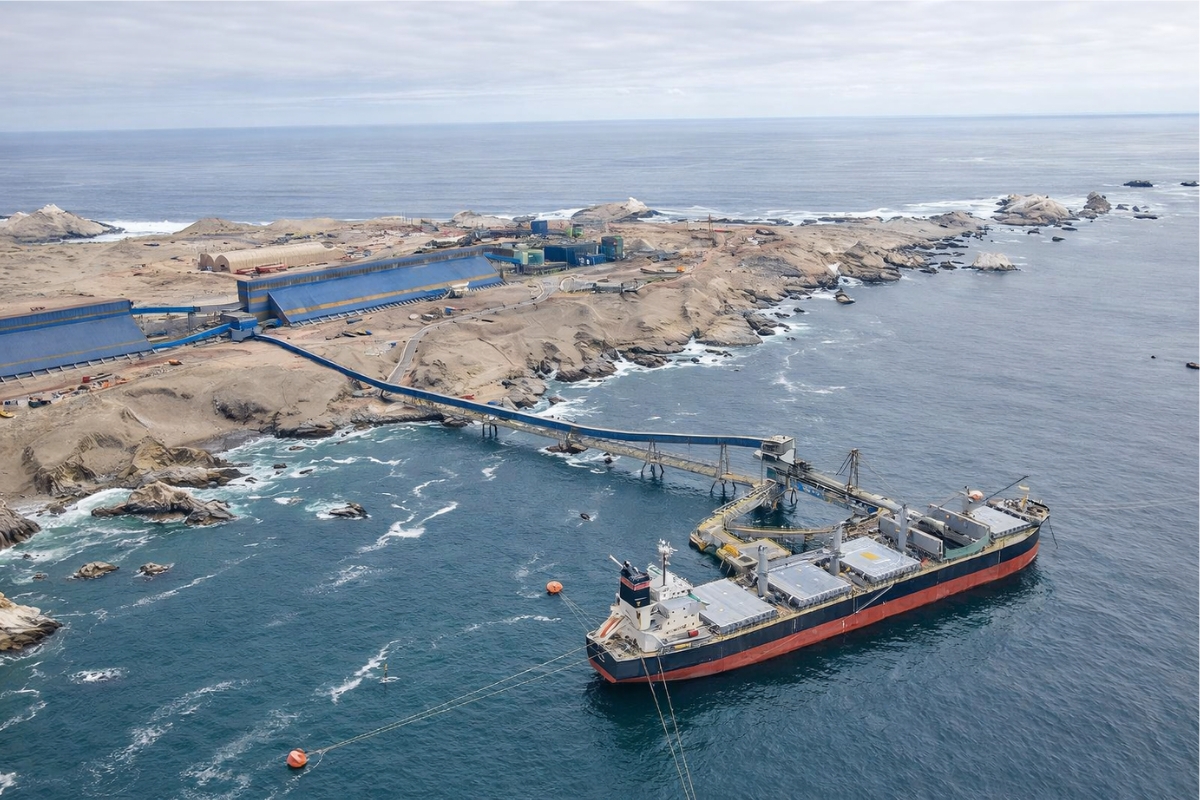
A $3.5 billion megaproject in Latin America pumps desalinated seawater at 1,050 liters per second over 194 km to keep a copper supermine in the Andes operational for another 20 years.

The CNNC, however, revealed that it has developed a unique predictive geological model, capable of identifying potential areas with uranium mineralizations at depth, even under extreme environmental conditions.
Cutting-Edge Technology for Prospecting
The discovery was only possible thanks to the combined use of satellite imagery, aerial surveys, and ultradeep drilling technologies, all operated by a task force of researchers from the Beijing Uranium Geology Institute and the technical team of the CNNC.
Additionally, the company claims to have created an integrated, eco-friendly, and efficient exploration system for desert regions — which can be replicated in other parts of the globe with similar geology.
Strategic Boost for the Chinese Nuclear Sector
Uranium is an essential raw material for nuclear fuel production. China, which plans to significantly expand its fleet of nuclear power plants in the coming decades, has been seeking to ensure autonomy in the supply of this critical resource.
With this discovery, the country not only strengthens its internal energy security but also consolidates its position as a global leader in deep uranium mining.
The Xinjiang deposit could represent a new frontier in mineral exploration, setting precedents for projects in hard-to-reach areas where economic or technical viability was previously thought to be lacking. At the same time, this achievement sends a clear geopolitical message: China is willing to lead the new era of nuclear energy — not just in installed capacity, but also in the complete mastery of the production chain.
Tarim Basin: From Forgotten Desert to Strategic Asset
Situated in one of the most arid and isolated areas on the planet, the Tarim Basin was already known to harbor oil and natural gas reserves, explored with significant investments over the past decade. Now, with the confirmation of the deep uranium deposit, the region enters the map of the critical strategic mining zones of the 21st century.
The discovery also boosts the CNNC’s efforts to create more sustainable mining protocols, reducing environmental impact even in fragile environments like deserts.
While China celebrates this breakthrough as a scientific and energy victory, other countries should closely observe the technology used in deep uranium exploration.
The possibility of finding similar deposits in other arid regions — such as the Sahara, parts of Australia, or the Midwest of the United States — could trigger a global revolution in the uranium market, which is already experiencing a new boom with the renewed interest in nuclear energy as a low-carbon solution.
For the CNNC, this is “a pioneering discovery in terms of location, rock type, depth, and exploration method.” More than that, it is a message of technological and energy supremacy that reinforces China’s role as a protagonist in the global energy transition — even if through nuclear channels.







Seja o primeiro a reagir!