





 Portuguese
  English
  Spanish
  6 min of reading
  0 comments


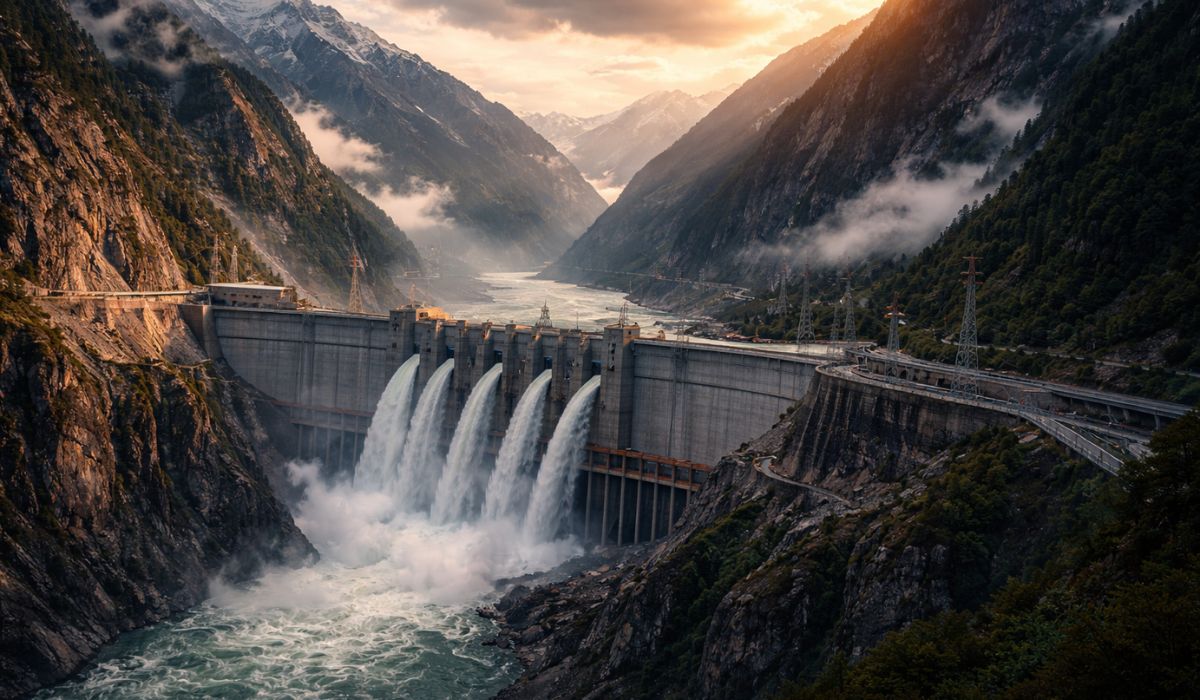
Mega project in Tibet combines unprecedented scale, high investment, and regional impact in a strategic area of Asia, bringing together renewable energy, extreme engineering, geopolitical sensitivity, and environmental concerns around one of the most closely watched hydropower projects in the world.
China has advanced a hydropower project in Tibet that could become the largest in the world in installed capacity, with 60 gigawatts (GW) and an estimated generation of 300 billion kilowatt-hours per year.
The project is located in the lower course of the Yarlung Tsangpo River, in the area known as the Great Bend, and was officially approved at the end of December 2024.
In July 2025, the Chinese government announced the start of construction.
-
Alone in space, a wandering planet without a star is consuming 6 billion tons per second, setting a record that challenges astronomy and reignites the debate on how planets and stars actually form.

-
Humanoid robots have already arrived in hospitals and are pushing wheelchairs, arranging beds, and interacting with patients. This advancement marks the shift of artificial intelligence from the digital world to direct physical care for human beings.

-
5 mysteries of the Moon that the Artemis missions could finally solve

-
Goodbye common charger: users around the world are replacing the old item with this more compact, powerful, and efficient GaN model that charges a phone, tablet, and laptop at the same time.

The investment reported by official Chinese sources and international media is around 1.2 trillion yuan, equivalent to about US$ 167 billion to US$ 170 billion.
The scale helps explain the international repercussions of the project.
The projected capacity exceeds that of the Three Gorges Dam, currently the main global reference in large hydropower plants.
For Beijing, the project is part of the strategy to expand renewable energy supply, strengthen energy security, and support the goal of carbon neutrality by 2060.
At the same time, the initiative has raised concerns about environmental impacts, geological risks, and potential effects on countries that depend on the waters of the same river system.
Plant in Tibet may surpass Three Gorges in energy generation
The estimated annual generation of 300 billion kWh would place the Tibetan project at an unprecedented level in the hydropower sector.
Authorities and analysts often compare this volume to about three times the annual production of the Three Gorges, although the ratio varies depending on the year and hydrological conditions.
Still, the data indicates a scale greater than that of the largest dams in operation worldwide.
The plan is not limited to an isolated structure.
Recent reports and information related to the project indicate the forecast of five cascade plants, which expands the intervention in the river valley and the potential for generation.
In this context, the project has been treated by the Chinese government as part of a broader package of energy infrastructure and regional development.
According to the state agency Xinhua, the project has also been presented as a tool to boost the local economy and strengthen Tibet’s integration into the national energy transition strategy.
Outside of China, however, observers associate the dam not only with electricity production but also with the strategic weight of controlling a transboundary basin.
Engineering in the Great Bend of the Yarlung Tsangpo increases technical challenge
The chosen section is among the most extreme in the world for hydropower exploration.
In the Great Bend of the Yarlung Tsangpo, the river descends about 2,000 meters in just 50 kilometers, according to information recently published by international agencies.
This drop is cited as one of the central factors for the area’s energy potential.
To take advantage of this waterfall, the project includes large-scale underground works.
Studies and analyses of the initiative indicate a water diversion system through tunnels and excavated structures in the mountain, an alternative that would reduce dependence on a conventional reservoir the size of the Three Gorges.
Even so, experts emphasize that the technical difficulties remain high.
The Yarlung Tsangpo canyon features rugged terrain, severe climate, complex geology, and limited logistical access.
In practice, this requires slope stabilization, deep excavations, and continuous operation in an area subject to significant tectonic activity.
Due to this set of factors, the project has been closely monitored by researchers and authorities from neighboring countries.
Concerns increased after the 6.8 magnitude earthquake that struck Tibet in January 2025 and caused damage to reservoirs in the region, according to Reuters.
After the quake, experts consulted by the agency emphasized that dams installed in seismic zones require even more stringent standards for monitoring, engineering, and operational safety.
India and Bangladesh monitor impacts of the project on the Brahmaputra
The Yarlung Tsangpo originates in Tibet, flows into India, and becomes part of the Brahmaputra system before reaching Bangladesh.
Therefore, the dam is treated as a transboundary issue.
In January 2025, the Indian government reported that it had raised its concerns with Beijing.
Later, New Delhi reiterated that it is monitoring the project and advocates for transparency regarding its potential downstream effects.
The most sensitive point is the management of water flow.
The possibility of retention or modulation in a strategic section of the river fuels concerns related to supply, agriculture, fishing, and seasonal flooding.
China claims that the project will not have a significant impact on the environment nor compromise the water supply to neighboring countries.
Still, Indian authorities keep the issue under observation.
Part of this caution is explained by the history of hydrological data sharing between China and India.
The Indian government officially recorded that the memorandum regarding Brahmaputra data expired in June 2023 and that the transmission of this information was halted from that moment on.
In a context of low predictability, the advancement of a project of this scale tends to increase diplomatic sensitivity around the river.
Bangladesh is also monitoring the case because it depends on the same water system in its final stretch.
In addition to human supply, the regime of the Brahmaputra influences agriculture, navigation, and the dynamics of flooding in the delta plain.
Therefore, any significant alteration in the river’s behavior tends to have regional repercussions.
Sediments, water security, and cooperation in shared basins
What is documented is the existence of fear, on the part of downstream countries and environmental organizations, regarding changes in the water regime, ecosystems, and basin security.
The effects of large dams on the natural transport of sediments are also part of this discussion.
In international rivers, this topic is often treated with caution because it involves soil fertility, erosion, flood dynamics, and maintenance of aquatic habitats.
In the case of the Yarlung Tsangpo-Brahmaputra, experts and governments have advocated for more transparency and technical cooperation before the impacts can be evaluated with greater precision.
Organizations linked to water governance, such as UN-Water, have been advocating for cooperation agreements in shared basins precisely to reduce the risk of tension between countries that depend on the same river course.
In this type of scenario, the debate often goes beyond engineering and reaches topics such as food security, disaster prevention, and the exchange of hydrological information.
Renewable energy, regional development, and diplomatic pressure
Within China, the project is presented as a national interest project, aimed at generating low-emission electricity and stimulating the economy.
Abroad, the initiative has also been monitored for its strategic weight.
In July 2025, when construction was officially launched, Chinese markets reacted to the announcement as part of a broader movement of investment in infrastructure.
The controversy surrounding the dam, therefore, is not limited to the size of the plant.
The debate involves biodiversity, seismic activity, dam safety, governance of international waters, and diplomatic relations among Asian countries.
As the timeline progresses, pressure increases for China to clarify the expected impacts, the technical design of the project, and the mechanisms for cooperation with neighboring countries sharing the basin.
In this scenario, the central discussion has shifted from just the capacity for energy generation.
The focus also falls on the regional effects of infrastructure of this scale and how they will be monitored, negotiated, and communicated to downstream countries.






Seja o primeiro a reagir!