





 Portuguese
  English
  Spanish
  4 min of reading
  0 comments


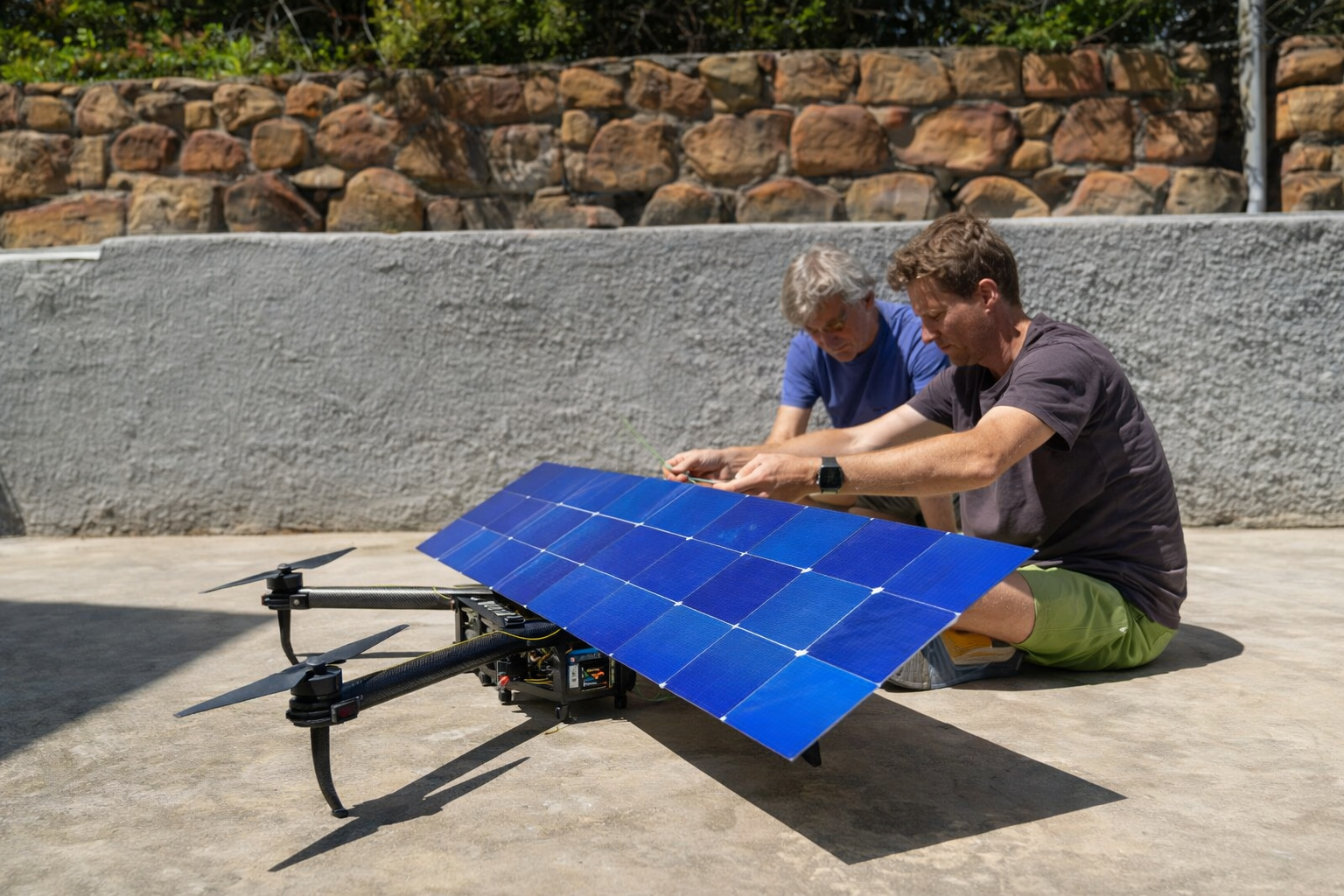
Homem-made drone built by father and son exceeds 5 hours in the air and shows how solar energy can reduce battery usage in various activities
A homemade solar-powered drone created by a father and son managed to stay in the air for 5 hours, 2 minutes, and 21 seconds, setting a new endurance record for this type of technology. The project was developed by Luke Bell and his father, Mike Bell, known for creating high-performance drones.
The result shows an important advancement, as most drones rely entirely on batteries and need to stop to recharge. With solar energy, the equipment can operate for much longer, expanding its use in areas such as agriculture, security, and land mapping.
The information was released by New Atlas, an international website specializing in technology and innovation, which highlighted the performance and potential of this new solution.
-
Daylight Saving Time becomes mandatory again and clocks will need to be set forward by 1 hour still in 2026 after the advancement of a project that aims to end the semi-annual change; only 12% of the population supports the current system in the USA.

-
In Brazil, there is a plain so absurdly flat that the water almost doesn’t know where to go, taking months to drain and spreading sideways for thousands of kilometers, creating the flood pulse that makes the Pantanal the largest wetland on the planet.
-
‘Technology Capital’ in Brazil is located in the interior of SP and brings together more than 200 innovative companies, patents five times above the national average, giants like Embraer and Volkswagen, as well as one of the largest concentrations of researchers in Latin America.
-
Young Brazilian travels 40 km by boat, walking, and bus to go to the gym, taking up to 4 hours of travel per workout.


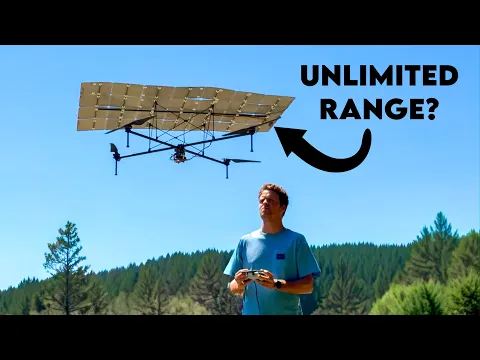

Father and son project bets on solar energy for longer flights
The homemade drone developed by Luke Bell and Mike Bell was designed to solve a common problem: the limitation of batteries.
The idea was to use solar panels to generate energy while the drone is in the air. Thus, it does not depend solely on the initial charge and can continue flying as long as there is sunlight.
In the latest version, the equipment features 28 solar panels, which generate more than 110 watts of energy on the ground. This is more than enough to maintain flight, as the drone needs about 70 watts to stay in the air.
Initial tests without battery showed the limits of the technology
Initially, the drone operated solely on solar energy, without any type of battery. The goal was to create a model that operated entirely with sunlight.
In practice, the result had limitations. Simple changes in weather, such as wind or clouds, caused the drone to lose power quickly. In one of the tests, it stayed in the air for only 3 minutes.
After that, the project underwent adjustments. The drone became lighter, with a reduction of about 70 grams, which helped reduce energy consumption. Improvements were also made to the structure to better secure the solar panels.
Auxiliary battery ensures operation even without strong sunlight
The solution found was to add an auxiliary battery with an automatic system.
This system works simply. When the sun does not generate enough energy, the battery kicks in. When there is strong sunlight, the excess energy is used to recharge this battery.
This balance was essential to achieve the record of over 5 hours of continuous flight, ensuring stability even with changes in weather.
New Atlas, an international website specializing in technology and innovation, highlighted that this system was the main reason for the achieved performance.
Homemade drone can fly for hundreds of kilometers and expand use in the field
The proposal for this type of drone goes beyond breaking records. The technology can enable flights of hundreds of kilometers per day, without the constant need for recharging.
This opens up opportunities for practical applications in areas such as agriculture, mining, surveillance, and mapping, where flight time is a decisive factor.
Another possibility is to adapt the homemade drone to consume less energy during flight, which would further increase its autonomy.

Efficiency of solar panels is still a challenge for evolution
Despite advancements, there are still limitations. The efficiency of the solar panels currently used ranges between 20 percent and 25 percent.
With improvements in this efficiency, the drone’s performance could grow significantly in the coming years, allowing for even longer flights.
Additionally, wind remains a significant challenge. Being lightweight, the drone is more sensitive to weather conditions, which requires new adjustments to the design.
Technology points to a future with more independent drones
The homemade solar drone created by Luke Bell and Mike Bell shows a promising path for the future. The possibility of flying for hours using only solar energy can reduce costs and increase efficiency.
With less dependence on batteries, these drones can thus work longer and with fewer interruptions, bringing benefits to various fields.
The evolution of this technology indicates a significant change in how drones will be used in the coming years.
And you, do you believe that solar-powered drones can replace current models? Leave your opinion in the comments and share this content with others.





Be the first to react!