





 Portuguese
  English
  Spanish
  5 min of reading
  0 comments


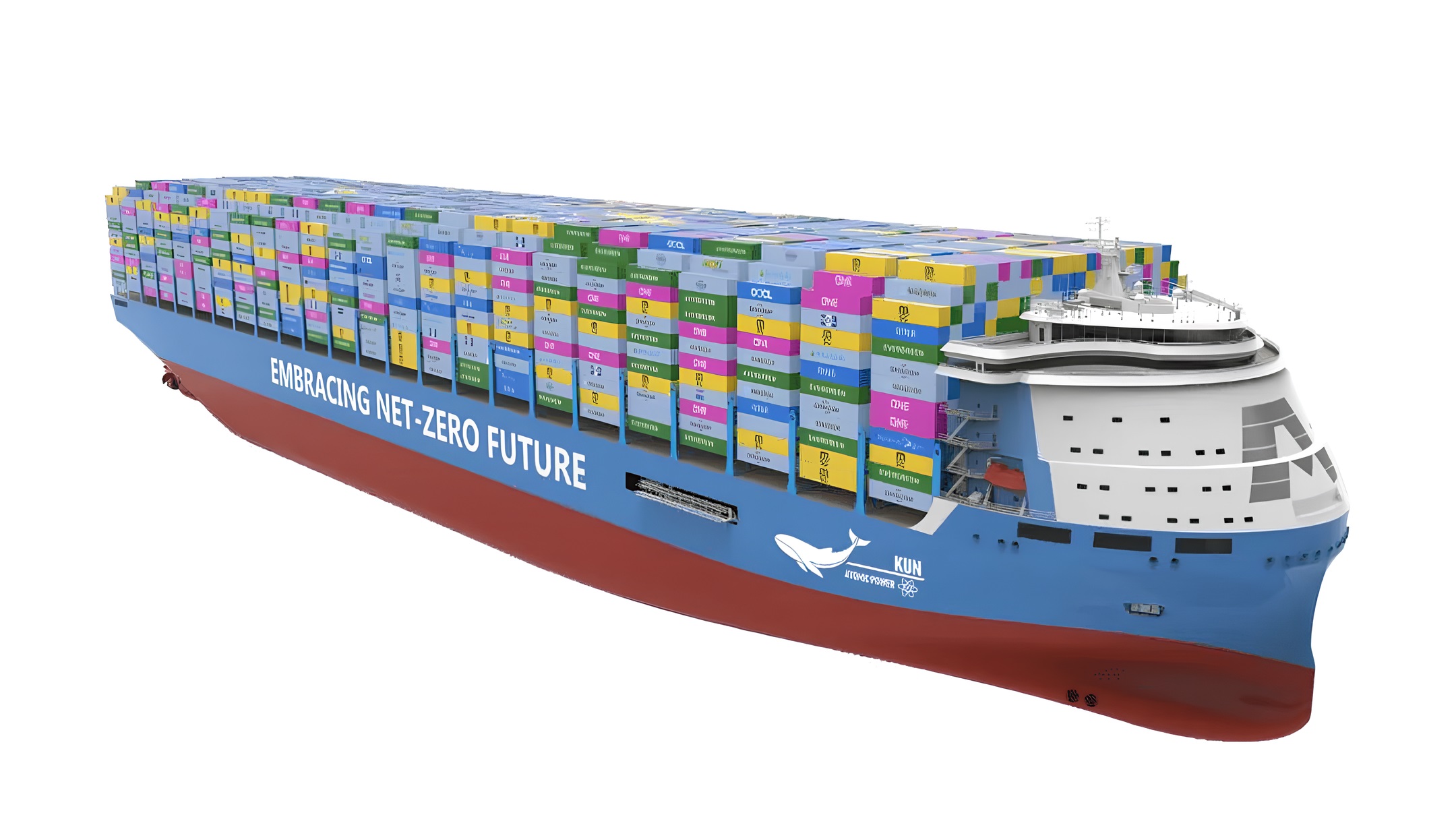
China Launches the KUN 24-AP, a Ship with a Nuclear Battery That Promises to Reduce Emissions and Transform Global Maritime Transport. Understand How This Logistical Innovation from China Places the Country at the Forefront of the New Era of Nuclear Container Ships
China, through CSSC (China State Shipbuilding Corporation) and Jiangnan Shipyard, unveiled the KUN 24-AP at the end of 2023, the world’s first nuclear container ship with a replaceable nuclear battery. With a capacity for 24,000 containers and propulsion based on a thorium molten salt reactor, this initiative marks a technological leap for the shipping sector. The project promises to revolutionize China’s logistical innovation and inspire significant changes in global logistics.
The KUN 24-AP and Its Innovations
The ship has dimensions equivalent to the largest cargo ships on the planet, with a capacity to transport up to 24,000 TEU (20-foot containers). Propulsion is guaranteed by a thorium molten salt reactor, belonging to the Generation IV of nuclear reactors. These systems operate at high temperatures and low pressures, offering superior safety and greater thermal efficiency.
The highlight is the adoption of an energy module considered a “nuclear battery,” designed to be replaceable at the end of its lifecycle.
-
American Airlines starts selling trips as if they were flights, with check-in and baggage check at the airport, but on short routes, passengers board luxury buses connecting cities to major hubs in the U.S.

-
São Paulo surprises the world with a colossal railway network project that promises over 1,000 km of tracks, R$ 194 billion in investments, and 40 projects connecting the capital to the interior with fast and sustainable trains.
-
The world’s largest escalator, measuring 905 meters in China, reduces urban travel time from 1 hour to about 20 minutes and transforms mobility in mountainous regions with an engineering solution adapted to the terrain.

-
A R$ 300 million logistics giant is taking shape in Serra with over 100,000 m² and raises a question: how can this transform e-commerce and distribution in the state?

With an estimated autonomy of up to 25 years, this solution eliminates the need for constant refueling, something common in fossil fuel-powered ships. This technology also facilitates maintenance and extends the vessel’s lifespan.
Reduction of Environmental Impact and Increased Efficiency
The main advantage of the nuclear-powered ship is the elimination of emissions during operation. This aligns with the decarbonization goals of the IMO (International Maritime Organization), which aims to reduce greenhouse gas emissions in the sector by 50% by 2050.
Studies by the American Bureau of Shipping (ABS) highlight that modular reactors like those of the KUN 24-AP are a viable and safe alternative, especially for intercontinental routes.
The nuclear model allows for high thermal efficiency and eliminates dependence on fuels like bunker oil. This efficiency also reduces operational costs and decreases the need for frequent stops for refueling.
The Safety of the Nuclear Container Ship
The nuclear container ship features a passive safety system based on automatic drainage of fluids in case of overheating. This mechanism prevents core meltdown and is designed to operate even without human action or electrical power.
The MSR (Molten Salt Reactor) technology has the advantage of operating at low pressure, reducing the risk of catastrophic explosions.
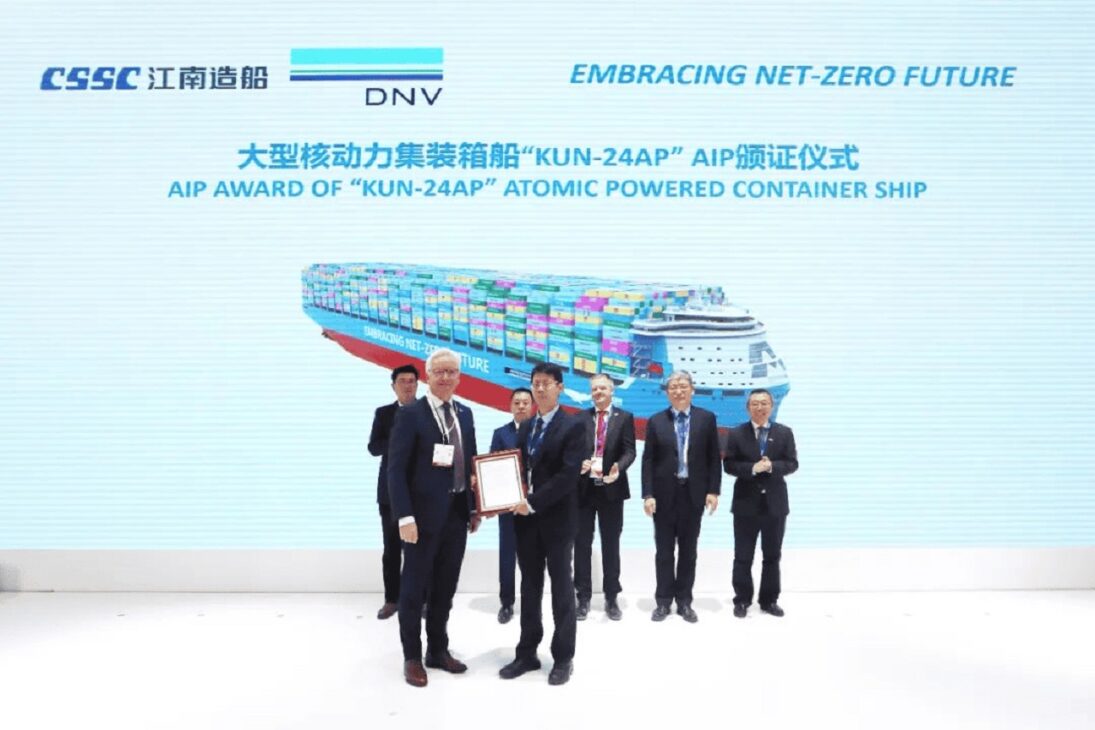
Furthermore, the project received preliminary certification (Approval in Principle) from DNV, one of the leading maritime classification entities in the world. This reinforces the proposal’s reliability in the international context and indicates that the KUN 24-AP follows rigorous design and naval engineering standards.
Industry Reaction to the Chinese Nuclear-Powered Ship
The introduction of a Chinese nuclear-powered ship with decades of autonomy has generated global repercussions. While the ABS considers the technology promising, competing companies like Samsung Heavy Industries are also investing in MSR reactors for maritime use. This technological race reflects the disruptive potential of this solution for the international logistics sector.
However, analysts point to regulatory and operational challenges. The acceptance of nuclear ships in international ports still depends on multilateral agreements and the revision of safety treaties. There are also concerns about how to handle potential accidents and how to implement safe zones in destination ports.
Regulatory and Technical Challenges of Logistical Innovation
Ports around the world may impose restrictions on ships with nuclear systems due to safety and public perception concerns. Additionally, there is currently no international standard for the operation of commercial vessels with molten salt reactors, which may hinder widespread adoption.
Maintenance also requires highly qualified professionals and sophisticated infrastructure. MSR reactors use liquid salts at high temperatures, demanding high-precision monitoring and control systems. Although the initial construction cost is high, experts project a significant return in the medium term due to operational savings.
Learnings from Previous Nuclear Ship Experiences
The only previous experience of commercial nuclear propulsion use was the Russian ship Sevmorput, decommissioned after years of operation with limited access to ports and high maintenance costs.
In contrast, the KUN 24-AP adopts modular nuclear battery ship technology, allowing for greater operational flexibility and more safety. Military aircraft carriers, such as those of the Nimitz class, also operate with nuclear reactors, but require refueling and intensive maintenance, unlike the new Chinese model.
The design of the KUN 24-AP provides for more spaced maintenance cycles, greater reliability, and less dependence on complex infrastructure.
The Impact of the Nuclear Container Ship on Global Logistics
The nuclear container ship KUN 24-AP can operate for years without interruptions, reducing bottlenecks in logistical channels such as Suez and Panama. With greater predictability in routes and without the need for refueling, it allows for planning optimized and reliable routes, especially in regions with restricted access or expensive fuel.
Ports around the world will need to adapt their facilities with safety protocols, specific anchorage zones, and procedures for handling nuclear vessels. This structural adaptation, although complex, can generate new markets and specialized jobs, stimulating local economies.
The KUN 24-AP could pave the way for a new generation of cleaner and more efficient commercial ships. China’s logistical innovation places the country at the forefront of sustainable solutions for maritime transport, with a significant impact on global carbon emitters. It is expected that other nations will follow this movement, investing in research and regulation to allow the safe operation of nuclear vessels.
While regulatory challenges and public acceptance remain, the combination of safety, efficiency, and autonomy makes the nuclear-powered ship one of the most relevant innovations of the decade.
The KUN 24-AP represents more than a technological innovation: it inaugurates a new paradigm in logistics and international trade, with the potential to transform how the world transports goods across the oceans.









-

-

2 pessoas reagiram a isso.