





 Portuguese
  English
  Spanish
  3 min of reading
  0 comments


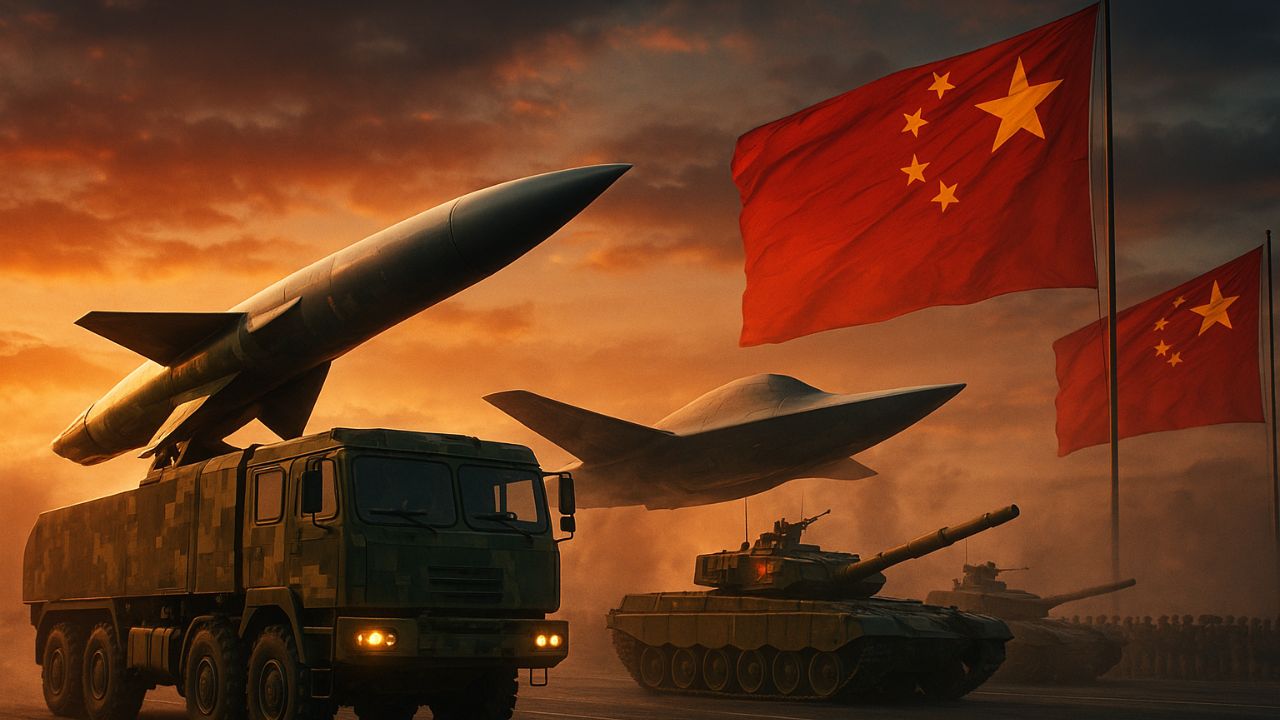
China Challenges The U.S. With New Missiles And Drones At Military Parade, Showing Strength And Sending A Clear Message To Washington.
On September 3, 2025, China showcased one of the largest military parades in its history in Beijing, revealing hypersonic missiles, drones with artificial intelligence, and even laser weapons.
The event gathered more than 20 foreign leaders, including Vladimir Putin (Russia) and Kim Jong Un (North Korea), and was seen as a direct message to the United States, as the China vs. U.S. competition for global military supremacy intensifies.
The demonstration drew attention not only for its military might but also for its political message of unity against Washington.
-
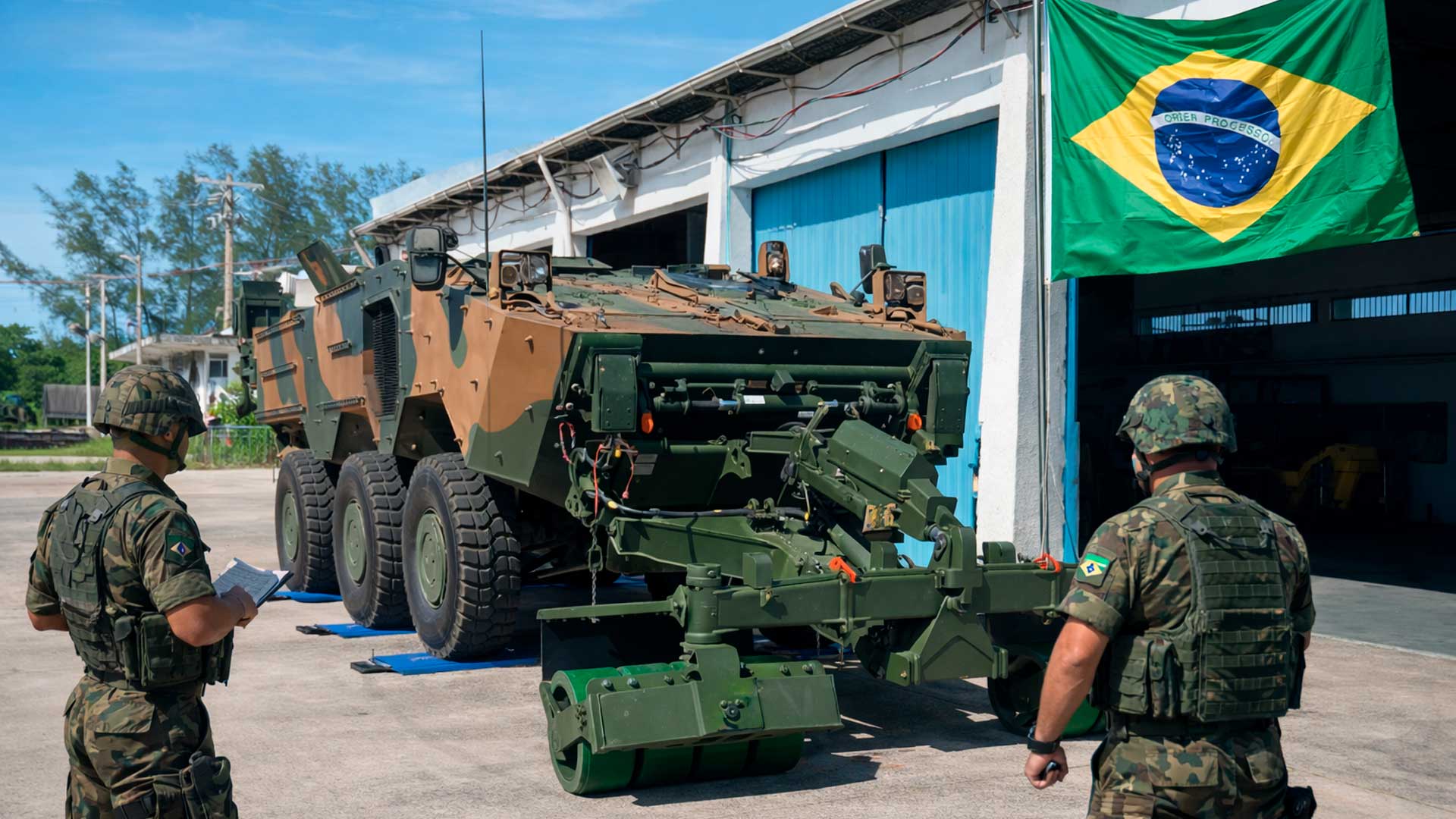
Brazil advances with decisive tests until June, the 6×6 Guarani armored vehicle with engineering equipment enters the most important phase and can enhance the operational capability of the Army.
-
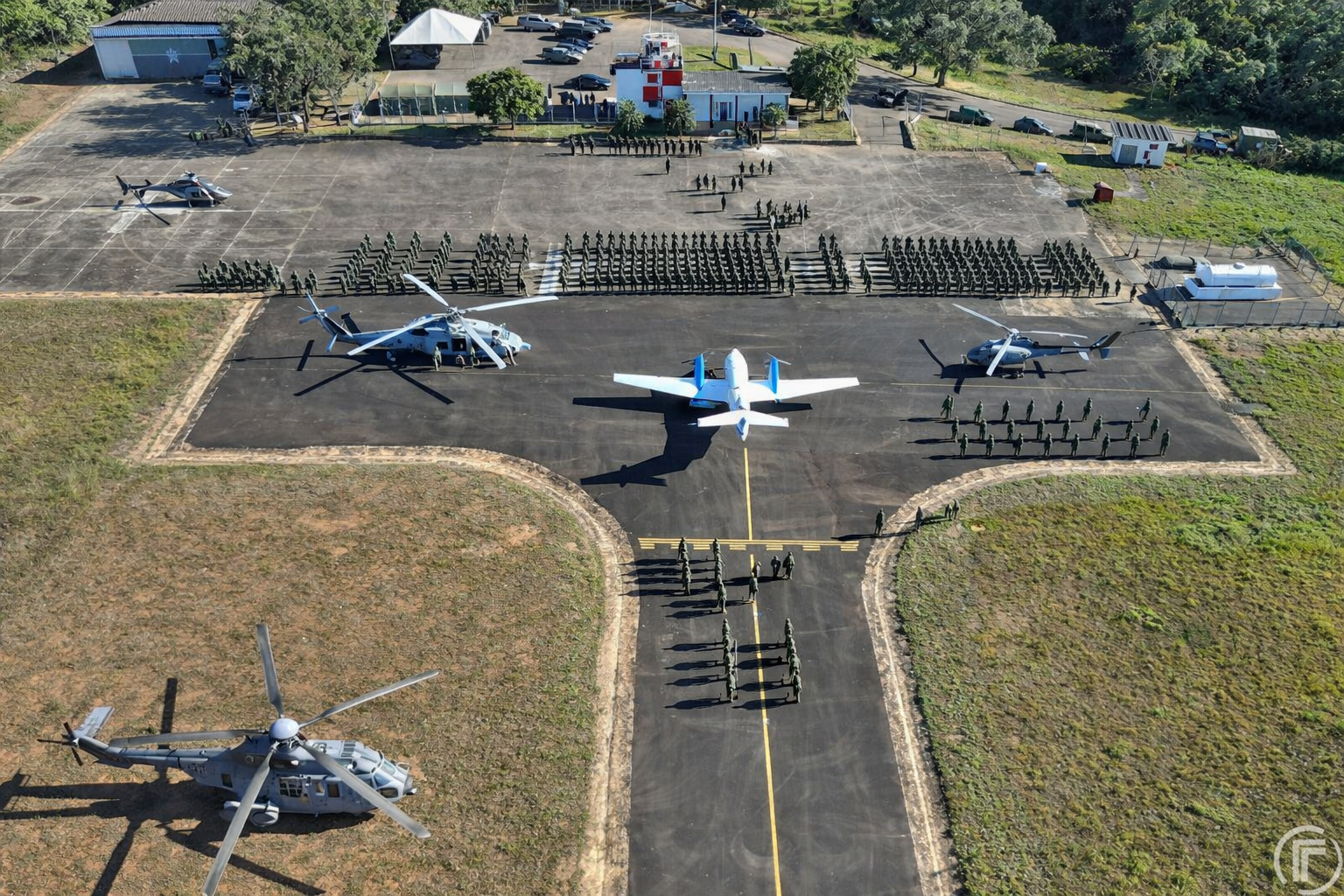
Furnas Airport is handed over to the Navy and becomes a strategic base with complete military operations, attack drones, and international mobilization at Furnas Lake.
-
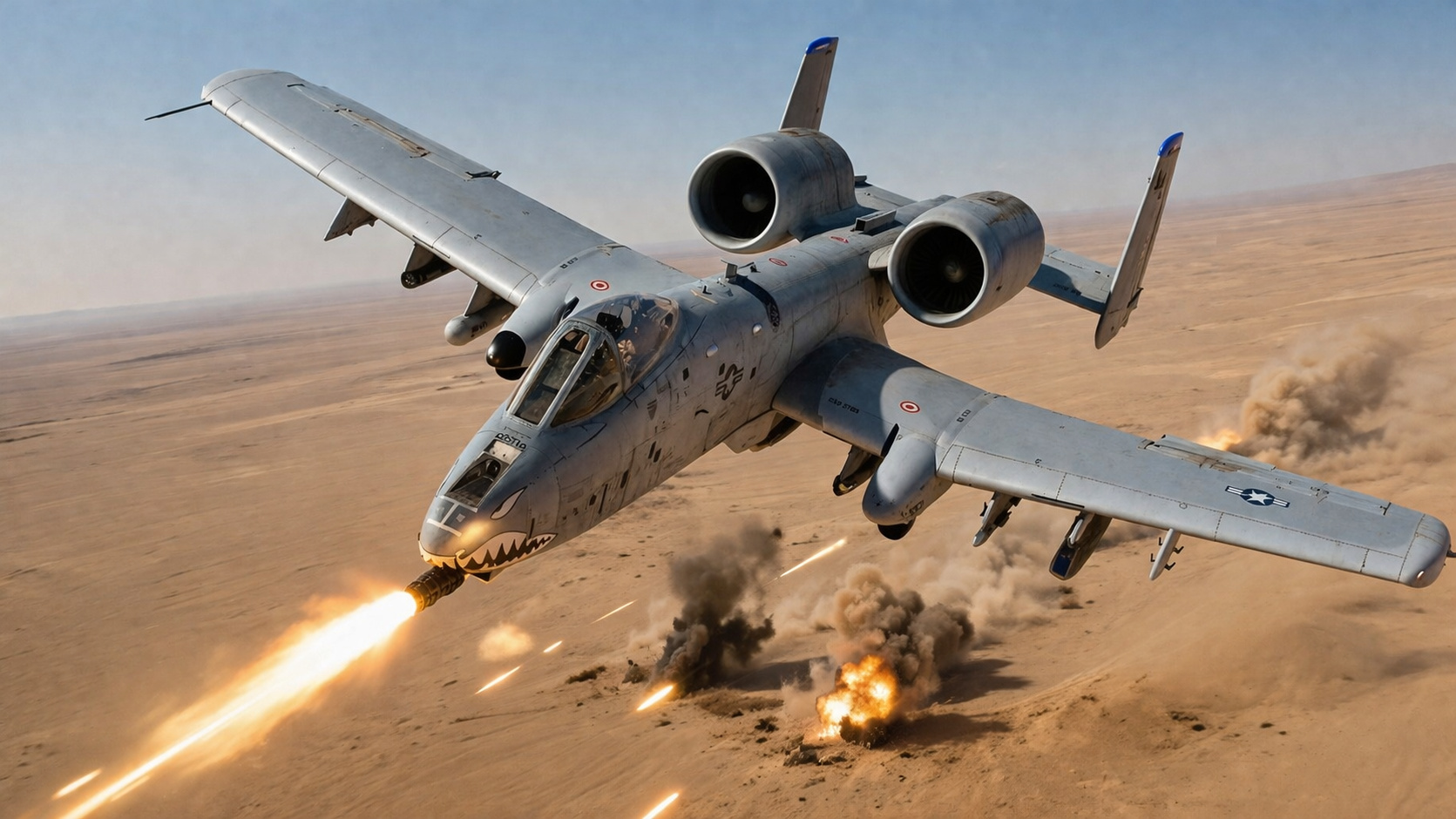
Few people know, but “mega burst” attacks from the A-10 in the Middle East are intriguing analysts and even experienced former pilots of the U.S. Air Force.
-
Manufactured in Brazil and exported to Saudi Arabia and Malaysia, the ASTROS system is renamed as Fogos in 2026, gaining AI, cruise missiles with a range of 300 km, and air defense costing R$ 3.4 billion, transforming a launcher from the 1980s into the most ambitious multidomain platform in Latin America.

Military Power On Display: Technology Beyond Copies
According to experts, China’s military parade showed that the country has moved beyond the “rudimentary copies” phase of Western equipment.
Today, Beijing presents its own innovative military technology, especially in drones, missiles, and defense systems.
According to Michael Raska, a professor at Nanyang Technological University, the big question is whether the Chinese Army will be able to efficiently integrate so many modern systems, as the country has not participated in large-scale wars for decades.
China Bets On Missiles To Face The U.S.
The highlight was the new missiles, which play a central role in China’s strategy. Among them:
- Dongfeng-61, capable of carrying multiple warheads.
- Dongfeng-5C, intercontinental ballistic, with range up to the U.S.
- Dongfeng-26D, nicknamed “Guam Destroyer,” aimed at hitting American bases in the Pacific.
Additionally, the YJ-17 and YJ-19 hypersonic missiles impressed with their unpredictable maneuverability, making interception by U.S. defense systems more difficult.
According to Alexander Neill from the Pacific Forum, this bet on missiles serves to compensate for China’s naval inferiority compared to the American Navy, considered the most powerful in the world.
Drones And Artificial Intelligence As Strategic Weapons
Another strong point of the parade was the drones with artificial intelligence (AI). The unmanned submarine AJX-002, measuring 20 meters in length, was presented as a key piece for surveillance and reconnaissance.
The GJ-11 drone, called the “faithful companion,” also caught attention for accompanying manned fighters on attack missions.
Moreover, even robot wolves were showcased, designed for reconnaissance and ground combat operations.
Experts point out that China is incorporating lessons from the war in Ukraine, where drones play a fundamental role. The strategy is clear: use AI to accelerate field decisions and reduce response time in combat.
China vs. U.S.: Who Has The Advantage?
Despite China’s advancements, the United States still maintains operational superiority.
While the Chinese follow a rigid command chain, “top-down,” the American military has greater flexibility, allowing field units to adapt strategies in real-time. This agility, according to Raska, gives the U.S. an important advantage in war scenarios.
He also notes that recent incidents, such as a Chinese ship colliding with a smaller vessel while facing the Philippine Coast Guard, raise doubts about the practical efficiency of Beijing’s forces.
China’s Parade Was A Showcase Of Weapons And Political Message
In addition to displaying military strength, China’s military parade served as a showcase of weapons for potential buyers.
Countries like Myanmar are already among the top customers, but the presence of Putin and Kim Jong Un showed that Beijing aims to solidify strategic alliances.
According to Alexander Neill, the message was clear: facing China would also mean dealing with Russia and North Korea, in a possible simultaneous conflict in different regions—from the Taiwan Strait to Ukraine.
This demonstration reinforces the view that the global military balance is shifting, and the China vs. U.S. dispute promises to shape geopolitics in the coming years.








Seja o primeiro a reagir!