






 Portuguese
  Spanish
 3 min of reading


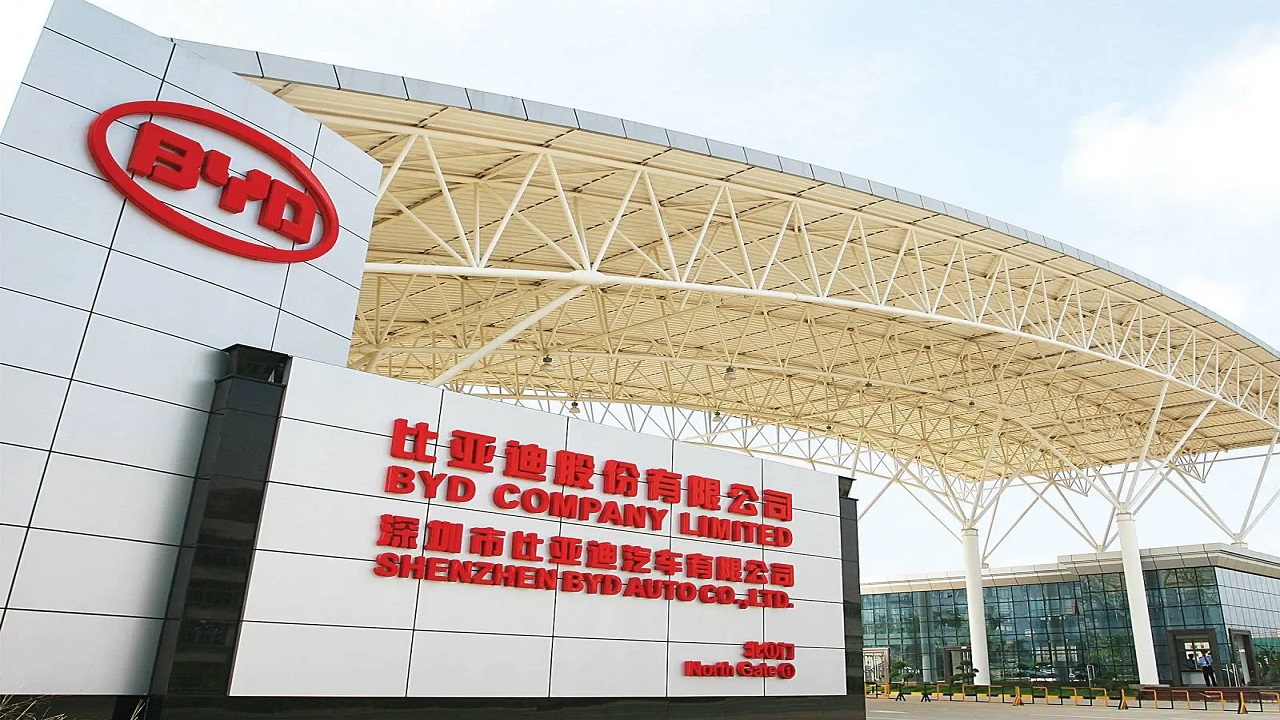
Chinese Automaker BYD Plans to Buy Part of Ford’s Factory in Camaçari, Bahia, to Have a National Electric Car Production Plant
Alongside Great Wall Motor (GWM), BYD is another Chinese automaker that is serious about the national electric mobility market. The multinational began its activities in the automotive sector with imported products, such as the seven-seat SUV Tan and the Han sedan, which have already arrived in the country. The medium-sized Qin and Song hybrids will arrive in the country in the second semester, along with the DI, a compact electric car that will focus on fleets. This time, the Chinese company is planning to acquire part of Ford’s factory in Camaçari, Bahia, to expand the production of its electric vehicles and generate thousands of new jobs.
BYD Wishes to Acquire Ford Factory in Bahia
Although it already has two factories in Brazil, one for photovoltaic solar panels in the Manaus Free Trade Zone (AM) and another for electric bus chassis in Campinas (SP), BYD is now seeking to acquire at least part of the old factory of Ford in Camaçari, Bahia, where it could assemble its passenger electric and hybrid cars. It is important to note that the company recently became the third most valued automotive manufacturer in the world.
Last week, the governor of Bahia, Rui Costa, during a visit to the Research and Development Center that Ford kept open in the interior city of Bahia, commented that he expects to soon develop a major announcement regarding a new electric car manufacturing industry in Bahia.
-
Uber Faces Shareholder Scrutiny as Board Accused of Ignoring Safety, Compliance, and Harassment Warnings Amid Over 3,500 U.S. Lawsuits

-
Ferrari’s First Electric Car Divides Fans, Priced at $630,000, Amid Concerns Over Limited Editions; Brand Clarifies It’s Not Just for Future Perks
-
BYD Dolphin Mini: The Electric Car That Defies Depreciation, Losing Only 3.58% in a Year and Becoming the Best-Selling Retail Model Under $22,000

-
Electric Car JAC E-JS4 Loses $19,000 in Value in One Year, Leading Record Depreciation of Used Cars in Brazil Due to Expensive Battery and New Models


Costa states that discussions are very advanced with investors, who see the factory as a significant geographical advantage due to its proximity to the port and the extraordinary technical capacity of the local workforce, which consists of trained technicians who worked in Ford’s vehicle production.
Although the governor has not disclosed the names of the investors, local sources assure that it is BYD, which already has a contract with the Bahia government worth R$ 1.5 billion for the construction and operation of a monorail network that will circulate in Salvador and the municipality of Simões Filho, generating hundreds of new jobs.
BYD’s Plans in Brazil Include Electrification and Job Creation
According to reports, the biggest hurdle in the negotiations with Ford’s factory is the fact that the legislation providing tax incentives for automakers that establish operations in the Northeast or Midwest of Brazil, as is the case with Stellantis in Goiana (PE) and Caoa Chery in Anápolis (GO), no longer applies to new entrants like BYD.
Thus, the conversations would involve regional incentive bodies, such as the Superintendence of Development of the Northeast (Sudene), the State of Bahia Development Agency (DesenBahia), and possibly a participation from the state in offering tax benefits and subsidies.
The goal of BYD would be to acquire only a part of Ford’s factory, where it would assemble its electric cars on a smaller scale, in CKD and SKD formats. Previously, the Chinese company considered purchasing another decommissioned Ford factory in São Bernardo do Campo (SP), but it abandoned the idea.
Learn About BYD
Renewable energies will become the largest source of electricity in cities around the world in the future, enabling urban ecosystems to operate more smoothly.
Therefore, BYD plans to construct a sustainable future powered by clean energy, where cities and nature coexist peacefully and where clean and pure air is guaranteed.
As a pioneer in clean energy solutions, the multinational is committed to providing a zero-emissions ecosystem and aims to build a sustainable future with electricity.





Be the first to react!