





 Portuguese
  English
  Spanish
  6 min of reading
  3 comments





Santos Combines A Unique Population Profile With A World-Renowned Coastal Garden, Creating An Urban Scenario That Drives Tourism, Economy, And Public Services.
Santos, on the coast of São Paulo, occupies a unique place on the demographic and urban map of the country.
According to the 2022 Demographic Census from the Brazilian Institute of Geography and Statistics (IBGE), the municipality leads the national ranking of female participation: 54.68% of the 418,608 inhabitants are women and 45.32% are men, which keeps the city as the most female in Brazil.
At the same time, the Santista waterfront houses the largest beach garden in the world, recognized by the Guinness World Records, with a length of 5,335 meters and an area of 218,800 m², forming a linear park that has become a postcard and structural axis of local tourism.
-
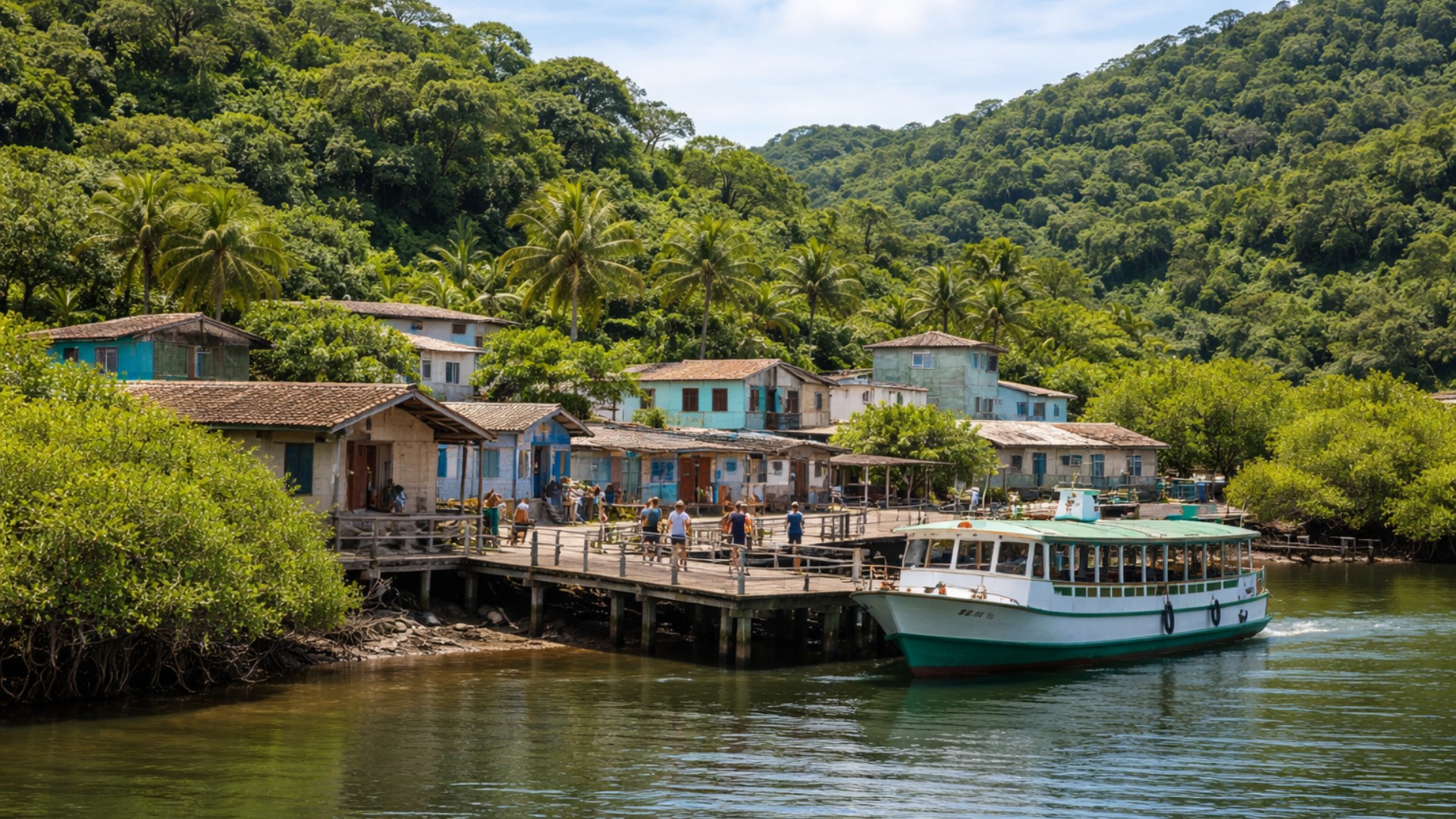
A Brazilian island charges R$ 0.50 to receive visitors and prohibits any new residents.
-
Why was the Great Wall of China built? The truth that many are unaware of!

-
At 73.8 meters tall, the world’s tallest teapot-shaped building has 15 floors, ensures stability, and impresses with an internal space of 28,000 cubic meters.

-
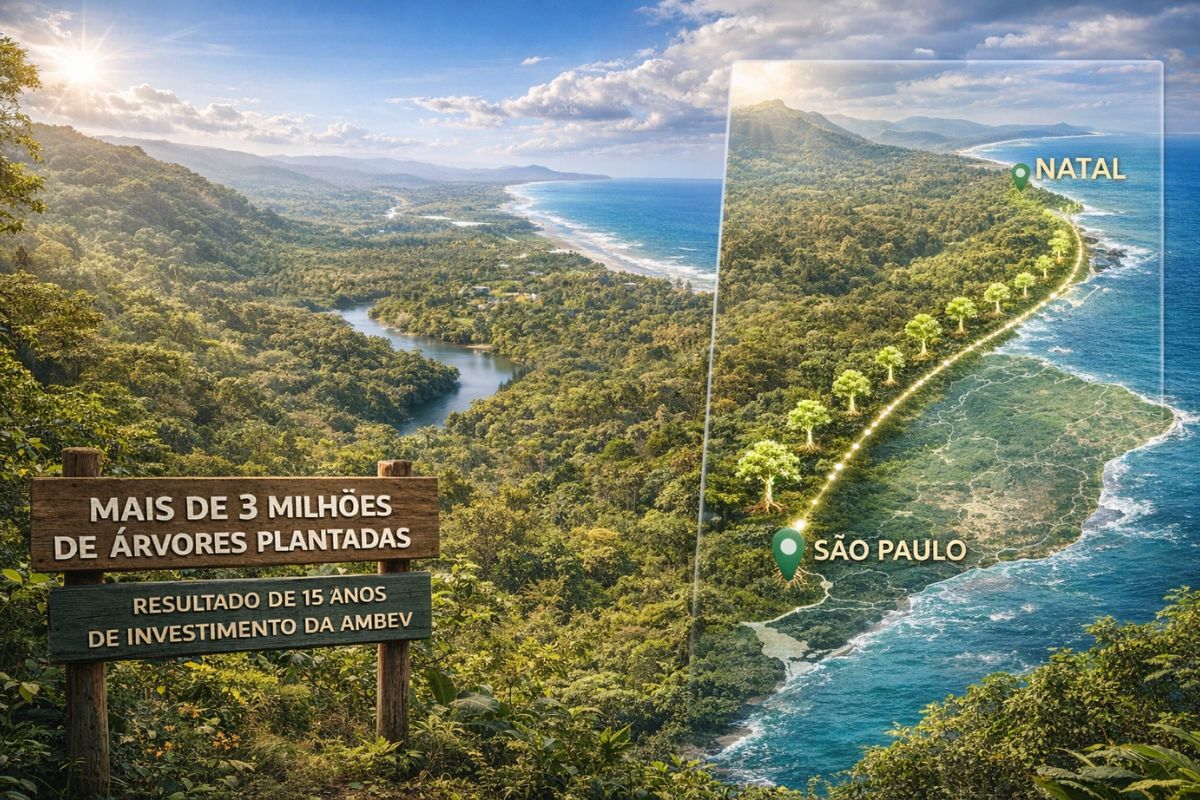
Ambev has planted over 3 million trees and restored an area equivalent to the coastline from São Paulo to Natal, and the result after 15 years of silent investment has finally appeared for all of Brazil to see.

While the population profile puts pressure on public policies in areas such as health, mobility, and safety, the combination of gardens, flowerbeds, and trees reinforces the city’s vocation for leisure, tourism, and real estate appreciation.
Together, demographics and landscape shape urban planning decisions and influence the economy of services, commerce, and logistics that characterize Santos.
Demographic Profile And Female Leadership In Santos
According to the consolidated data from the 2022 Census, Santos accounts for 228,881 female residents and 189,727 male residents, in a scenario where women exceed men both in absolute numbers and proportionally.
In comparison, at the national average, women represent 51.5% of the Brazilian population, a proportion lower than that recorded in the municipality.
This discrepancy helps to explain why the city ranks at the top of the female participation ranking among municipalities in the country.
This picture aligns with a trend observed in Brazil: the aging of the population.

The IBGE points to a significant increase in the number of people aged 60 and over, an age group where the female presence is historically greater due to women’s higher longevity and men’s higher mortality from external causes.
In the case of Santos, the combination of an aging population and a female majority reinforces the demand for health services, long-term care, accessible mobility, and safe public spaces.
The city government and local agencies use Census statistics to adjust policies such as specialized care in health networks, programs for the protection of women, and actions aimed at the elderly population.
Economy, Urbanism, And Effects Of Female Concentration
Based on this demographic portrait, Santos’s urban and economic structure tends to organize around sectors that concentrate female labor, such as commerce, services, education, and health.
At the same time, the city houses the Port of Santos, the main Brazilian port and the largest port complex in Latin America, which accounts for a significant share of the country’s trade balance and directly influences the labor market and land use.
This arrangement means that services aimed at daily care must consider intense flows of female residents moving between residential neighborhoods, the central area, the port, and the waterfront.
The scheduling of bus times, public lighting, and the use of squares and boardwalks gradually incorporates this female predominance and the increase in the elderly population.
In practice, demands for safety in walking routes, accessibility on sidewalks, availability of physical activities in public spaces, and support services have become central in urban planning.
The waterfront, where the large beach garden is concentrated, transforms into one of the main laboratories for this adaptation of space to the needs of female residents.
The Largest Beach Garden In The World And Its Influence On The Waterfront
Along the coastline, the seven kilometers of Santos beach are flanked by the waterfront gardens, recognized by the Guinness World Records as the largest beachfront garden in the world by area.
The ensemble extends for 5,335 meters, with a width between 45 and 50 meters and a total area of 218,800 m², accompanying neighborhoods such as José Menino, Gonzaga, and Ponta da Praia.
Along this green corridor, the city government maintains more than 1,300 flowerbeds, planters, and pots, as well as about 1,746 trees.
The botanical diversity includes dozens of species of flowers, shrubs, and palm trees, which serve as a barrier against wind and salinity and contribute to alleviating the thermal sensation on intensely hot days.
Among the flowerbeds, monuments, sculptures, and historical plaques reference local figures, sports events, and city landmarks.
This set of visual references transforms the garden into a space of memory and urban identity, used by both residents and visitors for walking, sports practice, social gatherings, and photographic records.
Tourism, Leisure, And Maintenance Of The Santista Waterfront
As a postcard, the waterfront garden of Santos serves as an entryway for tourists arriving by road, through the cruise port, or on day trips from the capital São Paulo.
The continuous landscape of lawns, palm trees, and flowers reinforces the image of an organized city focused on the sea, which favors the occupancy of hotels, restaurants, and kiosks distributed along the beachfront avenue.
This same structure requires ongoing maintenance.
The management of the garden involves teams of agronomists, gardeners, pruners, and other professionals responsible for pruning, irrigation, replanting, and pest control.

In parallel, the intense circulation of pedestrians, cyclists, and practitioners of sports like running, skating, and beach volleyball demands regular interventions in sidewalks, bike lanes, and urban lighting and furniture.
The green space also acts as a transition between the sand and the road infrastructure, influencing the layout of waterfront avenues, pedestrian crossings, and access to coastal neighborhoods.
The presence of a continuous linear park requires planning for parking lots, bus stops, bike rental stations, and service corridors in dialogue with the landscape to avoid disordered occupation.
Connections Between The Port, Gardens, And Urban Dynamics
Although they represent distinct urban functions, the waterfront garden and the port complex are connected in how they project Santos to the country and abroad.
While the port concentrates international trade and logistics operations, the beach garden consolidates the tourist image of a municipality oriented towards the sea, with a strong vocation for leisure and weekend and seasonal tourism.
This set influences the real estate market, especially in neighborhoods bordering the waterfront, where the view of the garden and the sea is a distinguishing factor in the valuation of apartments and commercial enterprises.
At the same time, areas further away from the coast and close to the port zone experience distinct impacts, related to heavy traffic, cargo flows, and the need for infrastructure works.
In this context, the fact that Santos is the city with the highest proportion of women in the country reinforces the challenge of reconciling an economy closely tied to the port with a daily urban life marked by the female presence in schools, services, commerce, health facilities, and leisure spaces by the sea.
In light of this urban mosaic, how can Santos align tourism, economy, and urban planning to ensure quality of life for those living in the municipality year-round?







Portanto , Santos é a cidade menos VIOLENTA do Brasil
O artigo contém uma série de erros, demonstrando que não houve revisão.
Não se diz feminina e sim femenino