





 Portuguese
  English
  Spanish
  6 min of reading
  2 comments


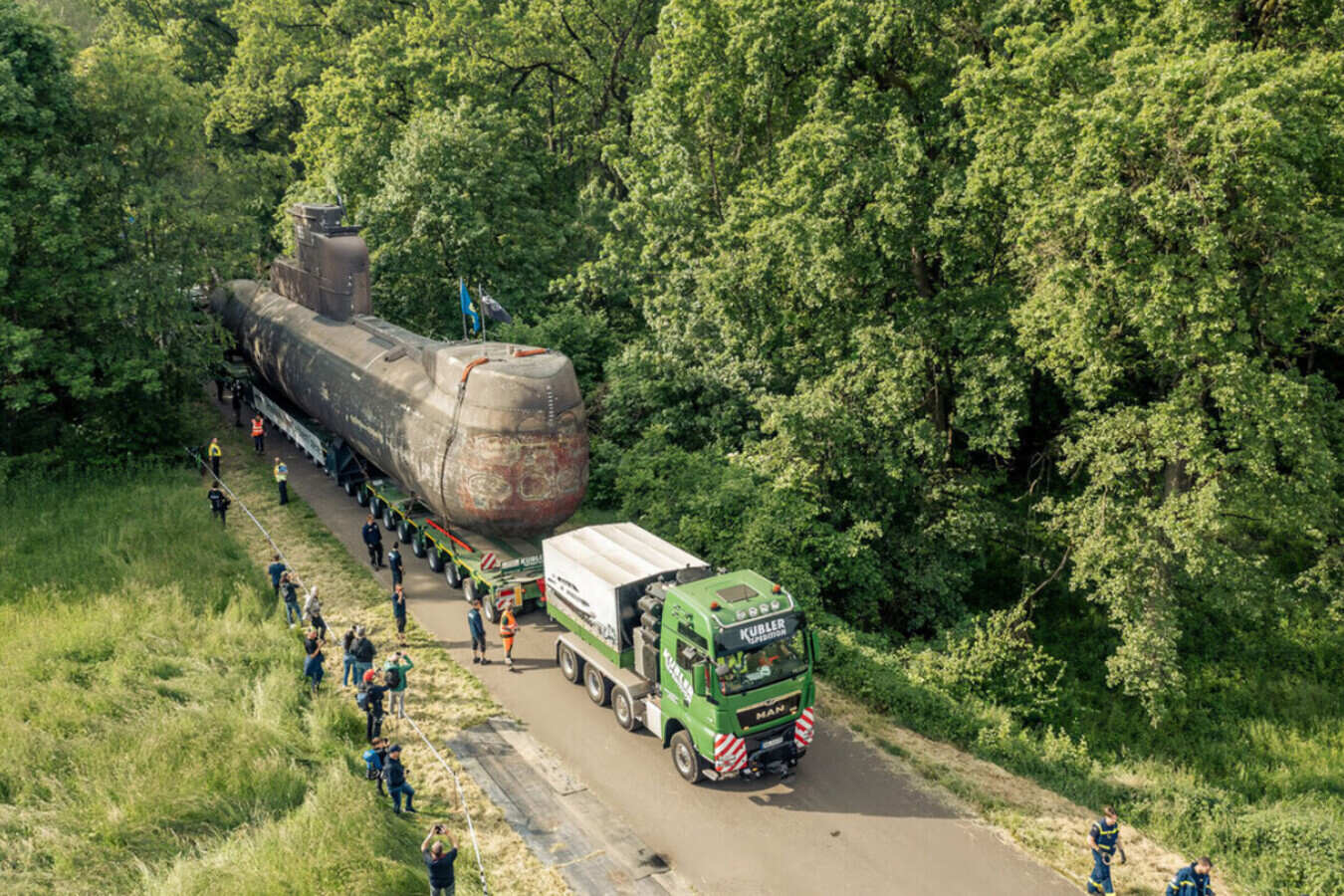


Submarine U17, Sunk In 1945, Crossed Roads And Rivers For 23 Days Until It Became An Attraction At A German Museum
The scene seemed straight out of a movie: a World War II submarine slowly crossing the streets and rivers of Germany, on a journey that lasted 23 days. This is the Unterseeboot 17, the U17, one of the most emblematic naval vessels of the conflict that began in 1939.

The submarine was built in 1935 and began operations at the start of the war. After six years of service, it was sunk by its own crew in 1945 as part of the “scorched earth” strategy set by Hitler.
The goal was to prevent military equipment from being captured by enemy troops.
-
Goodbye iron: new technology from Xiaomi promises to revolutionize the way we iron clothes with 500 kPa steam, continuous flow of 120 g/min, heating in 65 seconds, and six smart modes for different fabrics.

-
Rio Pardo, the most mysterious city in Rio Grande do Sul: untouched Pampas castle, the missing treasure of the Devil Boy, bride’s saint, invisible tunnels, and a 200-year curse today.

-
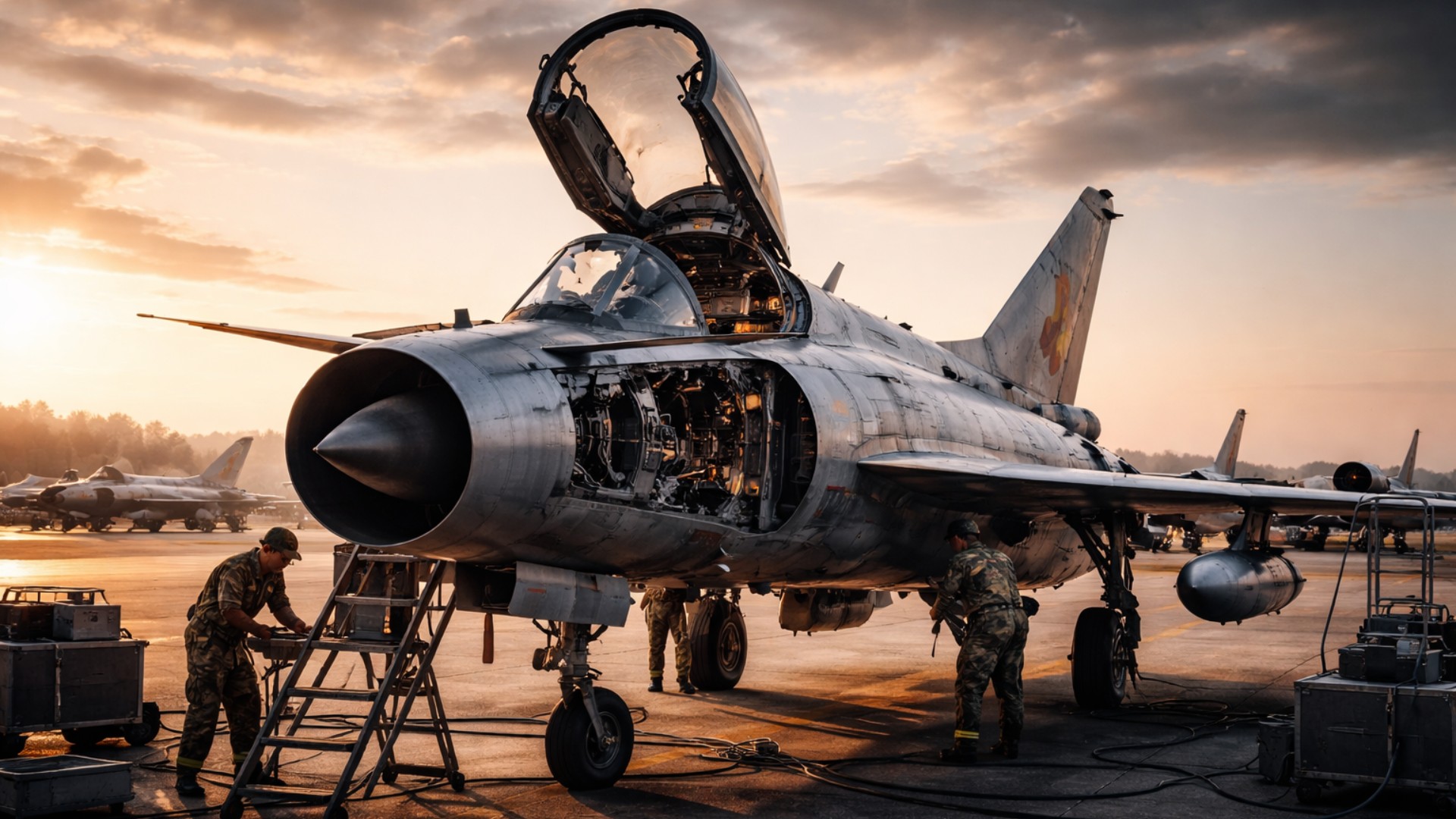
China retires the J-7 fighter after years of military protection and can now transform military items into drones, following more than 60 years of operation of the J-7, derived from the MiG-21, with thousands of units produced and strategic use in the PLAAF and PLANAF.
-
Volunteers are sought to live in the mountains for a month: a study pays people to stay at 2,500 meters, with 24-hour monitoring of sleep, metabolism, and blood pressure.


Nearly 80 years later, Germany decided to restore the U17. The plan was to turn the submarine into a public attraction.
To achieve this, two years of planning were necessary. The process began with the recovery of the submarine from the Baltic Sea.
Then it was taken to the Technical Museum of Speyer, where it underwent a complete restoration.
At the museum, experts were able to free the internal spaces of the vessel and decorate the environment with objects from the era.
The idea is to allow the public to explore the interior of the submarine in an immersive experience.
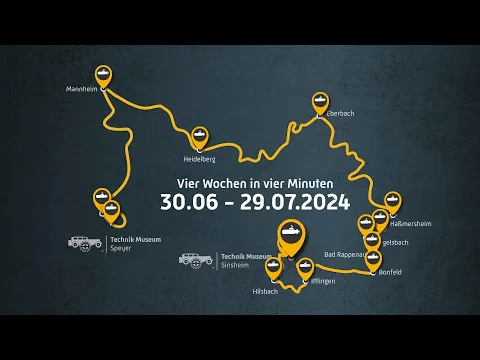
The final stage of the operation began on July 5, 2024. The U17 left Speyer and set out for the Technical Museum of Sinsheim, located in Baden-Württemberg, in the south of the country.
It covered about 50 kilometers in 23 days, crossing streets, roads, and stretches of rivers.
The crossing required an enormous logistical effort. The submarine moved at only 10 km/h. To do this, it was necessary to halt train services, dismantle traffic lights, remove signs, and close roads.
The platform used for transport had 240 wheels and was tilted at 70 degrees to pass over bridges. The entire structure needed to be constantly moistened.
The dimensions of the U17 help to understand the complexity of the operation. It is 48 meters long, 4.6 meters wide, and 8.6 meters tall. The weight exceeds 350 tons.
At the final destination, an adjacent structure was built to facilitate visitation. The expectation is that the public will be able to access the submarine starting in mid-2025.
With information from Xataka.
You May Also Like: War Mystery: Turkey May Have Buried Its Nazi Fighters From World War II Instead Of Destroying Them?
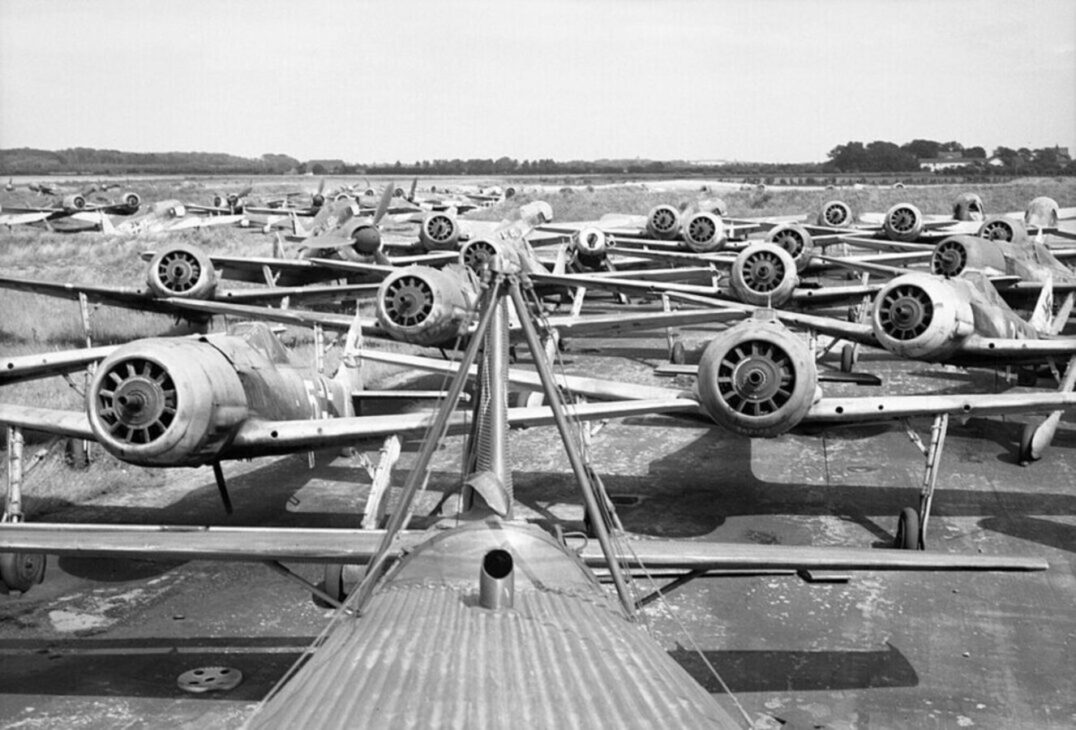
For decades, a mystery has intrigued Turkey: could German fighters from World War II be buried beneath a military base in Kayseri? The story involves Focke-Wulf Fw-190 A3 planes, secret agreements, and interrupted investigations.
According to stories circulating for decades, 50 Focke-Wulf Fw-190 A3 aircraft, supplied by Nazi Germany to Turkey, are said to be buried under the 2nd Command of Supply and Air Maintenance in Kayseri.
These rumors gained strength with reports that, in 1947, an agreement with the United States required the destruction of military equipment of German origin as a condition for American post-war aid.
Allegedly, instead of destroying the aircraft, Turkish authorities decided to secretly bury them.
Fw 190 A3: The Feared “Butcher Bird”
The Focke-Wulf Fw 190 A3, known as the “Butcher Bird,” was one of the most respected fighters of the Luftwaffe. Designed by Kurt Tank and placed into service in 1941, the aircraft quickly gained fame for its power, agility, and durability.
Equipped with a BMW 801 D-2 radial engine, the fighter could reach speeds of up to 670 km/h. Its power exceeded 1,700 horsepower (1,300 kW). The armament was heavy: two 7.92 mm MG 17 machine guns and four 20 mm cannons, making it lethal in air combat and ground attack missions.
The wide landing gear and robust structure made the Fw 190 a reliable aircraft. Luftwaffe pilots frequently praised it. Turkey acquired 72 units of this model during World War II, temporarily boosting its air force’s power.
How Turkey Received The Fighters
During the war, Turkey maintained a position of strategic neutrality. In 1941, a commercial agreement with Germany secured the supply of Fw 190 A3s in exchange for iron and chrome.
Many of these aircraft were assembled or equipped internally at TOMTAS facilities located in Anatolia.
According to official documents from the Turkish Air Force, the last recorded flight occurred in November 1947, under the command of Lieutenant Orhan Aksu. After that, the fighters were retired from service.
Previous Acquisitions And Parallel Projects
Even before the agreement with Germany in 1941, Turkey had already received other aircraft from Nazi Germany.
In 1938, it purchased six Focke-Wulf FW-58 bombers and fifteen Gotha Go 145 training planes. There were also attempts to acquire Heinkel He-111 bombers powered by Daimler-Benz engines.
Meanwhile, Turkey planned to produce 18 British Bristol bombers in the country itself. However, delays in licensing documentation forced the purchase of already assembled aircraft.
It had also ordered 60 Messerschmitt Bf 109 fighters, but deliveries did not occur after diplomatic relations with Germany were severed in 1939.
Turkish historians assert that these acquisitions reflected the country’s aviation policy at the time: strategic neutrality, supplier diversity, and a quest for self-sufficiency through domestic assembly. The Kayseri aircraft factory, a predecessor of TOMTAS, played a central role in this effort.
Supposed Burial Gains Strength
The timeline of events coincides with the hypothesis that, upon retiring the fighters from service, Turkish authorities opted to bury them as part of a modernization program supported by the United States. According to this version, the Fw 190 A3s were removed from the military inventory and discreetly buried.
In 2015, an official investigation used metal detectors in the area of the Kayseri airbase. Large metallic objects beneath the ground were identified, compatible with the size and shape of aircraft. The finding renewed public interest in the case.
However, the failed coup d’état in Turkey in 2016 interrupted the searches. Investigations were suspended, and the project was shelved indefinitely.
Civil Initiatives Tried To Move Forward
Before the excavation work was interrupted, some private initiatives attempted to advance the searches. Nejat Çuhadaroğlu, founder of the Hisart Museum, claimed to have held talks with military officials and made significant progress in negotiations and excavations.
He emphasized that “this model of aircraft does not exist in any museum in the world,” reinforcing the uniqueness of the potential find.
Authorities Maintain Skepticism
Despite the speculations, members of TOMTAS have always maintained a cautious position. Ferhat Çakır, a member of the company’s board, has stated in several interviews that no official record proves the burial of the aircraft.
According to him, “we did not find any concrete evidence of buried planes. But something was buried: the belief that the young Turks could produce high technology,” suggesting a symbolism behind the rumors.
Academic studies and military investigations conducted to this day have not located official documents confirming the existence of the aircraft beneath the ground of the base.
The Enigma Of The Buried Fighters Remains Unsolved
With the excavations suspended and authorities remaining cautious, the mystery of the Nazi fighters from World War II buried in Kayseri remains without a definitive solution.
The story continues to spark curiosity among enthusiasts, historians, and the public, fueling one of the greatest enigmas of military aviation in Turkey.
With information from Interesting Engineering.








Prezados Editores.
Não creio que tem aeronaves enterrado. Os EUA devem ter comprado da Turquia e dado outros em troca mais modernos. Assim eles muito curiosos levaram os aviões pra pesquisas e copiaram aquelas aeronaves e modernizaram.
Depois daquela data os EUA só cresceram em poder e força aérea.
Isso é fato.
A questão é de ordem. Teriam que descobrirem esse feito inédito.