





 Portuguese
  English
  Spanish
  3 min of reading


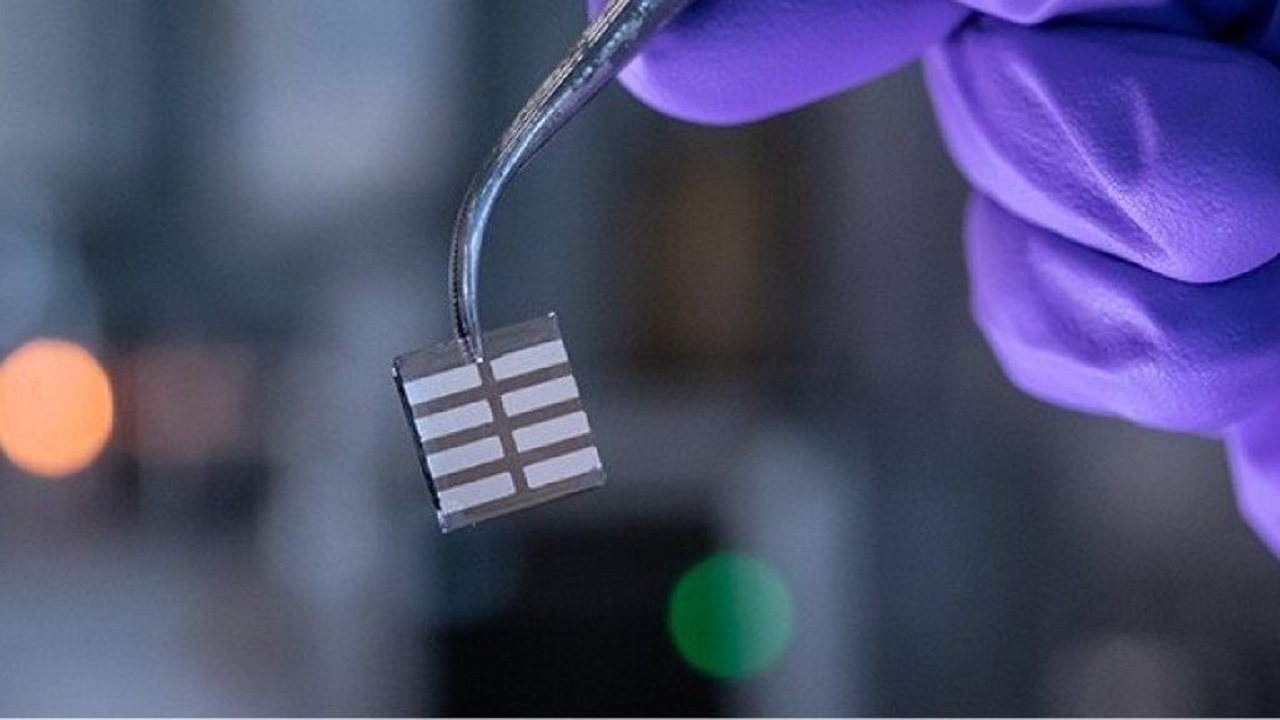
Scientists Develop New Solar Cell Capable of Revolutionizing the Renewable Energy Market. The New Material Used Can Capture Much More Light Even with a Thickness 10,000 Times Smaller.
Scientists have developed materials capable of capturing solar energy at levels much higher than a conventional silicon solar cell, yet with a thickness 10,000 times smaller. The material is sodium bismuth sulfide, which can be grown in the form of nanocrystals that will then be spread in a solution to create films 30 nanometers thick.
New Sodium Bismuth-Based Material Could Change the Renewable Energy Market
The new material for producing solar panels is made from non-toxic elements abundant in the earth for commercial use. In fact, compounds based on this material that may replace the solar cell are already widely used, ranging from lead substitutes in solder to over-the-counter stomach medications.
According to Cambridge University scientist Yi-Teng Huang, a material has been found that absorbs light more strongly than conventional solar cell technologies and can be printed using ink.
-
China is testing a train that will operate at 400 km/h in daily service, which is 80 km/h faster than the French TGV, and uses carbon fiber, magnesium alloys, and more than 4,000 sensors to become the fastest commercial train on the planet.

-
Forget about having an air fryer, electric oven, and steam pot taking up space in your kitchen because a 30-liter smart oven combines all these functions, automatically selects the ideal temperature, and even turns off by itself when cooking is done.

-
Engineers rewrote all the apps from scratch and bet everything on a buttonless screen: now the creator of the iPhone says that Apple needs to make the same revolution again because of AI.

-
Researchers in the U.S. have created a flying robot that transforms into a land vehicle while still in the air. The technology, based on aerodynamic transition, converts landing into a scene worthy of Transformers and redefines mobility between sky and ground.


This new solar panel technology for generating renewable energy has the potential to produce a lighter solar cell that can be easily transported or used in aerospace applications.
The organic solar cell, developed from carbon, can also be applied as ink to form thin coatings, but they still face durability issues. Silicon solar panels remain thick and heavy.
Scientists Discover Why the Material Can Absorb More Solar Energy
Researchers also found that the new material in the renewable energy sector remained stable in ambient air throughout the study, which lasted nearly a year, without the need for encapsulation, resembling other new photovoltaic materials like lead halide perovskites.
This demonstrates the long-term durability of the material, which is essential for solar cells sold.
Scientists discovered that there are two critical factors to explain the strong solar energy absorption of the new material for solar panels: the effects of crystal disorder and the role of sodium. The sodium and bismuth ions in NaBiS2 are similar in size, meaning that instead of occupying different crystallographic sites, they occupy the same site.
Similar Effects Are Found in Another Compound
As a result, the crystal structure changes to rock salt, a substance similar to sodium chloride, commonly known as table salt.
However, sodium and bismuth are not uniformly distributed throughout the material, and this non-homogeneity has a significant effect on absorption intensity.
Similar effects have been found in current work on the similar compound AgBiS2. However, NaBiS2 exhibits a stronger and clearer onset in solar energy absorption because sodium does not contribute to the electronic states around the bandgap of the semiconductor.








Seja o primeiro a reagir!