





 Portuguese
  English
  Spanish
  3 min of reading


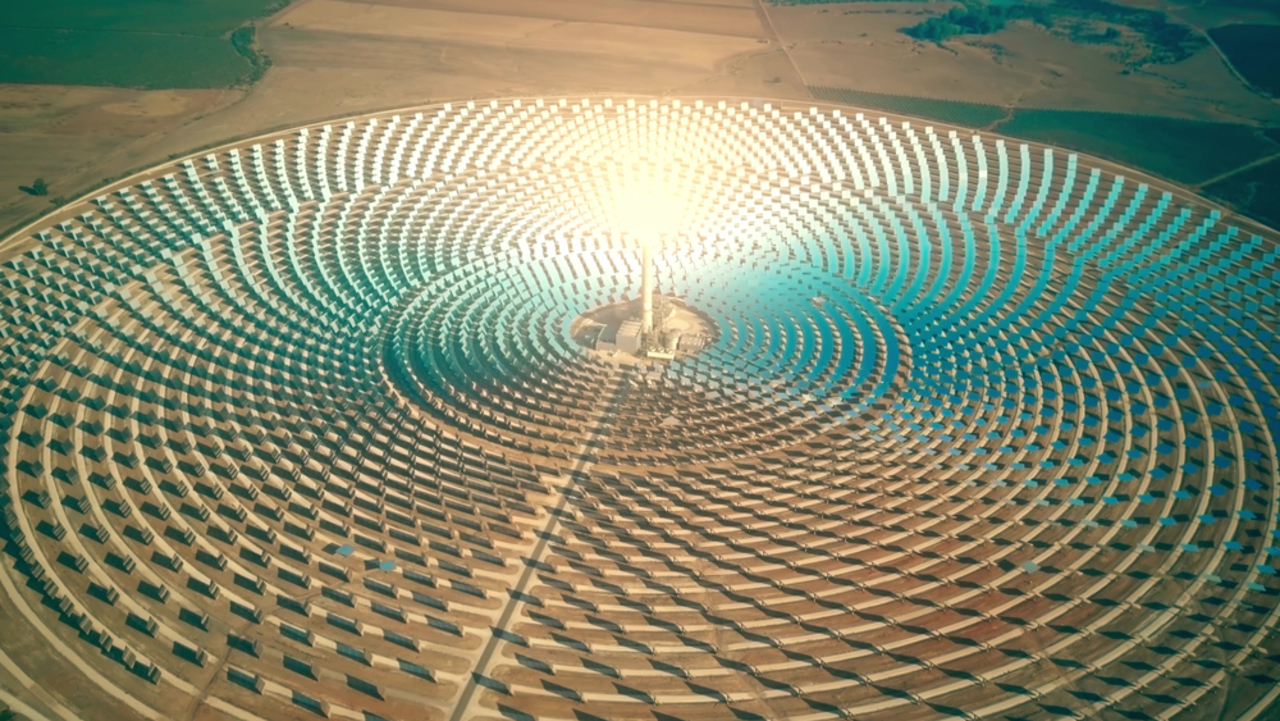
A Team Of Pentagon Scientists Successfully Tested A Prototype Solar Panel Capable Of Sending Electricity From Space
The Pentagon satellite, which is a solar panel the size of a pizza box, was called the Photovoltaic Radio Frequency Antenna Module (PRAM). It was launched into space in May 2020, mounted on a top-secret Pentagon drone, the X-37B.
Read Also
Bumps In The Road
This Pentagon technology circumvents many of the major challenges faced by solar energy here on Earth. Ground solar panels are limited by day and night cycles and can collect energy for only about 12 hours a day, but space panels would orbit the Earth facing the sun and collect sunlight all the time.
Ground panels also do not receive as much sunlight due to blue light scattering in the atmosphere (which is why the sky looks blue), but space panels would collect the full intensity of sunlight. They would also not be affected by weather conditions such as rain, snow, or dust storms.
-
The Brazilian state accelerates industrial competitiveness with a focus on the extraction of strategic minerals to boost the energy transition in Goiás.

-
A Canadian retiree creates a hydroelectric system on a real river, generating energy continuously throughout the day and demonstrating how the power of water can supply a house with stability even in a simple structure.

-
Petrobras reaffirms its commitment to the market and ensures that it will carry out the energy transition safely to maintain national sovereignty.

-
Researchers discover a possible hydrogen deposit of up to 46 million tons beneath an ancient coal basin, and the volume could exceed half of the entire global production.


New Pentagon Solar Panels Would Have To Be Launched In Large Numbers
However, these Pentagon solar panels would have to be produced and launched in large numbers to be an efficient energy source. A panel the size of a pizza box produces enough energy to power a tablet, which is impressive if you want to charge an iPad but not so impressive if you’re looking to restore power to an entire state.
But Jaffe says scaling up could be worthwhile, “Some visions have solar space matching or exceeding the biggest power plants today – several gigawatts – enough for a city.”
Another drawback is putting the panels up there. “Building hardware for space is expensive,” Jaffe said. While costs are coming down, investing in outer space infrastructure can be a daunting task. However, Jaffe says that it’s easier to build large projects like this when they don’t rely on gravity for support.
Global Solar Energy Transmission
The transmission technologies needed to make this happen are still in their infancy, but such a method of energy delivery could be extremely promising.
“The unique advantage that solar power satellites have over any other energy source is this global transmissibility,” said Paul Jaffe, principal investigator of PRAM at the U.S. Naval Research Laboratory, to CNN. “You can send energy to Chicago and a fraction of a second later, if needed, send it to London or Brasília.”
This means that this system could also be extremely useful for providing immediate energy to disaster-prone areas on Earth, without relying on physical infrastructure on-site.









Seja o primeiro a reagir!