





 Portuguese
  English
  Spanish
  4 min of reading
  0 comments


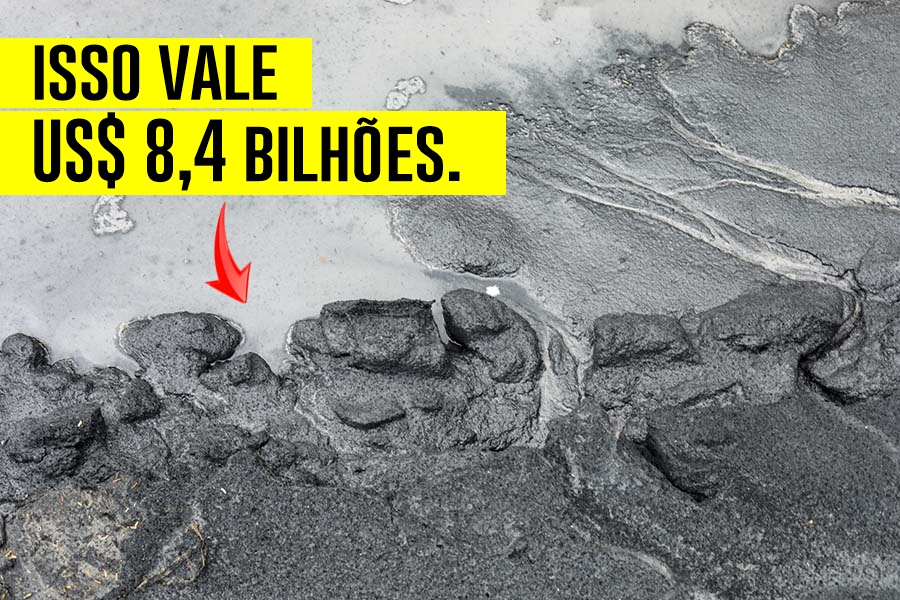
Treasure: Scientists Turned an Environmental Problem into an Economic Opportunity by Discovering That Toxic Waste Contains Rare Metals of Great Value, Valued at an Impressive US$ 8.4 Billion.
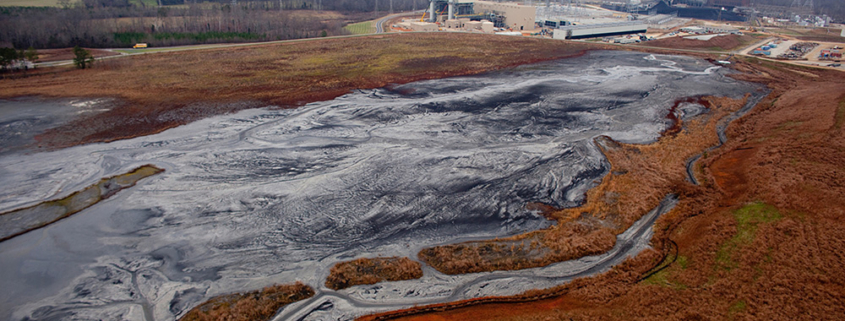
A recent study revealed a fact that may surprise you: toxic coal waste may be hiding a valuable treasure of rare metals for the energy transition. According to CNN, millions of tons of coal ash, a result of burning the most polluting fossil fuel, are stored in ponds and landfills in the United States, often contaminating soils and waterways.
Now, scientists have discovered that this toxic waste contains up to 11 million tons of rare earth elements, with an estimated value of US$ 8.4 billion.
A Hidden Treasure
These metals, known as rare earth elements, include names like neodymium, yttrium, and scandium. They are crucial for clean technologies, such as electric vehicles, wind turbines, and solar panels. Although not rare in nature, their extraction is complex, and the current supply does not meet the growing global demand.
-
Mysterious object on Mars divides NASA and Harvard after Curiosity image reignites suspicions about what was really found on the planet.
-
Giant structures 14 meters beneath Egypt are revealed by satellites and expose a millennia-old secret buried in Buto.

-
Children have been making clay pieces for 15,000 years in Southwest Asia, and fingerprints preserved on 142 ornaments helped archaeologists prove this.
-
New semi-autonomous legged robot technology challenges the limitations of space exploration by operating almost without human intervention on the Moon.


With the search for renewable sources and the transition away from fossil fuels, the need for these metals is expected to increase sevenfold by 2040, according to the International Energy Agency.
However, the United States has few reserves and relies on imports, primarily from China, which dominates the global market. This raises security and vulnerability issues in the supply chain.
Sustainable Alternative
The study led by the University of Texas at Austin identified coal ash as a unique opportunity to expand national rare earth reserves without resorting to traditional mining.
Researcher Bridget Scanlon, the study’s author, highlighted: “We are turning waste into treasure, completing the cycle by recovering valuable resources from toxic waste.”
Currently, the United States produces about 70 million tons of coal ash per year. Additionally, there are more than 2 billion tons stored in various locations. These ashes contain small concentrations of rare earth elements, but in sufficient quantities to justify extraction.
Regions and Extraction Potential
The source of the coal plays an important role in the feasibility of extraction. According to the study, ashes from the Appalachian Basin have a higher concentration of metals, but only 30% can be extracted. In contrast, ashes from the Powder River Basin, which spans Wyoming and Montana, contain lower concentrations but with an extraction rate of up to 70%.
These numbers highlight the economic viability of the process, as explained by Davin Bagdonas, co-author of the study: “The coal has already been processed to generate energy. This means that part of the initial extraction work has already been done for us.”
Economic and Environmental Challenges
Despite the potential, the extraction process still faces financial challenges. According to Paul Ziemkiewicz, director of the Water Research Institute at West Virginia University, the costs are significant. Extraction requires strong acids and bases, which not only increase the cost of the process but also raise environmental risks.
Another point raised is that coal ashes, in addition to valuable metals, contain hazardous contaminants such as mercury, arsenic, and lead. The extraction of rare earths does not eliminate the need for proper management of these toxic wastes.
Solutions and Investments
The study authors suggest that the value of the extracted metals could finance improvements in the storage and treatment of ashes. In April of this year, the Biden administration announced an investment of US$ 17.5 million in projects to extract rare earths from coal and its waste. Energy Secretary Jennifer Granholm emphasized that this initiative could strengthen national security and revitalize mining and energy communities.
This strategy is seen as a way to reduce external dependence without encouraging more coal burning. “The focus will be on reusing legacy waste,” Scanlon stated. According to her, the goal is to expand the use of coal by-products while minimizing environmental damage.
Future Opportunities with This Treasure
Although some fear that the value of coal ash could be used to justify increased coal production, experts assure that future dependence will be on the waste that already exists.
The U.S. Department of Energy emphasizes that the main objective is to explore sustainable alternatives and extract maximum value from these waste materials, without stimulating continuous use of coal as fuel.
This discovery brings a new perspective on the energy transition. Instead of discarding toxic waste, there is an opportunity to transform it into essential resources for the clean energy revolution. As the demand for renewable technologies grows, the rare earth elements extracted from coal ash could be the key to a more sustainable future.







Seja o primeiro a reagir!