





 Portuguese
  English
  Spanish
  3 min of reading
  0 comments


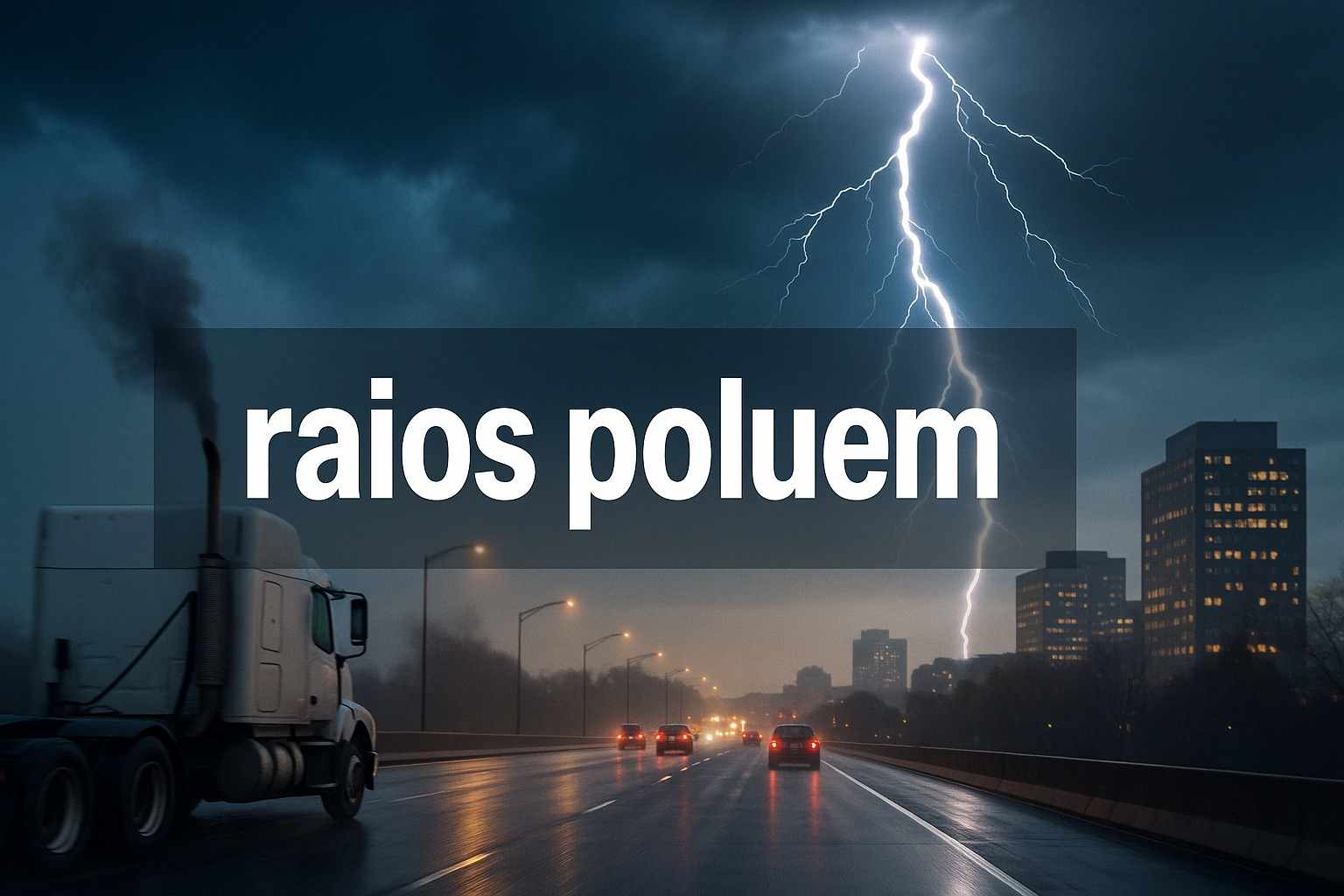
When We Think of Storms, We Usually Remember Floods or Blackouts. But Lightning Hides an Invisible Impact: It Releases Pollutant Gases into the Atmosphere, Comparable to Those Emitted by Car Exhausts
When it comes to storms, most people think of floods or power outages. However, lightning releases harmful gases, similar to those emitted by car exhaust. For the first time, scientists were able to measure this impact in real time, using NASA’s TEMPO satellite.
Researchers from the University of Maryland tracked storms in June 2025 and observed how lightning pollutes and at the same time helps purify the air.
The Tropospheric Emissions: Monitoring of Pollution (TEMPO) instrument, which normally takes measurements every hour, was adjusted for quick readings of 10 minutes.
-
They were brilliant! Scientists discover that our ancestors in China were already making super advanced tools 160,000 years ago, changing everything we knew.

-
Scientists unveil 3 million years of climate secrets hidden in the ice of Antarctica.

-
Ancient farmers created “aggressive plants” that changed nature forever.

-
Astronomers find a “backward” solar system that ignores all the rules of space and leaves scientists scratching their heads!


This capability allowed for capturing pollution as the storms moved across the eastern United States.
Professor Kenneth Pickering pointed out: “This is the first time this type of research is conducted with such temporal frequency. Storms change rapidly, intensify, and disappear in less than an hour.”
Unprecedented Data Combination
In addition to the TEMPO satellite, the team used NOAA’s Geostationary Lightning Mapper to count lightning strikes. This combination made it possible to more accurately calculate the amount of nitrogen dioxide emitted by each lightning strike.
According to Professor Dale Allen, this information helps improve climate models and better understand the air we breathe. “With this experiment, we were able to relate the count of lightning strikes to the amount of pollution generated in real time,” he explained.
The results show that lightning can significantly contribute to air quality, both negatively and positively.
Pollution at High Altitudes
The extreme heat from lightning decomposes nitrogen and oxygen molecules, forming nitrogen oxides. Pickering noted that these gases account for 10% to 15% of the total emitted globally.
While cars emit pollution at ground level, lightning releases gases much higher in the atmosphere. At this altitude, they promote ozone formation, which intensifies atmospheric warming.
Allen added that summer heat exacerbates the impacts. “The effects of lightning on climate during summer are comparable to those of nitrogen oxides created by human activities,” he highlighted. For this reason, the team focused measurements in June.
Lightning Also Purifies
Despite the risks, lightning has a positive effect. It releases hydroxyl radicals, which help clean the air by breaking down gases like methane. Previous studies have suggested that each lightning strike could generate around 250 moles of nitrogen oxides.
However, researchers are still seeking to better understand this variation. “We believe that, in more intense storms, the lightning bolts are shorter and produce less gas. Now we will have the chance to confirm this,” Allen explained.
Direct Health Impacts
The gases emitted at high altitudes do not stay put. They travel long distances in air currents and sometimes descend to ground level, worsening smog. This poses clear risks to human health.
Pickering cited the example of Colorado. In mountainous regions, lightning significantly contributes to surface ozone, increasing the pollution inhaled by residents.
Therefore, understanding this dynamic helps separate natural pollution from that caused by human activities.
Path to Better Forecasting
Scientists believe their results will be crucial for improving climate models. Allen emphasized: “We want to use this high-frequency data to reduce uncertainties. With more reliable information, we will have safer forecasts and better ways to protect health and the environment.”
This study paves the way for understanding how natural phenomena influence the air we breathe. Moreover, it shows that even lightning, often seen merely as a spectacle of nature, has a direct and powerful role in global pollution and climate.









Seja o primeiro a reagir!