






 Portuguese
  Spanish


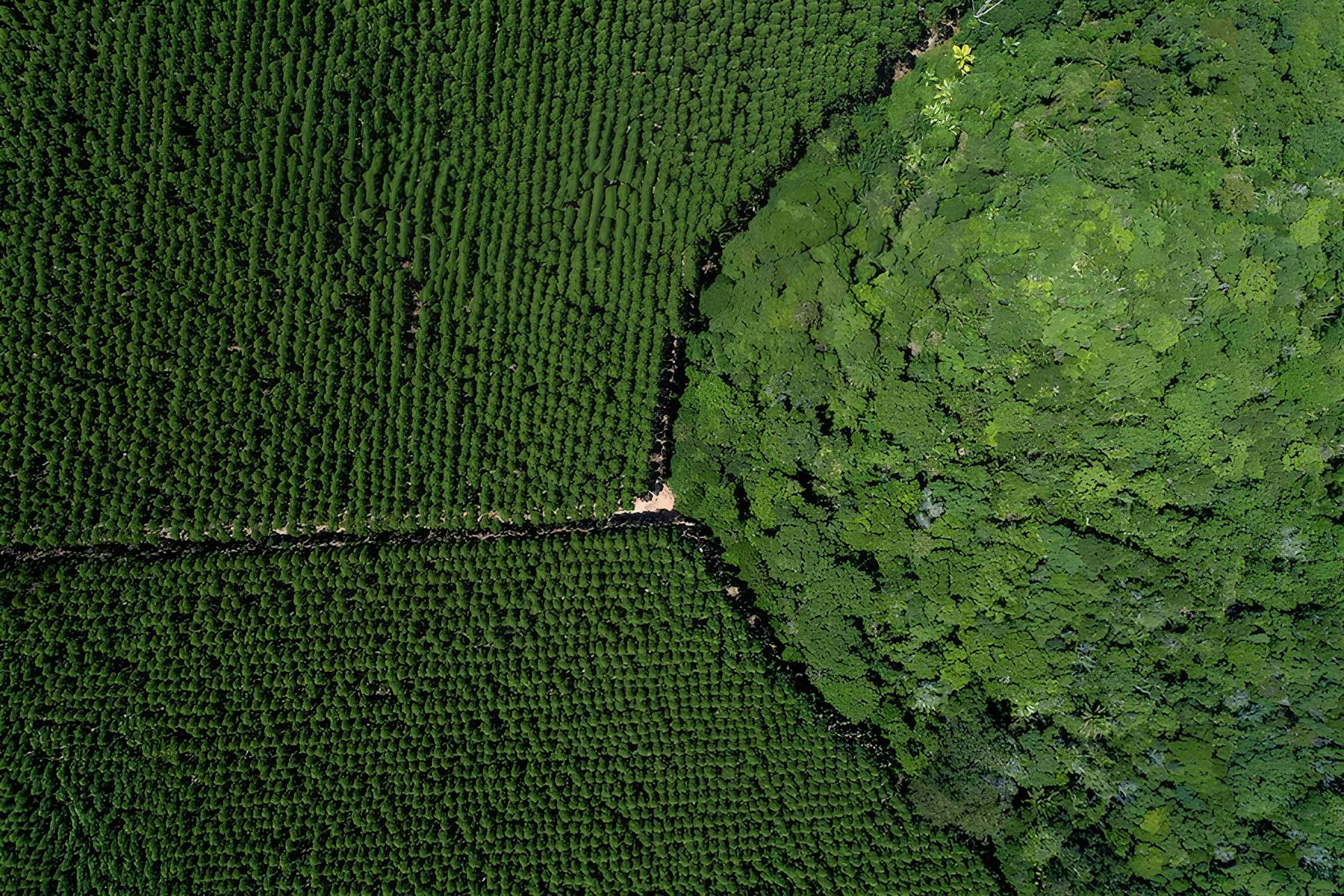

Suzano Manages 2.6 Million Hectares in Brazil, Combining 1.6 Million Hectares of Eucalyptus with 1 Million Hectares Preserved and Sustaining One of the Largest Forestry Engineering Projects in the World with 460 Thousand Seedlings Per Day.
In a country that traditionally views forests through the lens of conservation or agribusiness, Suzano occupies a unique position. The company manages 2.6 million hectares, of which 1.6 million hectares are allocated for eucalyptus cultivation and 1 million hectares are preserved areas of native vegetation. These figures place the company among the largest private forest area managers on the planet, sustaining a productive engineering model that combines industrial scale, intensive management, continuous replenishment, and environmental conservation.
The scale of operations impresses not only in area but also in tempo. To feed its production cycle, Suzano produces about 460 thousand seedlings daily, a mechanism that ensures the necessary forest replenishment to supply the cellulose, paper, and bioproduct industries. With crops concentrated in Maranhão, Bahia, Espírito Santo, São Paulo, and Mato Grosso do Sul, the company articulates a forest corridor that aligns logistics, technology, and sustainability in one of the country’s most extensive industrial projects.
The Engineering Behind 1.6 Million Hectares of Eucalyptus: Productivity, Management, and 7-Year Cycles


Silviculture follows an average cycle of seven years, the period in which the tree reaches sufficient maturity for harvesting aimed at cellulose production.
-
Strawberry Moon to Be Visible in Brazil on Monday (29th); Here’s When and How to Watch

-
Driver Crosses 100-Year-Old Railway Bridge Over Uruguay River, Encounters Rural Couple Preserving Traditional Farming Methods
-
Rural Producer Returns to Brazilian Farmland, Builds Family Agricultural Business with Children’s Support and Industry Backing
-
Goiás Couple Boosts Artisan Cheese Production from 25 to 70 Kilos Daily with Technical Support, Transforming Family Life in Rural Brazil


This relatively short window is one of the pillars of competitiveness in the Brazilian forestry sector. Suzano exploits this natural advantage combined with management techniques that include:
• selection of high-yield clones
• continuous monitoring through remote sensing
• supplemental irrigation in specific regions
• calculated fertilization to maximize development
• biological pest control as a partial substitute for chemical inputs
This approach allows the company to maintain high productivity levels per hectare, reducing the pressure on new areas and ensuring continuous renewal. With each harvest, the cycle restarts with planting internally generated seedlings, a process that requires rigorous standardization, logistical efficiency, and integration between nurseries and production areas.
Millions of Seedlings Per Week: The Industrial Structure that Sustains the Largest Private Plantations in the Country
The production of 460 thousand seedlings per day is not only an impressive statistic — it is the heart of Suzano’s forestry engineering.
The industrial nursery operates as a biological precision factory, where each seed, substrate, germination tray, and growth stage follows calibrated protocols.
This scale is necessary to maintain the renewal of harvested areas within operational cycles. Each year, millions of trees are replanted, ensuring that the forest stock remains stable, productive, and aligned with the demands of cellulose factories.

The dynamics work like a natural assembly line: the forest becomes simultaneously productive and renewable, at a continuous pace that characterizes the company’s forestry-based operations.
Additionally, the nurseries are highly mechanized and operated with technologies that include:
• climate control and light monitoring
• computerized irrigation
• sensors to assess seedling vigor
• cloning methods that preserve superior genetic characteristics
By operating at this level, Suzano transforms the concept of planted forests into an efficient, technically oriented industrial process with performance metrics similar to those used in the manufacturing industry.
The Role of 1 Million Hectares of Preserved Native Vegetation
The presence of 1 million hectares preserved contrasts with the planted area and reinforces a socio-environmental management model that has become part of the company’s global narrative. These areas include fragments of Atlantic Forest, savanna, coastal restinga, and other Brazilian biomes that coexist with eucalyptus through ecological corridors.
These corridors promote:
• genetic flow of fauna
• recovery of degraded areas
• protection of watercourses
• conservation of native species
• mitigation of monoculture impacts
Preservation is not just an environmental gesture, but a technical requirement: maintaining native areas reduces pest risks, improves soil health, and contributes to the resilience of plantings. Moreover, this strategy positions Suzano as one of the largest private maintainers of native vegetation in the country, reinforcing biodiversity commitments and environmental compliance.
The Forest Corridor that Connects Five States and Sustains the Global Cellulose Chain
The concentration of crops in Maranhão, Bahia, Espírito Santo, São Paulo, and Mato Grosso do Sul is not random. The strategic location of forests allows:
• proximity to factories
• access to export ports
• reducing transportation costs
• climate and soil diversification
• mitigation of climate risks
This creates a mosaic of integrated management zones that, combined, position Brazil as a global leader in forestry productivity.
Suzano, in turn, transforms this productivity into export capacity, supplying international markets with cellulose, packaging, sanitary papers, and, more recently, renewable-based bioproducts.
Why Suzano’s Forestry Operation is One of the Largest and Most Complex in the World

It is not just the size of the areas that impresses but the integration of technology, logistics, forest science, and environmental commitment. The company operates a cycle that includes:
• advanced genetic research;
• massive seedling production;
• precise management across millions of hectares;
• mechanized harvesting;
• conservation of native biomes;
• continuous satellite monitoring;
• carbon and climate strategies.
Few corporations on the planet achieve this level of integration. Suzano, by simultaneously controlling one of the largest banks of planted forests and one of the largest private conservation areas in Brazil, occupies a unique position on the global map of forestry-based industries.
The Forest as Infrastructure: The New Paradigm of Megacorporations in the Cellulose Industry
The sum of 1.6 million hectares planted, 1 million hectares preserved, and 2.6 million hectares under management reveals a new way of viewing forests: not as boundaries, but as infrastructure. In the context of Suzano, trees are treated as long-term industrial assets, strategic for global competitiveness and essential for a globally connected economy.
Brazil, with its combination of climate, soil, and technical expertise, provides ideal conditions for this model. And Suzano, by consolidating this monumental operation, demonstrates how Brazilian industrial silviculture has become one of the most advanced in the world.
The question that arises is not just about the size of the forests, but about the impact: how did a company transform areas the size of whole states into a continuous, sustainable, and globally relevant production system?


