





 Portuguese
  English
  Spanish
  4 min of reading
  0 comments


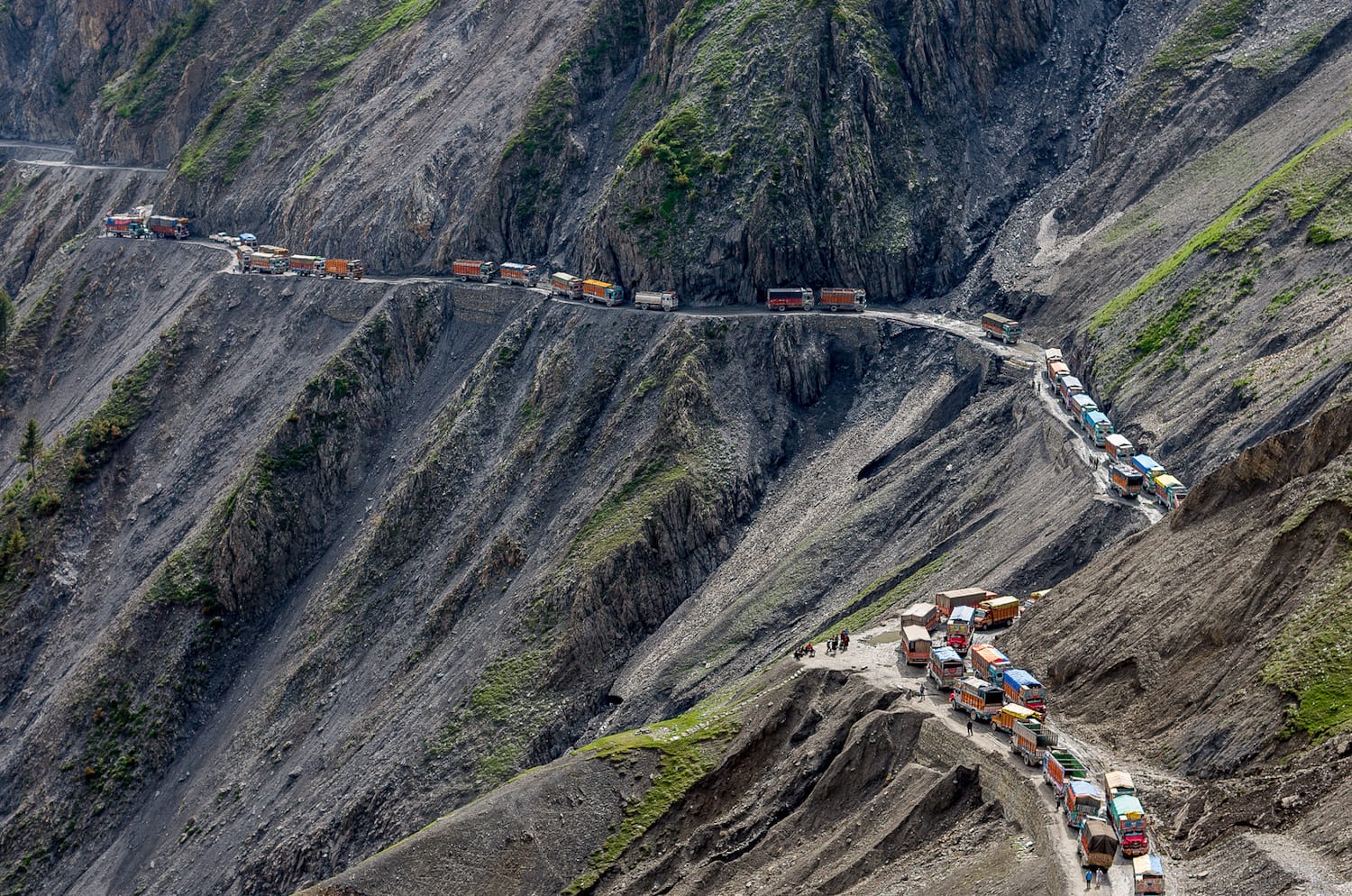
At 3,528 Meters Above Sea Level And Deep Cliffs, The Most Dangerous Mountain Road In The Himalayas Challenges Drivers On One Of The Most Extreme Journeys On The Planet.
In the heart of the Himalayas, where the weather can change in minutes and the geography transforms the landscape into a maze of cliffs, ice, and canyons, there is a road considered by mountain transport experts to be one of the riskiest on the planet. At 3,528 meters above sea level, narrow segments, constant snowstorms, and a recurring rate of closures due to landslides and avalanches, the road known as Zoji La is one of the most strategic and dangerous corridors in Asia.
Located in northern India, between the regions of Ladakh and Kashmir, the road remains closed during much of winter due to snow accumulation and storms that make the route an extreme risk for any type of vehicle. Even so, it is a vital route for transporting food, fuel, building materials, and military supplies, especially due to its proximity to border areas.
An Open Road In Unstable Terrain And Subject To Violent Weather Conditions
The stretch, which extends approximately 25 to 30 kilometers, was built on a steep slope carved from fragile rock, where the distances between the cliff and the vehicle tire can be just a few centimeters. For much of the journey, the road lacks:
-
With a rigid organization, attentive workers, and machines that don’t stop for a second, the production of foam slippers like Crocs in India demonstrates how the factory transforms raw material into pairs ready for export.

-
Archaeologists find 16th-century silver coin.

-
An 86-year-old farmer rejected a proposal of R$ 76 million to sell his land and surprised everyone by turning down an AI data center on his 105-hectare farm, negotiating for only R$ 10 million for environmental preservation.

-
You have probably crossed paths with it and didn’t even notice: the Brazilian tapiti rabbit lives hidden in the forests and may be disappearing without anyone noticing.
- guardrails;
- defined lanes;
- continuous pavement;
- landslide barriers;
- escape areas.
The combination of mud, ice, loose rock, and icy winds creates an environment where even reinforced trucks must proceed at low speed to avoid skidding. During the summer, the ice partially melts, but it gives way to another danger: large rocks that detach from the mountain, blocking the passage or falling on vehicles.

The Weather That Transforms The Road Into An Extreme Corridor
The elevation of 3,528 meters causes the region to be directly influenced by the air currents of the Himalayas, producing conditions such as:
- sudden snowstorms;
- visibility drops in seconds;
- thin ice on the road;
- wind gusts that push light vehicles;
- formation of high-friction ice patches (black ice);
- intense avalanche risk.
These conditions make Zoji La one of the roads with the highest rate of temporary blockages in the Asian subcontinent, leading the Indian government to plan, for years, alternative tunnels to reduce risks.
Why Thousands Of Drivers Still Need To Cross This Road Every Year
Zoji La is essential for supplying hard-to-reach areas and for the movement of the Indian Armed Forces, given that Ladakh is considered a highly sensitive geopolitical area. Military trucks, crowded buses, motorcycles, and SUVs travel this stretch daily, even knowing that:
- the ice can break under the weight of the vehicle;
- rocks can roll from steep slopes;
- the wind can push motorcyclists towards the cliff;
- the intense flow requires meticulous maneuvers on the edge of the abyss.
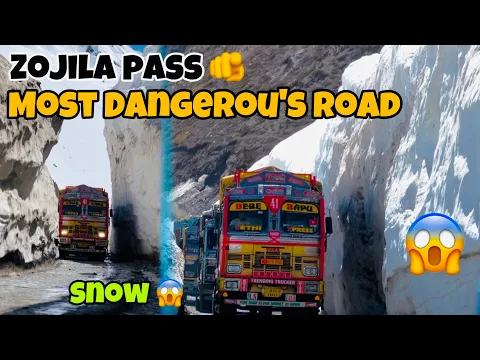

During deep snow periods, long lines of vehicles can be stranded for hours, waiting for machines to remove layers of ice that can reach several meters in height.
The Accounts That Solidified The Reputation Of An Extreme Road
Over the decades, videos and reports have documented:
- trucks skidding and almost falling into cliffs;
- buses that needed to be anchored with cables to avoid falling;
- motorcyclists knocked over by crosswinds;
- vehicles buried by sudden avalanches;
- travelers rescued after being trapped in last-minute snowstorms.
These images, published by Indian newspapers, international agencies, and experienced travelers, have fueled the global fame of the road as one of the most dangerous in the world.
A Logistical And Human Challenge On One Of The Most Relentless Mountains On Earth
The construction and maintenance of Zoji La require constant work from road engineering teams and local forces, who face:
- cracks formed by freezing and thawing;
- open roads with mechanical shovels amidst deep snow;
- strengthening of slopes in unstable terrain;
- continuous excavations to prevent permanent blockages.

Despite this, nature often prevails: sections are blocked, routes are diverted, and drivers must wait for hours until the road offers a minimum level of safety again.
Why Zoji La Is As Feared As It Is Revered
Even with extreme risks, the stretch represents:
A Human Feat
Driving there requires precision, physical endurance, and absolute attention.
A Vital Corridor
Without it, entire regions would be cut off for months.
A Geographical Challenge
The topography of the Himalayas makes any construction a constant engineering test.
A Unique Experience
Travelers describe the crossing as one of the most intense and impactful journeys one can take on four wheels.
Every curve reveals the contrast between the grandeur of the mountains and human fragility before them.
With extreme altitude, aggressive weather, unstable geography, and cliffs that drop hundreds of meters, Zoji La is more than a road—it is a test of courage, skill, and respect for the mountain.
The crossing combines unmatched beauty and real risk, making it one of the most iconic and challenging routes built by man in one of the most relentless environments on Earth.








-

Uma pessoa reagiu a isso.