





 Portuguese
  English
  Spanish
  4 min of reading
  0 comments


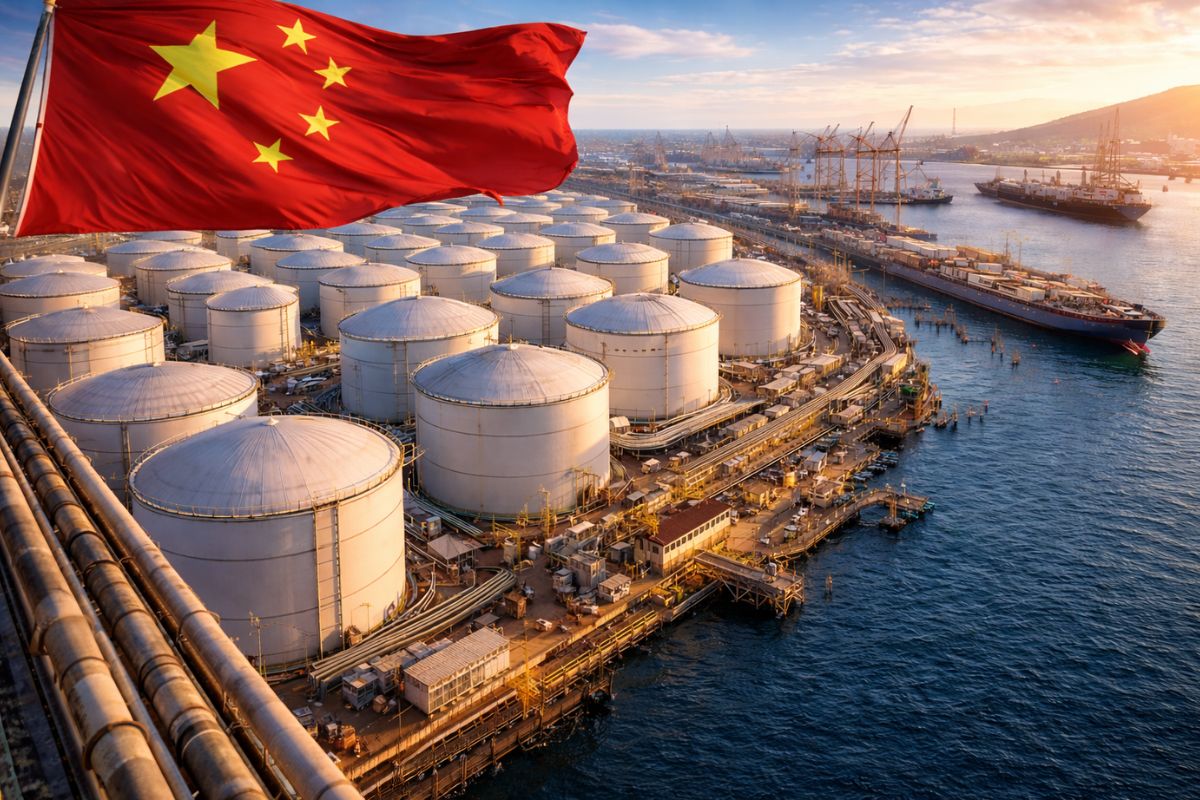
With Estimated Investment of US$ 700 Million and 5.2 Million m³ of Static Capacity, Giant Tanks Become Central to Energy Strategy and Import Flow on the East Coast
The winds from the Yellow Sea sweep through a hypnotic row of giant tanks perfectly aligned. At first glance, the scene appears quiet and simple, with no visible flames, no refinery releasing steam, and no drilling towers, but here lies one of the most strategic points of Chinese energy infrastructure.
In the port area referred to as DJ C, in Kindalo, Shandong Province, China has turned concrete, steel, and heavy engineering into a discreet weapon of predictability: giant tanks connected to piers, pipelines, and integrated terminals, capable of receiving, storing, and redistributing oil with high efficiency.
Where the Megabase Is and Why Shandong Imports So Much
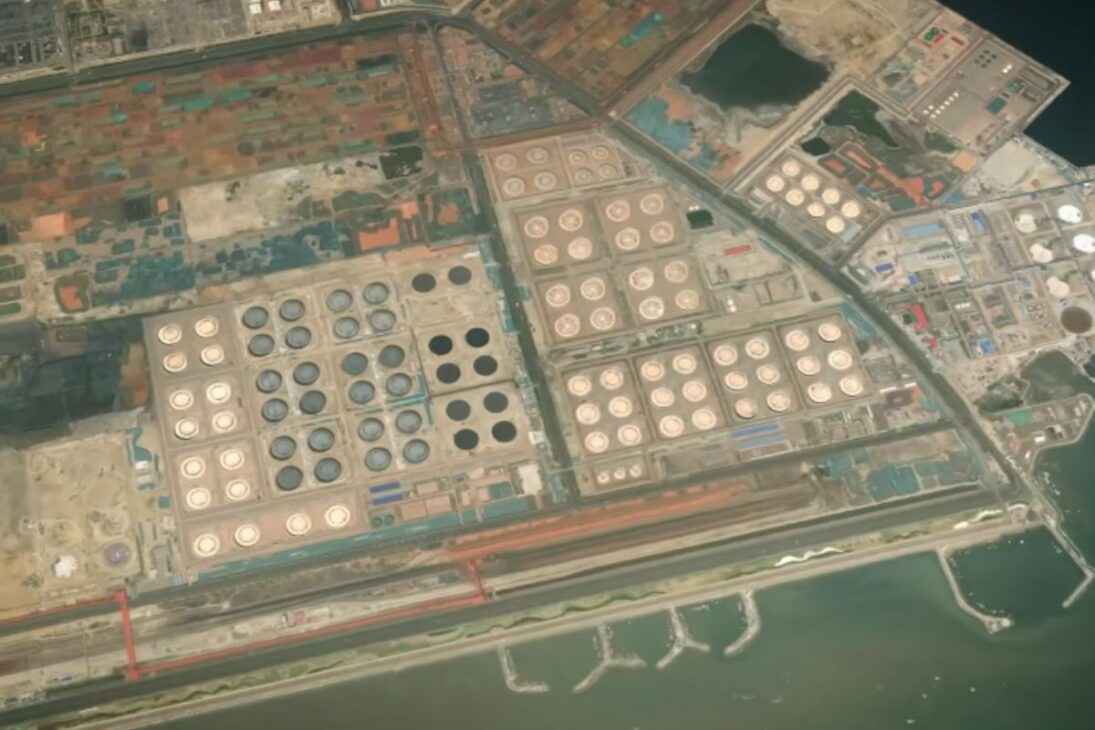
The base describes the complex as part of a system managed by the Shandong Port Group, in one of the most industrialized regions of the country.
-
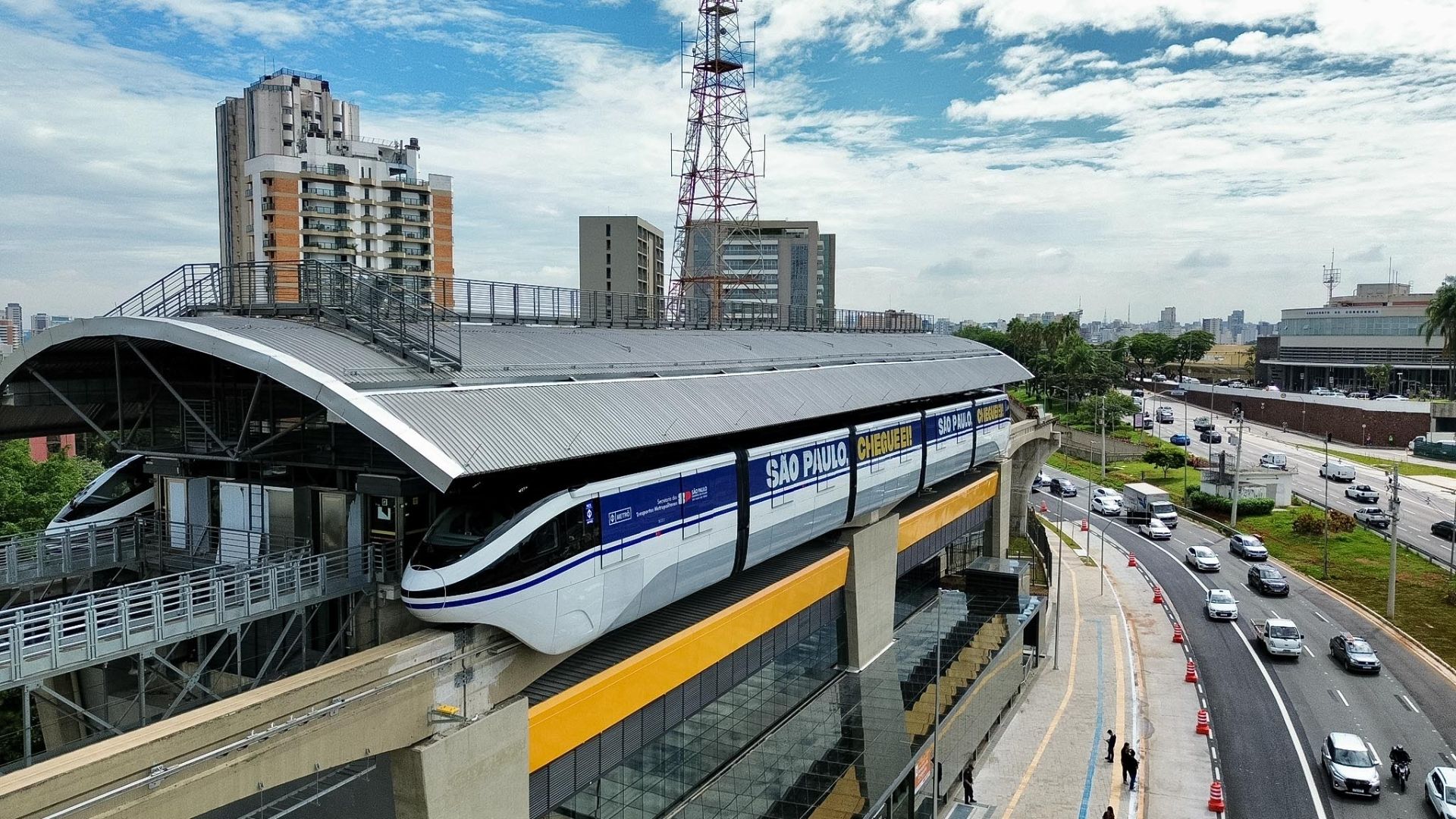
Congonhas receives the monorail promised for the 2014 World Cup after more than a decade of delays and becomes the first airport in Brazil with integrated subway.
-
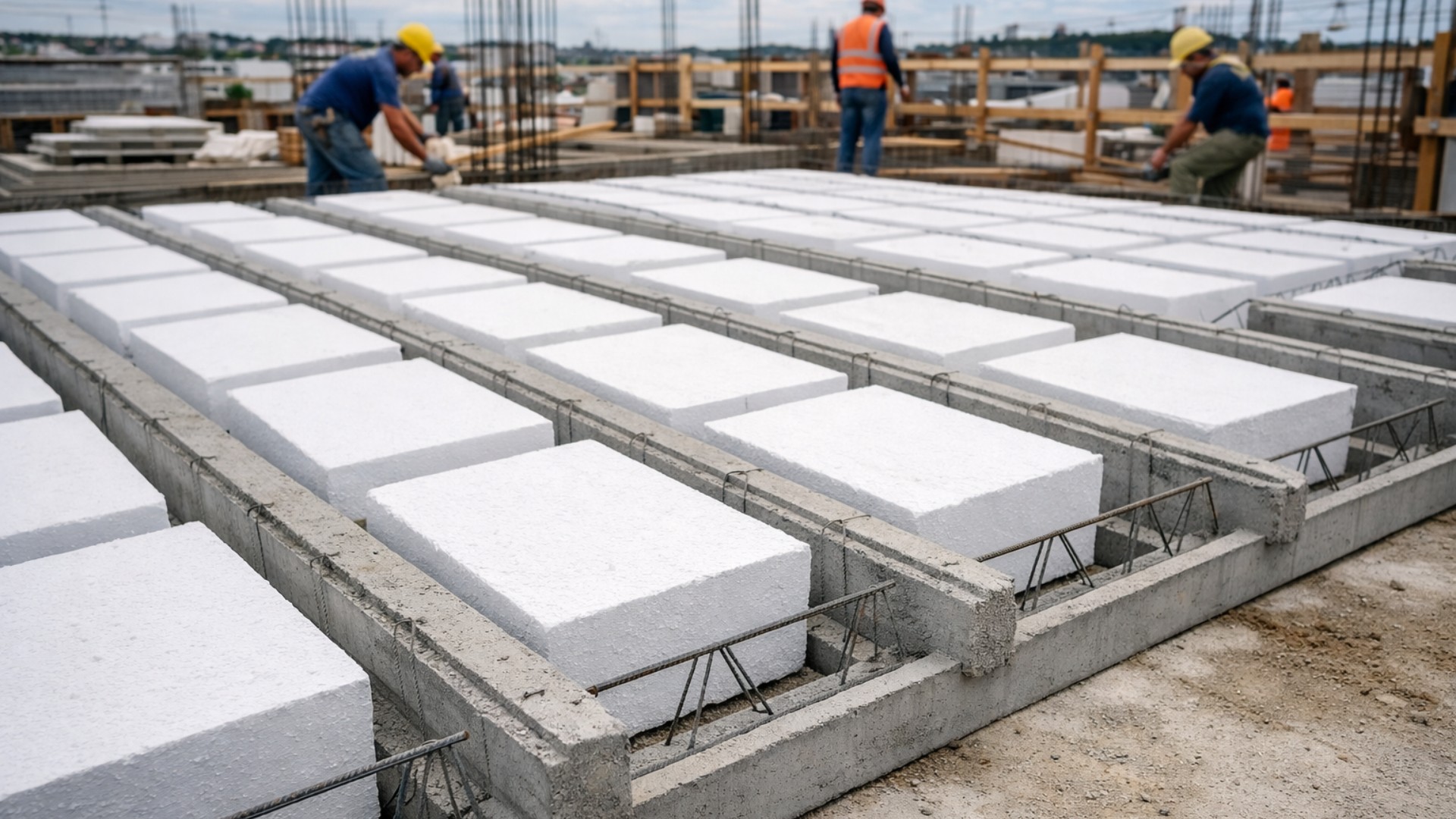
Goodbye, concrete: a new trend in civil construction reduces the weight of the structure by up to 30%, accelerates projects by up to 40%, cuts costs on steel and labor, and improves thermal insulation with EPS.
-
Russian engineers create an innovative propeller blade for aircraft that could completely change the way airplanes and helicopters operate.

-
Couple finishes building PVC chalet on the beach on the last day, with air conditioning and curtains, but discovers the bathroom drain is inverted: water escapes from the drain, risking breaking the floor, and the rush continues before the trip.


The site is presented as one of the main gateways for energy into China, with direct relevance to the flow of imported crude oil.
The key point is that the giant tanks do not appear as isolated structures. They function as an interconnected logistical node, designed to reduce bottlenecks and speed up the turnaround of oil between ships, storage, and distribution inland.
The Project Numbers and What They Reveal About Ambition
The base reports more than 50 giant tanks built, totaling 52 large units, with an estimated investment of around US$ 700 million. The completed static capacity is described as 5.2 million m³, resulting from three consecutive phases.
When the port’s connections with specialized piers, long-distance pipelines, and integrated terminals come into play, the projected annual movement capacity is cited as exceeding 11.06 million m³. The message is that it’s not just storage, it’s a system that moves, turns, and redistributes.
Why China Expanded in Three Phases to Reach 52 Giant Tanks
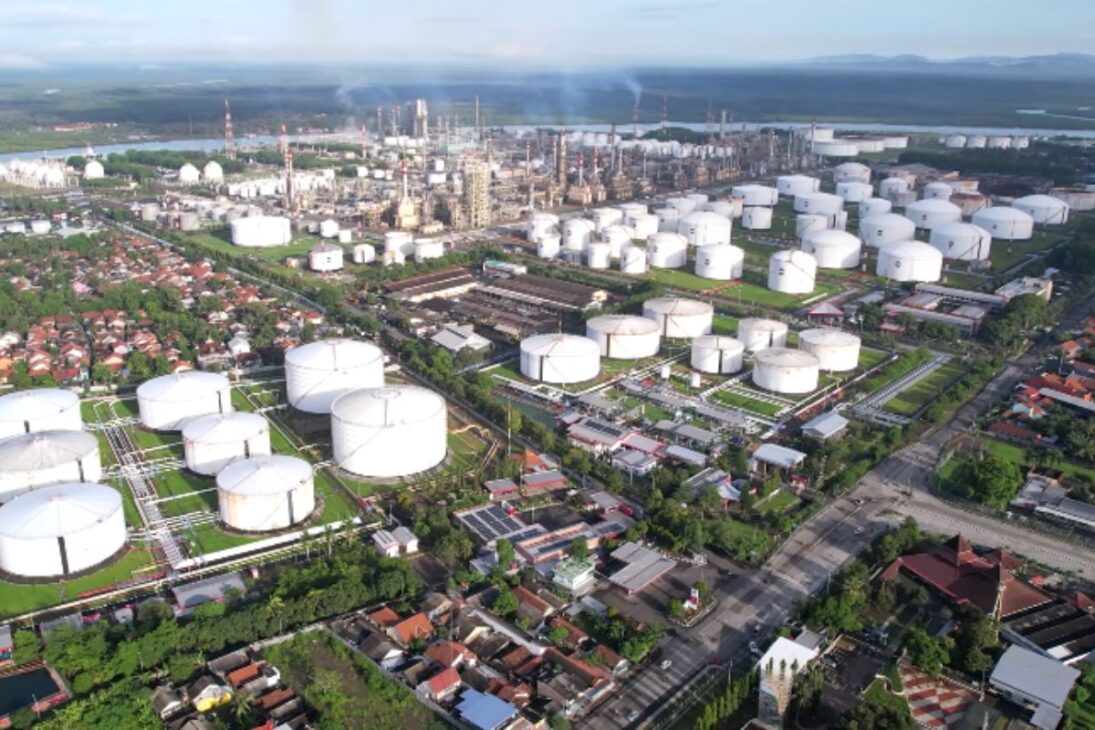
The explanation presented goes back to 2016, when a 1.2 million m³ facility was reportedly inaugurated in the complex, in a context of increased imported flow and pressure on port capacity. With more ships and more demand, the scenario described includes congestion and the need for scale.
The plan was structured in three progressive phases. In Phase 1, 16 giant tanks of 100,000 m³ each were included, along with auxiliary facilities.
In Phase 2, the complex gained an additional 24 identical tanks, increasing capacity. Phase 3, completed in 2023, added 12 more tanks and critical safety structures, raising the total to 52.
The base also highlights that, since the first two phases went into operation, the complex has already moved nearly 80 million tons in accumulated turnover. This reinforces a central characteristic: high-turnover stock, not “idle tank.”
What Exists Inside a Giant Tank Park Beyond the Visible Steel
From the outside, the project appears repetitive, dozens of cylinders. Inside, the base describes an engineering mechanism that mixes geotechnics, tank construction, industrial safety, automation, and port integration.
The technical heart includes 52 giant tanks of 100,000 m³ equipped with floating roofs. The pointed logic is to reduce the vapor space above the liquid, decreasing losses due to evaporation and helping to control emissions of volatile organic compounds. On a large scale, technical decisions translate into money over the years, as they reduce invisible losses.
Coastal Soil, Settlements, and the Challenge of Supporting Colossal Loads
Before the steel, came the most thankless problem: the soil. The base explains that ports often sit on compressible sedimentary layers, where settlements can slowly arise and become structural risks.
Therefore, each tank base requires geotechnical stability, controlled compaction, and deep drainage.
The load described is enormous: depending on the density of the oil, a single full tank can represent something between 80,000 and 90,000 tons.
Giant tanks require “giant” soil in reliability, because any deformation becomes an operational risk.
Industrial Safety: Combating Fire Is Just as Important as Storing
The expansion was not just about adding volume. According to the base, it required boosting the terminal’s “invisible muscle”: internal pipelines, electrical power, instrumentation, redundancies, and, above all, fire-fighting systems.
In Phase 3, critical safety structures emerge, including dedicated pump houses for fire-fighting and technical rooms.
In an installation of this magnitude, the fire system is as important as the giant tanks, with pressurized networks, high-flow pumps, and foam systems designed for immediate response.
The Link That Transforms Storage into Power: Berths, Pipelines, and Oil Pipelines
The text describes that the tanks connect to four super piers at the port, capable of receiving large oil tankers.
The unloading proceeds through underground pipelines for storage or immediate transfer to long-distance pipelines that supply refineries inland Shandong.
This design, from the berth to the tank and from the tank to the pipeline, transforms time into money: it reduces ship waiting time, decreases storage costs, and increases predictability.
For this reason, the giant tanks function as a strategic buffer between the international market and the regional refining park.
When Numbers Become Real Scale: Barrels, Days, and “Liquid City”
To give dimension, the base converts volume into concrete references: 5.2 million m³ would equal about 32.7 million barrels, almost three days of China’s average daily imports, according to the comparison presented.
The central idea is that giant tanks become a buffer zone: in favorable price windows, volume is purchased and stored; in volatile scenarios, capacity reduces logistic shock and helps sustain economic stability.
In your view, are these giant tanks just a logistical reinforcement, or are they already a strategic piece to enhance China’s control over the global energy game?








-

-

-

3 pessoas reagiram a isso.