





 Portuguese
  English
  Spanish
  4 min of reading
  1 comment


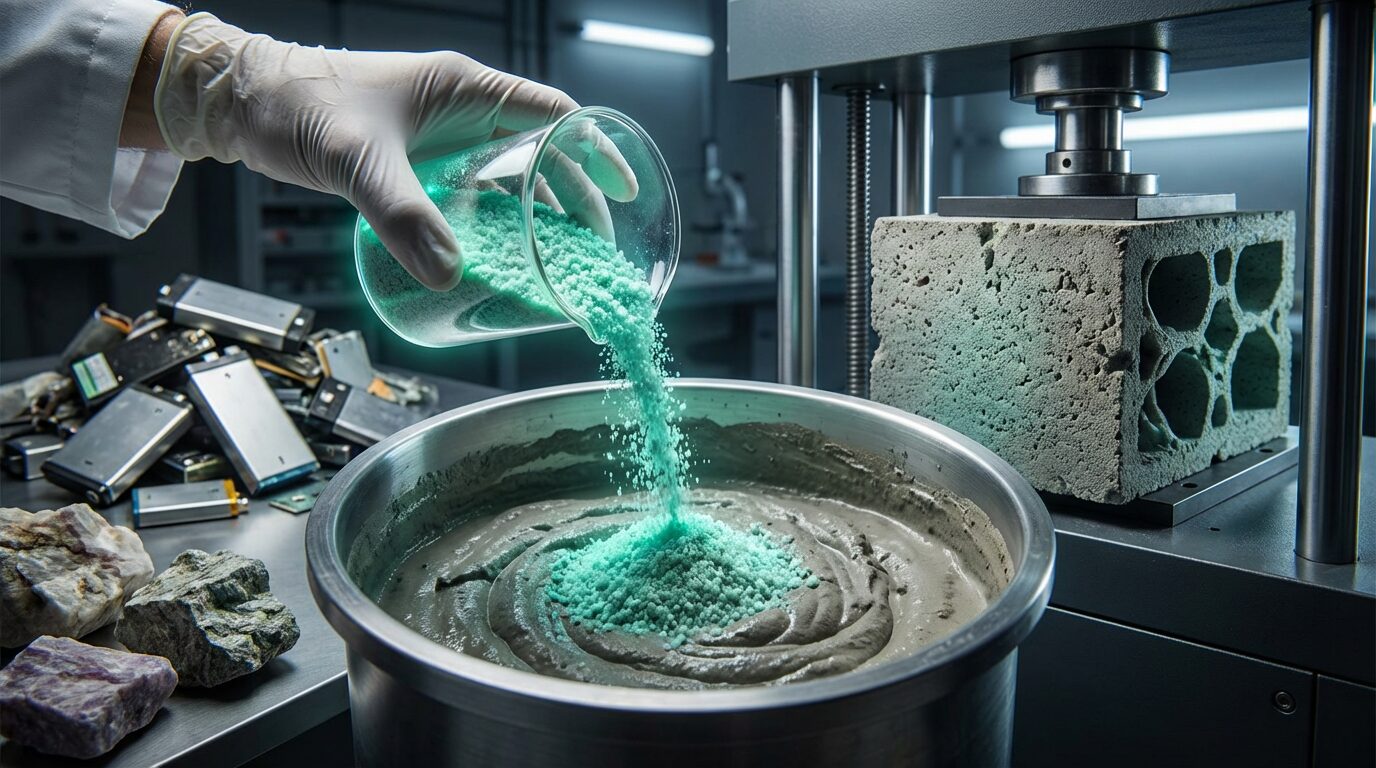


Australian Researchers Test The Use Of β‑Spodumene De-Lithiated As An Additive In Geopolymers And Point To The Reduction Of The Carbon Footprint Of Concrete
Concrete Sustains Modern Civilization And At The Same Time Is Responsible For A Significant Share Of Global CO2 Emissions, According To IPCC Data. Every Year Humanity Produces About 30 Billion Tons Of Concrete, Which Is Approximately 952 Tons Per Second.
A Team From Flinders University In Australia, Led By Professor Aliakbar Gholampour, Points To A Solution That Reuses A Waste From Lithium Refining, The β‑Spodumene De-Lithiated Known As DβS.
The Proposal Emerged As An Alternative To Reduce Dependence On Portland Cement.
-
For decades, a 50-kilometer ring structure in the middle of the Sahara has puzzled scientists: visible from space, it reveals layers of millions of years and turns the desert in Africa into a geological mystery.

-
With an unusual prize, Japan transforms office chairs into a resistance race on the streets, the ISU-1 Grand Prix grows, fills events, and pays 90 kilograms of rice.

-
With a façade that resembles a giant zipper, the building in Milan creates a sense of strangeness, featuring lighting that transforms engineering and attracts the attention of residents and tourists.

-
The Brazilian city has 319 crooked buildings built on sandy soil without proper deep foundations, houses the largest beach garden in the world, with over 5 km, and is still considered the birthplace of surfing — meet Santos, in São Paulo.
The Problem Of Portland Cement And The Climate Bill Of Concrete
Portland Cement Is The Main Source Of The Problem Because Its Production Requires Furnaces At Extremely High Temperatures And Releases CO2 Both From The Burning Of Fossil Fuels And From The Decomposition Of Limestone. See:


According To IPCC Reports, Cement Accounts For About 8% Of Global CO2 Emissions, Surpassing Sectors Like Commercial Aviation In Direct Impact.
This Dual Source Of Emissions Makes It Difficult To Reduce The Impact Through Just Point Improvements In Production. That’s Why Alternatives To Clinker And The Use Of Coal-Linked Ashes Have Been Sought, Including Geopolymers And Other Innovative Additives.
From Battery Waste To Geopolymer Concrete, How Flinders University Research Describes The Process
The DβS Is A Solid By-Product Of Lithium Refining That Often Becomes Waste In Deposits And Dams. Flinders University’s Team Tested Its Incorporation In Geopolymers, A Type Of Concrete That Does Not Use Portland Cement But Instead Uses Silicon And Aluminum-Rich Materials Activated By Alkaline Solutions.
In The Trials, The Researchers Vary The Types Of Alkaline Activators, The Ratio Between DβS And Other Aggregates, And The Curing Conditions At Room Temperature.
In Several Formulations, The Waste Acted As An Additive And Partial Substitute For Fly Ash, Resulting In Improved Mechanical Strength And Greater Durability Compared To Traditional Concretes In Certain Mixes.
According To The Research, The Technical Gain Is Accompanied By Environmental Potential Because The Use Of DβS Reduces The Link With Inputs Derived From Coal And Helps To Provide A Useful Destination For Wastes From The Battery Chain.
Expected Impacts, Circular Economy And Most Likely Initial Applications
The Reuse Of DβS Operates On Several Fronts, Reducing The Volume Of Wastes, Decreasing The Use Of More Polluting Raw Materials And Transforming A Storage Cost Into Economic Value. This Approach Brings Construction Closer To The Logic Of Circular Economy.
In Practice, Geopolymers With DβS Are Expected To Debut In Applications With Lower Structural Risk, Such As Sidewalk Paving, Parking Lots, Bike Lanes, Pre-Cast Blocks For Walls And Elements For Light Industrial Warehouses. Pilot Projects In Social Housing Are Also Cited As A Suitable Testing Ground.
Current Limits, Environmental Risks And Next Steps For Certification And Scaling
Laboratory Results Are Promising, But There Is Still A Need To Standardize The Quality Of DβS From Different Mines, Assess Durability In Humidity And Temperature Cycles, And Study The Behavior Against Chemical Attacks.
Regulators And Communities Will Demand Data On The Potential Leaching Of Elements And Impact On Surface And Groundwater.
Transforming The Finding Into A Product Requires Certification, Assessment Of Competitive Cost And Industrial Scalability. The Translation Of Scientific Breakthroughs To The Market Involves Large-Scale Testing, Technical Standards, And Performance History In Real Works.
Other Fronts To Decarbonize Concrete And The Role Of This Innovation In The Set Of Solutions
Complementary Alternatives Are Being Developed Around The World, Including Powders With Bacteria That Generate Biocement, Microcapsules With Healing Agents, And Additives Made From Wood Waste. No Single Solution Resolves The Global Challenge, But Together They Reduce The Carbon Intensity Per Cubic Meter Of Material.
The Incorporation Of DβS In Geopolymers, As Documented By The Team At Flinders University Led By Aliakbar Gholampour And Reported On The MariaMariaMake Website, Is A Concrete Example Of How Distinct Sectors Can Connect To Improve The Sustainability Of Construction.
Want To Join The Debate And Share Your Opinion On The Idea Of Using Battery Waste In Concrete? If You Believe This Route Is A Practical Solution Or An Environmental Risk, Leave Your Comment And Spark The Discussion About Priorities And Safety In The Energy Transition







Top gostei