Portuguese
  Spanish


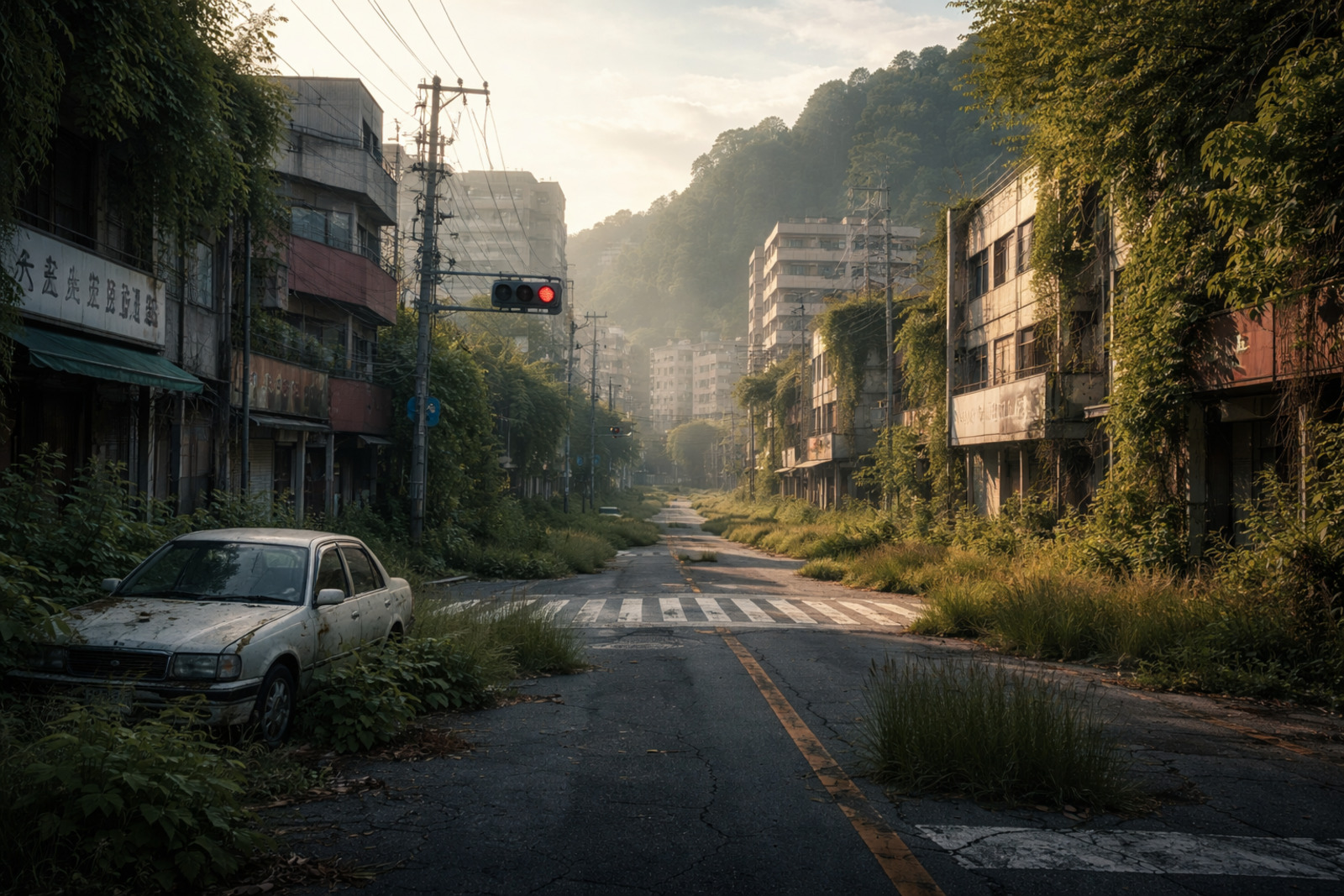

Fifteen years after the sequence of earthquake, tsunami, and nuclear accident of 2011, Fukushima still displays restored streets, reopened areas, and a human void that keeps the Japanese city among the most striking examples of ghost town in the world
Fukushima marks 15 years as a ghost town in Japan after the 9.0 magnitude earthquake, the tsunami, and the nuclear disaster of March 2011, which forced mass evacuation, prevented the return of the population, and left the region in reconstruction.
Fukushima 15 years later
When talking about ghost towns, many think of Pripyat in Ukraine. There are cases like Centralia in the United States and Herculaneum in Italy.
Fukushima draws attention due to the disaster that led to abandonment. The municipality completed 15 years since the beginning of this emptying last week.
-
Man Buys Metal Detector for Recovery Walks, Discovers 27.2 kg Gold Nugget in Brazil

-
Brazilian Mayor Uses Humorous Sign to Raise Awareness About Littering, Goes Viral on Social Media

-
Award-Winning Japanese Restaurant Reveals It Has Preserved Part of the Same Frying Oil for 66 Years

-
American Youth Transforms from Severe Obesity to U.S. Air Force Enlistment, Losing 90 Kilograms in Two Years




Today, Fukushima is undergoing restorations and has areas open for visitation and habitation. Even so, visitors describe a sense of strangeness when encountering preserved streets, but with limited presence.
Normal appearance, empty city
With asphalt, repainted lanes, and functioning poles, Fukushima looks like an ordinary city. The contrast appears in the lack of residents, after years of evacuation and restrictions.
Once marked by industry, tourism, and commerce, the region now displays empty streets. Those passing through find wildlife, visitors, and staff linked to recovery.
A visitor reported that the place seems reclaimed by nature, like a post-apocalyptic scene. Trees surround houses, weeds encroach upon urban areas, and empty cars accumulate dust among uncontrolled vegetation.
The sequence of catastrophes
Fukushima dominated the news on March 11, 2011, when it was hit by a sequence of catastrophes. At around 2:46 PM local time, a 9.0 magnitude earthquake struck the region.
The tremors were followed by a tsunami that reached the coast at 3:42 PM, with waves of up to 15 meters. The two disasters hit the Daiichi plant and caused the shutdown of three reactors.
Generators and electrical panels were destroyed, causing a total power outage. Even so, residents remained in the area until nightfall, searching for missing family members and waiting for the end of the blackout.
Authorities monitoring the plant noticed that the nuclear fuel began to overheat, with no power for cooling. The Japanese government declared an emergency and ordered evacuation within a radius of 2 to 3 km.
Explosions and evacuation
On March 12, a hydrogen explosion in reactor 1 destroyed the building’s roof and expanded the evacuation radius to 20 km. On March 14, another explosion in reactor 3 injured 11 workers.
On the 15th, explosions hit reactors 2 and 4, while the cores of reactors 1, 2, and 3 began to melt down. This drastically increased radiation levels and prevented the return of the population.
According to official data from the Japanese government, approximately 22,230 people were counted as dead or missing after the combination of the earthquake and tsunami.
Partial reopening
Areas farther from the plant, such as Tamura and Naraha, were reopened in 2014 and 2015. Other critical regions, such as Okuma and Futaba, were also released by Japanese authorities.
Although a large part of the region is already free for the population, there are only 200 registered residents. Many Japanese people still remain wary of Fukushima or prefer new lives far from there.
With information from Crusoe.