





 Portuguese
  English
  Spanish
  4 min of reading
  0 comments


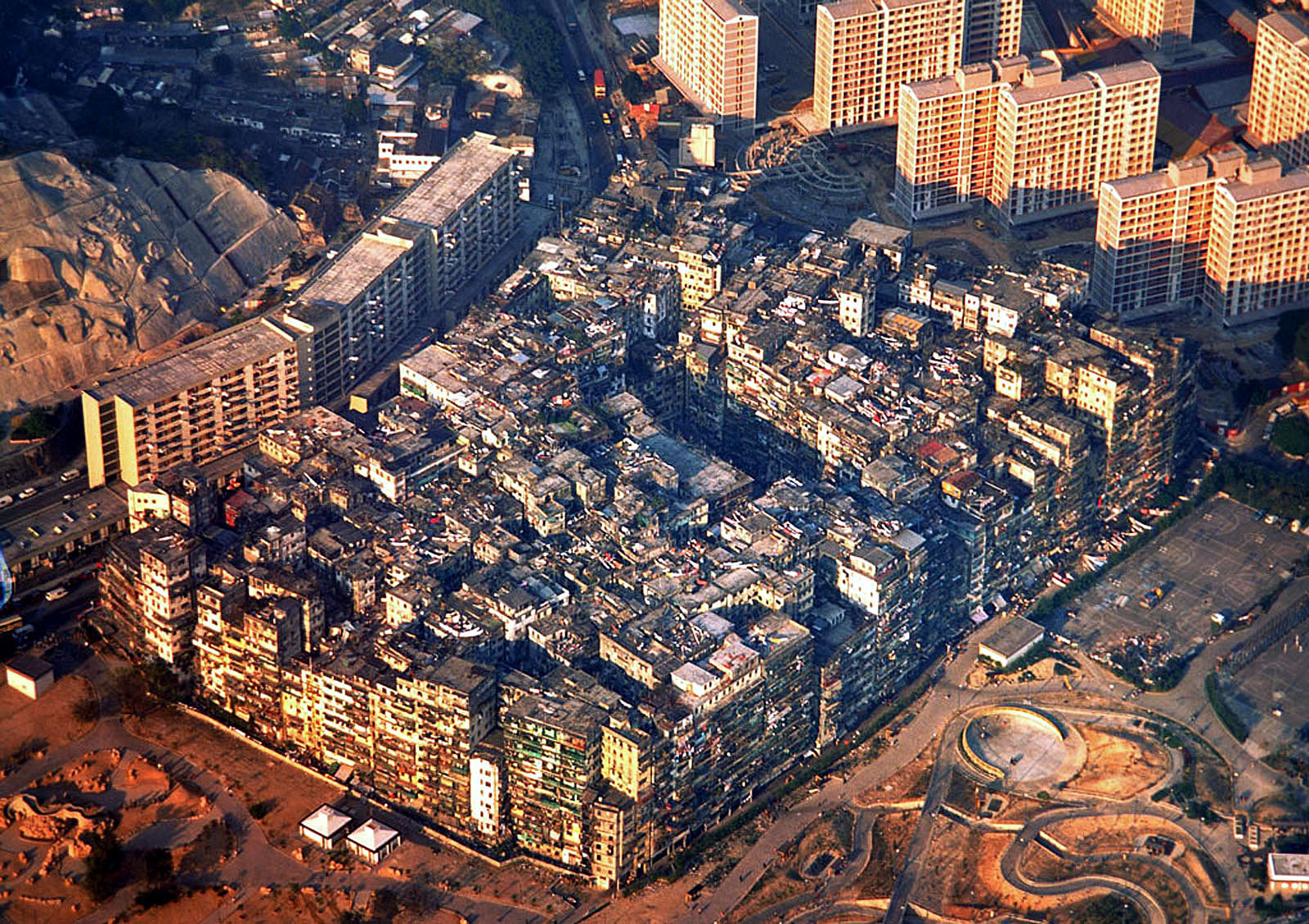
With 33,000 People in Just 2.6 Hectares, the Densest City in History Became a Human Labyrinth Where the Sun Never Touched the Ground Before It Was Demolished.
For decades, a city existed in silence in the heart of Hong Kong, hidden beneath layers of concrete, wires, and shadow. In an area of just 2.6 hectares, slightly smaller than three football fields, lived more than 33,000 people, forming what became known as the tightest city in the world and the most populated in modern history. A true “vertical ant nest,” where sunlight never reached the ground and where every square meter was fought over like gold.
This city, which resembled a living organism, was a hodgepodge of 14-story buildings interconnected with one another, built without any planning or supervision. The walls of one house supported the neighboring building; narrow corridors connected hundreds of apartments, and with so much concrete upon concrete, the place became a single block, as if all the buildings were one.
Kowloon Walled City – A Territory Without Owner and Without Laws in the Tightest City in the World
The location was born amid a political dispute between China and the United Kingdom when Hong Kong was still a British colony.
-
The village where two rivers run side by side without mixing in Santarém and Alter do Chão reveals some of the most beautiful freshwater beaches on the planet.

-
Brazil’s nuclear submarine with a speed 5 times greater than normal advances after nearly 50 years and R$ 40 billion spent.
-
A Brazilian island charges R$ 0.50 to receive visitors and prohibits any new residents.
-
Why was the Great Wall of China built? The truth that many are unaware of!

The territory of the walled city — officially known as Kowloon Walled City — remained in a kind of legal limbo: neither British nor Chinese. This uncertainty caused the public authorities to simply stop acting there over the decades.
Without government control, the city became self-sufficient, but also chaotic. Doctors, dentists, cooks, and merchants operated without licenses. Mechanical workshops, small factories, and even makeshift schools coexisted in a maze of staircases and dark passages.
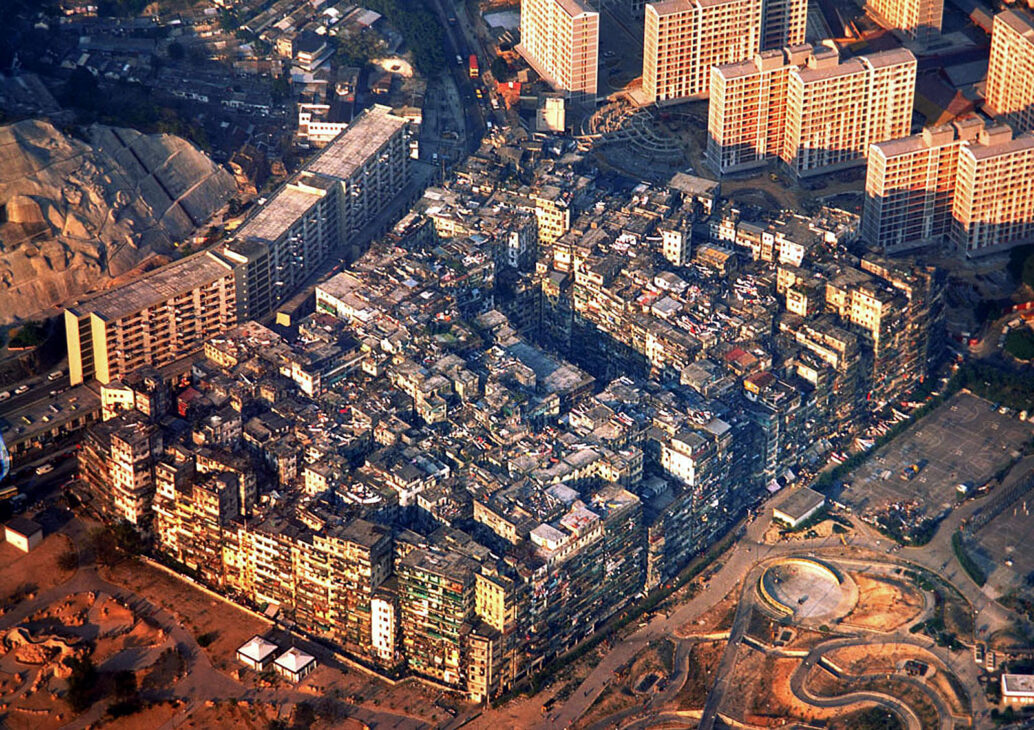
Water came from pumps installed by the residents themselves, and electricity was tapped from improvised networks, with wires crossing windows and alleys in all directions.
Above, the rooftops formed an irregular maze of roofs and passages. There, children played, clothes dried, and families tried to capture any remnants of light since, at street level, the sun never touched the ground. The density was such that the air was stifling and humid, with a constant smell of smoke and cooking oil.
A Living Labyrinth in the Heart of Hong Kong
Inside the city, no one really knew where one house ended and another began. The alleys were so narrow that two people could barely pass each other. The buildings were so close that the windows of different apartments almost touched. In some areas, it was impossible to tell day from night.


And yet, the city functioned. There were grocery stores, temples, daycares, bakeries, and even small restaurants, all stacked in vertical layers. It is estimated that more than 300 buildings were connected to one another, with a density equivalent to 1.25 million inhabitants per square kilometer — a number never repeated anywhere else on the planet.
The residents created a kind of informal society based on coexistence and need. Even with the stigma of being considered a “lawless city,” many accounts describe a supportive community where neighbors shared water, food, and even electricity.
Worldwide Fame and Inevitable Collapse
In the 1980s, the walled city began to attract the world’s attention. Photographers, urban planners, and documentarians started visiting it to try to understand how such a dense and disorganized place could continue to exist.
The images were almost unbelievable: overlapping buildings, staircases that ended in dead ends, pipes cutting through living rooms, and people living in tiny spaces, often just 5 square meters.
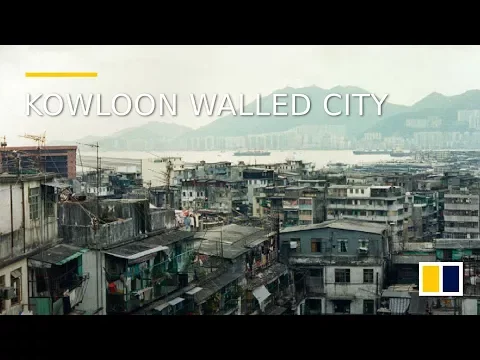
But what fascinated also worried. Sanitary conditions were precarious, and the risk of fires or structural collapses grew each year. The Hong Kong government, pressured by public opinion and health risks, decided to completely demolish the city and relocate the residents.
The operation was one of the most complex in the urban history of the territory. Demolishing a city that was, in practice, a single block of concrete required planning and months of work. Gradually, machines brought down the buildings, revealing the void where one of the most emblematic places of the 20th century once existed.
What Remains of the Walled City
Today, in the same location, there is the Kowloon Walled City Park, a park with trees that preserves part of the ancient walls and original structures. Replicas of alleys and scale models tell the story of that place which, for almost a century, defied the logic of modern urbanism.
The space is considered a symbol of human resistance and improvisation — a reminder of how far society can go when left to its own devices, but also a testament to people’s ability to adapt.
The walled city has disappeared, but its image remains alive. It is portrayed in films, games, and series, often used as a metaphor for a dystopian, disordered, and at the same time fascinating world.
A Colossus of Concrete and Humanity
At its peak, the former walled city concentrated 13 times more people per square meter than Manhattan, yet its residents created a functional and self-sufficient life. Amid shadows and artificial lights, a complex, vibrant community emerged, full of stories.
Demolished but never forgotten, this city continues to be a mirror of the human limit between chaos and survival. A reminder that, even surrounded by concrete, life always finds a way to continue.







-

-

-

-

-

-

114 pessoas reagiram a isso.