





 Portuguese
  English
  Spanish
  5 min of reading
  0 comments


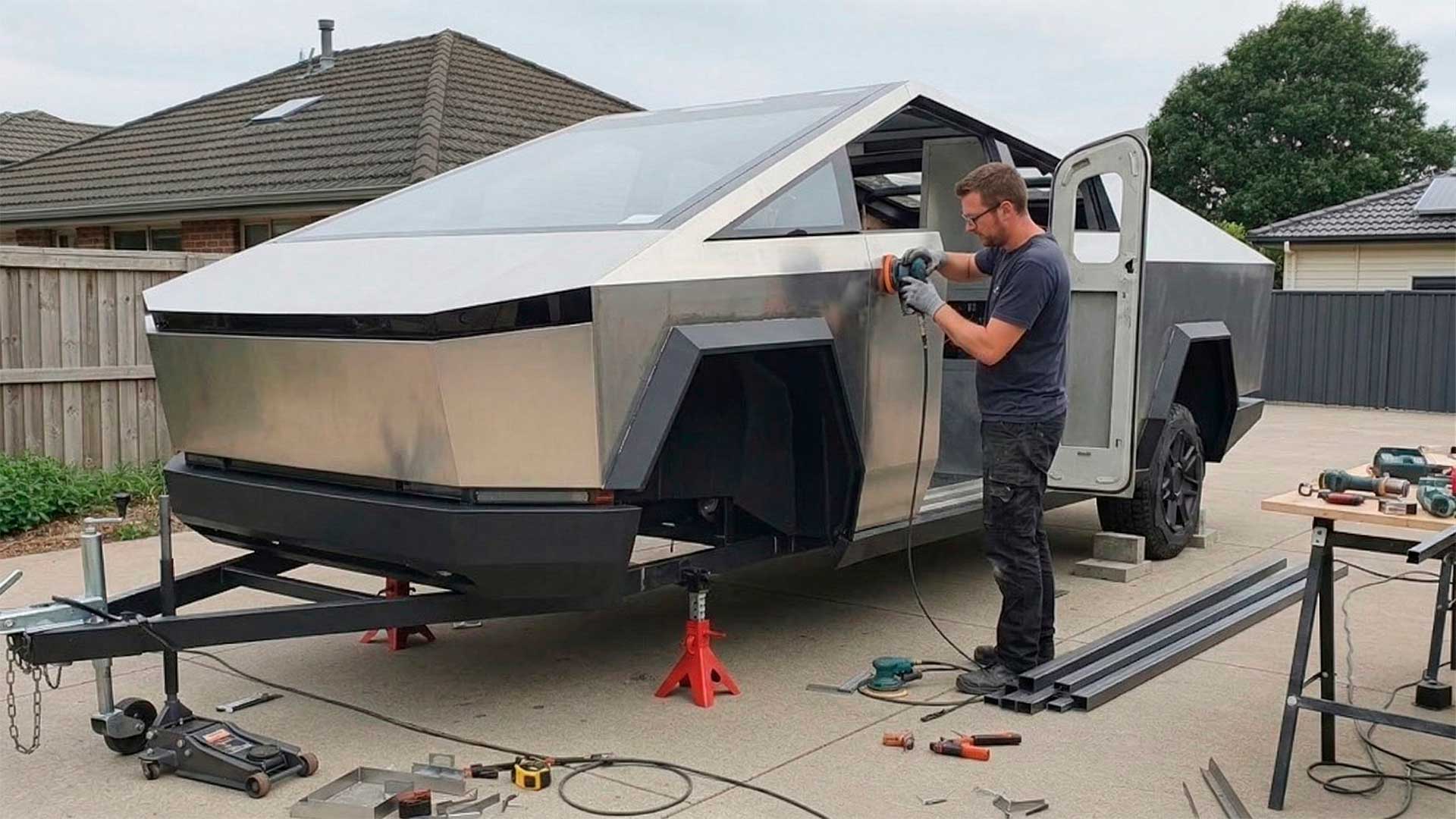
DIY Project That Transforms a Common Trailer into a Mini Camper Inspired by the Tesla Cybertruck Captivates Attention for Its Creativity, Low Cost, and Smart Design and Storage Solutions
A DIY project has caught attention on social media and in DIY, campervan, and home building communities by showing how an old simple trailer can be transformed into a futuristic mini camper inspired by the Tesla Cybertruck for about $500 in basic materials.
The initiative demonstrates how creativity, simple tools, and planning can transform a common trailer into a compact camping vehicle, with livable interior space, modern lighting, and functional modules.
The final result is impressive because the project primarily uses wood, simple panels, and metallic structures, yet reproduces geometric and angular lines similar to the futuristic design of the Tesla electric pickup truck, presented by Elon Musk in 2019.
-
The Brazilian colonial city that stopped in time and shares territory with a rocket launch base.

-
79-year-old woman challenges limits, visits 193 countries in the world after 56 years of planning and reveals the behind-the-scenes of a global journey that few have managed to accomplish.

-
These are the drivers who may stop paying tolls on highways in a project that promises to reduce costs for those who live from transportation in Brazil.

-
(Video): Italian pilot lands plane on moving train at 120 km/h and achieves unprecedented feat in aviation, even with a narrow runway and without direct visual contact.


In addition to its striking aesthetics, the project also bets on practical solutions for travel and camping, including storage compartments, a sliding outdoor kitchen, and cockpit-style interior lighting.
Initial Structure Shows How a Simple Trailer Base Can Become the Foundation of a Compact and Functional Camper
The project starts with something extremely simple. A common trailer parked in a workshop, which receives the first structural layer to support the entire construction.
The first step consists of installing a base of plywood over the metallic structure of the trailer, creating a solid platform that will serve as the floor for the future camper. On top of this base, the builder positions beams and wooden slats that form the structural skeleton of the cabin.
Each piece is carefully measured to ensure that the weight is evenly distributed and that the assembly remains stable during transport. This stage is considered crucial because the durability and safety of the camper depend directly on this initial foundation.
With the skeleton assembled, the overall shape of the structure begins to emerge, indicating the slanted and triangular lines inspired by the Cybertruck, marked by angular surfaces and geometric design.
Wood Panels and Slanted Structure Create a Futuristic Visual Inspired by the Tesla Cybertruck

After the initial structure, the builder begins to install wood panels on the walls and ceiling, using tools like a nail gun to speed up the assembly process.
Gradually, the original trailer disappears beneath the new structure, giving way to a compact cabin that resembles a futuristic mini trailer or micro motorhome.
The slope of the side walls and the angular shape of the roof help create the aesthetic that recalls the look of the Cybertruck, known for its geometric lines and almost military appearance.
In addition to aesthetics, these angles also aid in the structural rigidity of the cabin. In small projects like this, every engineering detail influences the strength of the assembly, especially during road movement.
The construction shows how relatively simple woodworking techniques can yield a surprisingly visual result when combined with modern design and careful planning.
Sliding Kitchen and Storage Modules Increase the Functionality of the Compact Camper
One of the most creative parts of the project is the installation of integrated sliding modules into the camper body.
One of the compartments serves as a retractable outdoor kitchen, which can be pulled out sideways from the body. This system allows food preparation outside without occupying the internal space.
The module is installed with metal tracks and precise fittings, ensuring that the mechanism can be opened and closed easily.
In addition to the kitchen, the project includes secret compartments and storage areas, essential for those who plan to travel or camp for longer periods.
This type of solution is common in professional vans and motorhomes, but here it appears in a totally DIY and low-cost project, which further increases the interest in the final result.
Interior with LED Lighting Creates a Futuristic Environment and Transforms the Small Trailer into a Livable Space
The interior of the camper is designed to be compact yet functional.
The ceiling receives triangular panels illuminated by LED strips, creating an atmosphere reminiscent of spaceship cabins or futuristic game rooms.
The lights in shades of white and purple help enhance the geometric design and make the environment more modern.
The internal space also includes shelves, electrical outlets, and hidden compartments, allowing for the organization of camping gear, portable batteries, and utensils.
Even with reduced dimensions, the final result shows that the trailer can be transformed into a small mobile refuge for travel and adventures, with basic comfort and striking style.
Final Result Impresses by Transforming Old Trailer into a Futuristic Mini Camper Ready for the Road
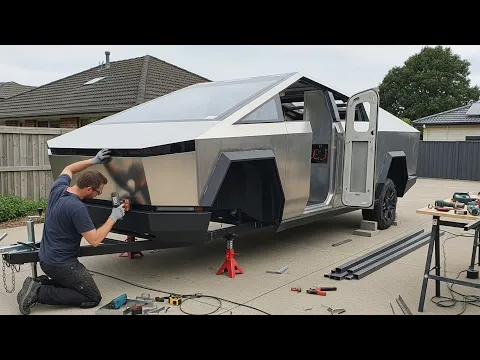
In the final stage, the builder installs external metal panels, which reinforce the structure and give visual finishing to the project.
The metallic surfaces help create the aggressive and angular look characteristic of the design inspired by the Cybertruck.
The camper also receives hatches, external compartments, and dark panels on the ceiling, completing the modern and functional look.
When the project is completed, the simple trailer that appeared at the beginning virtually disappears. In its place emerges a compact futuristic mini camper, ready to be hitched to a vehicle and taken on the road.
This case shows how DIY projects can become interesting alternatives for those looking to travel economically or build their own personalized camper without spending thousands of dollars on commercial motorhomes.
This type of initiative also accompanies the growth of the van life and campervan culture, which has been gaining popularity in various countries as a more flexible and independent form of tourism.
Now the question arises that is dividing opinions among camping enthusiasts and DIY builders. Can projects like this really replace traditional campers, or are they just creative garage experiments? Share your opinion in the comments and join the discussion.








-

-

-

10 pessoas reagiram a isso.