





 Portuguese
  English
  Spanish
  8 min of reading
  0 comments


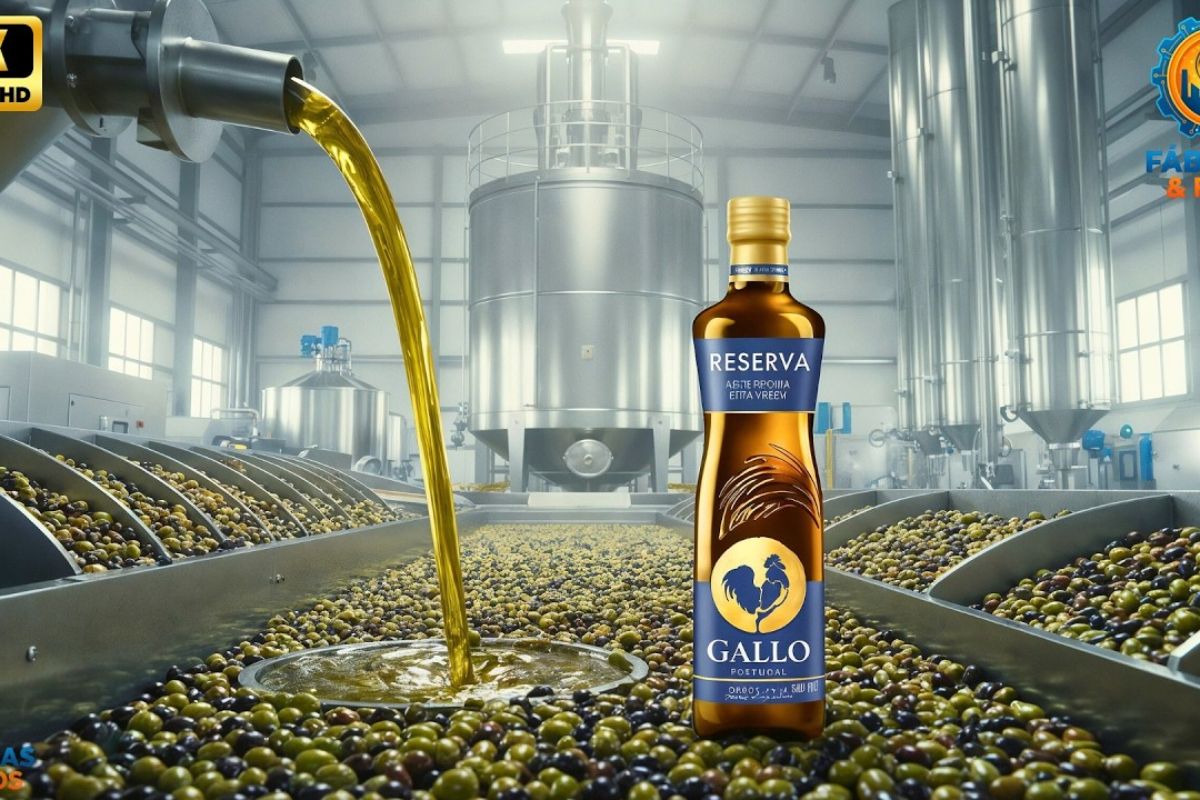
With Windows of Only 6 to 12 Hours Between Harvest and Extraction and a Yield of 15% to 20% from the Fruit, the World of Olive Oil Depends on Extreme Control to Produce Real Extra Virgin in a Market Surrounded by Adulterations and Cheap Blends.
Every year, more than 3 million tons of olive oil are produced on the planet. That’s so much that if this oil were put in one-liter bottles, it would form a continuous line crossing entire oceans. Behind every bottle of olive oil lies an industrial chain that is precise, delicate, and at the same time brutal, where minutes of delay or a few degrees higher in temperature can destroy the aroma, flavor, and identity of an entire batch.
Inside a modern oil mill, the factory specializing in olive oil looks more like a high-tech laboratory. From harvest to final filtration, everything is timed and monitored. Between 6 and 10 kilograms of perfect olives are required to obtain a single liter of real extra virgin olive oil, in an environment where sensors, centrifuges, and stainless steel tanks work to protect the oil from its greatest enemy: oxidation. And all of this happens in a global market where estimates point to a worrying level of fraud and adulteration.
From the Olive Tree to the Oil Mill: Where the Journey of Olive Oil Begins

The journey of olive oil begins long before the bottle, still in the field. The olive tree spends the whole year accumulating energy in the fruit, and any carelessness during this phase has a direct impact on what will later be considered either common olive oil or extra virgin olive oil.
-
Brazil’s nuclear submarine with a speed 5 times greater than normal advances after nearly 50 years and R$ 40 billion spent.

-
A Brazilian island charges R$ 0.50 to receive visitors and prohibits any new residents.

-
Why was the Great Wall of China built? The truth that many are unaware of!

-
At 73.8 meters tall, the world’s tallest teapot-shaped building has 15 floors, ensures stability, and impresses with an internal space of 28,000 cubic meters.


The fruit is small, bitter, resilient, cultivated for thousands of years on the banks of the Mediterranean. Ancient peoples treated this tree as a symbol of life, strength, and prosperity.
Today, it feeds one of the world’s oldest yet most modern industrial chains, connecting agricultural tradition to precision engineering focused on high-quality olive oil.
Olive Oil Harvest: When Every Minute Counts

The harvest is the first critical point for olive oil. If it is too slow, the fruit begins to ferment. If it is too aggressive, it multiplies invisible damage that will later manifest in acidity and aroma of the oil.
In the traditional method, harvesting is done by hand. Nets are spread under the trees, and workers use small rakes to carefully knock the olives down.
This type of harvesting reduces impacts, avoids bruising, and slows down the oxidation that spoils the oil, preserving the potential for real extra virgin.
On the other side is mechanized harvesting. Huge machines surround the tree, vibrate the trunk, and knock the fruits down in seconds.
The efficiency is impressive, but any wrong adjustment can crush olives, break branches, and initiate immediate chemical deterioration.
As soon as the fruit touches the ground or the machine’s tray, the clock starts ticking. The best olive oil factories work with a limit of 6 to 12 hours between harvest and extraction.
Beyond that, natural fermentation intensifies, aromatic defects arise, and the potential for extra virgin olive oil is lost forever.
Extreme Cleaning and Selection: Only Impeccable Olives Become Extra Virgin Olive Oil
After the harvest, the olives quickly go to the mill in ventilated boxes, without excessive heat and without excessive weight. By the time they reach the factory, the future olive oil undergoes a rigorous sorting process.
The first stage is the removal of impurities. Leaves, branches, dust, and any foreign bodies are eliminated by industrial fans and rotating water tanks.
A single crushed leaf next to the fruit can make the oil excessively bitter, due to compounds released under pressure. Next, fine selection begins.
The olives pass through vibrating conveyors, sensors, and, in cutting-edge oil mills, through optical sorters. High-precision cameras illuminate each fruit while jets of air instantly remove any stained, fermented, or insect-damaged olive.
This rigor has a simple and harsh reason: for every liter of real extra virgin olive oil, 6 to 10 kilograms of perfect olives are needed. If a small percentage is fermented, the sensory profile of the entire batch is lost, no matter how advanced the machines are.
Grinding and Malaxation: The Technological Heart of Olive Oil
When the selection ends, the most technological part of the olive oil factory begins. Inside the mill, the sound of machines and the intense aroma of freshly ground paste indicate that the transformation is underway.
In the past, huge granite stones crushed the olives slowly. Today, metal discs spin at high speed, grinding pulp, pit, and skin until a homogeneous paste is formed.
It is in this paste that the aromas, antioxidants, and oil still trapped within the cells are found. Grinding, however, is not the end, but the preparation.
The next step is malaxation. The paste is placed in stainless steel tanks and slowly stirred by internal paddles.
It is as if the olive paste receives a controlled massage so that tiny droplets of oil merge and form larger drops, which can later be separated.
Temperature is a critical point. Above about 27 degrees Celsius, the oil loses freshness and may cease to be extra virgin.
Therefore, sensors monitor each degree while experienced operators observe the aroma rising from the tanks. Many say they can sense the ideal point by smell.
Centrifuge, Color, and the Myth of Perfect Olive Oil
After malaxation, the paste goes to the horizontal centrifuge, a machine that revolutionized the olive oil industry.
Inside it, a cylinder spins at high speed, applying a force equivalent to several times gravity. In seconds, three elements are separated: water, solids, and oil.
The oil that comes out of the centrifuge barely touches the air, which preserves its flavor and reduces oxidation. The contrast with ancient methods is huge: what used to take hours now happens in moments, with more purity and control. And here emerges a detail that dismantles one of the greatest shelf myths.
The freshly extracted oil does not appear golden and crystal clear as in advertisements. It is often cloudy, thick, and a deep green. This shows that color is not synonymous with quality. There are excellent oils that are quite yellow and mediocre oils that are incredibly green.
The color of the oil depends on variety, ripeness of the fruit, and natural pigments, not on quality level.
Filtered or Unfiltered Olive Oil: Stability Versus Intensity
Once extraction is complete, begins a strategic decision that changes the appearance, durability, and even the aromatic profile of the oil. To filter or not to filter.
In modern oil mills, filtering acts as a fine polish. The oil passes through cellulose plates or membranes that remove impurities without altering its main natural compounds.
The result is a brighter oil, more stable, and with a longer shelf life.
On the other hand, unfiltered oil—the famous cloudy oil—retains suspended particles that provide intense flavor but accelerate oxidation.
It is a vibrant and powerful oil in the first days, but ephemeral, ideal for quick and fresh consumption. Neither is automatically superior. They are different cycles within the universe of olive oil.
Tanks, Inert Gases, and Total Surveillance of Olive Oil
After filtering is defined, the oil goes to high-standard storage tanks. These are huge stainless steel structures that function as safes.
Light does not enter, temperature is controlled, and air contact is practically zero.
The empty space is filled with nitrogen or argon, inert gases that create an invisible shield against oxidation. A simple careless airflow can compromise weeks of work with oil, which is why this protection is considered non-negotiable.
Sensors scattered throughout the room monitor temperature, pressure, vibration, and even chemical variations. If the temperature rises above the ideal range—generally between 14 and 18 degrees Celsius—a warning is triggered.
In high-quality oil mills, olive oil storage resembles more of a laboratory operation than a common industrial warehouse.
Quality Control: When Science and Palate Judge Olive Oil
While the oil rests in the tanks, quality control steps in. Analytical equipment identifies fatty acids, volatile compounds, and chemical markers that determine whether the product can truly be labeled as extra virgin olive oil.
This helps prevent fraud, unwanted blends, and misleading labeling. Even so, the human palate is still decisive for the fate of the oil.
Panels of trained tasters evaluate samples in search of balanced fruitiness, clean bitterness, and characteristic pungency. A slight defect, almost imperceptible to the average consumer, can disqualify an entire batch.
Only after this combination of chemical examinations and sensory tasting is the approved oil sent for final packaging.
Proper Packaging: The Last Defense of Olive Oil Against Time
In the bottling stage, a simple mistake can ruin all previous care. Transparent bottles allow light to enter and accelerate oxidation.
Therefore, good producers use dark bottles, metal cans, or opaque containers to protect the oil.
Bottling machines use vacuum or nitrogen injection inside the bottles before sealing. This step expels residual oxygen and prolongs the freshness of the oil until it reaches the shelf and, finally, the consumer’s kitchen, maintaining aroma and flavor for much longer.
Global Journey of Olive Oil and Where Fraud Enters the Story
Once it leaves the bottling line, the oil begins a journey that can cross continents. It originates on farms in Spain, regions of Portugal, Italy, or Greece and, days later, is inside climate-controlled containers crossing oceans.
Stable temperature, absence of light, and controlled vibration help preserve the oil’s profile until it reaches its destination.
Many olive oils found in supermarkets are blends, mixtures of batches from different countries to achieve fruitier, milder, or spicier profiles. This alone is not fraud; it is a commercial strategy.
The real fraud begins when the oil is mixed with cheaper oils, such as soybean or sunflower, and is still sold as extra virgin. In scandals already revealed in the international market, there have been batches with less than 20 percent of real oil.
This scenario has led governments and international bodies to create stricter rules, certifications, and mandatory analyses to protect the consumer and the quality olive oil market itself.
How the Consumer Can Recognize Truly Authentic Olive Oil
At the end of this brutal and precise chain, the oil reaches the shelf. It is here that the average consumer enters the story, often unaware of what has happened from the olive tree to the bottle.
Some signs help distinguish more serious products from suspicious offers.
Among the main points to watch for are:
• Skeptical of extra virgin olive oil priced significantly below the average
• Prefer dark packaging or cans, which better protect the content from light
• Look for the harvest date, not just the expiration date, as the peak of the oil often falls within about 12 months after harvest
After learning everything that happens behind a simple bottle, it becomes clear that real extra virgin olive oil requires impeccable raw material, rapid extraction, and cutting-edge technology, which does not align with unrealistically low prices.
Now that you know the behind-the-scenes of this process, let me know in the comments: after understanding how olive oil is produced and protected, will you choose olive oil bottles differently at the supermarket?








Seja o primeiro a reagir!