





 Portuguese
  English
  Spanish
  3 min of reading
  0 comments


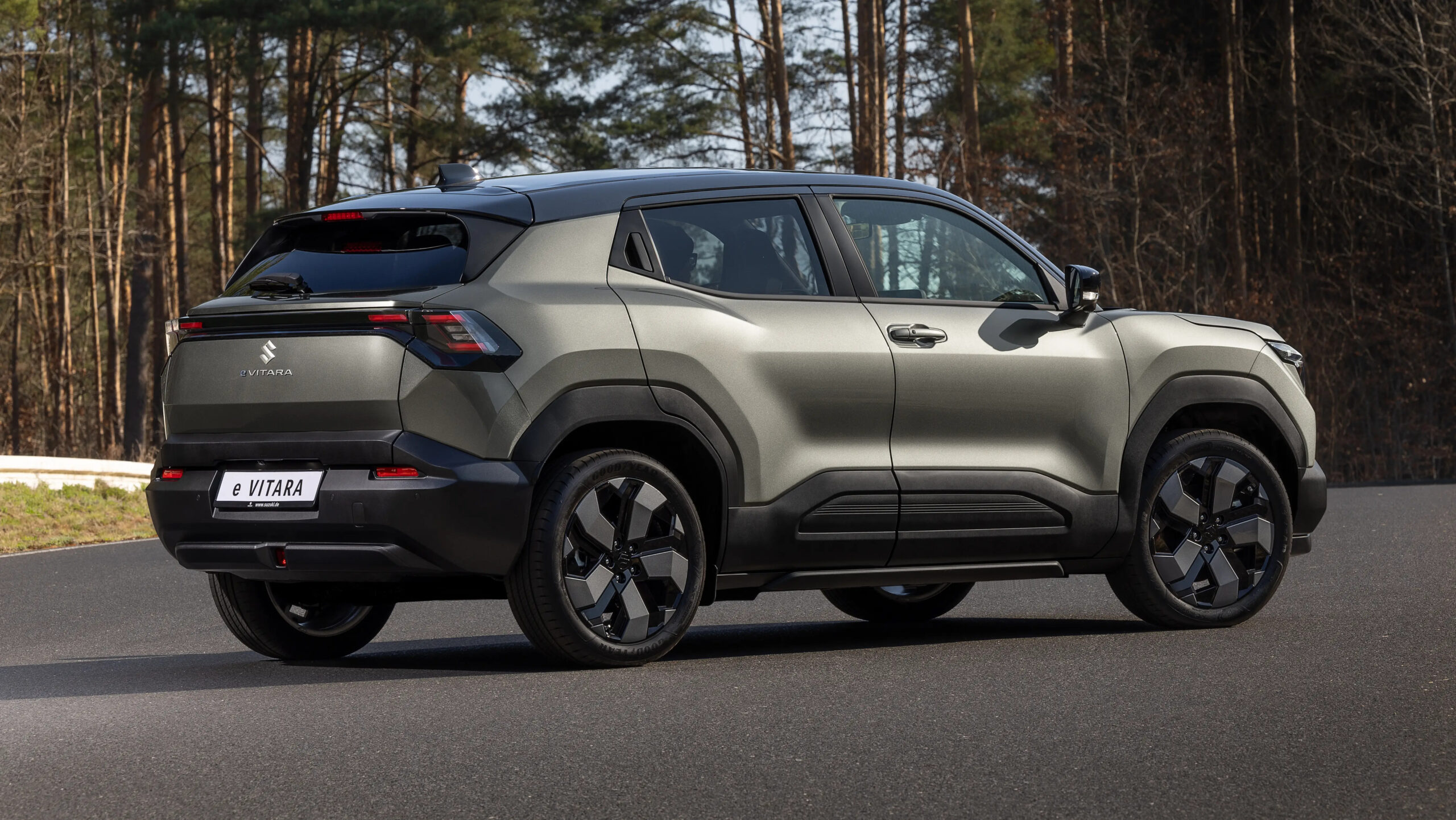
Suzuki Electric Vitara Debuts in Brazil with Two Motors, 4×4 AllGrip-e Traction, and BYD LFP Battery, Marking the Brand’s Entry into the EV Market.
Suzuki takes a decisive step towards electrification by confirming the arrival of the Electric Vitara (e-Vitara) in Brazil. Expected to land in the country by March, the model marks the brand’s debut in the 100% electric segment and comes with an unusual technical proposition among compact SUVs: electric all-wheel drive, two motors, and a battery sourced from BYD.
Produced in India and developed in a technological partnership with Toyota, the e-Vitara emerges as a differentiated alternative in an increasingly electric market dominated by front-wheel drive SUVs with an urban focus.
Suzuki Electric Vitara and the Brand’s Debut in the EV Market
The Electric Vitara is the first mass-produced electric car from Suzuki. Unlike experimental projects, it is born as a global product, designed to cater to markets such as India, Europe, and now Brazil.
-
Less than a Tera TSI, up to 710 km of range and charging in 9 minutes: the new BYD Song Ultra expands the Chinese brand’s bet on increasingly faster, more technological, and competitively priced electric SUVs.

-
With a 1.0 engine producing 75 hp and costing less than R$ 70,000, Fiat’s car returns to the podium as the cheapest in the country; a temporary promotion for the 2026 Like version reduces the price of the Fiat Mobi.
-
With a mild hybrid system of 48 V, 176 hp and a price of R$ 175,990 in the Sahara version, the new Jeep Renegade changes mostly on the inside, improves slightly in fuel consumption, and remains almost the same car.
-
With a 293.5 cm³ engine and a range of up to 400 km with a 14.1-liter tank, the Honda CB 300F Twister 2026 has up to 24.7 hp, an initial price of R$ 25,150, and already exceeds R$ 29,000 in the Fipe Table.



The choice of the Vitara as the first electric vehicle is not random. It is a well-established name associated with reliability, mixed use, and off-road capability, attributes that Suzuki aims to preserve even in the transition to electric mobility.
Two Electric Motors and 4×4 AllGrip-e Traction
One of the main differentiators of the Suzuki Electric Vitara is the AllGrip-e system, an electric evolution of the brand’s traditional all-wheel drive. In the AWD configuration, the model uses two electric motors, one on each axle.
This setup delivers around 135 kW (approximately 184 hp) and torque around 300 Nm, with instant electronic distribution between the wheels. In practice, this improves traction on slippery surfaces, inclines, sand, and dirt roads, something rare among compact electric SUVs sold in Brazil.
BYD-Supplied LFP Battery and Focus on Durability
The Electric Vitara uses LFP (Lithium Iron Phosphate) batteries supplied by BYD, one of the largest battery manufacturers in the world. This type of battery prioritizes durability, thermal stability, and safety, even if it sacrifices a bit of energy density compared to NCM batteries.
Versions with 49 kWh and 61 kWh are expected, depending on the configuration. Estimated range varies between 310 and 395 km in real-world use, potentially reaching around 420 km in more optimistic cycles, depending on the version.
Shared Platform with Toyota
The e-Vitara is built on a platform developed in partnership with Toyota, a result of the strategic alliance between the two Japanese automakers. This base accommodates different battery capacities and traction configurations.
This collaboration ensures a project with conservative engineering, focusing on structural reliability and well-tested solutions, aligned with the historical profiles of the two brands.
Performance Consistent with the Electric SUV Proposal
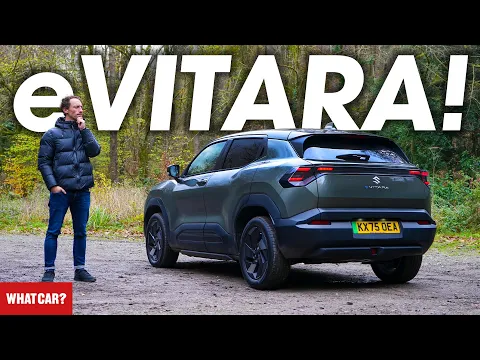
Even without a sporty focus, the Suzuki Electric Vitara presents competitive numbers. The all-wheel drive version accelerates from 0 to 100 km/h in about 7.4 seconds, performance sufficient for urban and highway use with ease.
The top speed is around 150 km/h, a common limiter in electric SUVs aimed at efficiency and range preservation.
Charging and Everyday Use
The Electric Vitara supports fast charging in direct current (DC), allowing it to charge from 10% to 80% in approximately 40 to 45 minutes, depending on the charger.
At residential chargers or wallboxes, a complete charge takes about 6 to 7 hours, making the model viable for daily urban use and medium trips.
Positioning in the Brazilian Market
In Brazil, the Suzuki Electric Vitara is expected to occupy a little-explored space: that of a compact electric SUV with all-wheel drive, something non-existent among today’s best-selling models.
The proposal combines robustness, electrification, and Japanese engineering, targeting consumers who want to enter the electric world without sacrificing versatility and safety on different types of terrain.
The Suzuki Electric Vitara arrives in Brazil as a strategic and bold project. With two electric motors, 4×4 AllGrip-e traction, and BYD-supplied LFP battery, the model breaks away from the standard urban electric vehicle and bets on a more complete proposal.
More than just Suzuki’s first electric vehicle in the country, the e-Vitara signals how the brand intends to position itself in the era of electrification: focusing on reliability, real-world use, and differentiated technical solutions.









-

-

-

-

5 pessoas reagiram a isso.