





 Portuguese
  English
  Spanish
  4 min of reading
  0 comments


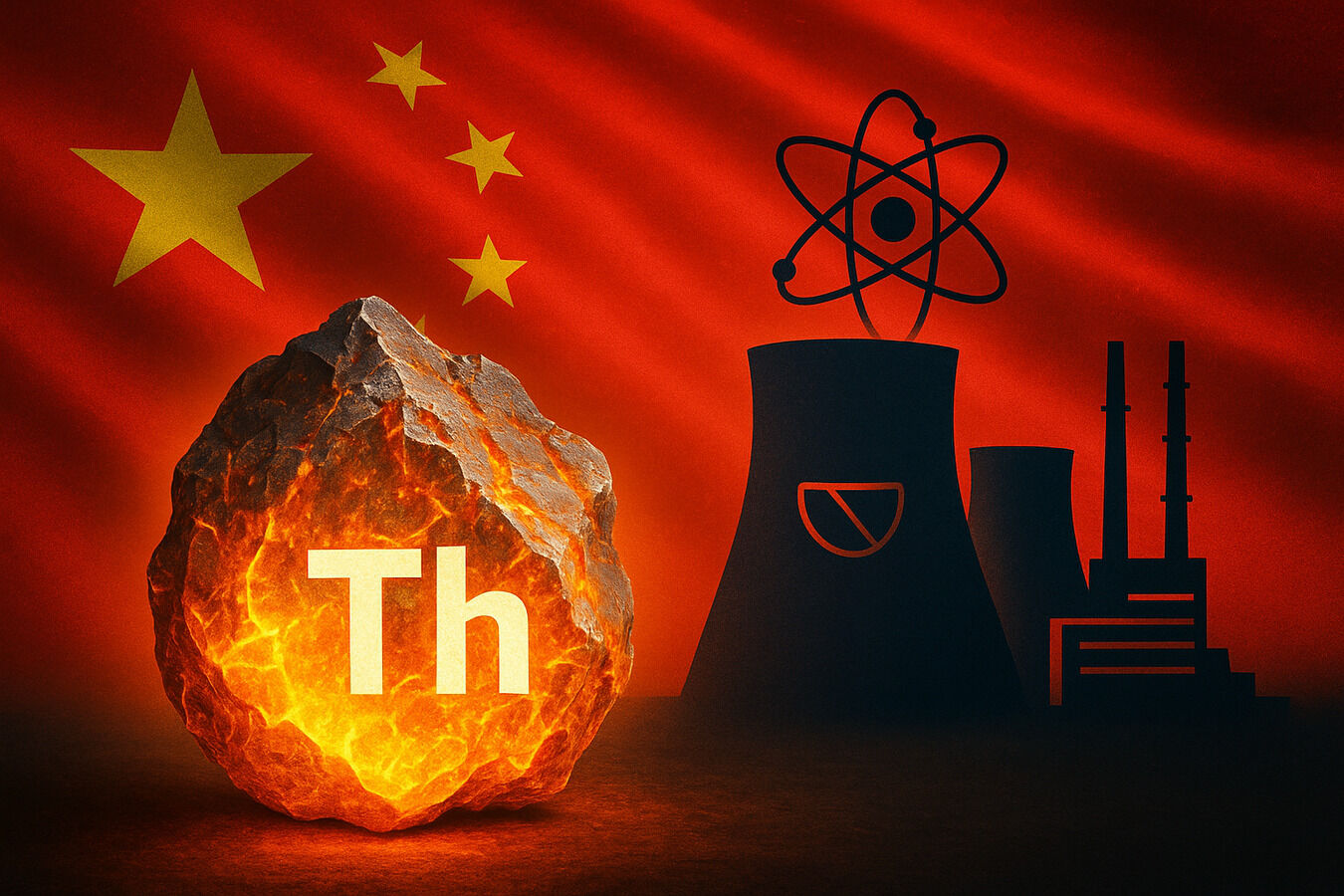
Discovery Of 1 Million Tons Of Thorium In Inner Mongolia Could Secure Energy Autonomy And Redefine The Global Nuclear Technology Dispute
Chinese researchers claim to have found a virtually inexhaustible energy source capable of powering the country for the next 60,000 years. This is thorium, an abundant radioactive element that, when used in molten salt nuclear reactors, can generate large amounts of electricity more safely and efficiently than conventional systems.
The discovery was made at the Bayan Obo mining complex in Inner Mongolia. Scientists estimate that there are about 1 million tons of the mineral available for extraction.
According to a declassified report obtained by the South China Post, these previously overlooked resources could represent a profound change in the global energy matrix.
-
Inflation in March reaches 0.88% according to IBGE and pressures the Brazilian economy, impacting family budgets and requiring more strategic decisions to maintain financial control.

-
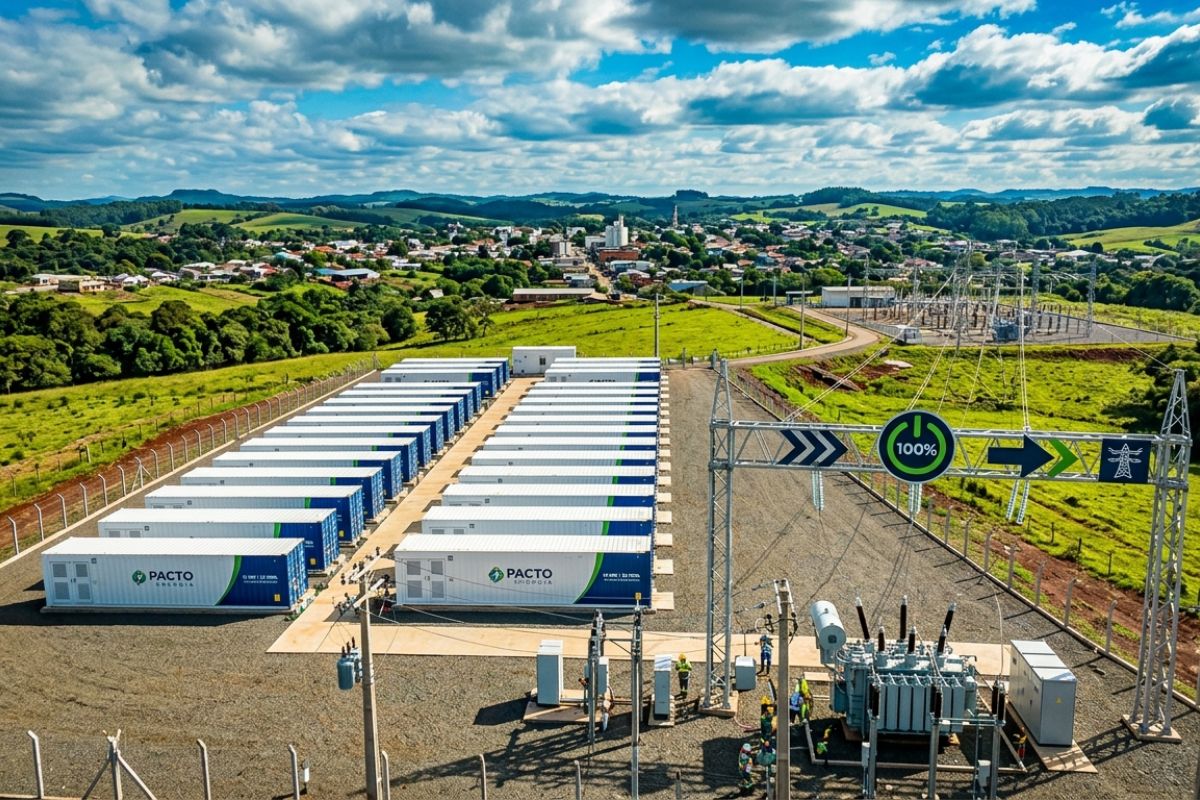
In Paraná, distributor Pacto connects 100% of the load in Coronel Vivida to batteries: a BES of 10 MW and 20 MWh costs just over R$ 30 million and lowers the local tariff now.
-
With a dependence of up to 80% on gas imported from the United States, Mexico is responding with a robust energy strategy, betting on shale gas, creating a scientific committee, and preparing to expand natural gas production to reduce vulnerability and strengthen its energy security in the coming years.

-
The United States proposes to Brazil a critical minerals agreement with a minimum price to combat Chinese dumping and priority for investment, but the Planalto is blocking the signing out of fear of upsetting China and due to electoral calculations in a year of competition.

The most important aspect, according to experts, is that this technology could reduce reliance on fossil fuels and even eliminate the need for uranium extraction.
A Discovery Amidst The Global Dispute
The revelation comes at a time of intense technological rivalry between China, the United States, and Russia. All are seeking to consolidate nuclear energy dominance as a pillar of their energy policies.
During the same period, the U.S. government has made an agreement with Ukraine to explore rare mineral reserves, intensifying the race for strategic resources.
For China, thorium may be the differentiator that can ensure energy autonomy for thousands of years.
How Thorium Could Change Nuclear Energy
Unlike uranium-235 used in conventional reactors, thorium is not fissile on its own. It must be bombarded by neutrons to transform into uranium-233, which can sustain fission and generate heat for electricity production.
Thorium molten salt reactors (TMSRs) stand out for four factors:
- Safety: they operate at high temperatures but with fuel diluted in liquid salts, reducing the risks of explosions and nuclear meltdowns.
- Less Waste: burning thorium produces much less radioactive waste than uranium.
- Efficiency: according to the World Nuclear Association, it can generate up to 200 times more energy than uranium.
- Abundance: it is 500 times more common in the Earth’s crust and could eliminate the need for uranium extraction.
Additionally, this technology would allow the utilization of a resource present in various countries, expanding access to nuclear energy.
Feasibility And Challenges
The enthusiasm for thorium is not new. Since the last century, scientists have evaluated its use, but high costs and lack of infrastructure have delayed adoption.
China had already estimated that its reserves could supply the country for 20,000 years. Now, the new report triples that projection. Still, technical and economic obstacles remain to enable large-scale use.
Development requires investments in research and construction of specific reactors, different from current ones.
The Role Of China And The Progress Of The Project
Beijing is leading an ambitious project to build the first large-scale thorium reactor in the Gobi Desert. It is expected to generate 10 megawatts of electricity and serve as a model for future plants.
The government claims that the system will be operational by 2029, which would be an important step towards energy independence.
The United States and Russia are also investing in the technology, with advanced research and tests on thorium-based fuel cycles.
Thorium: Potential And Geopolitical Implications
Despite the benefits, thorium does not eliminate the challenges of nuclear energy. Its extraction and processing are still costly, and the adaptation of electrical and industrial grids may take decades.
In the geopolitical realm, mastery of this technology could alter the balance of power. A country capable of producing nearly unlimited energy would have a strategic advantage over economies dependent on oil, gas, and uranium.
A Chinese researcher, speaking anonymously to the South China Post, emphasized that “every nation has thorium,” which could democratize access to nuclear energy.
Uncertain But Promising Future
If China succeeds, it could lead a new era of nuclear energy. Thorium, due to its abundance and efficiency, has the potential to drastically reduce pollution and dependence on fossil fuels.
However, history shows that control over energy sources has always generated international disputes.
The almost infinite energy promised by this discovery could be a milestone for sustainability – or the beginning of a new race for power.
With information from Xataka.








-

-

-

-

-

-

22 pessoas reagiram a isso.