





 Portuguese
  English
  Spanish
  5 min of reading
  1 comment


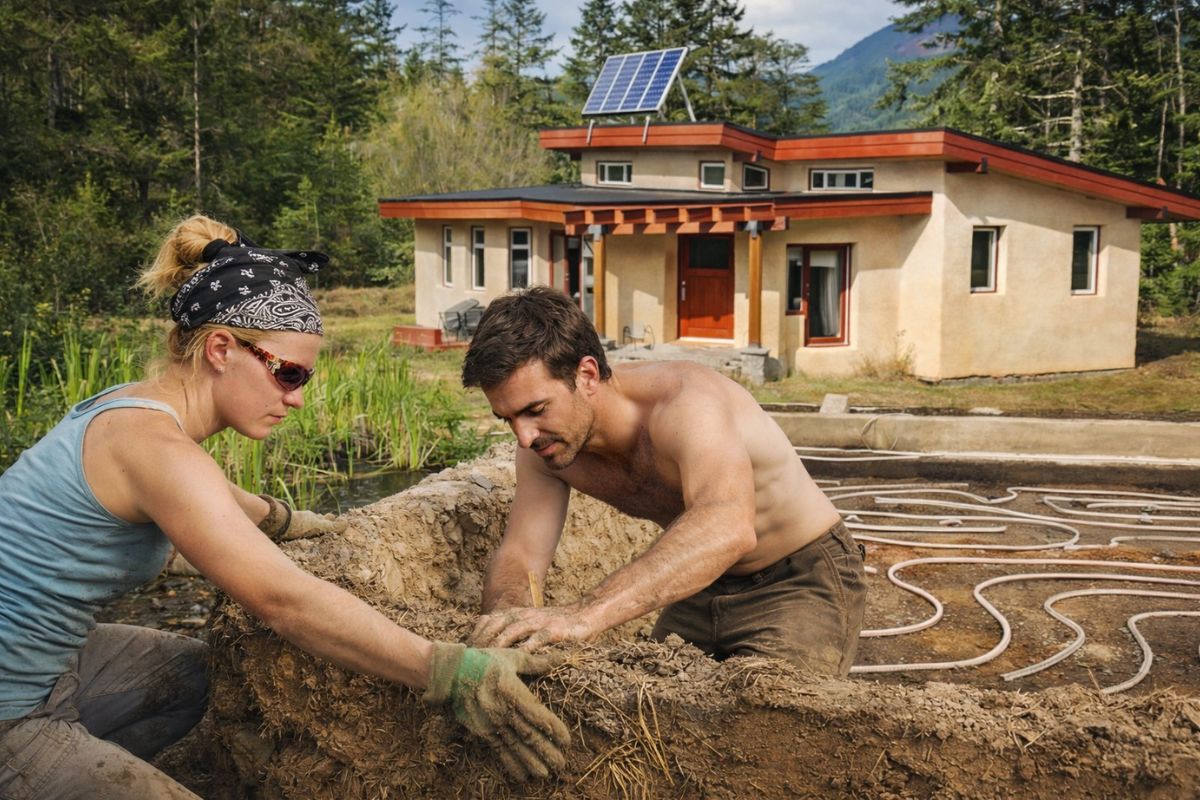


Built by a Couple with 60-Centimeter Walls, the Modern House Integrates Solar Panels, Deep Well, Rainwater Harvesting, Wet Zone for Treating Wastewater and Radiant Heating in the Floor, Proving that Natural Construction Can Deliver Technical Performance, Acoustic Comfort and Continuous Operation with Low Daily Use Consumption.
The modern house built by the couple brings together elements that, at first glance, seem difficult to reconcile: adobe, straw, and clay structure, daily use comfort, energy autonomy, and off-grid water operation. The project started as a retreat for people interested in green building but evolved into a habitable laboratory with replicable solutions.
Without relying on the rhetoric of “going back to the past,” the property adopts objective technical decisions: thick walls, passive sunlight design, cross ventilation, thermal mass in the floor, and independent systems for energy and water. The result is a quiet, stable, and functional house, focused on continuous performance and low operational complexity.
The Modern House Project and the Logic Behind Self-Sufficiency

The proposal was conducted by a couple who took charge of nearly all the execution, with occasional support from a carpenter, assistant, and collaborators during heavier stages. The goal was not only to raise a different property but to prove that a modern house can combine contemporary aesthetics, comfort, and environmental engineering into a single integrated system.
-
Between tunnels, bridges, and billions in investment, Istanbul is preparing to receive a 125-kilometer railway that crosses continents, enhances the circulation of goods and passengers, and changes the strategic outlook of Turkish transportation.

-
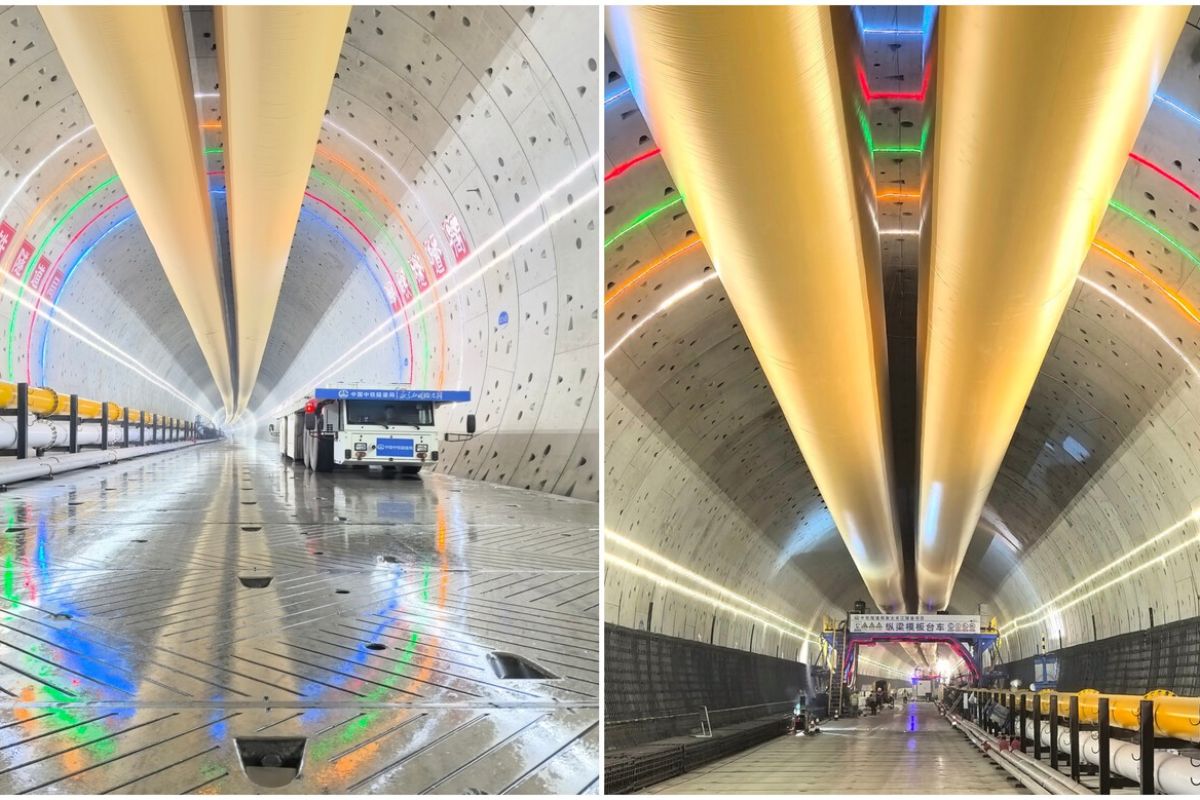
China completes the most critical section under the Yangtze River with the intelligent tunneling machine Linghang, excavating 11.32 continuous kilometers at depths of up to 89 meters and transforming the Chongming-Taicang tunnel into a landmark that redefines the scale of high-speed rail engineering in the 21st century.
-
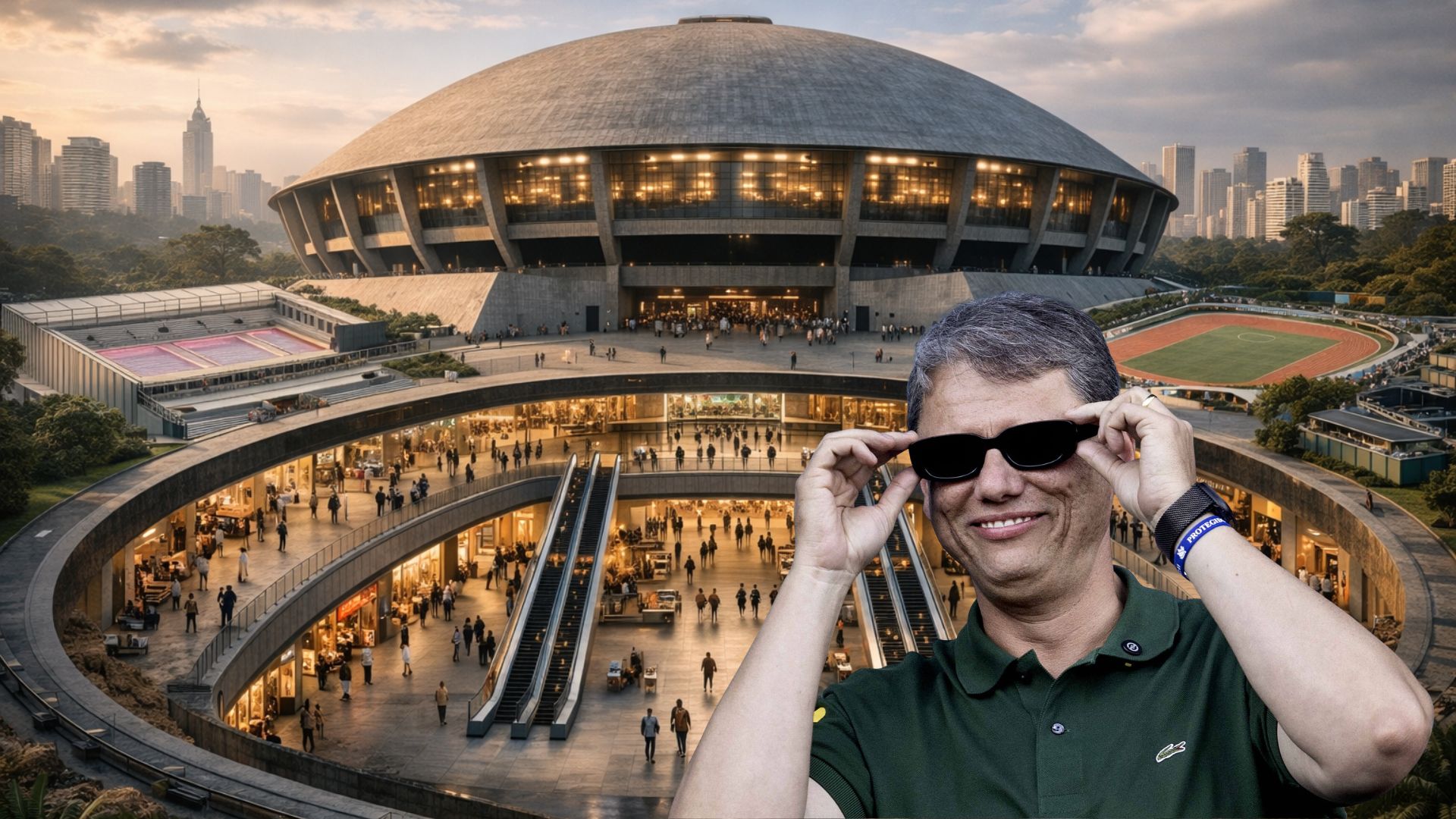
The government of São Paulo surprises South America with a plan to transform the famous Ibirapuera with underground shops, air conditioning, and a 25-year concession in a billion-dollar project that expands the audience, alters a protected area, and provokes an immediate reaction.
-
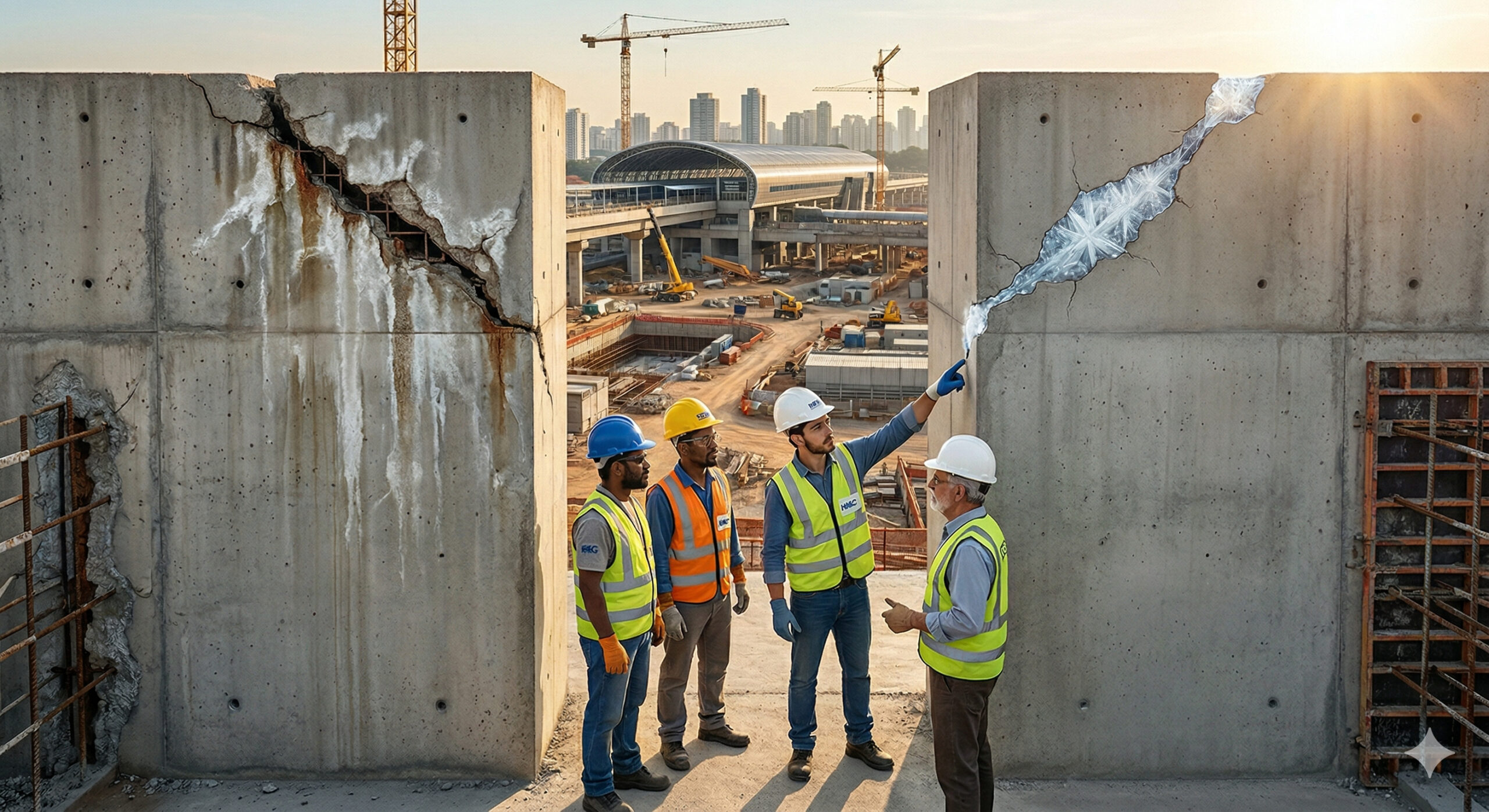
With a lifespan of up to 60 years and a cost up to 30% higher than conventional concrete, self-healing concrete is already being used in Brazil to eliminate leaks, reduce maintenance, and is changing the real cost of construction projects.

The residence was designed in an open plan, with approximately 1,000 square feet of internal space, of which about 200 square feet were reserved for the machinery room. This choice is not a detail: it shows that in an off-grid house, the technical infrastructure stops being a “supporting role” and takes center stage in routine performance.
60-Centimeter Rammed Earth Structure, Seismic Design, and High-Intensity Execution

The structural walls are about 60 centimeters thick and are made from a mixture of sand, clay, straw, and water, finished with a clay-based plaster. Instead of merely functioning as a seal, they contribute to the support of the structure in various points.
This completely alters the construction logic compared to the conventional model of lightweight closure and columns.
The execution required drying control, crack monitoring, and waiting before final finishes. In a humid environment, this stage was particularly sensitive because the earthen wall needs to be kept protected until the roof is effectively secured.
The process also incorporated reinforcements for seismic scenarios, with cables anchored to the foundation and connected to the tops of the walls to reduce shear and roof collapse risks.
Energy, Water, and Sanitation: How the Modern House Works Off-Grid

On the energy axis, the residence operates with four solar panels in an isolated system, around 1 kW, in addition to a backup generator for contingency.
It is a configuration that prioritizes predictability: moderate power, monitored consumption, and redundancy for periods of low generation. In off-grid projects, operational security is as important as efficiency.

On the water axis, the house uses its own well of about 465 feet deep, rainwater harvesting, and a large-volume pressure tank to reduce the pump’s activation cycles. Wastewater treatment combines a septic tank for solid separation and a constructed wetland for natural polishing of gray and black water.

The system operates by gravity, without a continuous electrical demand, and relies on organic matter and plant roots for purification.
Real Comfort: Internal Silence, Radiant Heating, and Passive Solar Design
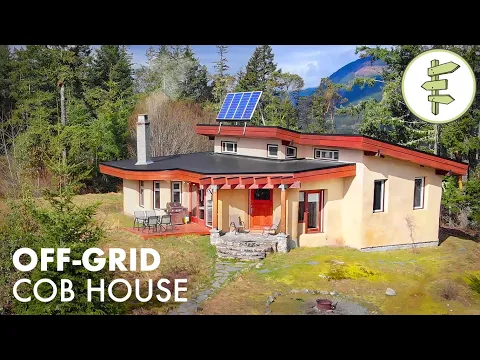

One of the most noticeable effects of the modern house is in acoustic comfort. Even with occasional external noise, the interior maintains a sense of shelter and sound stability, a characteristic associated with the thickness of the walls and the mass of the structure. Silence, in this case, is not an aesthetic accessory but a physical performance of the envelope.
In thermal comfort, the strategy combines windows oriented to receive winter solar gain, calibrated eaves to reduce direct sun exposure in summer, thermal mass floors, and hydraulic radiant heating.
With operable low and high windows, ventilation by height difference improves air renewal. It is a passive engineering approach that reduces dependence on equipment and softens climatic extremes.
Layout, Materials, and Maintenance: Why Experience Matters as Much as the Construction
The layout features two bedrooms, an integrated kitchen, an open social area, and a bathroom with curved geometries that show that natural construction does not mean formal limitation.
Curves were used not just for architectural language but also for structural behavior. Elements like built-in benches and continuous surfaces reinforce the reading of a sculpted space, not assembled from independent pieces.
In maintenance, the project requires a routine compatible with the materials: inspection of plasters, protection of critical areas against moisture, and attention to the performance of technical systems.
The couple reports that the construction was physically exhausting, with challenges beyond expected during rainy periods and slow drying. Still, the experience established a key point: sustainable performance depends on method, not improvisation.
What This Modern House Teaches for Those Thinking of Building Better
The case shows that self-sufficiency is not synonymous with technological isolation. On the contrary, the operation of the modern house depends on integrated decisions among architecture, hydraulics, energy, sanitation, and usage management.
It is not enough to choose “eco-friendly material”; it is necessary to design water flow, thermal strategy, electrical redundancy, and maintenance from the outset.
It is also clear that comfort and sustainability do not need to compete. When the house combines thermal mass, solar orientation, natural wastewater treatment, and well-sized technical infrastructure, it reduces vulnerabilities in daily routines and enhances resilience.
The main lesson is practical: sustainable construction only works truly when everyday performance becomes a design criterion, not a presentation promise.
In your assessment, which solution from this house would make the most difference in your daily life: thick walls for silence and thermal stability, off-grid power system, or water treatment through wetlands? And, if you were to start a project now, at which stage would you invest more planning to avoid rework later?






Muito anúncio impossível ler a matéria