





 Portuguese
  English
  Spanish
  2 min of reading
  0 comments


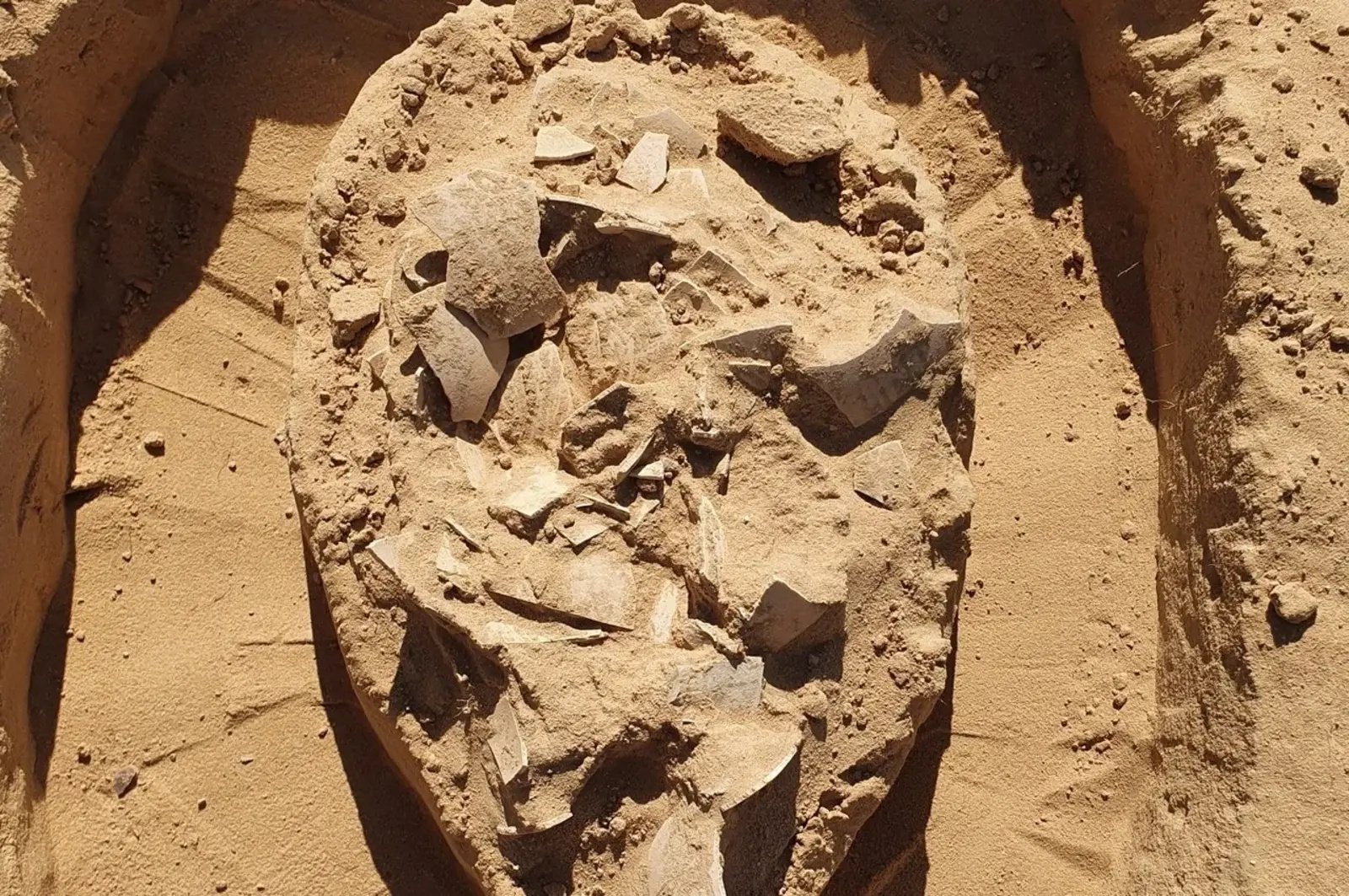
The discovery of ostrich eggs about 7,000 years old next to a campfire in the Nitzana area in southern Israel reinforces evidence of food preparation and consumption by prehistoric nomadic groups in a rare site in the desert
Archaeologists discovered ostrich eggs about 7,000 years old in the Nitzana area in southern Israel, next to a small campfire, in a finding that reinforces human use of the site and indicates food preparation and consumption by prehistoric nomads.
Find in the desert
The group of ostrich eggs was found nearby, with one of them positioned inside the campfire itself.
The arrangement reinforces that the eggs were intentionally gathered there, and not displaced by natural processes.
-
A study proposes transforming the Moon into a kind of quarantine center for samples brought from Mars and other worlds, creating a sterile and isolated barrier that would filter any unknown organisms before the material reaches Earth and its ecosystems.

-
Wax notebook falls into latrine 800 years ago, survives intact in Germany and reveals Latin notes that may expose the routine of a high-status medieval merchant.

-
After more than 11 years orbiting Mars, NASA declared the MAVEN probe lost, which disappeared after passing behind the Red Planet in December, began to spin abnormally, depleted its batteries, and never responded to controllers on Earth again.
-
China creates a capsule with artificial intelligence that scans the stomach in just 8 minutes and can reduce costs by up to R$ 1,400, paving the way for a new era of gastrointestinal diagnostics without tubes, sedation, and discomfort for patients.


Experts from the Israel Antiquities Authority pointed out that the association between the ostrich eggs and the campfire indicates clear human use.
The interpretation is that the desert nomads likely cooked and consumed the eggs on-site.
Value as food
The ostrich eggs would represent an important resource for groups moving through arid areas.
Being large, they could feed several people. In environments where food is scarce, this type of resource would have significant value at the time.
Collecting the eggs likely required effort, but the amount of food provided compensated for the work.
The arrangement of the remains also suggests that they were brought to the point of use intentionally.
Unusual preservation of the eggs
Such discoveries rarely remain preserved. Eggshells tend to decompose over time, especially in open areas exposed to wind and heat.
In this case, the shifting sand helped keep the site intact. Layers of sand covered the area after use, sealing and protecting what remained there until later exposure by the dunes.
Difficulty of study
Nomadic sites often leave few physical traces. As the remains are scarce and dispersed, reconstructing daily life is more difficult.
Therefore, objective evidence of activities such as cooking is especially valuable.
With information from Heritagedaily.






Be the first to react!