






 Portuguese
  Spanish
 4 min of reading
  0 comments


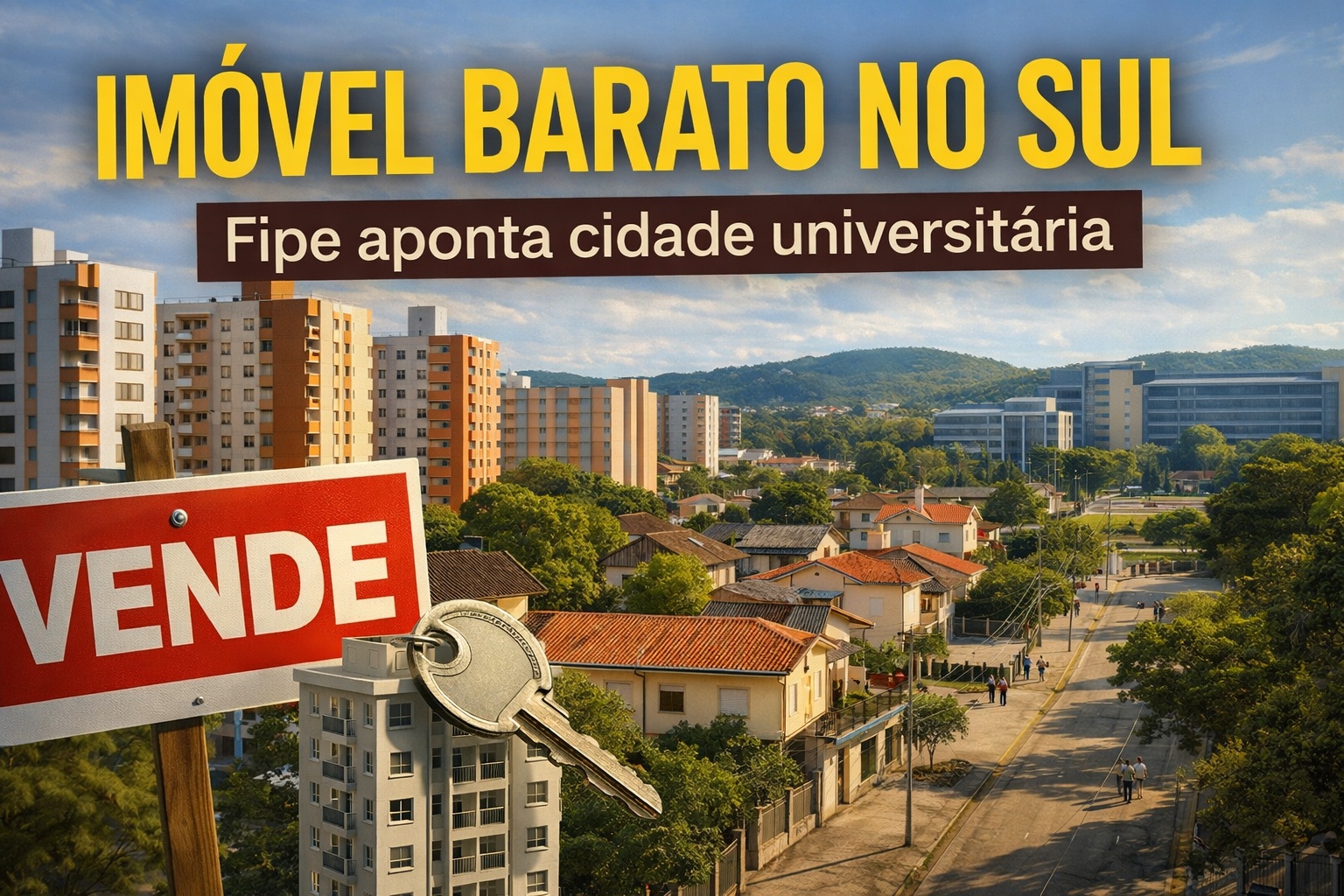
Santa Maria (RS) Appears Among The Lowest Prices on FipeZAP: m² at R$ 5,358 and Annual Increase Above 11%, Driven by Demand from Universities.
Santa Maria, in the heart of Rio Grande do Sul, has always had a different “engine” than cities driven by beaches, tourism, or luxury booms: here, the rhythm is dictated by universities, services, and a medium-sized city life, with constant demand and less room for speculative euphoria. And it was exactly this profile that made the municipality stand out when it comes to purchasing property at more “down-to-earth” prices. In the FipeZAP for Residential Sales (November 2025), Santa Maria recorded a average price of R$ 5,358 per m², a level well below the average of the 56 monitored cities (R$ 9,585 per m²).
In other words: in the overview of the index, the local m² costs just over half the national average for the sample, something that, for those seeking an “entry” into the market, completely changes the financing math and the down payment value.
Price of m² in Santa Maria According to FipeZAP and Why This Draws Attention
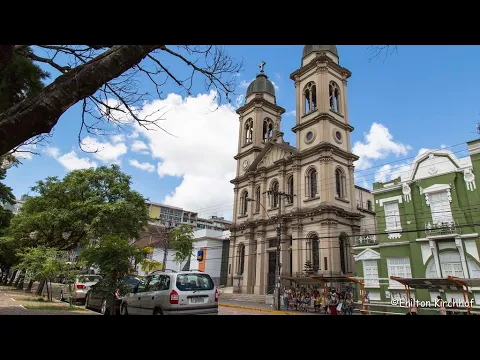

What makes the data even more interesting is that cheap does not mean stagnant. In the same data set from FipeZAP, Santa Maria shows a monthly increase of +2.34% and annual variation of +11.36% (with a 12-month cumulative of +12.81%).
-
Not even the end of the ‘roller coaster’ described by the price of Brent crude oil (the main global benchmark) – which jumped from a price of $72 to $120, then dropped to $76 per barrel – due to the recent peace agreement between the US and Iran, was enough to relieve the Brazilian economy from inflationary pressures.

-
With JBS in the egg business, Mantiqueira accelerates expansion in the United States, recovers operation affected by avian flu, and projects 10 million birds by 2027.

-
A man went to the supermarket in China with the salary of a single day’s work, and what he put in the cart will make any Brazilian question why they pay so much to eat so little.
-
Louvre sees $102 million worth of jewels disappear in daring heist, and now the crime that shocked Paris will hit the screens




This suggests a typical scenario of a university city with liquidity: the price is not “inflated”, but it also does not remain stagnated. For the buyer, this combination usually means two things at once: an entry opportunity and a lower risk of buying a “dead” asset, without turnover.
Quick Comparison with Other References from the Index
To clarify the size of the number, it’s worth placing Santa Maria alongside other cities in Rio Grande do Sul in the same report:
- Pelotas shows up with R$ 4,386 per m², ranking among the cheapest in the index.
- Santa Maria appears with R$ 5,358 per m², still below the national average.
- Porto Alegre, the capital, already enters another level, with R$ 6,107 per m².
- The overall average of the 56 monitored cities stands at R$ 9,585 per m².
This picture helps to understand the “zone” in which Santa Maria is positioned: it is not the cheapest in the country, but it also does not reach the level of capitals, which matters because capitals tend to carry higher m² costs even when local income does not keep pace.
The “University City” Factor That Sustains Demand Without Relying on Luxury
The label of “university city” is not empty marketing. UFSM, for example, hosts about 30,000 students, including in-person and distance learning courses. In cities with this profile, the demand for properties tends to be less seasonal than in places dependent on tourism.

Here is a detail that weighs in the market: long-term rentals and predictable turnover. Even those not buying to live often look at university cities as “income assets” because the property does not depend on a single sector to maintain constant demand throughout the year.
Santa Maria in Numbers: Why Urban Size Helps Explain the Market
Santa Maria is not a small “transitional” city. The municipality has 271,735 inhabitants, which ensures scale for services, commerce, health, and regional jobs.
This size reinforces a more stable real estate behavior: there is an economic base and sufficient population to sustain neighborhoods with different income and price profiles.
When a municipality has a medium size and also attracts students, civil servants, and regional services, the real estate market tends to remain in the middle of the road between two extremes:
on one side, small towns with little liquidity; on the other, capitals with high prices and intense competition for location.
What the FipeZAP Number Really Says and What It Does Not Say
FipeZAP works with advertised prices, not with final escritural values. Still, it serves well as a thermometer of trends and comparisons between cities.
First, R$ 5,358/m² is a market gravity center of advertised prices, not a fixed value for all properties. Neighborhoods, construction standards, and the condition of the property greatly alter this number.
Second, the annual increase above 11% indicates a warming trend, not an explosion. It is different from stagnant markets and also from markets that spike due to bubbles.
Third, the comparison with the national average shows the size of the relative discount. When the index points to an average close to R$ 9,600/m², Santa Maria appears with a big enough difference to draw the attention of those seeking cost-benefit.
Santa Maria occupies a curious space on the Brazilian real estate map: it does not have the price of a capital, but it also does not carry the risks of a stagnant market.
The FipeZAP indicates a m² below the national average and, at the same time, an annual appreciation above two digits — a combination that usually attracts those looking to enter the market with more security.
And you, reader: when buying a property, do you prefer to pay more for the showcase of a capital or find a cheaper entry in a medium-sized city with constant demand and a moving market?







-

-

3 people reacted to this.