





 Portuguese
  English
  Spanish
  4 min of reading
  0 comments


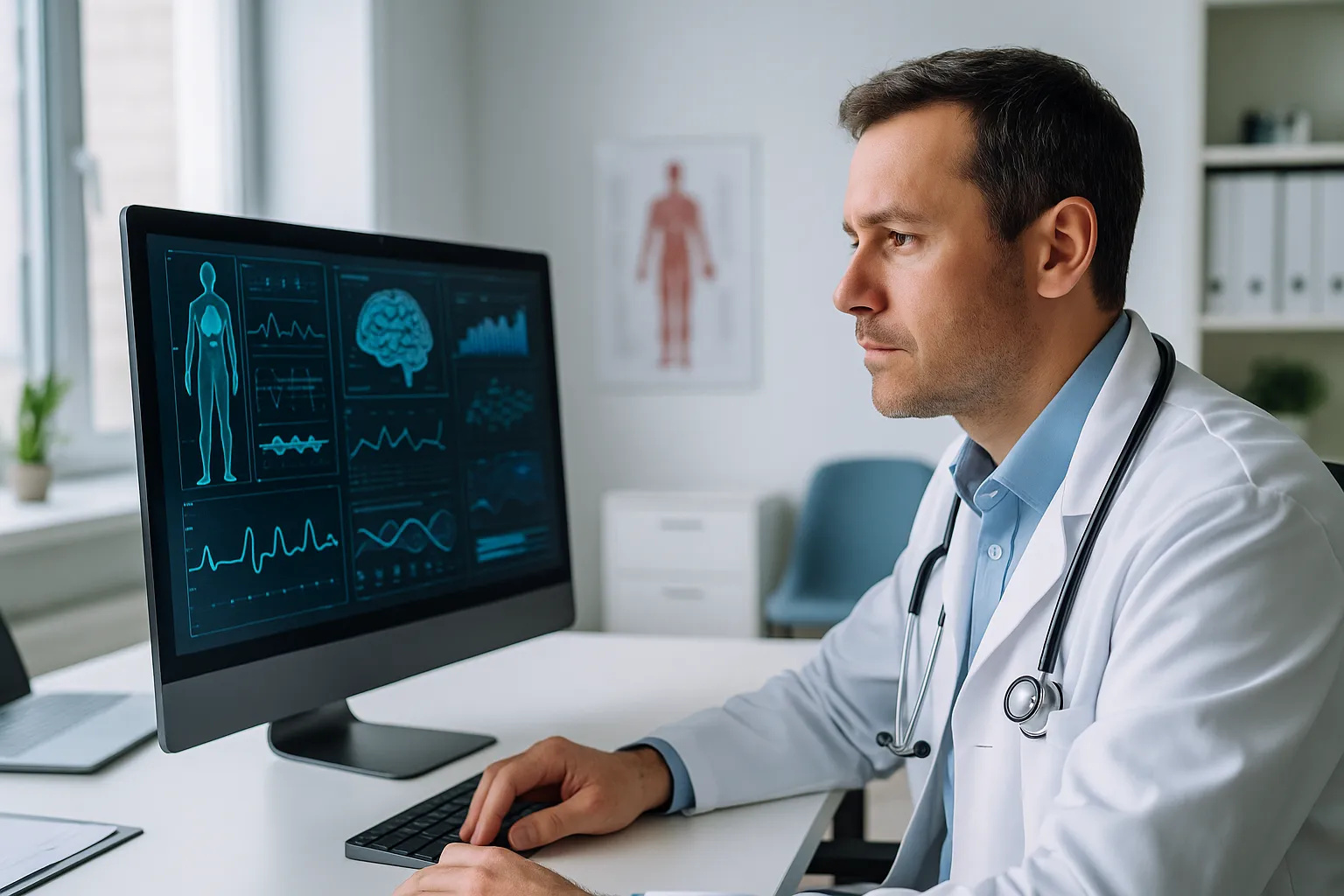
Have you ever imagined receiving a medical alert even before feeling any pain or discomfort? Artificial intelligence (AI) has turned this futuristic idea into reality. In hospitals and research centers around the world, AI for predicting diseases is already a concrete tool, capable of analyzing data and identifying risks long before symptoms appear.
AI For Predicting Diseases
In medicine, prevention has always been the best treatment, but identifying problems early depended on routine exams and clinical observations. Now, with AI for predicting diseases, doctors can cross-reference information from laboratory tests, electronic medical records, and even subtle signs in medical images that would be imperceptible to the human eye. This allows for the creation of an individualized “risk map” for each patient.
The Revolution of Medical Data
The great strength of AI lies in its ability to process vast volumes of data in seconds. While a doctor needs to analyze test results in isolation, algorithms can cross-reference family history, lifestyle habits, genetics, and behavioral patterns together. This type of analysis generates predictive reports, showing the probability of a person developing hypertension, diabetes, cancer, or even neurodegenerative diseases.
-
Scientists create a “molecular sponge” that transforms dirty water and even water from the Dead Sea into potable water using only sunlight and without consuming any electrical energy.

-
Chinese company creates solar cell that breaks the physical limit of silicon with 34.85% efficiency and promises to revolutionize electricity bills with panels that generate 20% more energy starting in 2026.
-
For the first time in over half a century, humans have seen the Moon up close and returned to tell the tale, and the technology that brought them back makes Apollo look like a toy.

-
From 1969 to 1972, only 12 human beings set foot on the Moon, and then the world simply stopped going, until this week when NASA showed that the journey back has finally begun.
Heart Diseases Under Smart Surveillance
Among the main applications of AI for predicting diseases, cardiovascular diseases stand out. Based on electrocardiograms, MRIs, and even heart rate records from smartwatches, the systems can predict arrhythmias or heart attacks weeks or months in advance. This provides time for medical interventions, lifestyle adjustments, and even preventive use of medications.
Oncology With Early Diagnosis
In the fight against cancer, artificial intelligence has been a powerful ally. Machine learning systems can identify micro-alterations in imaging tests that indicate tumors in early stages, when they are still practically invisible. This type of technology has already shown efficiency in breast, lung, and skin cancer, offering accuracy rates higher than conventional analyses.
Mental Health Also Gains Attention
A growing field is the use of AI for predicting diseases related to mental health. By analyzing patterns of speech, writing, sleep, and digital behavior, some algorithms can identify signs of depression or anxiety disorders before the patient is aware. This approach opens pathways for quicker interventions and personalized treatments.
Continuous Monitoring With Everyday Devices
Another interesting point is that AI does not rely solely on hospitals or clinics. With the popularization of wearable devices, such as smartwatches and fitness bands, data collection occurs 24 hours a day. Algorithms analyze heart rate, sleep quality, blood oxygenation, and even variations in body temperature, creating automatic alerts that can be shared with the responsible physician.
Ethics And Privacy: The New Challenges
With so much potential, ethical questions also arise. Who should have access to this data? How safe is it to store such sensitive information in digital systems? Patient privacy and the transparency of the criteria used by the algorithms are constant concerns. Additionally, there is the risk of misdiagnosis if the systems are not calibrated correctly or fed with low-quality data.
Doctors Remain Indispensable
Despite advancements, experts emphasize that AI does not replace doctors. It functions as a co-pilot, providing information to assist in the decision-making process. The final diagnosis and treatment management remain the responsibility of healthcare professionals, who can interpret the data considering each patient’s reality and uniqueness.
The Future Of Personalized Medicine
AI for predicting diseases opens up space for an increasingly personalized medicine. Instead of general protocols, each patient will have monitoring based on their unique data. This not only increases the chances of preventing severe diseases but also reduces the costs of complex treatments and prolonged hospitalizations.
How This Already Affects People’s Lives
Although it may seem distant, reality is already showing changes. Clinics use AI to predict complications in pregnant women, forecast flu outbreaks in specific regions, and even indicate when an elderly person is at higher risk of falling at home. This integration of technology and healthcare is making medicine more proactive than reactive, anticipating problems rather than just treating them.
If just a few years ago predicting diseases before symptoms seemed like science fiction, today it is a tangible reality. Artificial intelligence promises not only to prolong life but also to ensure a better quality of daily living. The future of healthcare is becoming increasingly interconnected, and the big question is not whether AI will transform medicine, but how far it will be able to take prevention and human care.










Seja o primeiro a reagir!