





 Portuguese
  English
  Spanish
  9 min of reading
  38 comments


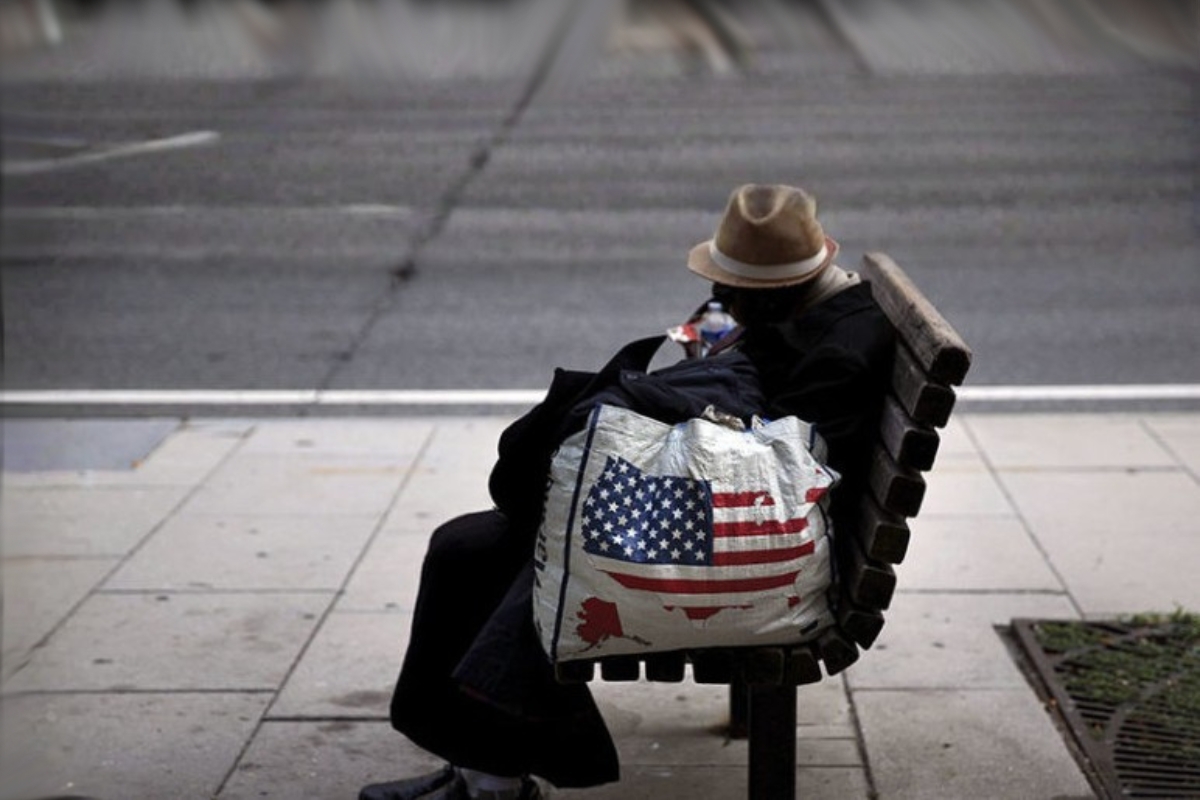


Poverty In The United States Is Not Just Homelessness. See Where The Poor Live (Including In Motels, Trailers, And Crowded Houses), Why Rent Is So Heavy, And How SNAP And Section 8 Work.
You can visit the United States as a tourist, see clean streets, full stores, and think, “there is no poverty here.” However, poverty often does not scream: it is hidden behind the door of a motel paid for by the week, inside an apparently normal house but crowded inside, or in the car parked at night near a Walmart.
And when rent becomes an impossible wall to climb, a person’s life does not plummet directly to the sidewalk. They slip down in stages. And this is very common for millions of poor people trying to live in the U.S. without a real safety net.
First, Let’s Go To The Basics: How Many Poor People Are There In The U.S. Today?
According to the most recent official data consolidated in public Congressional material (based on official measurements), the poverty rate in the United States was 10.6% in 2024, which corresponds to 35.9 million people living in poverty.
-
India announces a plan of $3.06 billion to bring aviation to forgotten regions: 100 new airports, $1.07 billion in subsidies, and regional routes guaranteed for 10 years, from 2026 to 2036, away from the centers.

-
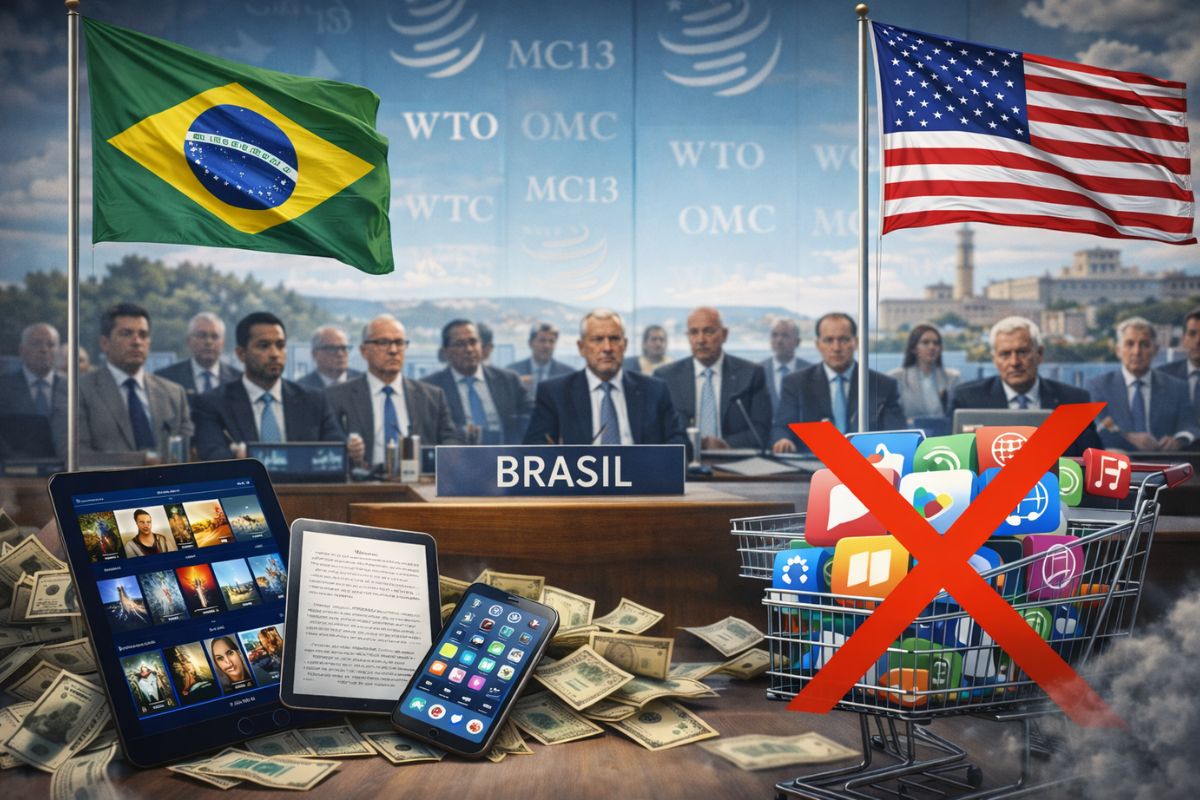
Brazil blocked a proposal from the United States at the WTO that would make the exemption from tariffs on digital products like streaming and ebooks permanent, favoring American tech giants at the expense of developing countries.
-
IPTU exemption for seniors in 2026: see how to secure the benefit.

-
The institute that trained the greatest aerospace engineers in Brazil has just opened its first campus outside São Paulo after 75 years: ITA Ceará will have R$ 445 million, new courses in energy and systems, and classes are expected to start in 2027.


For reference, in 2023 the official rate was 11.1%, with 36.8 million people in poverty, according to the U.S. Census Bureau.
However, here enters a crucial point: “poverty” (measured by income) and “not having a home” (homelessness) are not the same thing. Many poor people have a roof over their heads.
Many homeless people do not appear in poverty statistics as you might imagine. The problem is broader: it is housing insecurity.
Invisible Poverty: It’s Not Just Homelessness
When we talk about poverty in the United States, many people think of the most extreme image: someone sleeping on the street, in a tent, or under a bridge.
This does exist, indeed. And according to the official HUD report, on a typical night of the national count (Point-in-Time), 771,480 people were homeless or in temporary shelters/programs in 2024 — the highest number ever recorded in this count.
But this does not tell the whole story. And here I will maintain exactly the logic and numbers of your base text because they effectively explain the “ladder” of precariousness.
Real Numbers: Homelessness, Precarious Housing, And Crowding
In approximate numbers, the picture looks like this:
The most visible point: about 770,000 people homeless on a typical night (homeless). This number matches the official record for 2024 (771,480).
But in addition to that, there are other huge groups that almost no one sees:
There are another 17 million living in substandard houses, that is, homes below acceptable standards, with serious structural, sanitation, or safety issues.
There are between 3 and 4 million living as doubled up: people and families “in favor,” living in the homes of relatives or friends due to lack of better alternatives.
And there are about 10 million living in crowded homes (crowded homes), with several families sharing the same space.
When you add all of this up, it gives about 30 million people at some level of housing insecurity — almost 10% of the population.
This is the point: housing poverty here usually happens “within the formal system,” only it is squeezed, improvised, and hidden.
“If Section 8 Exists, Why Are There People Homeless?” The Contradiction That Is Not A Contradiction


Many people hear about Section 8 (Housing Choice Voucher) — that program that can cover a huge part of rent — and think: “so why does someone become homeless?”.
Because in the U.S., there are, in practice, two types of social programs:
There are programs that function as guaranteed rights. If you meet the rules, the government has to provide assistance. This is the case with SNAP (the famous food stamp), Social Security (retirement), and Medicaid (basic health care for low-income individuals). These programs respond to demand.
Housing programs (like vouchers and part of assisted rental policies) fall into the limited funding category: the budget has an annual cap. If the money runs out, it runs out.
The effect of this is brutal: only about 1 in 4 eligible families actually receive federal rental assistance.
This proportion (“one in four”) frequently appears in analyses of the topic and is described as a kind of “housing assistance lottery.”
In other words: you may be eligible, need assistance, be at the limit… and still, you may wait years, or not even get into the queue.
The Official Meter: Federal Poverty Level (FPL)
The entry point for many benefits is the Federal Poverty Level (FPL).
In your base text, the FPL is explained in a very “real-life” way, in practical terms, as an approximate monthly amount: a person would be considered poor with a monthly income of around US$ 300, and for each additional person, you would add approximately US$ 50; a family of four would be around US$ 2,600 to US$ 2,700 per month.
I keep this explanation as it is in the original because the intention there is to show the chasm between “being considered poor on the meter” and the real cost of living in various American cities.
And to make this even more solid with updated information: the federal guidelines for 2025 (published by HHS) exist in official annual amounts by family size, used by various programs as a reference.
Cause #1: Low Wages vs High Rent, The Heart Of The Problem
The main cause of precarious housing in the U.S., as your text argues, is not “lack of jobs.” It is low-wage work in a country where rents in the U.S. have skyrocketed in many cycles and remain heavy for those living on wages.
Millions work in hospitality, cleaning, restaurants, tourism, essential services, and light construction. Jobs exist. Income exists. But it does not keep pace with the cost of living near jobs, schools, and transportation.
Even when rent growth slows down at certain times, that does not erase the accumulated damage. Reports from Zillow Research show that the rental market can “cool down” at certain times and still remain expensive, especially for those needing to renew contracts who have no leeway.
And there is another piece of data that helps understand why the math does not add up: the National Low Income Housing Coalition (NLIHC) points out a severe shortage of truly affordable housing for those earning very little, with millions of units missing for the lowest-income populations.
Cause #2: Immigration And Lack Of Access To Assisted Housing
The second major cause highlighted in the text is institutional: undocumented immigrants do not have access to Section 8 and cannot live in public housing.
Even when working, paying taxes, and having citizen children, these families are stuck in the private market.
When rent rises, there is no “cushion” to soften the blow. And here comes a strong piece of advice from the text: if a person is able, it is worth prioritizing buying a house (even a simple one), avoiding rental dependence, and primarily seeking legal immigration paths (work visa, green card).
Tourists, students, and undocumented individuals do not have access to social programs that would make a huge difference at the beginning of their lives in the U.S.
Cause #3: Mental Health And Drugs (Cause And Consequence)
When the situation reaches the most extreme stage, the text presents important numbers: among homeless individuals, about 30% have severe mental illness; 30% to 40% have substance use disorders; and 20% to 25% live with both at the same time.
And here is the detail that changes everything: this is not a simplistic explanation that goes “it’s the person’s fault.” The text makes a point to say that mental illness and chemical dependency are cause and consequence of housing collapse. Sometimes they lead to the loss of housing. Sometimes they explode after housing has been lost.
Is Panhandling Illegal? In General, It’s Not That Simple
The text states that panhandling or giving to panhandlers is not illegal, and that many municipalities have tried to ban it, but judges tend to recognize it as a form of free speech.
This debate does exist: there is strong legal discussion in the U.S. about panhandling as protected expression under the First Amendment, and many broad restrictions end up being challenged.
The “practical” solution described in the text is the informal division between passive panhandling (standing still with a sign) and aggressive panhandling (approaching people at sensitive points, like ATMs, restaurants, or blocking intersections).
The police, as described in the logic, tend to intervene not for “asking,” but for intimidating people or obstructing traffic. This is a topic that varies greatly by city, but the tension between “public order” and “freedom of expression” is real and recurring.
Why Are There No Slums In The U.S. Like In Brazil?
The comparison with Brazil is straightforward: in the U.S., slums like the Brazilian ones do not appear because urban zoning laws are strict, irregular occupations are quickly repressed, and private property is strongly protected.
This prevents the “postcard” slum, but does not prevent slum-like conditions. It happens another way: diffuse, hidden, in stages.
The “Slumification” In The U.S.: The Stages That Almost Nobody Sees
The script usually goes like this:
The family loses formal housing, tries to enter programs like Section 8 or public housing, but hits a queue, closed list, or lack of funds.
As they cannot wait, they start to look for cheaper and still “dignified” alternatives: mobile homes, trailers, RV parks.
If it gets worse, they migrate to motels paid weekly (prepaid, no credit, no deposit). It’s not a “movie motel”: it’s the roadside, simple, cheap, two-story.
Then comes overcrowding: full houses, improvised rooms, converted garage or basement.
Or the family becomes doubled up: living in favor, without a contract, without stability, without privacy. Sofa, inflatable mattress, whatever works.
When the family is evicted from there too, they enter the gray area: living in a car or van. Bathroom in a supermarket, shower in a gas station or gym. Belongings in the trunk. Sleeping where they can.
And only later, when even the car is lost, does the street become a destination.
Where The Poor Live In The United States, In Practice: “Map” Of Poverty Inside And Outside Large Cities
If you want to understand where poverty is concentrated, it is worth looking at official cuts by state and metropolitan regions.
The Census Bureau itself publishes analyses of poverty by states and large metropolitan areas based on the American Community Survey (ACS).
And there is an important historical pattern: there are counties with persistent poverty for decades (20% or more over long periods) — very present in rural areas of the South, parts of Appalachia, and some territories with structural vulnerabilities.
This helps explain why, in many places, poverty does not just summarize as “center of a big city”: it also resides along long roads, distant services, and cheap rents… but with few opportunities nearby.
Three Movies To Understand Poverty In The United States
To visualize this world without relying solely on statistics, we recommend watching three movies:
- Nomadland (Oscar winner in 2020), about seasonal workers living in vans.
- The Florida Project (2017), about low-income families near Kissimmee, some connected to Disney, living in motels paid by the week.
- Los Angeles: Skid Row is My Home (2017), about life in the largest homeless camp in Los Angeles.
The idea is simple: these stories show that “not everything is rosy” and that the culture of meritocracy does not hold for everyone, even those who work hard.
Housing Poverty In The United States “Whispers”
Housing poverty in the U.S. rarely appears as a giant slum or a crowd on the street. It hides behind colorful facades, beautiful houses on the outside but crowded on the inside, and cars parked at night.
Understanding this is not ideology. It is seeing how modern social problems actually work.
And if you want to live in the U.S., the advice remains valid: go prepared, understand the reality, and with the right visa.
The U.S. offers opportunities, but it is not just about expensive iPhones and big TVs. The country is complex. And those who arrive with a strategy have a better chance of building something solid and even getting rich.
Now I want to know your opinion. Leave a comment with your perspective, and if this text helped you, share it with someone else who is also thinking of living in the United States.







E só eleger o lula, afinal ele tirou 30milhoes da pobreza
Aqui no Brasil, têm favelas q parecem pocilgas. Milhares de famílias vivem em barracos e casebres que sequer tem saneamento. Vivem pior que nas cavernas do tempo dos australopitecus.
As autoridades, que são eleitas p/solucionar os problemas de infraestrura de todos as situações, como moradias, recebem todos os tipos de auxilios, inclusive Aux. Moradia e outros, tem casos q são p/marido e mulher, e os mais necessitados, p/receber um aux de BCP, tem q ter uma renda de 25% do salário mínimo p/pessoa.
Um parlamentar, q recebe só de subsídios/salários, + de 40 mil por mês, recebe vários tipos de auxilios.
Essa matéria é muito útil para acabar com ilusões que muitas pessoas têm sobre os Estados Unidos da América.
Se a pessoa tiver realmente vontade de vencer , é muito mais produtivo garimpar oportunidades aqui mesmo no Brasil. Nossa língua, nossa cultura ,nossos costumes que conhecemos são vantagens que lá na ” América ” não teríamos.