





 Portuguese
  English
  Spanish
  3 min of reading
  1 comment


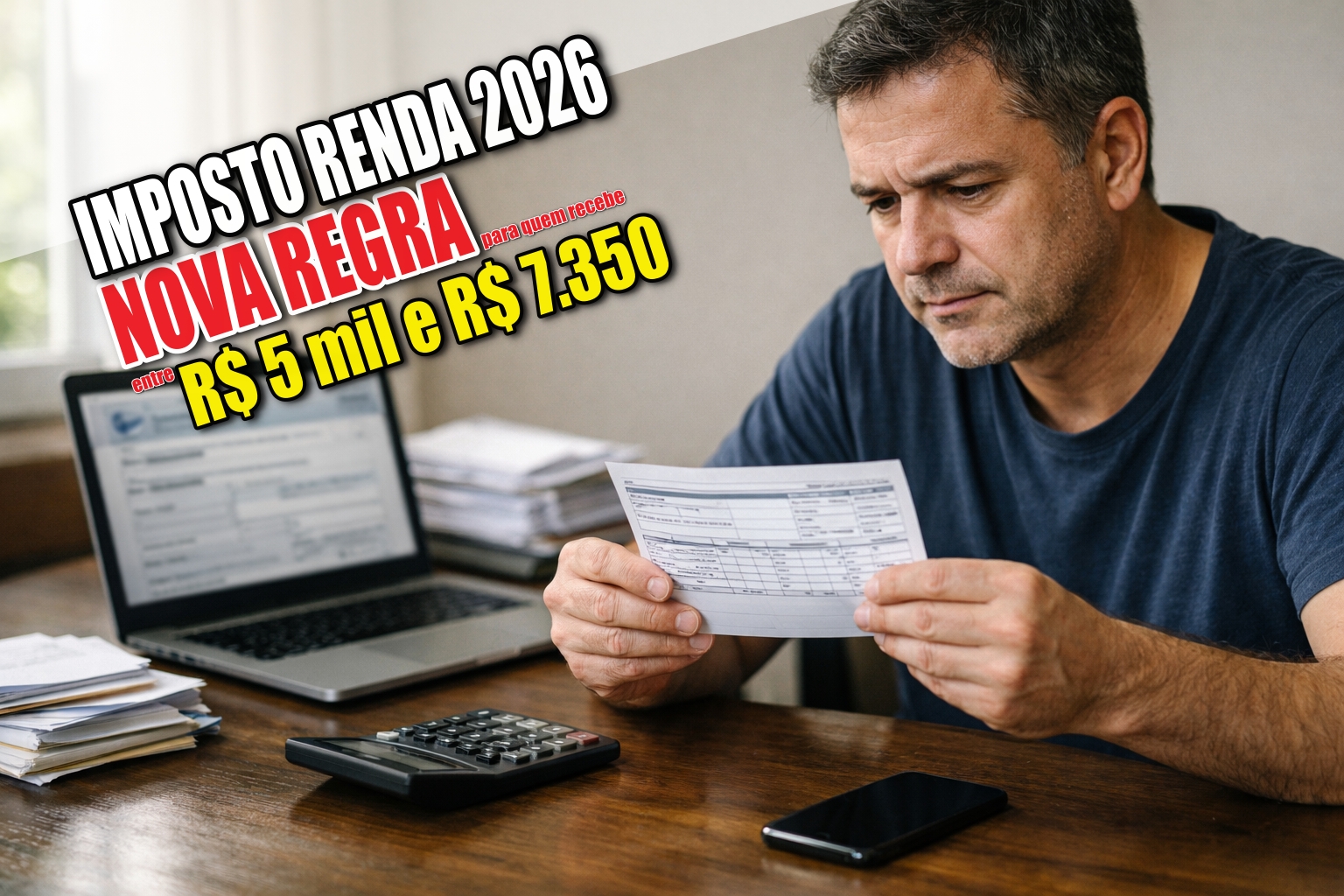


Change in Law Expands Exemption up to R$ 5,000 and Creates Progressive Discount to Alleviate Tax for Those in the Intermediate Income Bracket.
The Law No. 15,270/2025 modified the rules of the Individual Income Tax and directly affected those earning between R$ 5,000 and R$ 7,350 per month.
The new rules come into effect starting in January 2026 and affect declarations submitted in 2027, as they are included in the calculation for the following year.
The main change lies in the expansion of the exemption threshold and the creation of a progressive discount for intermediate incomes, reducing the final tax for part of this threshold.
-
IPTU exemption for seniors in 2026: see how to secure the benefit.

-
The institute that trained the greatest aerospace engineers in Brazil has just opened its first campus outside São Paulo after 75 years: ITA Ceará will have R$ 445 million, new courses in energy and systems, and classes are expected to start in 2027.

-
Luciano Hang, owner of Havan, goes to Juiz de Fora after the tragedy in February, brings R$ 1 million, hands out R$ 2,000 cards, and donates up to R$ 15,000 to victims in the region.

-
The Brazilian passport allows legal residence in dozens of countries without the need for a prior visa, and most Brazilians are unaware that they can apply for residency directly upon arriving in nations in South America, Africa, and even Europe.


What Happened and Why It Caught Attention
The change brought a new design for the monthly tax within an income range that tends to feel the weight of the deduction on their paychecks.
With the rule, those with a monthly income of up to R$ 5,000 will have full exemption from the income tax.
Those who earn between R$ 5,000.01 and R$ 7,350 enter a model with partial deductions, which decreases as income rises.
What Changes in Practice for Those Earning from R$ 5,000 to R$ 7,350
The progressive table continues to exist, with rates of 7.5% to 27.5%, applied according to income.
What changes is the final amount paid, as the progressive discount reduces the assessed tax for those in the intermediate bracket.
In practice, a person may remain within the same tax rate but pays less due to the calculated deduction.
Above R$ 7,350, the discount ceases to exist, and the traditional calculation applies using the progressive table.
Who Is Entitled and What the Law States When Applicable
The rule covers taxpayers with monthly earnings within the range of R$ 5,000.01 to R$ 7,350.
The benefit is not restricted to salary. All taxable income, such as salary, retirement, and rents, are included in the calculation base.
The law establishes that the discount is aimed at intermediate incomes, reducing tax without changing the structure of the rates.
The effect is stronger near R$ 5,000 and gradually weakens until it nearly disappears close to R$ 7,350.
How the Discount for Intermediate Incomes Works
The discount does not change the tax rate; it reduces the final tax after the normal income tax calculation.
The procedure involves a formula based on monthly or yearly taxable income, making the deduction greater for incomes closer to R$ 5,000.
As income increases, the discount shrinks gradually until it disappears as one approaches R$ 7,350.
This creates a smoother transition between total exemption and full taxation, avoiding a sharp jump in the amount paid.
Points of Attention and Common Questions
Those earning R$ 5,500 tend to notice a significant reduction in their annual tax because they still fall into a part of the range with a more relevant discount.
For incomes around R$ 6,500, the savings are smaller but continue to exist within the logic of progressive deductions.
Incomes close to R$ 7,300 have reduced impact because the discount in this stage becomes almost nonexistent.
Since all taxable income is included in the calculation, changes in salary, retirement, or rents can affect the final tax result.
The Law No. 15,270/2025 introduces a new framework for the Income Tax starting in January 2026, with exemption up to R$ 5,000 and progressive discount up to R$ 7,350.
For those in the intermediate bracket, the main impact is the possibility of paying less tax without changing the rates, thanks to the partial deduction that decreases as income rises.









E quem tem mais de 65 anos e recebe o valor de R$ 6.400,00 ?