





 Portuguese
  English
  Spanish
  3 min of reading
  0 comments


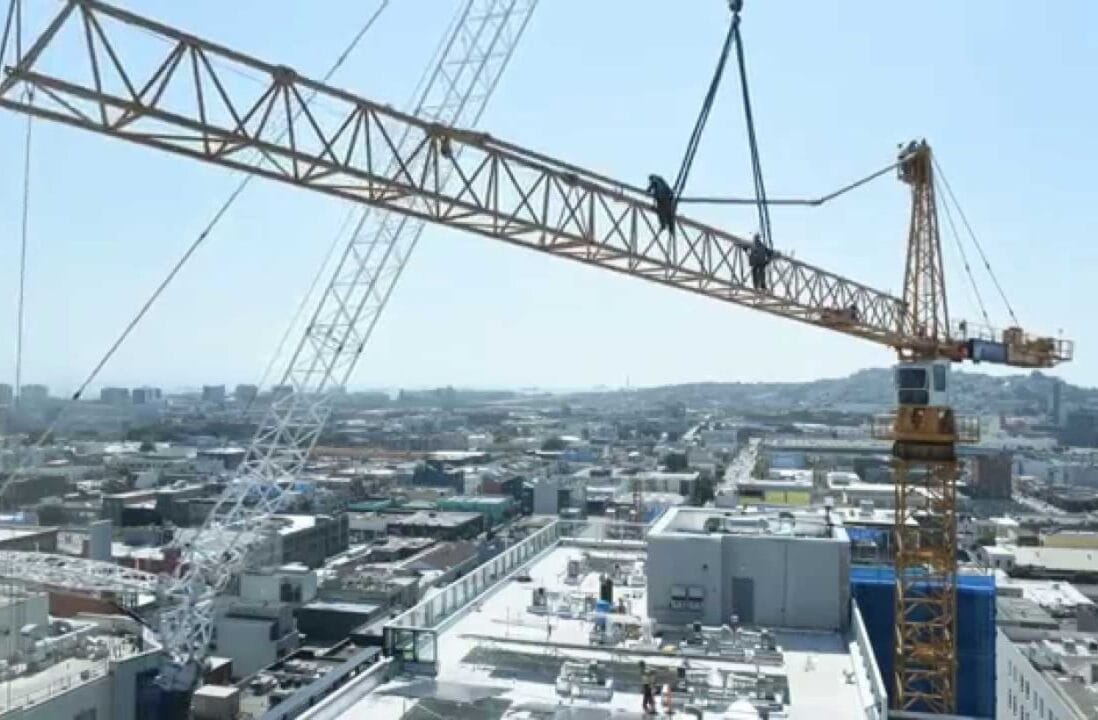
Discover How Cranes, Essential in Construction, Are Assembled and Raised to the Top of Buildings, Optimizing Costs and Increasing Productivity in Large Constructions.
Cranes, visible in various urban centers and essential pieces in construction, spark curiosity about how they are transported and assembled, especially at considerable heights. These structures, known for their ability to move large loads, can lift up to 40 tons, representing a significant advancement in efficiency of constructions.
The crane assembly process starts with the foundation, which must be robust enough to support the enormous loads. Initially, with the help of a crane, the tower sections are assembled. The next step involves the installation of the top part, which includes the jib, the counterweight, and the operator’s cabin.
A Notable Aspect of Cranes in Construction Is Their Self-Assembly Capability


Using hydraulic jacks, the crane adds sections to its tower, allowing it to grow in height as construction progresses. This ingenious mechanism ensures that the crane can be raised without the need for another crane, reducing costs and construction time.
-
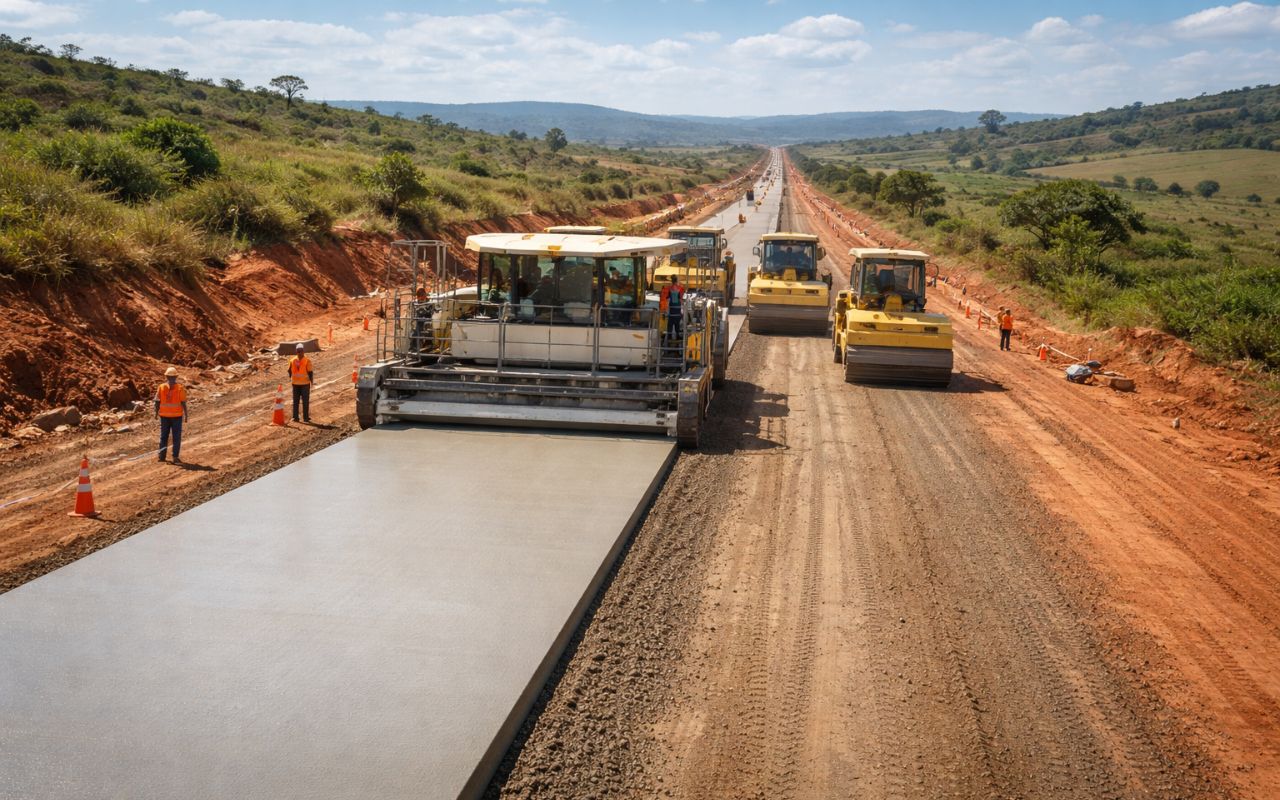
New CCR concrete paving technology promises roads up to 3x more durable, less maintenance, and cost reduction in Brazil.
-
Made from recycled plastic, plastic wood is gaining space in the construction industry because it does not rot, resists moisture, and reduces maintenance costs over the years.

-
Florianópolis will receive a million-dollar BRT that will begin construction in 2026 with nearly 400 million in funding from the federal government and the Inter-American Development Bank, and the map already shows the routes for the exclusive bus corridors.

-
Without a blueprint, without an engineer, and using scrap from the dump, a father spends 15 years building an 18-room castle for his daughter, featuring tram tracks, 13 fireplaces, and over 700 m², which may now be demolished.


During assembly, it is crucial to maintain an exact balance between the jib and the counterweights to avoid twisting the structure. Lateral anchors are essential to ensure the crane’s stability, especially as it reaches greater heights, preventing the risk of buckling.
Variants of Cranes
There are variants such as internal cranes, which use the building’s structure to elevate themselves, representing a lighter and less costly solution, as they do not require a dedicated foundation. This method not only speeds up assembly but also integrates the crane into the building’s skeleton, optimizing space and resources.
The crane assembly process in construction is a clear example of innovation and efficiency, allowing for the execution of large-scale works with greater speed and cost reduction. The crane’s self-assembly technology not only facilitates logistics on site but also underscores the constant evolution in the construction sector, marking a significant advancement in how buildings are erected.
How Does a Crane’s System Work?
Cranes are pillars in optimizing job sites, facilitating the transport of materials and equipment both vertically and horizontally. This efficiency not only saves time but also increases safety by positioning loads in the exact places of use. The operation of a crane is based on a set of interconnected components, from the base that fixes it to the ground, through the mast that defines its height, to the operator’s cabin, which is the control center for movements.
The mechanical system of cranes, which includes cables, pulleys, and motors, allows for precise and controlled movement of loads. Depending on the type of crane and the specific needs of the project, different models are employed, such as ascension cranes, fixed tower cranes, and mobile tower cranes.
What Does a Crane Operator Do and What Is Their Salary?

The crane operator has the responsibility of maneuvering this complex equipment, requiring skill, precision, and technical knowledge. The compensation for these professionals varies significantly, reflecting the complexity of the operations performed and the level of experience required for the role.
The salary of a crane operator varies widely depending on the country, the professional’s experience, and the type of equipment operated. In Portugal, the average salary of a crane operator is around 1,000 euros, with a range that can go from 750 to 1,600 euros. In Brazil, the variation is even broader, with salaries ranging from approximately 1,500 to 20,000 reais, reflecting the diversity of equipment and the experience needed to operate them efficiently and safely. This salary variation demonstrates the value and importance of these professionals in the construction industry, where competence and experience are essential for the safety and efficiency of operations.










-

Uma pessoa reagiu a isso.