






 Portuguese
  Spanish


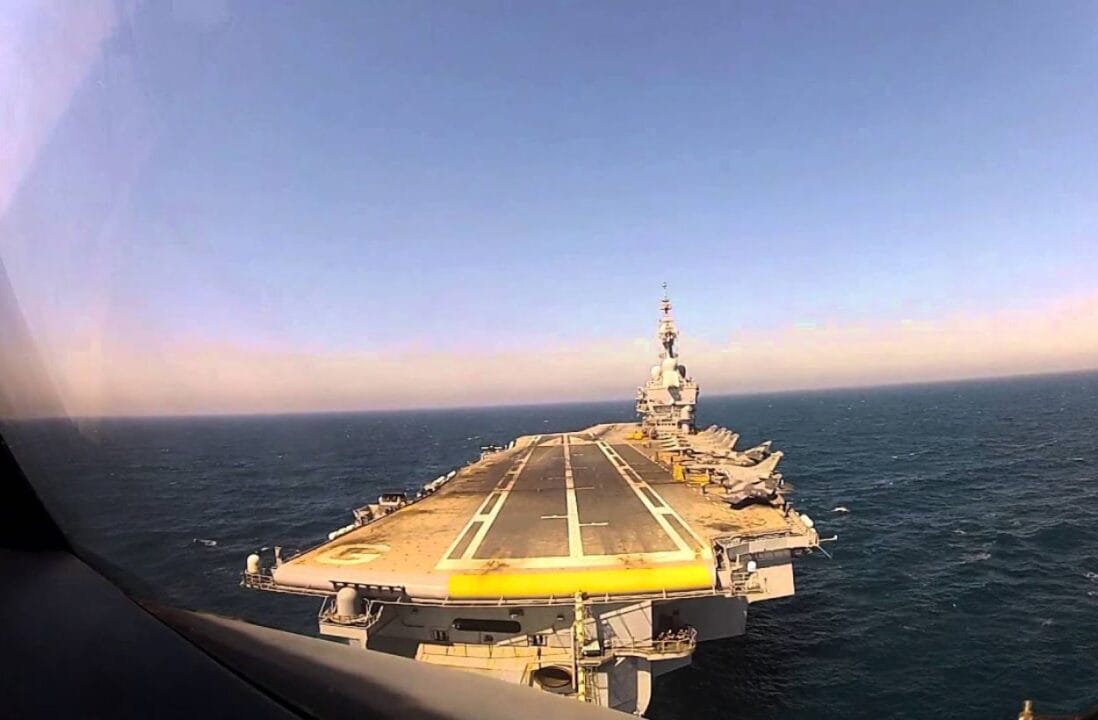

In The Midst Of Strategic Discussions, The Brazilian Navy Explores Options For The Acquisition Of A New Aircraft Carrier Aiming To Strengthen Its Offensive Capability And Power Projection In The International Scenario.
The Brazilian Navy, without a large aircraft carrier since the retirement of São Paulo, is seriously considering acquiring a new unit for its fleet. The Navy Commander, Admiral Olsen, highlighted the strategic importance of such an acquisition, despite current budgetary constraints.
Historically, Brazil had the aircraft carrier São Paulo and, after its decommissioning, incorporated HMS Ocean as a multi-purpose auxiliary ship, known as NAM Atlântico. However, this does not fully meet the needs for strike aircraft operations, leading to the consideration of new aircraft carriers.
Construction Of Aircraft Carriers


The Navy Articulation and Equipment Plan (PAEM), created in 2011, already envisioned the construction of aircraft carriers, aligned with the future aircraft choices of the Brazilian Air Force. The Naval Group (previously DCNS) proposed an aircraft carrier based on the Charles de Gaulle, with diesel-electric propulsion, capable of operating Rafale fighters or a modified version of the Gripen by Saab.
-
They exchanged the idea of a large house for a 35 m² warehouse, spent US$ 12,000 on the structure, and created a tiny house in Colorado with space to live and work.

-
While modern cities rely on pumps and electricity, in Iran, ancient tunnels carried water through the desert using only slope and gravity.
-
Instead of sending families far from the city, a project in Chile intentionally created incomplete houses on expensive urban land and left technical space for each to grow.
-
General Motors Replaces Over a Thousand Workers with 50 Cobots at Electric Vehicle Plant, UAW Union Criticizes Move Amid Industry’s Automation Push


The Brazilian Navy faces the dilemma of building its own or investing in a new and more modern aircraft carrier. The high cost and technical risks complicate the decision, emphasizing the need for adequate financial resources for such an undertaking.
Acquisition Of A New Aircraft Carrier By The Brazilian Navy
The interest in aircraft carriers remains alive globally, with countries like Japan and South Korea re-evaluating their naval capabilities. In Brazil, governmental support may be crucial to advance the acquisition of a new aircraft carrier, similar to the precedents with the auxiliary ships Minas Gerais and São Paulo.
Brazil has options ranging from acquiring large aircraft carriers, which would require significant investments in escorts, to smaller and more economical options, such as the helicopter carriers of the Cavour class or Juan Carlos I, which can operate with modern aircraft like the F-35B fighters.
The Brazilian Navy is at a crucial moment to define its future naval capability, with the possibility of acquiring a new aircraft carrier. This strategic move, however, depends on the allocation of sufficient resources and government support, to ensure that the Brazilian fleet can maintain its operability and expand its influence at sea.
And The History Of NAM Atlântico?
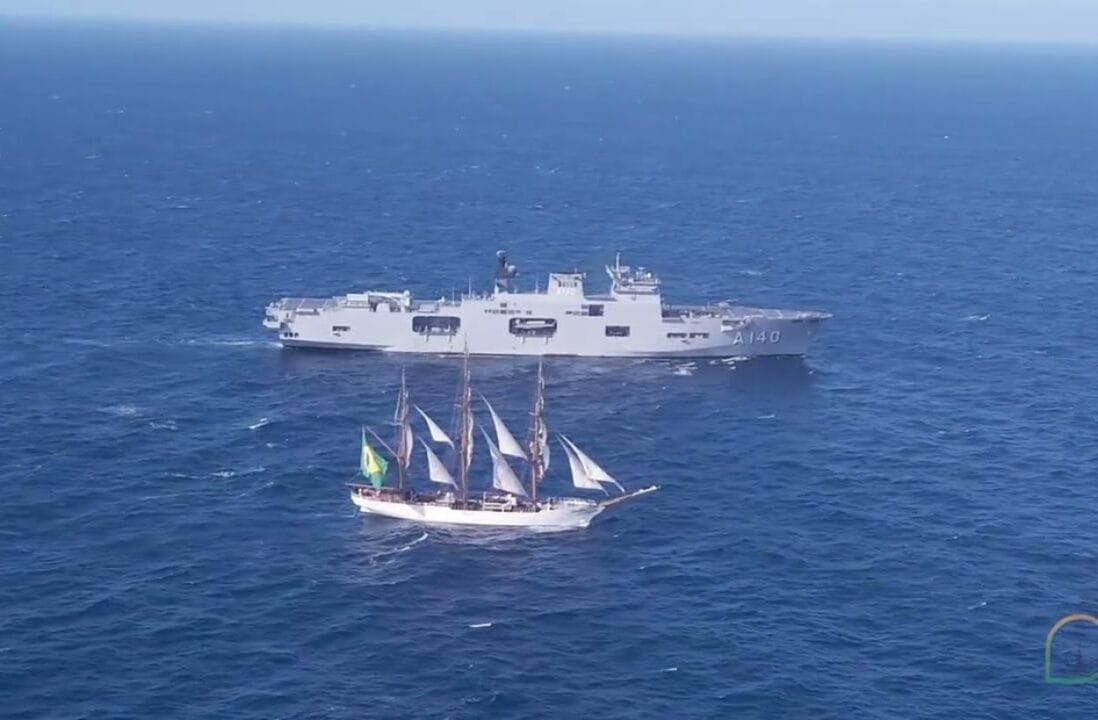
NAM Atlântico (A140), the amphibious helicopter carrier that currently leads the fleet of the Brazilian Navy, was originally commissioned as HMS Ocean by the Royal Navy in 1998. Its transition to the Brazilian Navy in 2018, after being acquired for £84.6 million, marked a new chapter in its journey as a vital element of the Brazilian naval force.
With a displacement of 21,578 tons and a length of 203.43 meters, the Atlântico can transport up to 18 helicopters and 40 vehicles, operating with a total crew of 1,295 people. This composition allows the ship to perform a variety of functions, from amphibious operations to command and control missions.
Multi-Purpose Aerodrome Vessel (NAM) In 2020
Reclassified as a Multi-Purpose Aerodrome Vessel (NAM) in 2020, the Atlântico expanded its capabilities to include the operation of medium altitude long endurance fixed-wing aircraft and vertical take-off and landing (VTOL) aircraft. In 2023, the ship demonstrated its strategic importance by serving as a field hospital and coordination center during rescue operations in the floods and landslides in São Paulo.
Based at the Navy Arsenal of Rio de Janeiro, NAM Atlântico not only reflects the capability of the Brazilian Navy in naval and humanitarian operations, but also highlights the versatility and importance of amphibious helicopter carriers in security and assistance to the population in times of crisis.







Seria ótimo!