





 Portuguese
  English
  Spanish
  4 min of reading
  0 comments


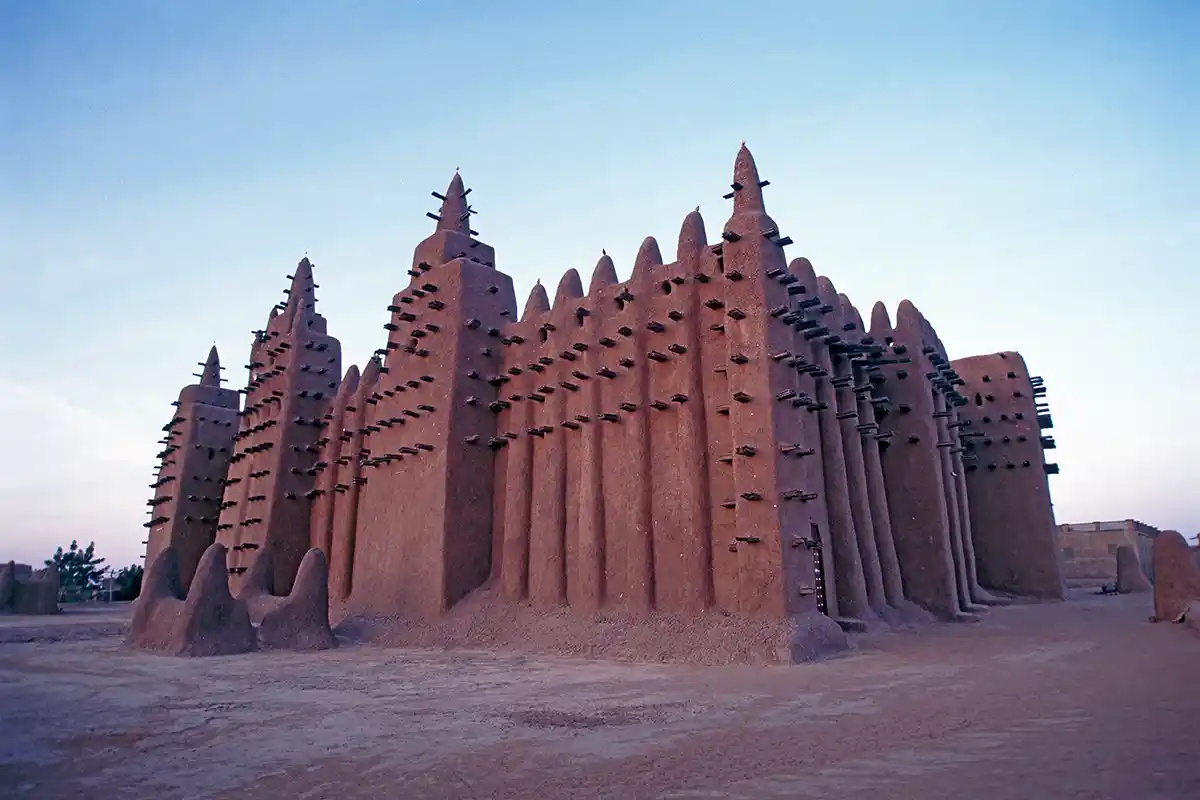
City of Djenné, in Mali, Uses Mud Bricks for Centuries, Without Concrete, and Maintains Its Structures with Annual Reconstruction Done by the Community.
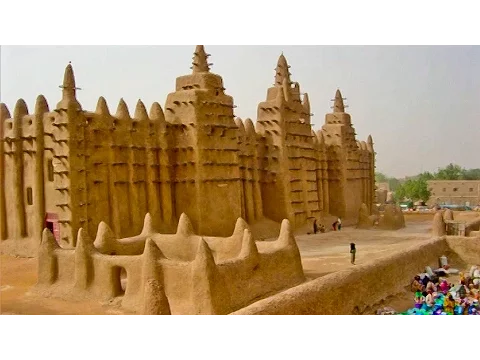
In a world dominated by reinforced concrete, steel, and industrialized structures, the city of Djenné completely defies the logic of modern engineering. Located in the interior of Mali, along the banks of the Bani River, it was built almost entirely with hand-molded mud bricks, known as banco, and has remained habitable for centuries without resorting to cement, metal beams, or deep foundations in the current standard. The most impressive aspect is not only the material but also the construction and social system that keeps the city standing to this day.
Djenné is home to hundreds of buildings made of raw earth, including houses, markets, and the Great Mosque of Djenné, considered the largest adobe structure in the world. Some of these buildings exceed 20 meters in height, something that seems incompatible with such a simple material at first glance.
The strength does not come from rigidity, but from adaptation.
-
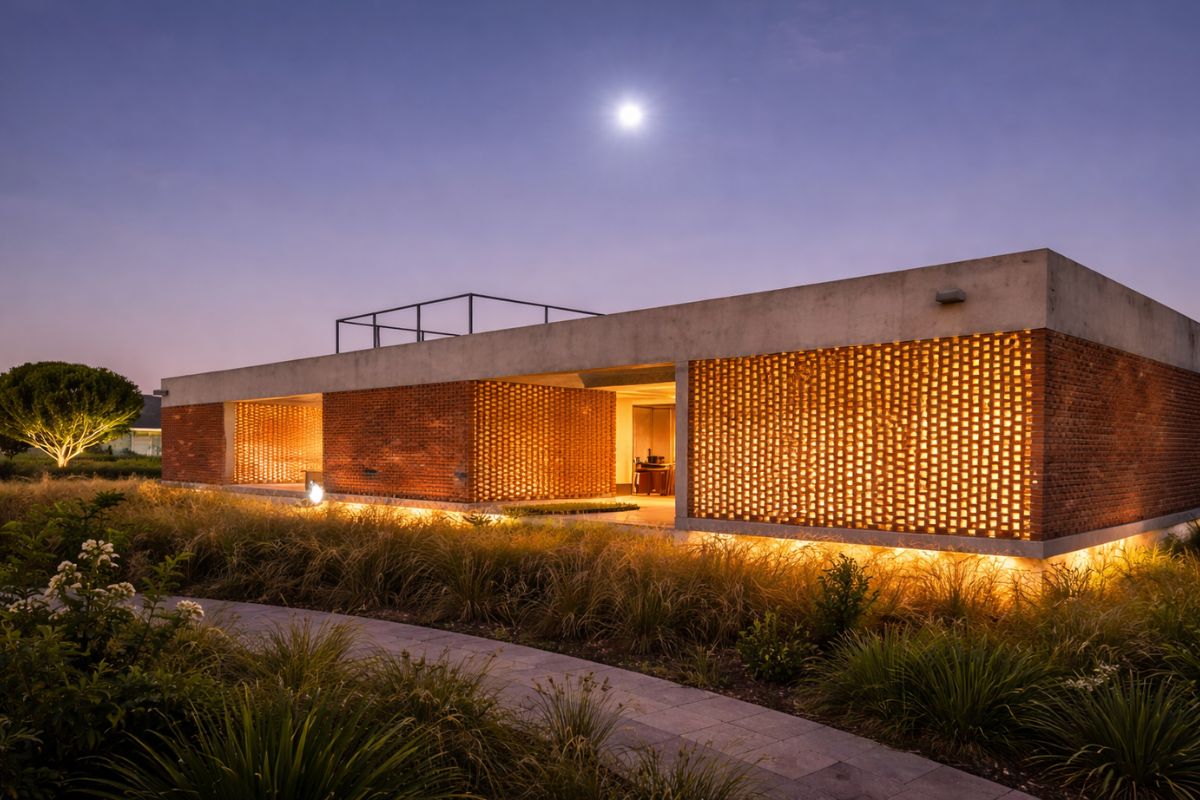
Casa Tupin in Brasília seems to float with exposed concrete and prestressed beams, 12 pillars support everything and without windows, it uses floor-to-ceiling openings in glass, cobogó, and small bricks in the internal courtyard.
-
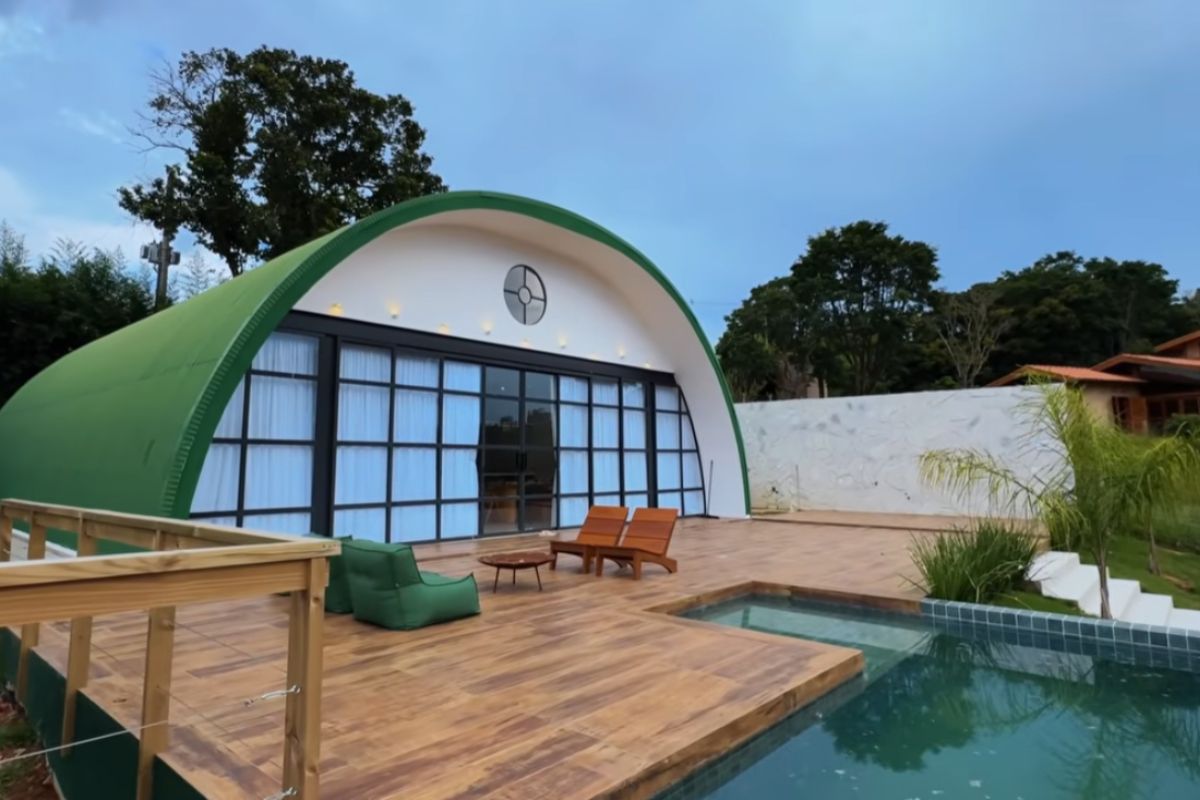
An architect transformed a hangar into a curved house with a view of the reservoir: a metal structure assembled in a week, glass doors, bold colors, toucans in the bathroom, and a design full of stories.
-
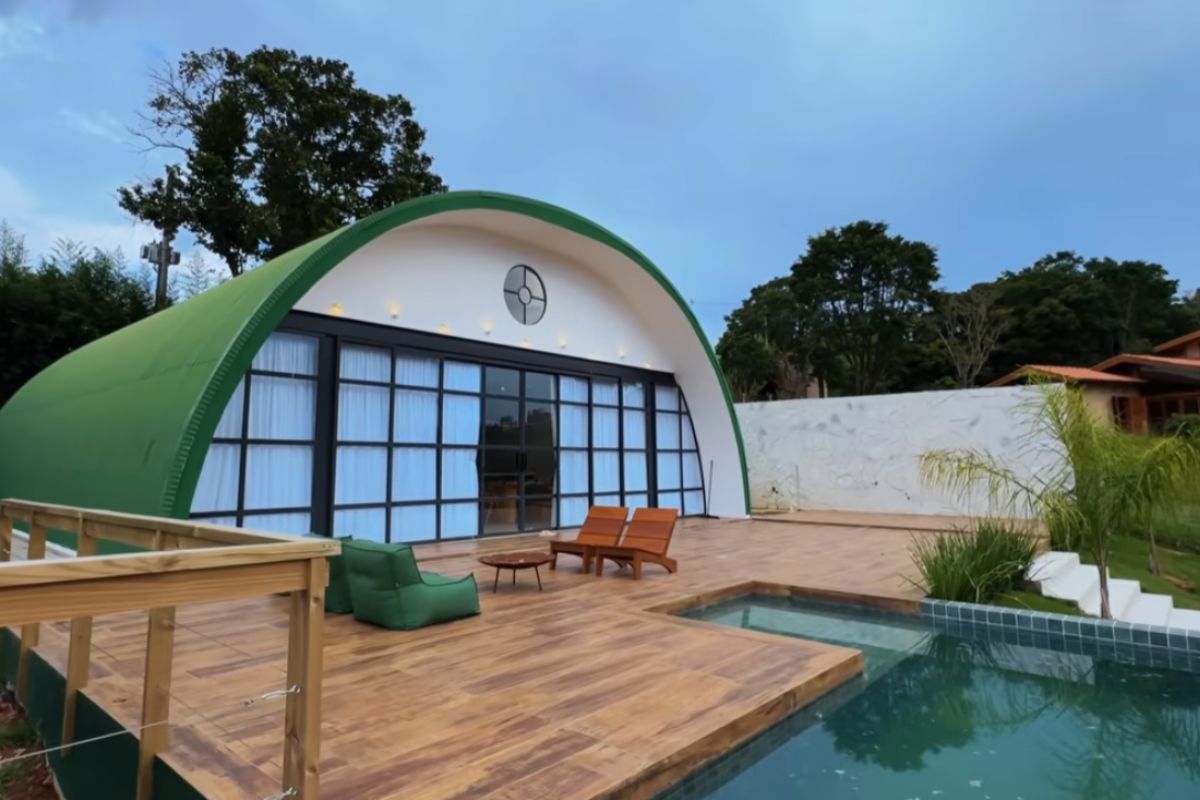
An architect transformed a hangar into a curved house with a view of the reservoir: a metal structure assembled in a week, glass doors, bold colors, toucans in the bathroom, and a design full of stories.
-
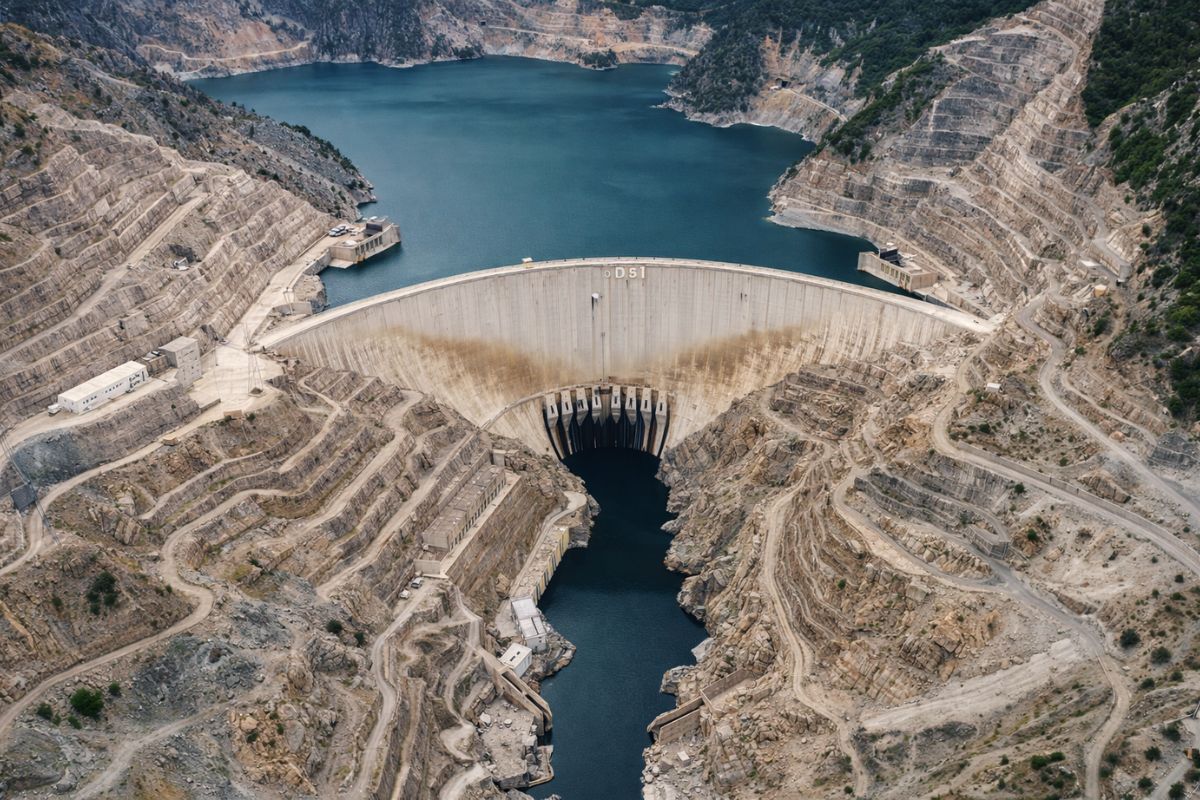
In Turkey, the Yusufeli dam nestled in a canyon sets a record: a concrete arch of 275 m, river diverted through a tunnel, 4 million m³ of concrete, 558 MW, and energy for 2.5 million people.
Mud Bricks as Structural Solution
The bricks used in Djenné are made from a mixture of clay, sand, water, and vegetable fibers, manually molded and sun-dried.

Unlike concrete, they do not harden definitively. They remain slightly plastic, allowing the structures to absorb thermal variations, minor soil settlements, and even vibrations without collapsing.
The walls are extremely thick, in many cases with more than 60 centimeters, ensuring stability, thermal insulation, and resistance to the extreme heat of the Sahel, where temperatures easily exceed 40 °C.
Architecture Designed for Continuous Maintenance
Unlike modern cities, Djenné was not designed to be “eternal” without maintenance. On the contrary: it was designed to be constantly repaired.
Every year, after the rainy season, part of the earthen coating wears away. Instead of treating this as a failure, the city has transformed the process into an organized system.
The result is an urban model in which durability does not depend on the immutability of the material, but on the repetition of care.
The Annual Reconstruction That Keeps the City Alive
Every year, the Crepissage de la Grande Mosquée takes place, a collective event where residents of all ages gather to reapply fresh mud to the facades of the main buildings. Tons of clay are prepared, transported, and applied manually in just a few hours.
This annual reconstruction is not merely symbolic. It renews the protection of the walls against water, repairs cracks, and reinforces critical structural points. It is preventive maintenance on an urban scale, done without machines, without cement, and without contracted companies.
Engineering Without Formal Engineers
The constructive knowledge of Djenné is not found in technical manuals but in oral tradition. Mixing techniques, wall thickness, facade slope, and opening placement have been passed down through generations.
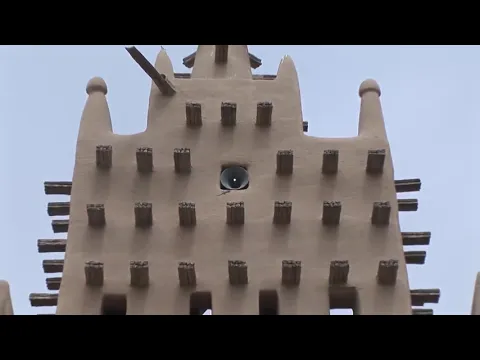
Elements such as exposed wooden beams on the facades are not decorative: they function as permanent scaffolding, allowing residents to reach the high parts of the buildings during annual maintenance.
Resistance to Time and Climate
Although it may seem fragile, the system has shown impressive resistance. Djenné has survived flooding from the river, prolonged periods of drought, extreme temperature variations, and even profound political and economic changes in the region.
While modern concrete buildings often deteriorate in just a few decades without proper maintenance, mud structures in Djenné have remained functional for hundreds of years because they are designed to be continually renewed.
An Opposite Logic to Modern Construction
In contemporary engineering, the goal is often to minimize future maintenance as much as possible. In Djenné, the logic is reversed: maintenance is part of the design. The material does not try to resist indefinitely; it accepts wear and replenishes itself.
This model reduces environmental impact, eliminates reliance on complex industrial supply chains, and creates a direct connection between the population and the infrastructure where they live.
Djenné is recognized as a World Heritage site by UNESCO, but more than just a historical site, it functions as a living laboratory of vernacular engineering.
In times of debate about sustainability, CO₂ emissions, and alternative materials, the city shows that it is possible to build with low impact and long-lasting durability as long as the logic of the project is different.
When Strength is in Collectivity
The true resilience of Djenné lies not just in the mud bricks, but in the social system that supports them. Without concrete, steel, and machines, the city remains standing because it was designed to be maintained by people, not by “indestructible” materials.
In a world that seeks increasingly complex solutions, Djenné proves that sometimes the most durable engineering arises from simplicity combined with collective organization.








-

-

-

-

-

-

67 pessoas reagiram a isso.