





 Portuguese
  English
  Spanish
  4 min of reading
  0 comments


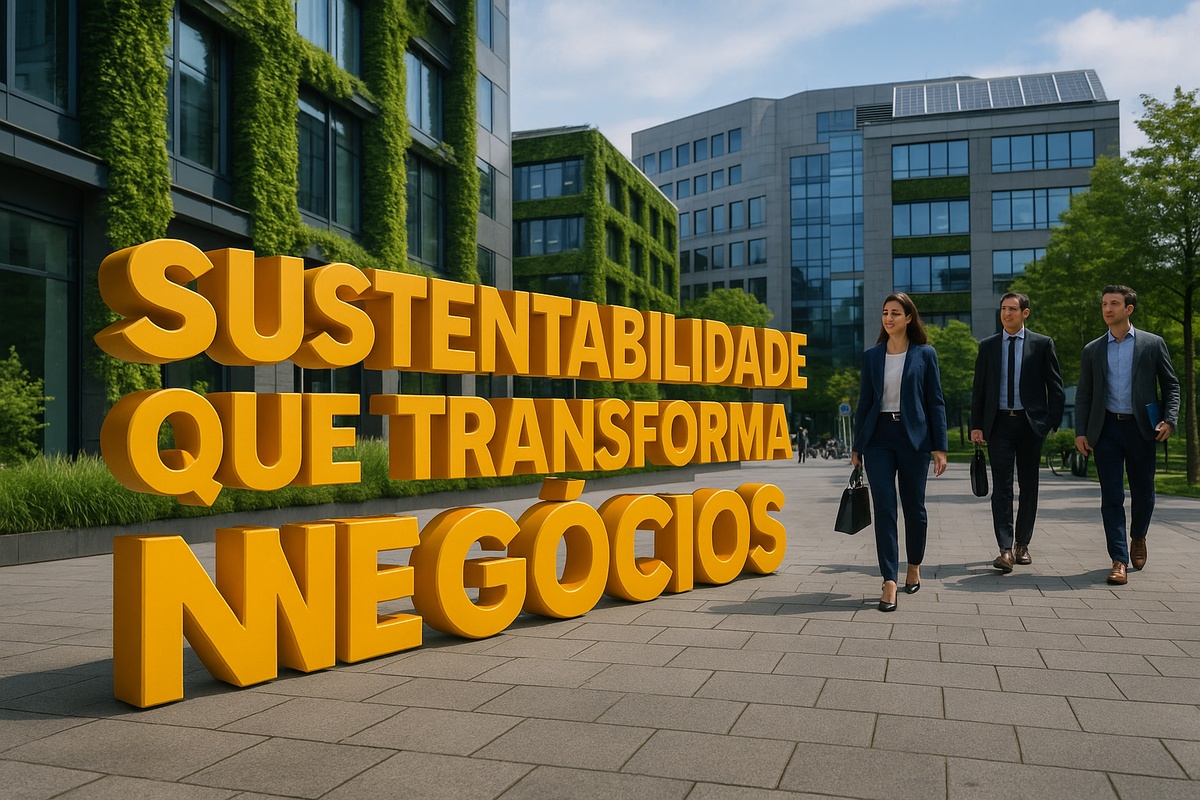
Companies From Different Sectors Accelerate Investments and Change Strategies to Make Sustainability an Essential Pillar of Their Business Models.
A silent yet profound transformation is underway in the Brazilian corporate world. Therefore, companies from various segments have begun to see sustainability not just as an obligation but also as a way to grow, innovate, and capture market share.
Moreover, this change in posture has been documented by entities such as the National Confederation of Industry (CNI), Getulio Vargas Foundation (FGV), and media outlets like Folha de S.Paulo, in reports from 2023, 2024, and 2025.
Sustainability Becomes a Competitive Advantage and Gains Momentum in the Business Environment
In 2024, the CNI revealed that the volume of private investments in environmental, social, and governance (ESG) practices grew 41% compared to the previous year. Consequently, these initiatives are present in sectors such as industry, agribusiness, technology, and retail. Thus, companies seek, much more than just complying with legislation, to stand out and win over increasingly demanding consumers.
-
With a water crisis on the radar, Sabesp invests in reclaimed water for data centers and transforms sewage treatment into a solution that saves millions of liters and protects public supply.

-
Foresea achieves 100% offshore waste reuse in 2025, eliminates landfill disposal, and consolidates sustainable strategy with 1,500 tons recycled.

-
With earth, bamboo, straw, and lime mortar, a specialist builds a house for just over $460 and draws attention for its cost being much lower than traditional construction.

-
Rodrigo de Freitas Lagoon advances in environmental recovery with sanitation, elimination of irregular sewage, and the resumption of water sports in Rio de Janeiro.


According to research by IBOPE released in March 2024, more than 70% of Brazilians already prefer brands aligned with environmental and social responsibility. Therefore, this pressures companies to adopt concrete strategies, going beyond mere rhetoric. Thus, it is essential to invest in real and measurable actions.
Energy efficiency programs, use of recyclable materials, circular economy, and encouragement of diversity have gained traction. In fact, these initiatives were highlighted in reports published by ABNT and FGV in early 2025.
Economic and Social Impacts of Sustainable Practices in Companies
The consolidation of sustainability as a central value has caused important economic changes. For this reason, companies that invest in ESG practices enhance their competitiveness and attract new profiles of investors. Moreover, the pursuit of environmental and social certifications increased by 35% between 2023 and 2025, according to ABNT.
Consequently, the strengthening of the sustainability agenda has brought benefits such as reduced operational costs, increased productivity, and improvements in brand reputation. Experts from FGV, in their analysis from June 2025, emphasize that these factors generate direct positive impacts on the market value of companies.
Meanwhile, sustainable initiatives create jobs, promote innovation, and strengthen ties with society. Thus, these actions create opportunities for the development of new products and services, adding value to the national economy.
Challenges of the Transition and Consumer Pressure for Transparency
Despite progress, the challenges of transitioning to sustainable business models remain significant. On the other hand, companies face high initial costs and, in addition, need to adapt their supply chains. However, they also deal with demands for tangible results.
According to CNI, companies seek support through partnerships, tax incentives, and green financing lines to overcome barriers. Since 2023, many companies have created dedicated areas to monitor environmental indicators. Thus, they ensure transparent accountability to society.
The Brazilian consumer, increasingly informed, demands clarity and honesty about the actions taken by brands. Therefore, communication has become a key piece in this process. Thus, it is essential to invest in reports and institutional campaigns that deliver exactly what was promised, without exaggeration or false expectations.
Legislation and Editorial Review: Rigor and Transparency Come First
The evolution of rules and public policies, especially after the Legal Framework for Sustainability in March 2024, has breathed new life into the regulatory environment. Therefore, companies need to follow stricter standards and adopt detailed editorial review processes. Thus, they ensure that the information disclosed is reliable and compliant with the norms of Google Discover and Google News.
The World Economic Forum, in a report published in 2025, highlighted that companies aligned with innovation, transparency, and environmental responsibility expand their market share. Therefore, they gain the trust of investors and consumers.
The Future of Corporate Sustainability: Continuous Review and Collective Engagement
Recent experience shows that the success of companies depends on the constant engagement of leaders, employees, and customers. Since 2022, experts from FGV have suggested the frequent updating of policies and rigorous editorial review. Additionally, the use of objective data to report progress has become essential.
Companies that adopt these practices can transform sustainability into a real advantage. Therefore, they contribute to generating financial results and building a lasting legacy. Thus, the trend is that, in the coming years, pressure for transparency and positive social impact will increase even further.
What do you believe is more urgent for Brazilian companies? Is it investing more in sustainability to capture the global market or prioritizing transparency and social engagement to strengthen societal trust? Share your opinion!










Seja o primeiro a reagir!