





 Portuguese
  English
  Spanish
  6 min of reading
  0 comments


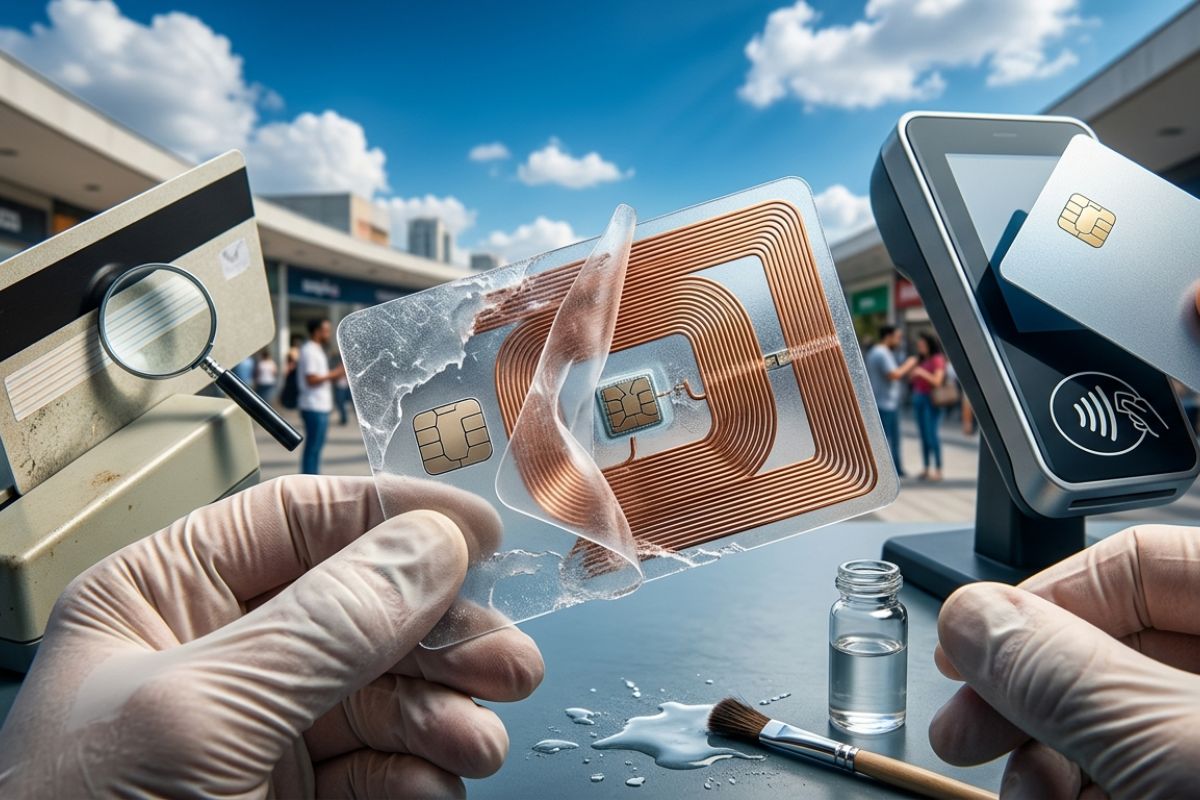
Behind the credit card, there is a “mini system” with antenna, chip, and cryptography, created to gain speed and security, but that still leaves gaps in the era of contactless payment.
The credit card seems simple in hand, but inside it is a set of technologies that has evolved over decades to solve two old problems: paying faster and committing fraud less. In practice, it has moved from a world of paper, signatures, and visual checks to becoming a device with storage, authentication, and contactless communication.
And when you look at this story in sequence, you can understand why the credit card has never stood still: each leap in convenience opened a new type of scam, and each layer of protection pushed criminals to another gap.
Dissolving the card in acetone: the “frame” that becomes an antenna

The demonstration is straightforward: by immersing a credit card in acetone, the plastic begins to dissolve and reveals an internal structure that many people might not imagine. Metal traces appear that function as an antenna, with the chip positioned in the center.
-
Scientists have recorded 12 sunken vessels on the seabed around the port of Santos: seven have already been studied, with highlights including the Casador from 1828, the Questrel that appears at low tide, and the Professor Besnard, which capsized after a recent heavy rain.

-
The time when astronauts traveled the farthest in space happened now: Artemis II took Orion to 406,771 kilometers from Earth, surpassing the Apollo 13 milestone by 6,600 kilometers.

-
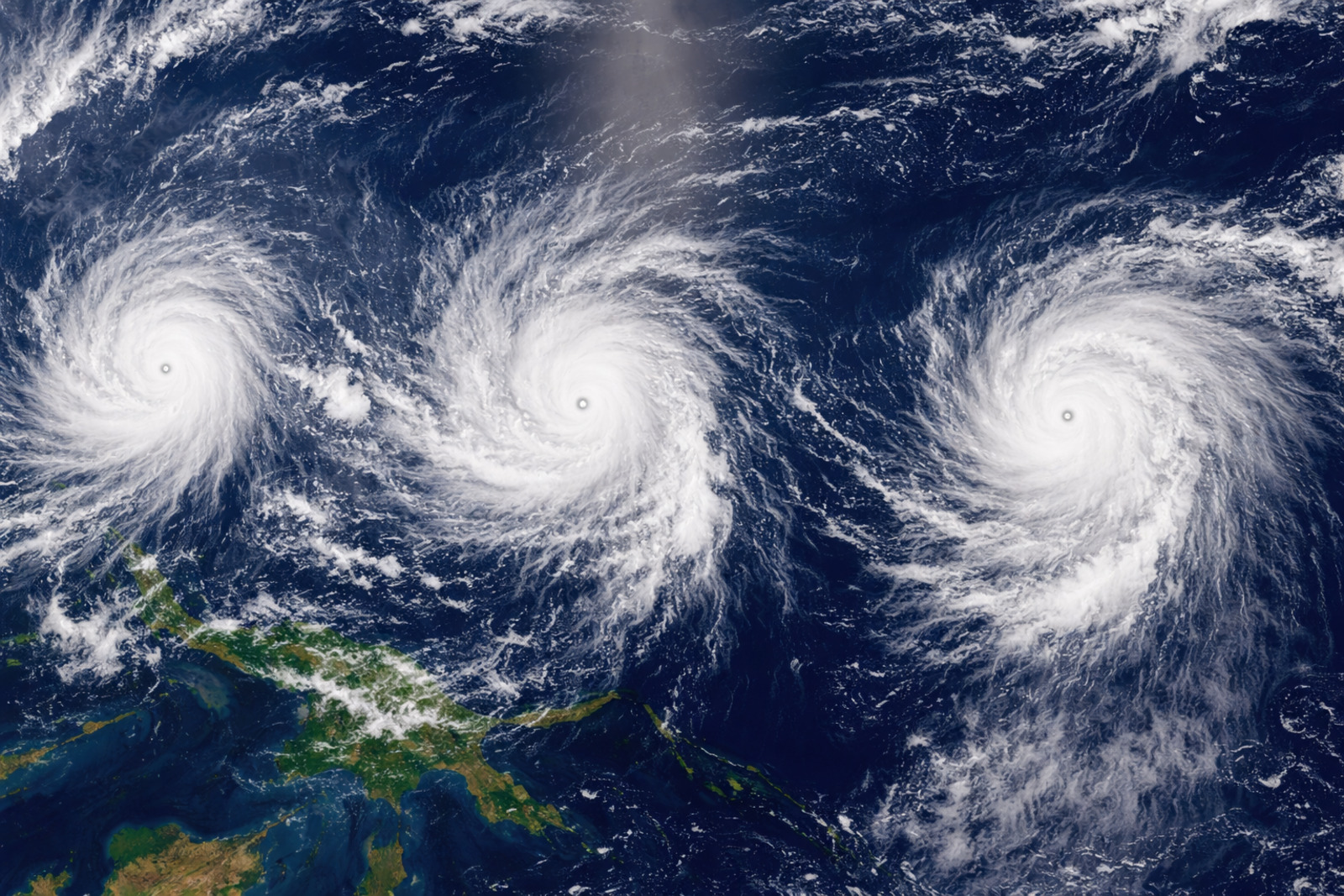
The rare emergence of triple cyclones in the Pacific can unleash extreme rainfall on islands, form twin storms, and even strengthen a stronger El Niño on the planet.
-
The Moon holds billions of years of frozen water in dark craters that could provide fuel, oxygen, and drinking water for astronauts, and a new study finally explains how that ice got there.

The most curious detail is that, even when “disassembled” visually, the set can still continue operating if the antenna and the chip remain connected.
This helps to understand why the antenna is so critical for contactless technologies: it is not just decoration; it is the component that allows communication and, in some cases, power.
The Soviet clamp without power: the idea that seemed impossible
Before the credit card became a “pocket computer,” there was a piece of espionage that seemed magical for its time: a listening device hidden in a decorative plate, without a battery, without a plug, and without its own power source.
The reason it went unnoticed for years is simple and brilliant: the clamp remained inactive until it was “awakened” remotely. When radio waves hit the antenna, the electrons oscillated, and the system re-emitted a signal.
In certain frequencies, the response became much stronger due to a resonance phenomenon. The sound in the room made a diaphragm vibrate and alter the capacitance, modulating the return signal with audio information.
This logic of “feeding from a distance and responding back” is not just espionage history. It is a conceptual relative of modern identification and payment technologies, which also depend on a reader “calling” and the device responding.
The first universal credit card: convenience, but with delays and fraud
With the economy growing, the need to buy without carrying large amounts arose. The universal credit card appeared as a solution, but the flow was slow: the merchant printed data on receipts, sent it to the bank, and authorization could take time.
This delay became an invitation for criminals, because the scam could happen and the fraudster could disappear before any blocking.
When the system still depended on paper and manual checks, speed was the bottleneck. And when speed improves, security needs to keep up.
The magnetic stripe: faster, more practical, and dangerously clonable
To speed things up, the magnetic stripe comes in. The logic is: store data in a stripe that the reader can read instantly.
The problem is that this type of data is static. In other words, the credit card with a stripe delivers the same information every time it is swiped.
This characteristic opened the door for large-scale cloning. If you can read and write, you can copy.
Fraud becomes an industrial process, with data capture and replication on “blank” cards. The result is that the stripe resolves the transaction time but pays a high price in vulnerability.
How the EMV chip changes the game: cryptography and unique codes
To contain cloning, the EMV standard and the use of the chip emerge, which functions as a mini computer. Here is the key change: the card stops repeating the same information and starts generating a unique code for each transaction.
The flow, in simplified terms, is as follows: the terminal sends the purchase details and includes a random number. The chip uses a secret key to scramble the message and returns a code.
The bank performs its own validation, and if the result matches, the transaction is authorized. The strong point is that the secret key does not need to “appear” in the communication, and each purchase is different from the previous one.
In practice, this makes the credit card much more resistant to traditional cloning. Stealing a code does not equate to stealing the card, because that code cannot be used to repeat the transaction later.
Chip and password: security rises, but the scam moves
With the chip, the easiest path is no longer to copy the card but to steal the card or steal the password. Looking over the shoulder, hidden cameras, and distractions at the checkout come into play. Protection improves, but the threat adapts.
A classic dilemma also arises: security costs time. In large volumes, seconds turn into lines. And that’s where the industry begins to seek “contactless” solutions.
Contactless payment: NFC, reader energy, and the comfort of touch
The credit card for contactless payment depends on a magnetic field generated by the reader. When touched, the card’s antenna receives induced energy, passes through a diode to power the chip, and then the information exchange occurs. The card does not need a battery because it “borrows” energy from the reader.
In terms of cryptography, the logic is similar to the traditional chip: the transaction continues generating data that makes sense for that specific payment. The difference is the medium: instead of metallic contact, it is communication via proximity field.
Adoption skyrockets when touching keyboards and handing over cards begins to be seen as a health risk. Convenience becomes the standard, and the technology becomes widely popular.
The current vulnerability: reading data via NFC is not the same as cloning
An important point to avoid panic: being able to “read” a credit card via contactless may seem alarming, but does not automatically mean being able to clone the card. Without the secret key of the chip, complete cloning does not hold up like it does with the magnetic stripe.
Even so, there is value in captured data. The number and validity can appear in a quick read, but online purchases usually require the CVV, which is not stored on the chip.
Therefore, the scam tends to migrate to two paths: social engineering to obtain the CVV or frauds that exploit the very act of bringing the card close.
Ghost tapping and the “digital wallet thief”: the scam of touching

The most direct scam in the logic of contactless is theft by proximity, also called ghost tapping. The idea is simple: in crowded places, a hidden reader stays close enough to try to trigger small transactions, within limits allowed in many countries.
This changes the scenario of the credit card: the problem is not “cloning forever,” but rather “taking little, many times,” or taking quickly before you notice.
How to reduce risk in everyday life without paranoia
There is no perfect measure, but you can significantly lower the risk with consistent habits: enable transaction notifications in your bank app to see any purchase in real-time.
Prefer digital wallet on your phone when possible, because the real card numbers do not need to be exposed in the same way, and access usually requires biometrics.
Consider a wallet with shielding if you frequent very crowded places, especially in transportation routines and events.
Avoid leaving multiple “loose” cards separated in external pockets, as this facilitates very close proximity.
In the end, the story of the credit card is a race: speed pulls fraud, fraud pulls cryptography, cryptography pulls new attempts. And the user becomes part of the security when using alerts, blocks, and more controlled payment methods.
Have you already activated your credit card notifications on your phone, or do you still only trust looking at the bill at the end of the month?







Seja o primeiro a reagir!