





 Portuguese
  English
  Spanish
  4 min of reading
  0 comments


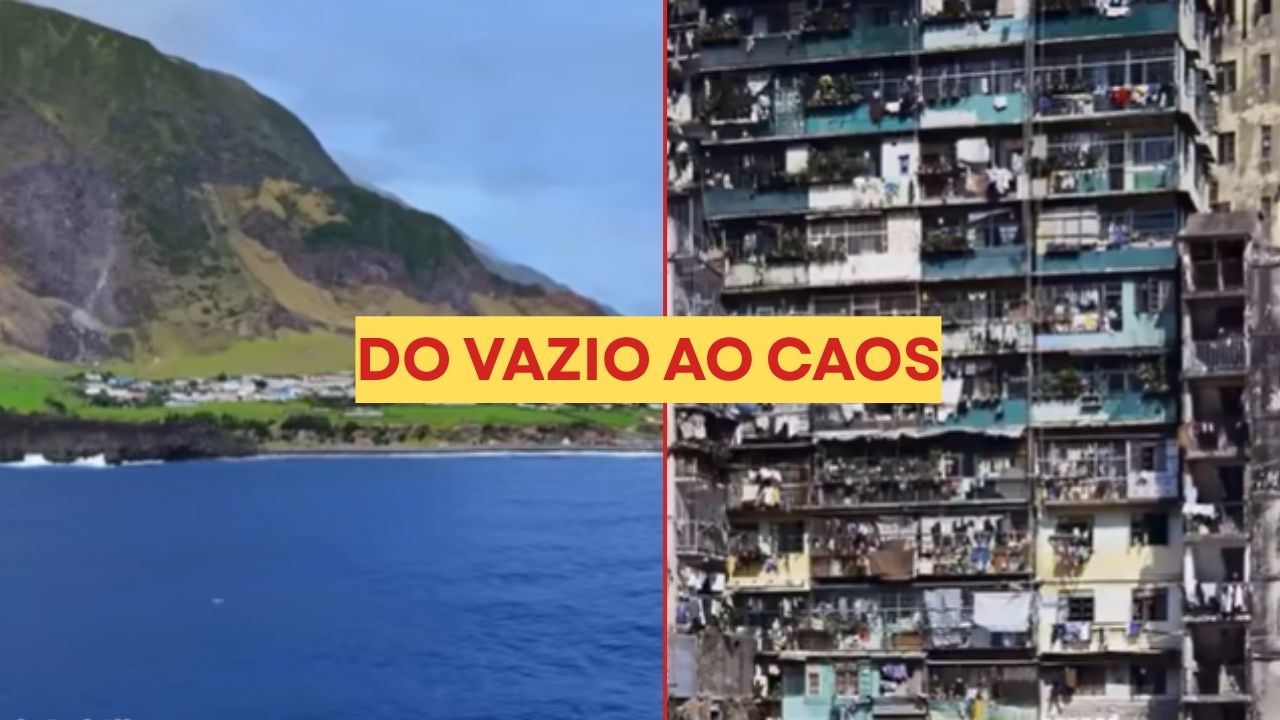
From The Icy Silence of Greenland to The Historic Chaos of Kowloon, We Examine The Extremes of Population Density and How Overcrowding Challenges The Limits of Human Survival.
Could you live in a place where the nearest neighbor is days away, or would you prefer the frantic pace of a city where the sky is almost invisible? Overcrowding is a phenomenon that divides the planet into opposing realities. While vast stretches of land remain untouched, small dots on the map concentrate millions of people, testing the infrastructure capacity and the mental sanity of their inhabitants.
According to data compiled by Canal Feito Geo, this journey through demographic extremes reveals impressive numbers. The distribution of the world’s population is radically unequal, creating chasms where density varies from less than one person per square kilometer to urban clusters that challenge physics and urban planning.
Life Where Almost No One Lives
To understand overcrowding, it is necessary to first look at emptiness. The most remote inhabited place on the planet is the island of Tristan da Cunha, a British territory in the middle of the Atlantic Ocean. With a density of only 0.16 inhabitants per km², its fewer than 250 residents live in almost total isolation. Access is made exclusively by ships, on journeys that can last over a week from South Africa or the United Kingdom.
-
Brazil’s nuclear submarine with a speed 5 times greater than normal advances after nearly 50 years and R$ 40 billion spent.
-
A Brazilian island charges R$ 0.50 to receive visitors and prohibits any new residents.
-
Why was the Great Wall of China built? The truth that many are unaware of!
-
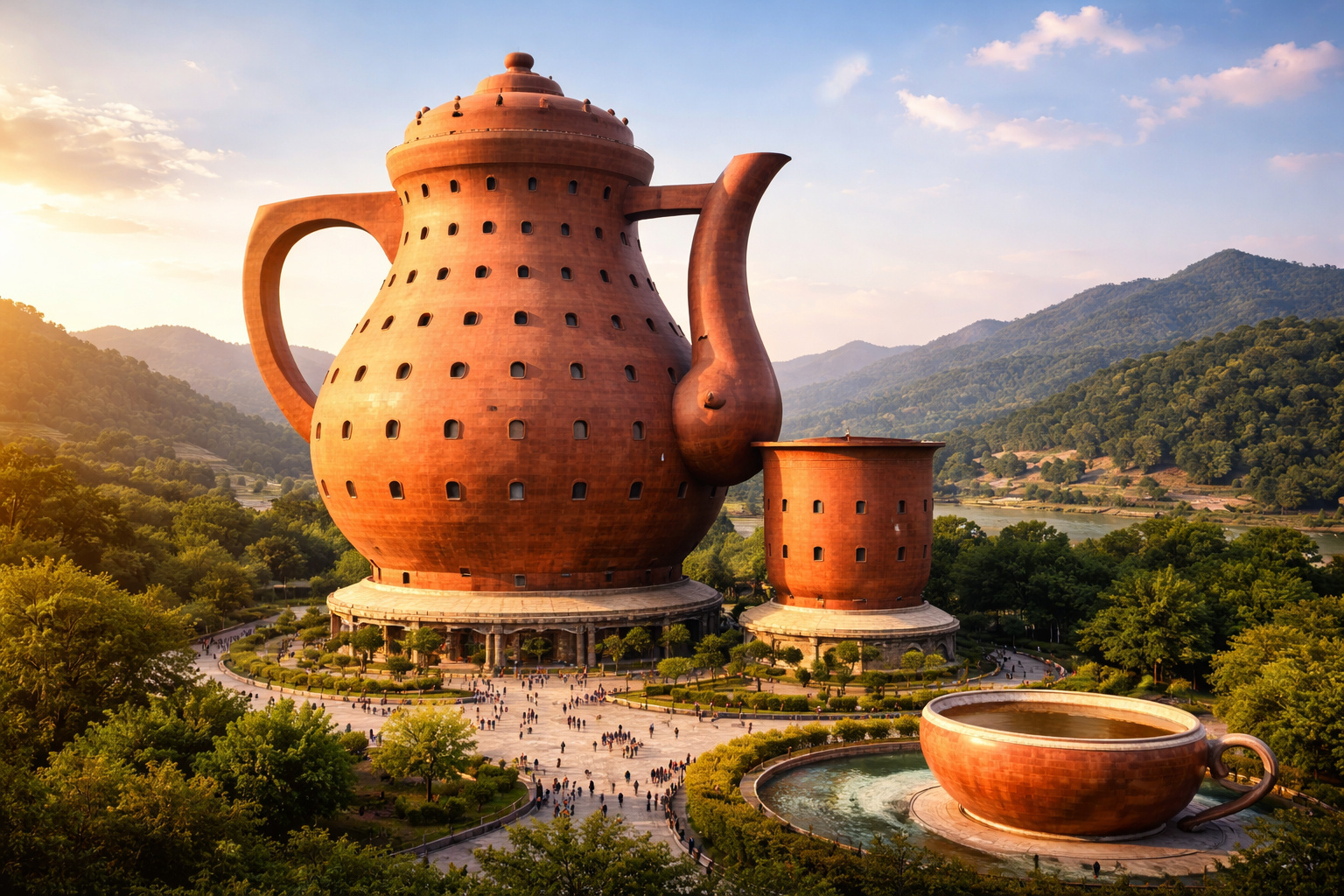
At 73.8 meters tall, the world’s tallest teapot-shaped building has 15 floors, ensures stability, and impresses with an internal space of 28,000 cubic meters.

Another example of demographic emptiness is Mongolia. Despite its giant size, the country has a density of only 2 inhabitants per km². Dominated by steppes and the inhospitable Gobi Desert, life in the interior follows a nomadic rhythm, very different from the large centers. Greenland takes this isolation to the extreme: with 0.026 inhabitants per km², most of the territory is covered by ice, restricting the population to small coastal villages adapted to the freezing cold.
Empty Horizons and The Beginning of Urbanization
As density increases, we find nations that balance large voids with modern cities. Iceland, with 3.4 inhabitants per km², and Canada, with about 4 inhabitants per km², are examples where nature still prevails. In Iceland, volcanoes and glaciers shape a quiet life outside the capital, while in Canada, vast forests and tundras in the north remain virtually uninhabited.
Moving up the scale, Uruguay (19 hab/km²) offers a lifestyle that blends the urban vibrancy of Montevideo with the tranquility of the countryside. Surprisingly, Japan has a national average of about 34 inhabitants per km² according to the analyzed data. Although Tokyo is a dense metropolis, the country has vast areas of mountains and rural islands where tranquility prevails.
When Cities Start To Run Out of Space
The dynamics change when we enter territories where occupation is intense. China (153 hab/km²) and India (420 hab/km²) show how the population can be distributed in different ways. While China concentrates crowds in the east and leaves the west empty, India has a more uniform distribution, with cities and villages densely populated throughout the territory.
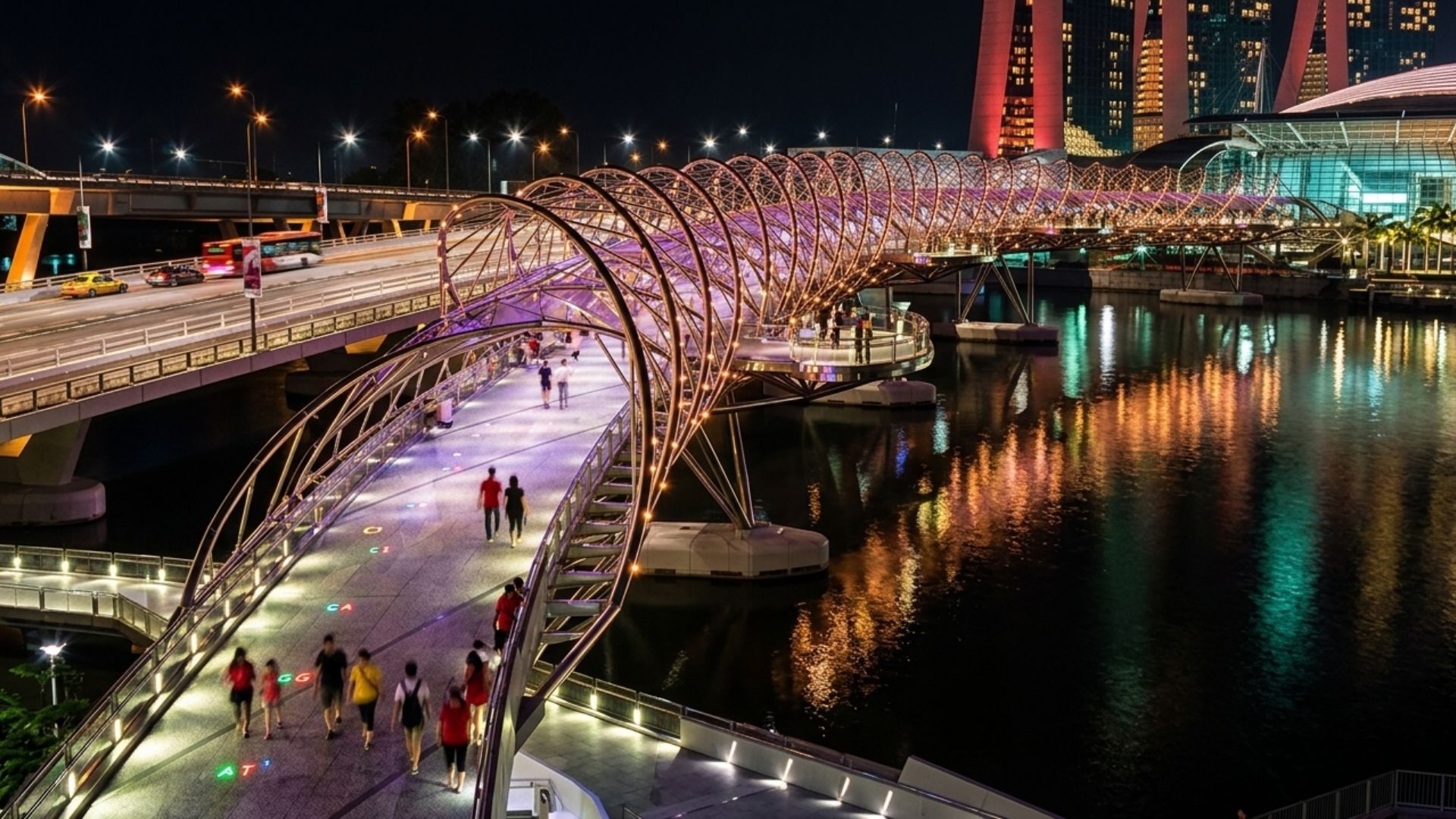
In Europe, The United Kingdom (277 hab/km²) balances the hustle of London with preserved green areas. In more critical situations, countries like Singapore hit impressive numbers, with over 7,000 inhabitants per km². Unlike other overcrowded places, Singapore has transformed the lack of space into efficiency, using high-level urban planning and verticalization to ensure quality of life.
Surviving Extreme Overcrowding
The true test of human endurance occurs where space becomes a rare luxury. In Macau, the density exceeds 20,000 inhabitants per km², forcing the city to expand its territory over the sea. The situation is even more dramatic in neighborhoods like Dharavi in Mumbai, and Tondo in Manila, where density can exceed 100,000 inhabitants per km² in certain areas, with residents living in precarious conditions and minimal spaces.
The Mong Kok district in Hong Kong is another critical point, with around 130,000 inhabitants per km². There, residential buildings are stacked side by side, and commerce operates 24 hours a day, creating an environment where the notion of personal space practically doesn’t exist.
The Maximum Limit: The Walled City of Kowloon
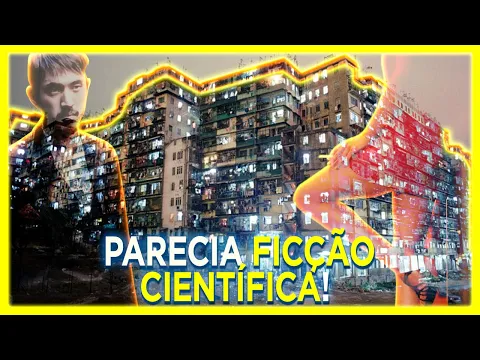

However, no place in history has represented overcrowding as viscerally as the Walled City of Kowloon in Hong Kong. Before its demolition in 1993, this enclave reached the surreal mark of 1.2 million inhabitants per km². It was an urban anomaly: a block taken over by buildings of up to 14 stories, constructed without planning, forming a dark maze where sunlight did not enter.
Kowloon operated almost like an autonomous organism, outside of government control, housing factories, residences, and businesses in a claustrophobic space. Although it has been transformed into a park, Kowloon’s legacy remains the definitive example of the physical limit of human occupation. With projected growth for megacities in the future, it remains to be seen whether we will find technological solutions for density or if new “Kowloons” will emerge.
In the face of these extremes, the reflection remains: could you adapt to a lifestyle where personal space does not exist, or would total isolation be your only option? Leave your opinion in the comments, we want to know how you deal with the lack (or excess) of space in your city.




-

Uma pessoa reagiu a isso.