





 Portuguese
  English
  Spanish
  4 min of reading
  15 comments


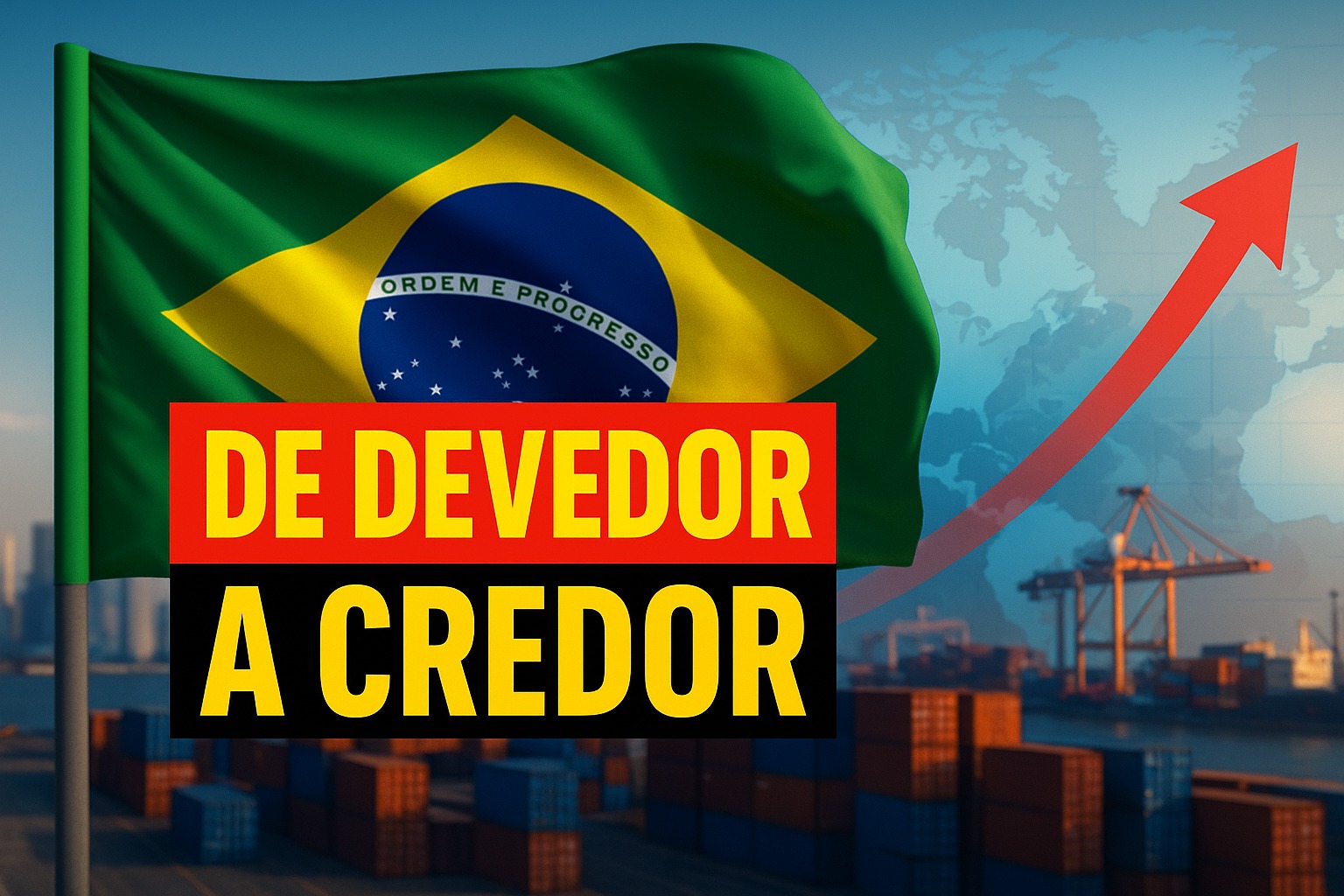


From Great Debtor to IMF Creditor, Brazil Earned International Respect, Expanded Influence in Multilateral Forums, and Strengthened Its Global Economic Image
For many years, Brazil was among the main debtors of the International Monetary Fund (IMF). With each economic crisis, turning to the Fund seemed inevitable, even though it was seen as an uncomfortable resource. The stigma accompanied the country and served as a constant warning about fiscal fragility.
Everything began to change in 2005. That year, the government announced the full payment of its obligations to the IMF, eliminating the accumulated debt at once.
The gesture was considered historic because it symbolized the end of a long dependency.
-
Inflation in March reaches 0.88% according to IBGE and pressures the Brazilian economy, impacting family budgets and requiring more strategic decisions to maintain financial control.
-
In Paraná, distributor Pacto connects 100% of the load in Coronel Vivida to batteries: a BES of 10 MW and 20 MWh costs just over R$ 30 million and lowers the local tariff now.

-
With a dependence of up to 80% on gas imported from the United States, Mexico is responding with a robust energy strategy, betting on shale gas, creating a scientific committee, and preparing to expand natural gas production to reduce vulnerability and strengthen its energy security in the coming years.
-
The United States proposes to Brazil a critical minerals agreement with a minimum price to combat Chinese dumping and priority for investment, but the Planalto is blocking the signing out of fear of upsetting China and due to electoral calculations in a year of competition.
A Billion-Dollar Loan in 2009
The transformation became even more surprising four years later. In 2009, amid the turbulence of the international financial crisis, Brazil announced it would lend US$10 billion to the IMF.
This time, it was not the debtor seeking help, but rather the creditor willing to strengthen the institution.
The contribution was formalized in government documents, despite political speeches suggesting higher amounts.
Regardless of the discrepancy, the loan marked a profound change in Brazil’s position before the international community.
Brazil’s Global Recognition and Influence
The gesture did not go unnoticed. By assuming the role of creditor, Brazil began to be seen differently by major powers.
In addition to earning respect, the country gained a seat in decision-making spaces of the Fund itself, influencing the direction of international financing policy.
Therefore, the credit operation was not merely symbolic. It opened up space for active participation in multilateral forums and strengthened the country’s image in strategic diplomatic negotiations.
The Path Opened by Economic Fundamentals
None of this would have been possible without a solid foundation built in the previous years. Between the late 1990s and the first half of the 2000s, public debt fell from 65% to 32% of Gross Domestic Product.
At the same time, international reserves grew from US$37.8 billion to over US$200 billion.
Control over inflation and unemployment completed the set of measures that gave Brazil new momentum.
This fiscal balance, combined with economic growth, created the conditions for the country to have resources available to support the IMF.
Behind the Decision
Lending billions to an organization that had once been a creditor of Brazil was not simple. The process required internal negotiations, political coordination, and public defense of the measure.
For the government, the move symbolized maturity and commitment to global financial stability.
Furthermore, the decision aligned Brazil with other emerging countries that, at the same time, bolstered the Fund’s coffers.
The collective gesture indicated that new economies were willing to occupy more relevant spaces on the international chessboard.
Market Repercussions
The news had a significant impact on financial markets. Many analysts saw the gesture as a turning point for the Brazilian economy.
The contribution was celebrated as a sign of confidence but also brought calls for accountability: maintaining reforms and rigorously managing public resources would be necessary.
This balance between celebration and caution marked the initial reaction. On one side, enthusiasm for the new image; on the other, concern about the ability to maintain the positive trajectory.
Indirect Benefits
Taking on the position of creditor brought advantages beyond prestige. Brazil gained more influence in discussions regarding guidelines for countries in crisis, something that had previously been denied to it.
This ability to opine in strategic scenarios placed it on equal footing with traditional powers.
Although the practical results were not immediate for the daily lives of the population, the gain in credibility resonated in the economic environment.
There was greater investor confidence, stability in the exchange rate, and encouragement for growth.
New Scenarios and Challenges
Time, however, brought changes. The Brazilian economy went through phases of instability and new cycles of uncertainty.
Despite this, the status of IMF creditor remains relevant and serves as a reminder of the importance of fiscal discipline.
Discussions about public debt, international reserves, and investments remain at the center of economic policy choices, showing that the task of balancing the budget is never definitive.
A Legacy of Learning
The transition from debtor to IMF creditor stands as one of the most emblematic chapters in recent economic history.
The episode demonstrated that it is possible to turn the tide with responsible management and well-calculated strategic decisions.
More than prestige, the experience brought valuable lessons. Brazil learned that credibility is not acquired through speeches alone, but through consistent results that inspire confidence both within and outside its borders.
With information from Terra.







O governo empresta para o FMI e Venezuela para fazer boa imagem no exterior mas no âmbito interno a economia afunda, a indústria está cada vez mais decadente, os jovens fogem da escola e das universidades, e vamos vivendo da venda de commodities. Vivendo num mundo de aparências, vai ser impossível efetivar a decolonialidade que os filósofos da modernidade ficam proclamando.
Brasil com uma dívida de 10 trilhões é credor de que mesmo? Só se for do dinheiro dos nossos impostos, ****.
Quitou uma dívida que tinha juros de 4% com um empréstimo de 12,75%. Um feito realmente memorável kkkk
Pura invenção ****. É por isso que as pessoas acabam enfrentando a justiça e tendo que pagar um preço alto pela própria ignorância.