





 Portuguese
  English
  Spanish
  4 min of reading
  1 comment




The Current Poorest State In The US, Mississippi Hasn’t Always Held This Position! Discover How It Transitioned From One Of The Richest To The Poorest In The Blink Of An Eye.
Mississippi, a state located in the heart of the Southern United States, is known for its rich artistic tradition and beautiful natural landscapes. However, despite its GDP of US$ 115 billion, Mississippi carries the title of the poorest state in the US. But this has not always been its reality. In this article, we will explore the impressive trajectory of Mississippi, from its days of prosperity to becoming the poorest state in the country. Understand the historical, economic, and social reasons behind this surprising transformation.
Understand Why The State Of The US Was So Rich
To better understand the fall of the state, we must go back to the late 18th century when the country gained its independence from Great Britain, thus recognizing Mississippi as a state of the Nation.
In this process, the settlement of the state was linked to the fertility available in its soil. This is because its territory is shaped by a series of geological and climatic factors that make it extremely fertile.
-
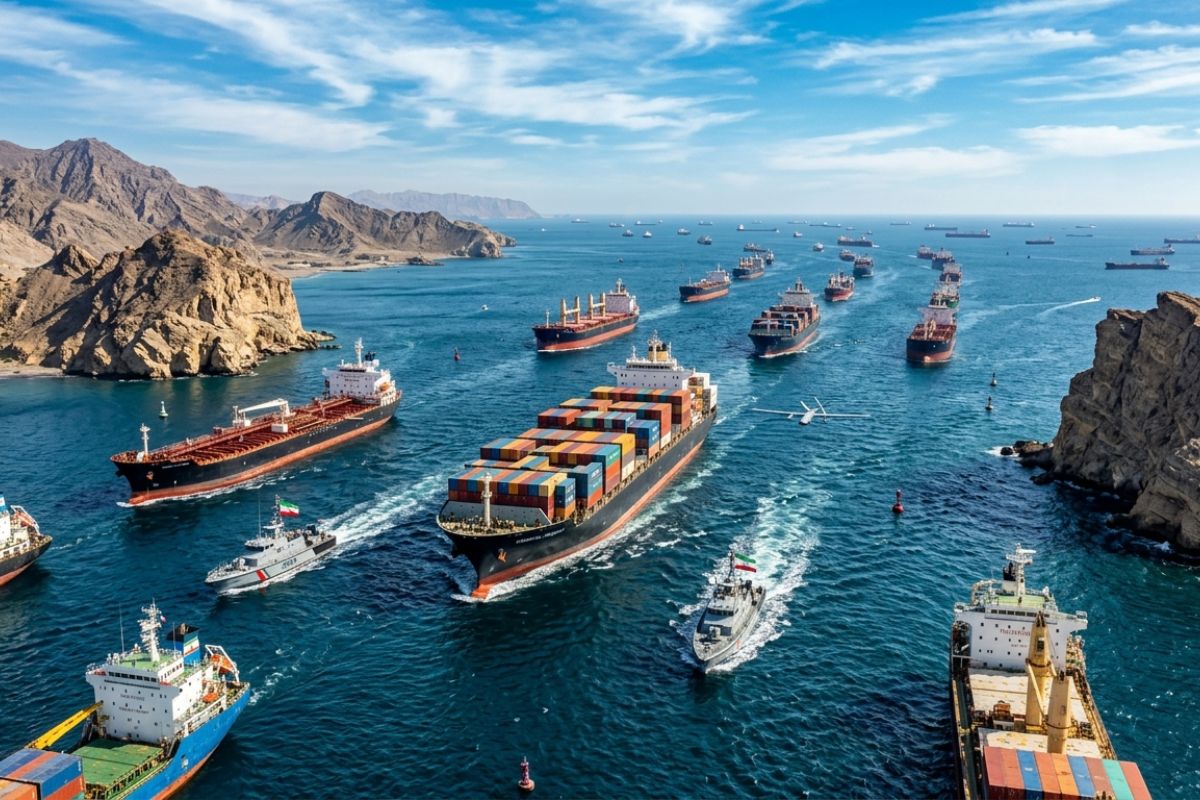
Iran authorizes the passage of ships with essential goods in the Strait of Hormuz, requires coordination and protocols; UN postpones resolution to reopen the oil route, while China, France, and Russia reject the use of force.
-
The Ukraine war exposes the strength of the M113 armored vehicle amid modern warfare with military drones.

-
Maritime geopolitics: China and the USA compete for strategic ports in Peru.

-
Iran shoots down two US aircraft: F-15 fighter crashes in mountainous area, one crew member is rescued and another is still missing; second crash in the Persian Gulf exposes still active air defense, says US intelligence.



However, just as the colonization and settlement of Mississippi occurred rapidly, slavery in the region also expanded quickly, lasting for over a century. To give an idea, in 1820 there were about 33,000 slaves, but by 1860 that number grew to 437,000, representing more than half of the Mississippi population.
At that time, the productive capacity of the state was so great that in 1860 Mississippi was the richest state in the nation, with cotton being the backbone of the economy, its production expanding by 600% compared to 1820.
Thus, cotton dominated exports not only from the state, which produced thousands of tons of the product annually, but primarily from the United States, which catered to Great Britain’s strong textile production.
How Did The State Of Mississippi Become Poor?
Everything began to change in 1861 with the onset of the Civil War between the Southern states, which supported slavery, and the Northern states, which were abolitionist. Despite playing a leadership role, providing soldiers and vital resources, the consequences of the conflict were devastating for Mississippi, especially after the defeat of the Confederacy and the military occupation of Southern states until they were reintegrated into the Union.
In this process, slavery in the country came to an end, which led to the decline of agricultural production and the major farms in the South that no longer had the same workforce. Among the most affected states was Mississippi, which went from being the richest state to the poorest in the US and did not have a strong or previously established industry to replace the agricultural model.
Such a problem led to contradictory proposals, such as the sharecropping model, where landowners agreed to give part of the production to the worker, serving as a catalyst for social conflicts and terrorist movements against African Americans in the state, alongside the resistance from the local political and economic elite to implement changes so that Mississippi could reintegrate into the Union, which only occurred in 1870.
Understand How The State Transitioned From Richest To Poorest In The USA
Based on what has been presented so far, it is evident that poverty and misery prevailed in Mississippi for over a century. Even though the Civil War devastated the logistical infrastructure and overturned the existing economic model, the new century brought with it the difficult economic restructuring of Mississippi.
The economic problem of the state was structural, as it did not have a strong industrial tradition like the Northern US, making its dependence on primary products derived mostly from agriculture hinder any significant change in the state’s economic development, which explains the fact that by the end of the 1960s about 40% of the population lived in poverty.
Thus, diversifying the economy was essential to attract income and quality of life, something that was pursued in the second half of the 20th century when the manufacturing industry established itself in the state, especially after a combination of economic and tax incentives was implemented to attract the eyes of companies.










Uma análise crítica ao modelo econômico adotado pelo Mississipi e estados do sul dos EUA e também do sul global em geral dependente de exportações de commoditties contrapondo a um outro modelo que é a manufatura onde é produzido mais riqueza e bens de valor agregado. O Mississipi é “pobre” comparando aos restante dos EUA e dos países ricos mas é rico comparando a América Latina.