





 Portuguese
  English
  Spanish
  5 min of reading
  0 comments


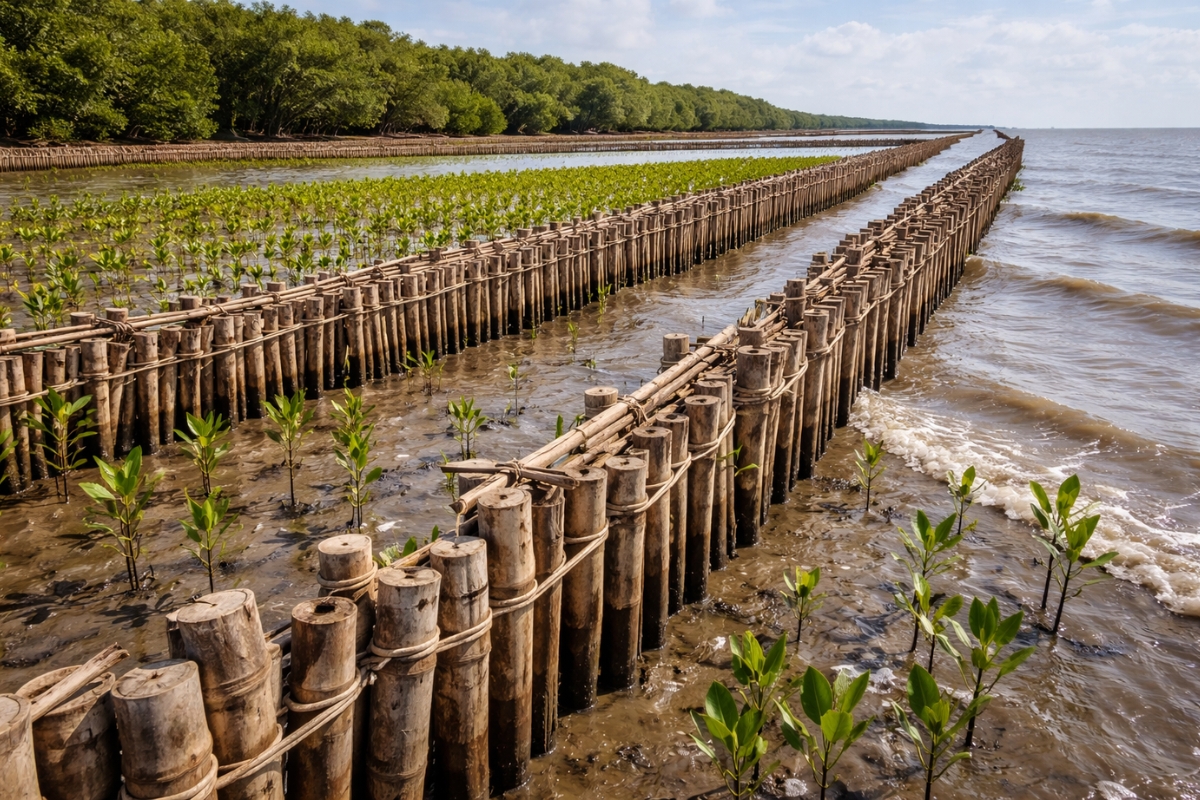
In Nha Mat and Vinh Chau, Communities in the Mekong Delta Installed Permeable Bamboo Fences About 1.6 M High to Reduce Waves by About 40% and Accumulate 30 to 60 Cm of Sediments in 10 Months, Creating a Base for the Return of Mangroves and More Coastal Protection
Along the Mekong Delta in southern Vietnam, coastal communities have been facing a difficult scenario for decades.
The combination of rising sea levels, stronger waves, and mangrove destruction has accelerated erosion and the loss of forests that protected dikes and villages.
In several places, the sea has advanced over former fields and mangrove areas, leaving the soil unstable and making it much more difficult for new trees to grow, even with planting programs.
-
INMET danger alert: heavy rains between the 3rd and 4th may drop up to 100 mm/day and winds of 60 to 100 km/h in several regions of Brazil require extra caution.
-
The parts crisis may bring back the drop notch and microSD in 2026; while Windows 11 promises to become lighter, leaks mention batteries of up to 10,000 mAh and 200 MP cameras.

-
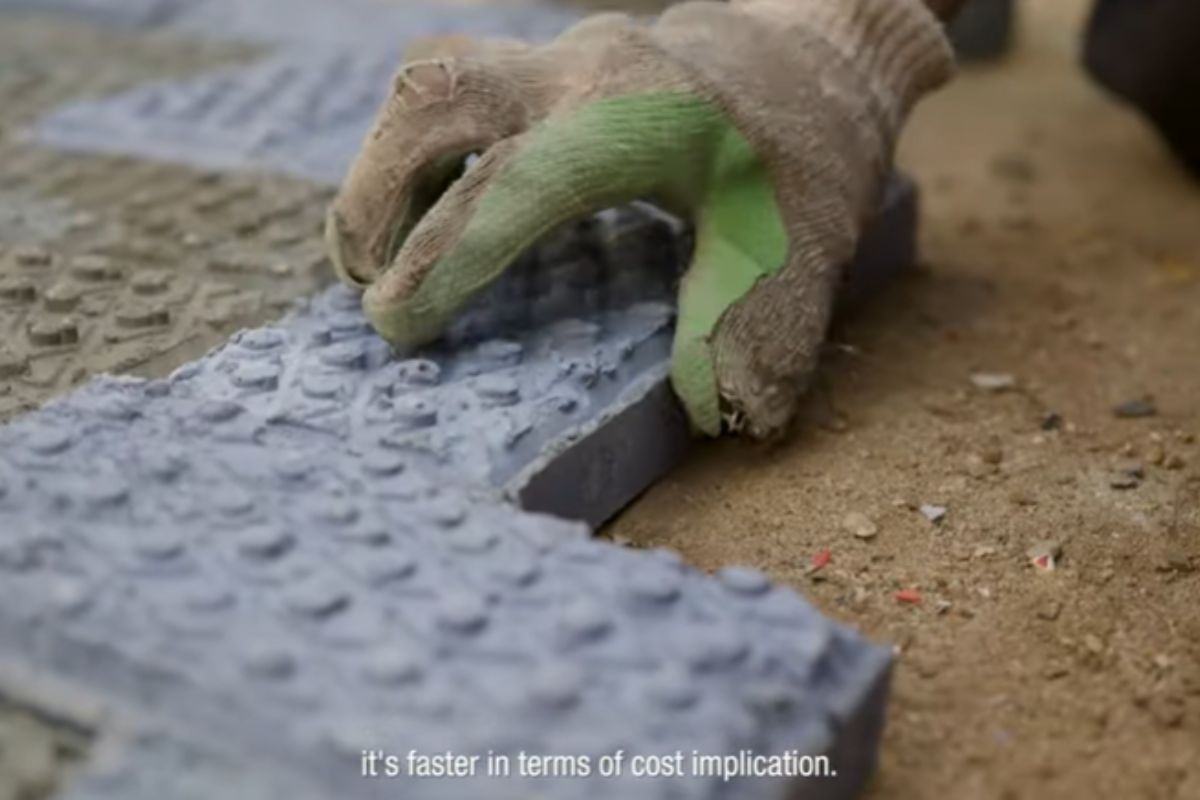
In Kenya, engineer Nzambi Matee created “bricks 2.0” using packaging plastic: a mixture with sand, heated and pressed; they are 5 times more resistant, already have official licensing, and are being used in streets and construction projects.
-
More than 20,000 positions could be opened, and thousands of technicians are starting to be trained in Brazil, as the expansion of data centers creates an urgent race for professionals to keep the internet, cloud, and artificial intelligence running 24 hours a day.


The information was published by Frontiers in Marine Science, a scientific journal, which describes the adoption of permeable bamboo fences and barriers in shallow waters to reduce wave energy and create conditions for the return of mangroves.
Mekong Delta Has Been Losing Coastline for Decades with Rising Sea, Changing Sediments, and Vanishing Mangroves
The Mekong Delta is considered one of the most vulnerable regions in the world to the combination of rising sea levels, land subsidence, storms, and changes in sediment flow.
Over time, this has reduced the natural protective barrier and left the coastline more exposed to wave and tide action.
Studies indicate that about half of the region’s mangroves have been lost in just a few decades, and in some stretches, dikes have become directly exposed to the sea, increasing the risk of breaches during storms.
This data appears in ScienceDirect, a platform for scientific publications that gathers research on coastal erosion and mangrove loss in Vietnam.
Direct Planting in Water Fails Because Waves Uproot Seedlings and Soil Remains Flooded Too Long

What seemed simple, planting mangroves and waiting for them to grow, does not work in areas that have been heavily eroded.
The soil is lower, the flooding time is long, and the waves knock down small plants before they can establish strong roots.
Therefore, the strategy had to start with another step: reconstructing the coastal plain by raising the land with sediments and reducing wave energy.
The information was shared by TU Delft, a university and research center, explaining that restoration depends on creating suitable physical conditions before replanting.
Bamboo Fences in Nha Mat and Vinh Chau Were Installed in Shallow Water to Break Wave Strength
The solution tested in places such as Nha Mat, in Bac Lieu city, and Vinh Chau, in Soc Trang province, was the installation of permeable fences made with bamboo stakes and bundles of branches.
These fences were positioned in shallow water, parallel to the coast or in T shapes.
The secret is that they are not closed walls.
They allow water to pass through but break the force of the waves and reduce current speed, creating a “calm point” behind the structure.
As a result, sediment begins to accumulate where there was previously only erosion.
Measurements in Nha Mat Show 40% Reduction in Waves and 30 to 60 Cm Gain in Sediment in 10 Months
A field study in Nha Mat measured waves in front of and behind bamboo fences about 1.6 m high and multiple rows of stakes filled with bamboo bundles.
The numbers are impressive.
Significant wave height can be reduced by about 40% in shallow sea conditions, depending on water depth and fence geometry.
In just 10 months, the sediment level behind the fences increased by approximately 30 to 60 centimeters, raising the coastal plain and creating a much more favorable environment for the return of mangroves.
The data was detailed by Frontiers in Marine Science, a scientific journal that published the field study with the measurements.
In Soc Trang, T-Shaped Fences Helped Close Eroded Gaps Between Still-Living Mangrove Areas

In addition to Nha Mat, the technique was also applied in Soc Trang with permeable T-shaped fences.
The objective was to close eroded gaps between still-intact mangrove heads, something that had left stretches vulnerable to the sea’s advance.
According to ScienceDirect, a platform for scientific publications, these barriers reduced wave energy, increased sedimentation, and helped recover areas that had been completely eroded.
The result was a gradual reconstruction of parts of the coastal plain.
Mangroves Return to Function as a “Natural Shield” and Reduce Risk to Dikes and Community Life
With more accumulated sediment and less aggressive waves, the replanting of mangroves along the coastline is much more likely to succeed.
And when the mangroves return, they not only take up space; they provide protection.
The complex roots dissipate wave energy, stabilize the soil, and offer habitat for species important for local fishing, as described by cris.brighton.ac, a university academic repository.
Technical reports indicate that when the fences were properly sized and positioned, there was a reduction in erosion at the base of the dikes and banks, with a lower risk of collapses during extreme events.
Furthermore, the gradual return of the fauna associated with mangroves can favor artisanal fishing.
About 7.1 Km of Barriers Were Installed and the Strategy Works Best with Waves Below 0.9 M
The low cost is one of the factors that weighs heavily in favor of this solution.
Bamboo and local wood tend to be cheaper than rigid structures, especially on muddy coasts where heavy construction can be difficult and expensive.
Studies report that approximately 7.1 km of permeable bamboo fences have been installed in parts of the eastern coast of the delta as a temporary solution to reduce waves and promote sedimentation.
This information appears in cris.brighton.ac, an academic repository that compiles analyses and data about the region.
Another important observation is that the strategy is especially effective in areas with moderate waves, typically below about 0.9 m in height, according to ScienceDirect, a platform for scientific publications.
In other words, it is not a “magic” solution for every sea, but it can be decisive in the right scenario.







-

Uma pessoa reagiu a isso.