





 Portuguese
  English
  Spanish
  6 min of reading
  1 comment


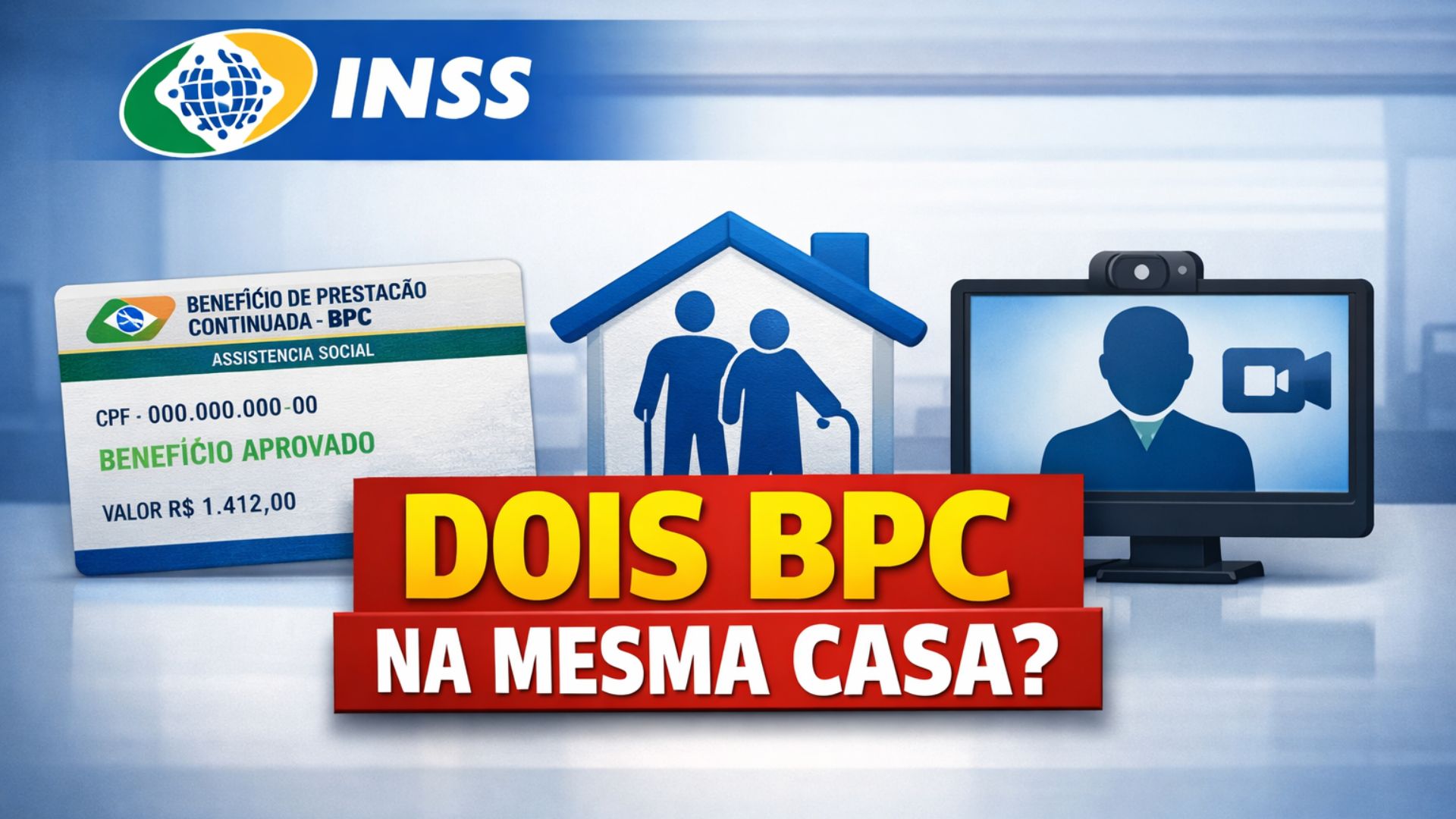


Bill Approved by Chamber Committee on November 13, 2025 Changes Rules of Continuous Cash Benefit for the Elderly, with Changes in Family Income Calculation and Possibility of Remote Evaluations, While Proceedings Continue Until Decision in Congress.
Changes Approved in 2025 in BPC for the Elderly
The Committee on the Defense of the Rights of Persons with Disabilities of the Chamber of Deputies approved, on November 13, 2025, a text that alters access criteria for the Continuous Cash Benefit (BPC) for low-income elderly individuals.
The substitute raises the family income per capita limit to half a minimum wage, allows for a deduction of up to one minimum wage from the calculation when there is more than one elderly person or person with a disability in the same residence — creating space for two BPC to be paid to the same household — and permits social and medical evaluations to occur via videoconference, depending on the case.
The measures still need to advance in other legislative stages before becoming law.
-
IPTU exemption for seniors in 2026: see how to secure the benefit.

-
The institute that trained the greatest aerospace engineers in Brazil has just opened its first campus outside São Paulo after 75 years: ITA Ceará will have R$ 445 million, new courses in energy and systems, and classes are expected to start in 2027.

-
Luciano Hang, owner of Havan, goes to Juiz de Fora after the tragedy in February, brings R$ 1 million, hands out R$ 2,000 cards, and donates up to R$ 15,000 to victims in the region.

-
The Brazilian passport allows legal residence in dozens of countries without the need for a prior visa, and most Brazilians are unaware that they can apply for residency directly upon arriving in nations in South America, Africa, and even Europe.



What is BPC and Who Can Have the Right
The BPC is an assistance benefit provided for in the Organic Law of Social Assistance (LOAS) for elderly individuals aged 65 or older and persons with disabilities in vulnerable situations, traditionally conditioned on family income per capita less than one quarter of the minimum wage.
According to the Chamber Agency, the report approved by the committee sets the new ceiling at half a minimum wage per person, aiming to correct situations where poor families were just a few reais above the limit and, even so, remained in a vulnerable condition.
Two BPC in the Same Household
The main news for families with more than one elderly person is the real possibility of coexistence of two BPC in the same household.
Currently, the amount already received by one beneficiary counts fully in the income calculation and tends to prevent another member from reaching the required threshold.
The approved text determines the deduction of up to one minimum wage from the calculation when there is more than one elderly person or person with a disability in the household, a mechanism that unlocks access for the second potential beneficiary.
The Chamber Agency explicitly registers this change, highlighting that “two people […] may receive BPC simultaneously.”
Social and Medical Evaluations by Videoconference
Another relevant change is the authorization for social and medical evaluations — necessary steps for granting BPC — to occur via videoconference, as long as the technical team deems it appropriate for the specific case.
The measure seeks to reduce travel and timeframes for individuals with reduced mobility, without eliminating the in-person evaluation when necessary.
The very report of the substitute presented by the rapporteur in the committee mentions parameters for social evaluation by videoconference when changing provisions of the LOAS and related laws.
Legal Basis and Reporting
The bill approved in the committee is based on PL 1624/2022, authored by Deputy Ivan Valente, and was reported by Deputy Duarte Jr., who presented a substitute consolidating the points of consensus.
The processing record of “SBT 1 CPD => PL 1624/2022,” available on the Chamber’s portal, indicates the presentation of the text on November 11, 2025, two days before the committee’s vote.
The title of the substitute confirms the combination of three axes: new rule of per capita income, evaluation by videoconference, and adjustments interacting with social benefits, preserving the assistance nature of the BPC.
Processing in the Chamber and Remaining Stages
After approval by the Committee on the Defense of the Rights of Persons with Disabilities, the matter will be analyzed by the Health Committee, Finance and Taxation Committee, and Constitution and Justice and Citizenship Committee.
As there were differing opinions in thematic committees, the Chamber Agency informs that the proposal will need to be submitted to the Plenary of the Chamber.
This process indicates that the changes are still under discussion and may undergo adjustments until the final deliberation, which requires continuous monitoring by those intending to apply for the benefit based on the new rules.
Income Criteria: Half a Minimum Wage per Person
In practice, the increase of the income limit to half a minimum wage expands the potential universe of eligible elderly individuals, especially in family arrangements that currently fluctuate very close to the cutoff of one quarter of the minimum wage per person.
This redesign of the income criterion has been discussed throughout 2025 in different legislative fronts and interacts with administrative initiatives aimed at stabilizing the benefit amid income fluctuations, without altering the assistance nature of the BPC.
The committee approval, however, specifically addresses the text that alters the LOAS and related laws, and does not imply immediate implementation.
Practical Impact of the “Two BPC” Item
On the axis of “two BPC in the same household,” the deduction of up to one minimum wage from the income calculation aims to correct a practical effect frequently recorded by assistance entities: when an elderly person already benefiting from BPC is part of the family income, the full inclusion of this value prevents another elderly individual with the same vulnerability from reaching the required ceiling.
With the deduction rule provided in the substitute, this blockage is likely to be mitigated, without waiving the verification of the other legal requirements of each applicant.
The details of this change are recorded in the official report from the Chamber that reported the vote.
Procedures and Operationalization of Remote Evaluations
The authorization for evaluations by videoconference addresses an operational problem that has become evident with the digitization of public services.
For elderly individuals with reduced mobility, residing in remote areas or having difficulty traveling to service units, the possibility of remote evaluation can accelerate the conclusion of the process.
The text, however, conditions the use of the resource to the analysis of the technical team — composed of social workers and medical experts — preserving the rigor of the verification steps.
This guideline is recorded in the official material of the Chamber, as well as the indication that the measure alters the LOAS and other pertinent laws.
Context and Scope of BPC
The advancement of the text on November 13 occurs in a context of broader debates regarding social assistance and population aging.
The Chamber Agency attributes to the change in rules the potential to expand the scope of BPC, which remains as an assistance policy aimed at elderly individuals and persons with disabilities in low-income situations.
Although there is social expectation regarding the subject, the legislative process requires further voting and, depending on the outcome in the Chamber, subsequent review by the Senate before any presidential sanction.
Until then, the current rules apply.
How to Monitor and What to Observe
For service coverage purposes, it is important to note that the approved text does not alter, by itself, the procedures for applying for BPC while the proposal is still in process.
At the same time, the eventual adoption of evaluations by videoconference will require specific execution regulations after the final approval and publication.
Thus, interested parties should observe the official communications on the Congress channels and, when there is a sanctioned law, the regulatory ordinances responsible for translating the legal framework into administrative practice.
The processing pages and institutional news are the primary sources to monitor each stage.
With the possibility of two BPC in the same household and the forecast of remote evaluation under technical criteria, the bill approved in committee places the assistance benefit at the center of the debate on access and operationalization.









Boa tarde. Eu acho que quem recebe o BPC deveriam ter o décimo terceiro. Muitas pessoas trabalharam e trabalham sem carteira assinada, dinheiro as vezes mal da para pagar a contas como que vai contribuir. .?