





 Portuguese
  English
  Spanish
  4 min of reading
  0 comments


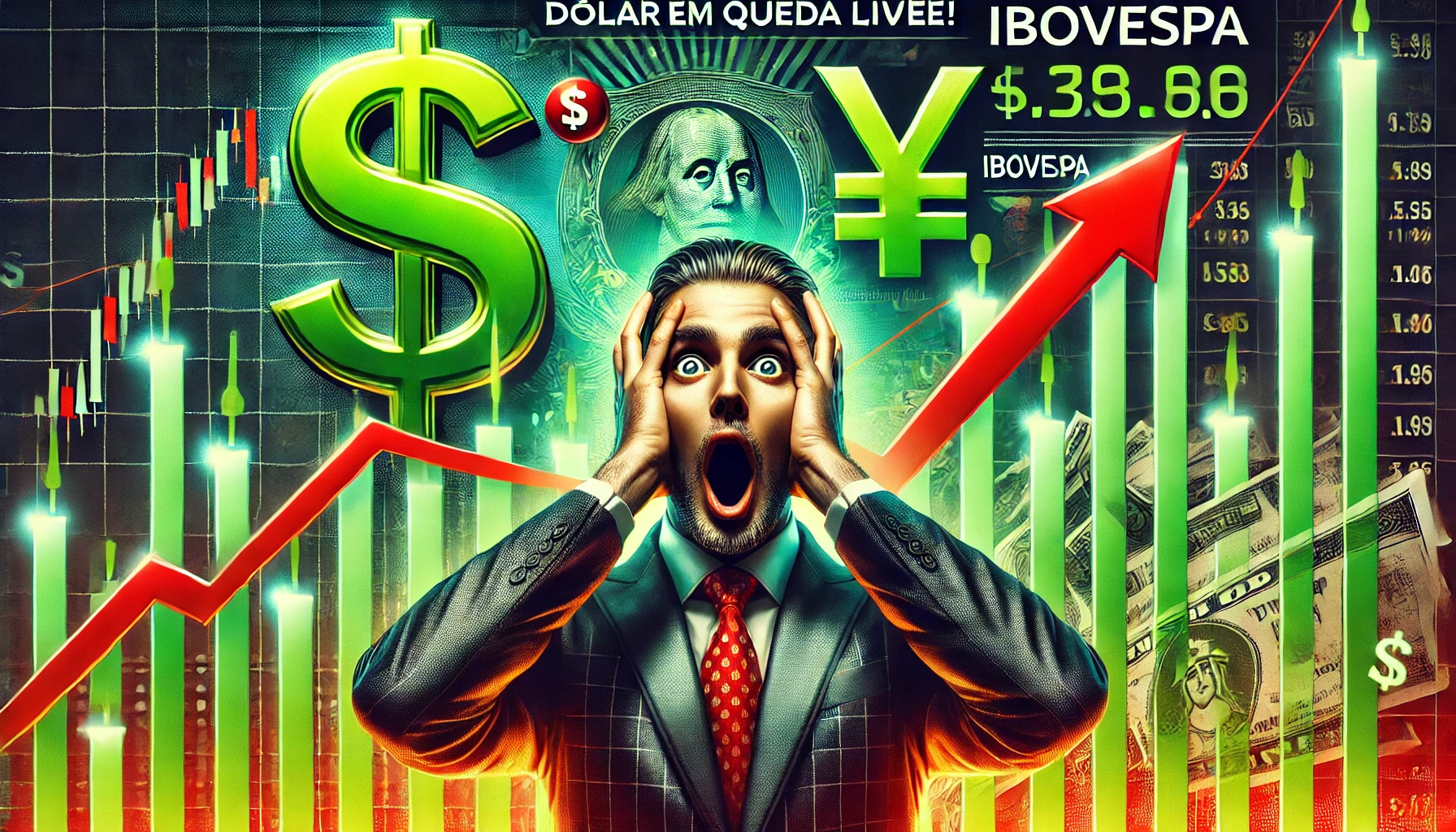
Dollar Falls! The US currency closed the seventh consecutive session down, priced at R$ 5.64, while the Ibovespa soared! The Fed’s decision to maintain interest rates in the US and the expectation for Copom in Brazil heat the markets. Find out how these movements affect your pocket and investments!
The dollar ended this Wednesday’s session (19) down 0.43%, reaching R$ 5.64, the lowest value since October last year.
The Ibovespa, the main index of B3, rose 0.79% and closed at 132,508 points, driven by decisions on interest rates in Brazil and the United States.
The market remains attentive to the movements of the Federal Reserve (Fed), the US central bank, and the Monetary Policy Committee (Copom) of the Central Bank of Brazil, whose decisions directly influence the global economy and investments.
-
“No one will make us change the Pix,” says Lula after the US report.

-
Lula responds directly to Trump and says that Pix is from Brazil and will not change under pressure from anyone, after a report from the United States pointed out the Brazilian payment system as an American trade barrier.

-
Amazon has just announced a new fee on all deliveries, and your online purchases will become more expensive starting April 17, including for those buying from the United States here in Brazil.

-
He sold his share for R$ 4 thousand, saw the company become a giant worth R$ 19 trillion, and missed the opportunity of a lifetime.


Fed Decision Keeps Interest Rates in the US
The Fed announced the maintenance of interest rates between 4.25% and 4.50% per year, as already expected by the market.
The positioning of the US central bank reflects a cautious strategy in the face of economic uncertainties, but indicates the possibility of two rate cuts still this year, which could impact emerging markets like Brazil.
The decision to keep interest rates high in the United States makes investments in developed countries more attractive, reducing demand for risk assets like those from emerging markets.
However, the market is already beginning to price in a possible shift in this monetary policy, which may have repercussions on the dollar exchange rate and the performance of the Brazilian stock market in the coming months.
Expectation for Copom in Brazil
Still this Wednesday, after market closure, Copom will announce its decision on the Selic rate.
Analysts expect an increase of 1 percentage point, raising the basic interest rate to 14.25% per year, the highest level in almost 20 years.
This tightening monetary policy aims to contain inflation but may slow economic activity by making credit more expensive and reducing consumption.
Impact on the Financial Market
With the maintenance of interest rates in the United States and the expectation of a Selic hike in Brazil, investors continue adjusting their strategies.
The dollar has accumulated:
- 1.67% loss for the week
- 4.54% decline for the month
- 8.61% depreciation for the year
The Ibovespa, in turn, registered the following performances:
- 2.75% increase for the week
- 7.91% rise for the month
- 10.16% gain for the year
Economic Policies and Outlook
The Brazilian government is closely monitoring the evolution of the economic scenario.
This Wednesday, the Secretariat for Economic Policy (SPE) of the Ministry of Finance published the Macrofiscal Bulletin with new projections for GDP growth and inflation.
The GDP growth estimate for this year remained at 2.3%, below the 3.4% expansion recorded last year.
The projection for the Broad Consumer Price Index (IPCA), the main inflation indicator, rose from 4.8% to 4.9%, reflecting challenges in controlling prices.
Global Trade and Tariff Policies
Another factor that continues to influence the markets is the tariff policy of the United States.
The US president, Donald Trump, maintained some tariffs on imports while others were temporarily suspended.
Experts warn that these tariffs may increase production costs, impact consumer prices, and contribute to inflation in the US.
Additionally, trade uncertainties affect investor confidence and may slow global economic growth, harming emerging markets like Brazil.
How Do These Decisions Impact the Consumer?
The interest rate decisions in Brazil and the United States affect not only large investors but also the daily lives of consumers.
With high interest rates, credit becomes more expensive, making financing and installment purchases more difficult.
Moreover, the behavior of the dollar directly impacts the prices of imported products, such as electronics and fuels, which may become more expensive or cheaper depending on the exchange rate of the US currency.
Expectations for the Coming Months
The market will continue to monitor the developments of monetary policies in Brazil and the United States.
The projection is that the Selic will remain high for an extended period until inflation indicators show a more pronounced slowdown.
In the external scenario, investors are waiting for the Fed’s next steps to understand how the US central bank will adjust its policy in the face of global economic slowdown.
As a result, fluctuations in the exchange rate and stock market are likely to continue in the coming months as the market absorbs new information and reassesses risks and opportunities.







Seja o primeiro a reagir!