





 Portuguese
  English
  Spanish
  3 min of reading
  0 comments


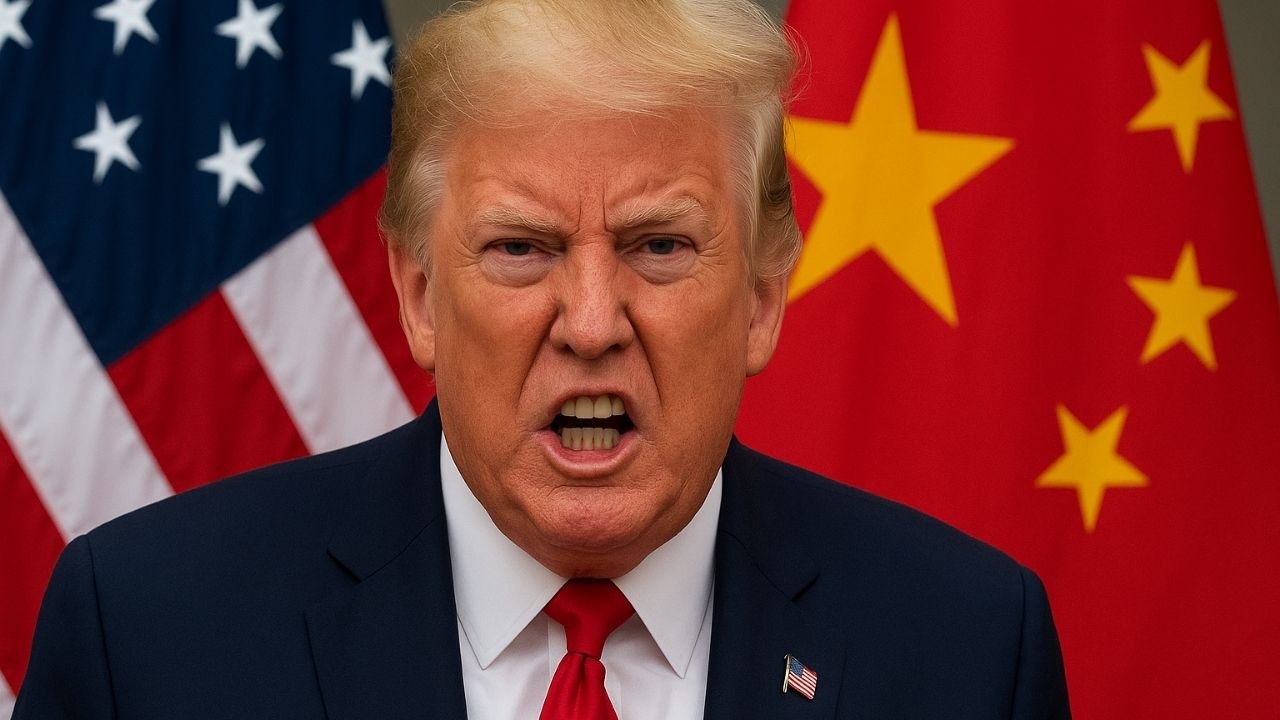
Donald Trump Announces 100% Tariff on Imports from China, Rekindling Trade Tensions Between the U.S. and the Asian Country.
The President of the United States, Donald Trump, announced on Friday (10/10/2025) the imposition of a 100% tariff on products imported from China, a measure that marks a new escalation in the trade war between the two largest economies in the world.
The tariff will come into effect on November 1, 2025, but according to Trump, it could be implemented sooner depending on actions taken by the Chinese government.
The decision was announced just hours after Beijing revealed export controls on elements of so-called “rare earths,” essential minerals for the global technology industry.
-
Middle East War Hits Fertilizers and Transportation and May Strain Brazilian Wallets
-
Russia Considers Suspending Gas to Europe After Surge in Energy Prices
-
How A War Thousands of Miles From Brazil Started Disrupting Global Shipping Routes, Raising Container Costs, and Putting Up to 40% of Brazilian Beef Exports at Risk
-
Iran-U.S. War Drives Up Oil Prices and Pressures Global Financial Markets

The Chinese measure was viewed by Washington as an “aggressive” and “hostile” act in international trade.
What Motivated Donald Trump’s New Tariff
In a series of posts on Truth Social, Trump stated that China had sent an “extremely hostile” letter to the world, declaring its intention to broadly restrict its exports.
According to the Republican, the document shows an “absolutely unprecedented” stance in international trade and represents “a moral disgrace in dealing with other nations.”
“Starting November 1, 2025 (or earlier, depending on China’s actions), the United States will impose a 100% tariff on China, in addition to any existing tariffs. Export controls will also be imposed on all critical software,” wrote the American president.
Trump argues that the measure is a direct response to China’s advance on the global market for strategic minerals, accusing the Asian country of attempting to dominate essential production chains.
The Role of Rare Earths in the U.S.-China Dispute
The so-called rare earths are a group of 17 chemical elements used in the manufacturing of chips, cell phones, computers, electric vehicles, and military equipment.
China dominates over 90% of the global production and refining of these minerals, giving it a position of power over high-tech supply chains.
Recently, Beijing included five new elements on the export control list and expanded oversight on the use of semiconductors, causing concern among countries dependent on these materials — including the U.S. and Brazil, which also has significant reserves.
Trump stated that this strategy would “clog the markets and make life difficult for virtually every country in the world — especially for China itself.”
He further added that the United States holds much stronger and broader monopolistic positions, but had never utilized that power “until now.”
Immediate Impacts on Financial Markets
Donald Trump’s reaction had an instant impact on global markets. The U.S. S&P 500 index dropped 2% shortly after the president’s first post, reflecting investors’ concerns about a new round of trade tensions.
With the announcement, investors flocked to safe-haven assets, such as U.S. Treasury bonds and gold, causing bond yields to fall and the price of the precious metal to rise.
The dollar, which had been weakening against other currencies, regained strength after the statements.
Meeting with Xi Jinping Canceled
Prior to the announcement of the tariff, Trump had already indicated the cancellation of a meeting with Chinese President Xi Jinping, which was scheduled to take place during the Asia-Pacific Economic Cooperation (APEC) summit in South Korea at the end of the month.
According to the American president, “there is now no reason for the meeting to occur,” indicating that dialogue between the two countries has returned to a point of maximum tension.
The Chinese government had not officially confirmed the meeting.
What to Expect from the New Trade War
Experts believe that the 100% tariff imposed by Trump could reignite a retaliation war similar to that which characterized the Republican’s first term from 2018 to 2020.
During that period, tariffs and countermeasures affected billions of dollars in global trade, putting pressure on supply chains and driving up product prices.
With China’s control over technological supplies and the American response through tariffs and barriers, tensions between the U.S. and China are expected to escalate in the coming weeks.
The world watches cautiously for the next steps in this dispute, which once again puts global trade on alert.






Seja o primeiro a reagir!