





 Portuguese
  English
  Spanish
  7 min of reading
  0 comments


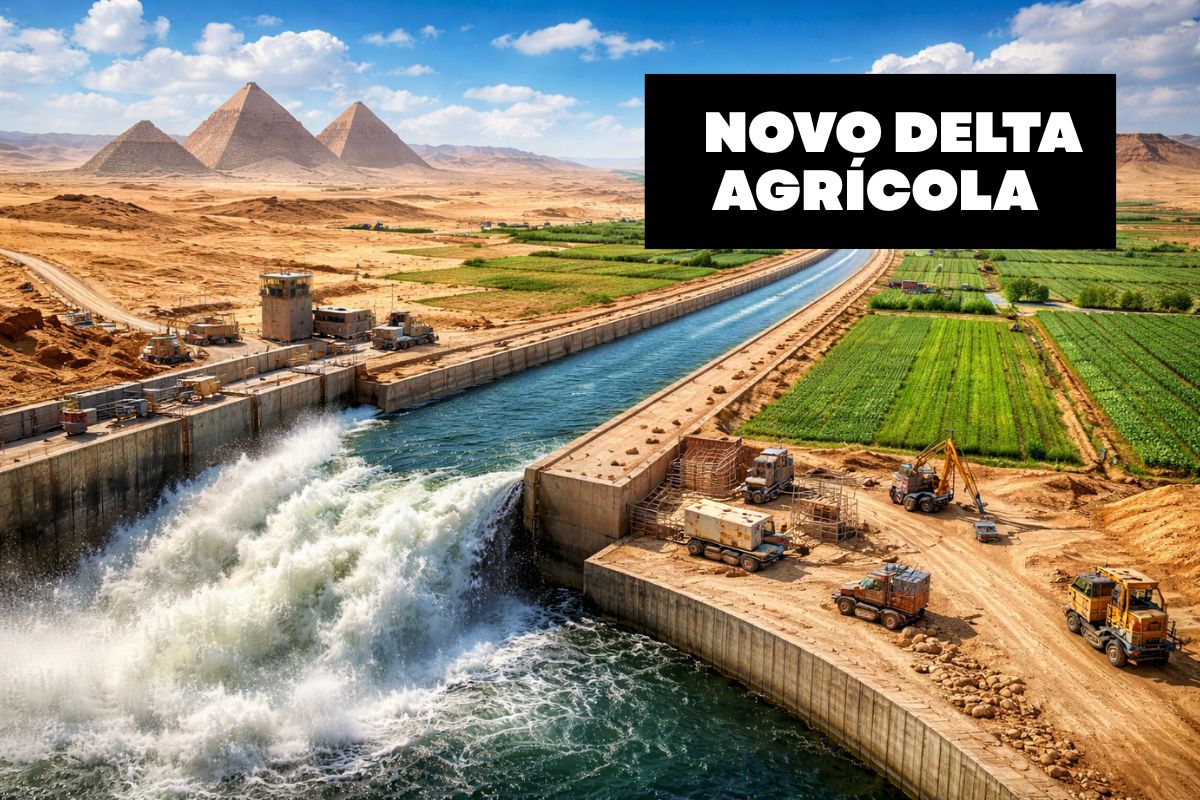
Billions Of Dollars Are Being Invested To Transform The Desert Into A New Agricultural Delta, Using The New Delta Project And Desert Irrigation As A Bet To Reinforce Egypt’s Food Security In Light Of Water Scarcity In Egypt.
Seeing the new agricultural delta emerge in the middle of a previously barren landscape is like watching a country trying to rewrite its own geography. Where there was only scorching sand and hot wind, concrete-lined canals, giant irrigation pivots, pumping stations, and harvesters are now advancing through fields that simply did not exist a few years ago.
It is this radical transformation that the New Delta Project places at the center of the Egyptian map, with the promise of alleviating water scarcity in Egypt and reducing dependence on imported food.
At the same time, this new agricultural delta carries an enormous weight.
-
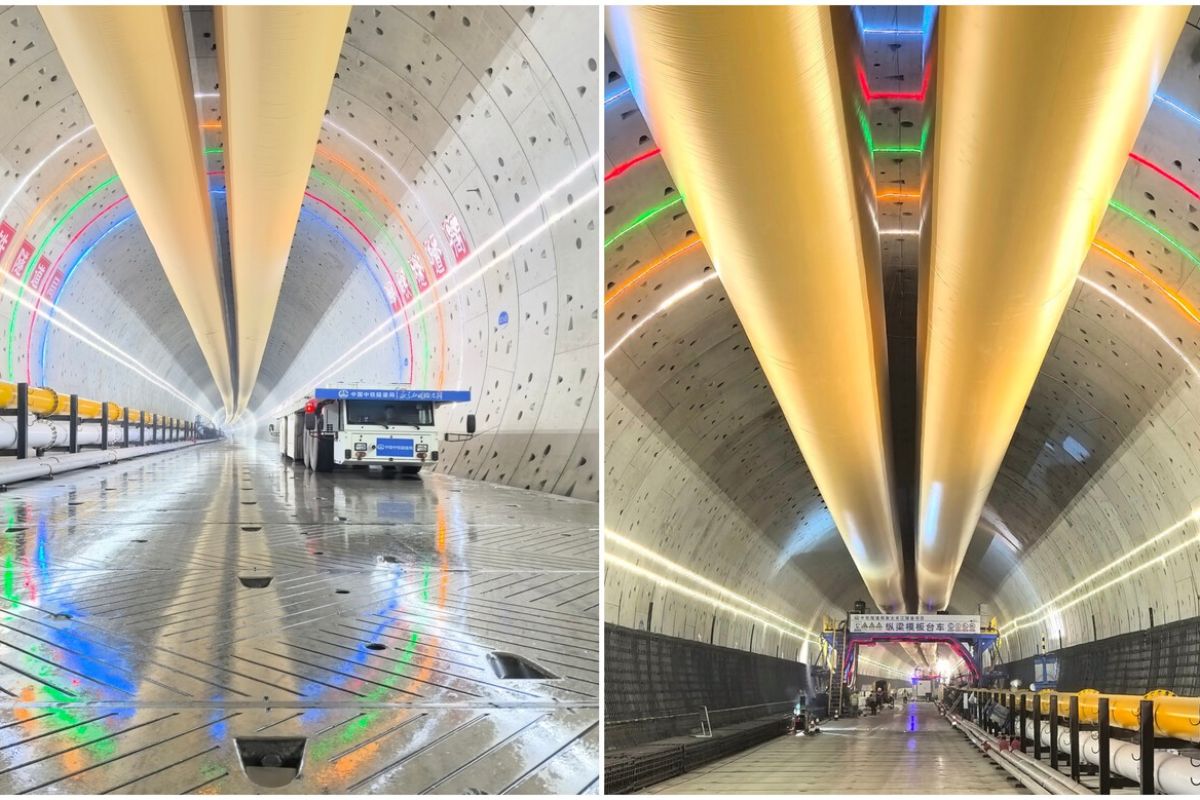
China completes the most critical section under the Yangtze River with the intelligent tunneling machine Linghang, excavating 11.32 continuous kilometers at depths of up to 89 meters and transforming the Chongming-Taicang tunnel into a landmark that redefines the scale of high-speed rail engineering in the 21st century.
-
The government of São Paulo surprises South America with a plan to transform the famous Ibirapuera with underground shops, air conditioning, and a 25-year concession in a billion-dollar project that expands the audience, alters a protected area, and provokes an immediate reaction.

-
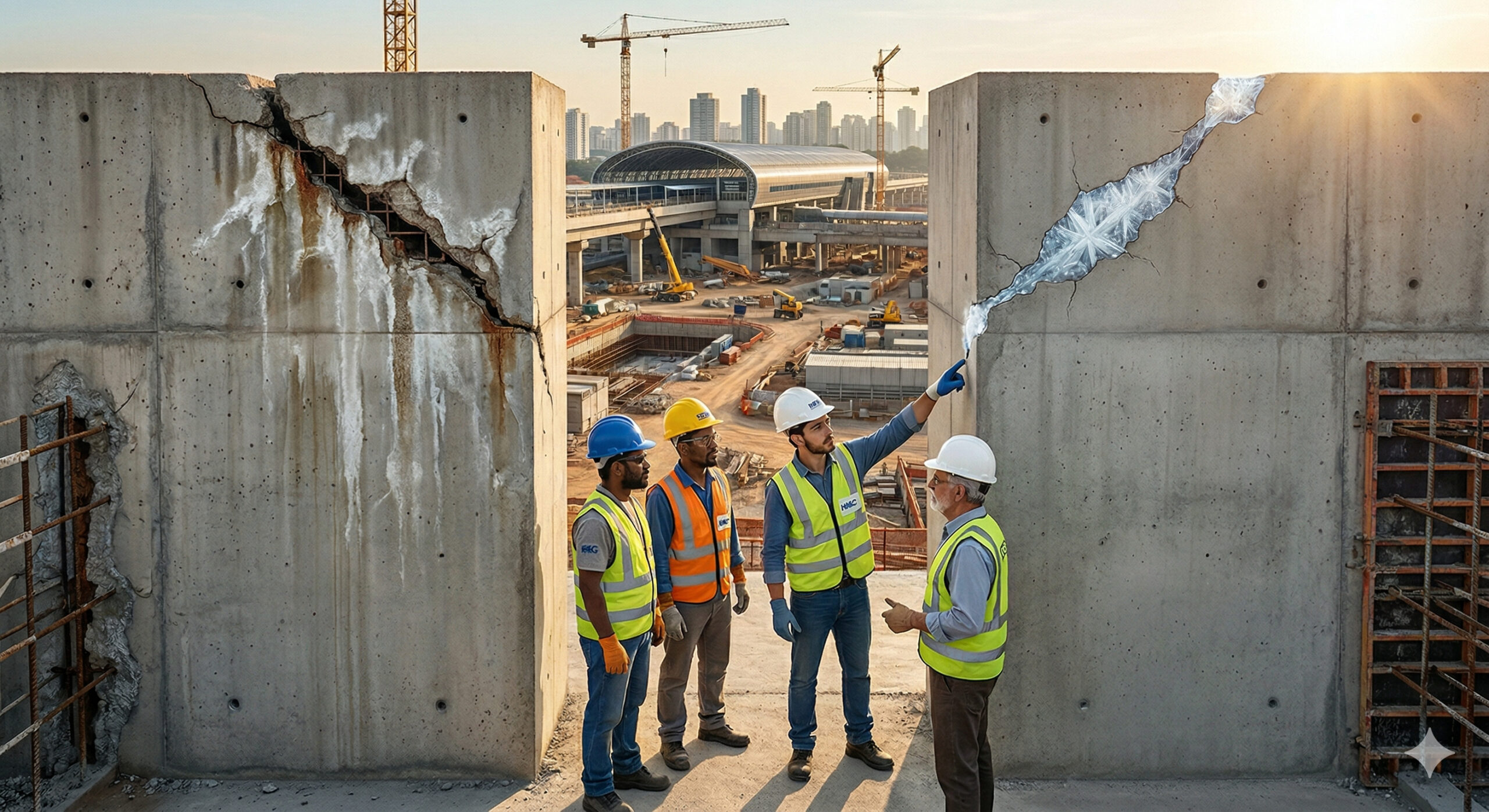
With a lifespan of up to 60 years and a cost up to 30% higher than conventional concrete, self-healing concrete is already being used in Brazil to eliminate leaks, reduce maintenance, and is changing the real cost of construction projects.
-
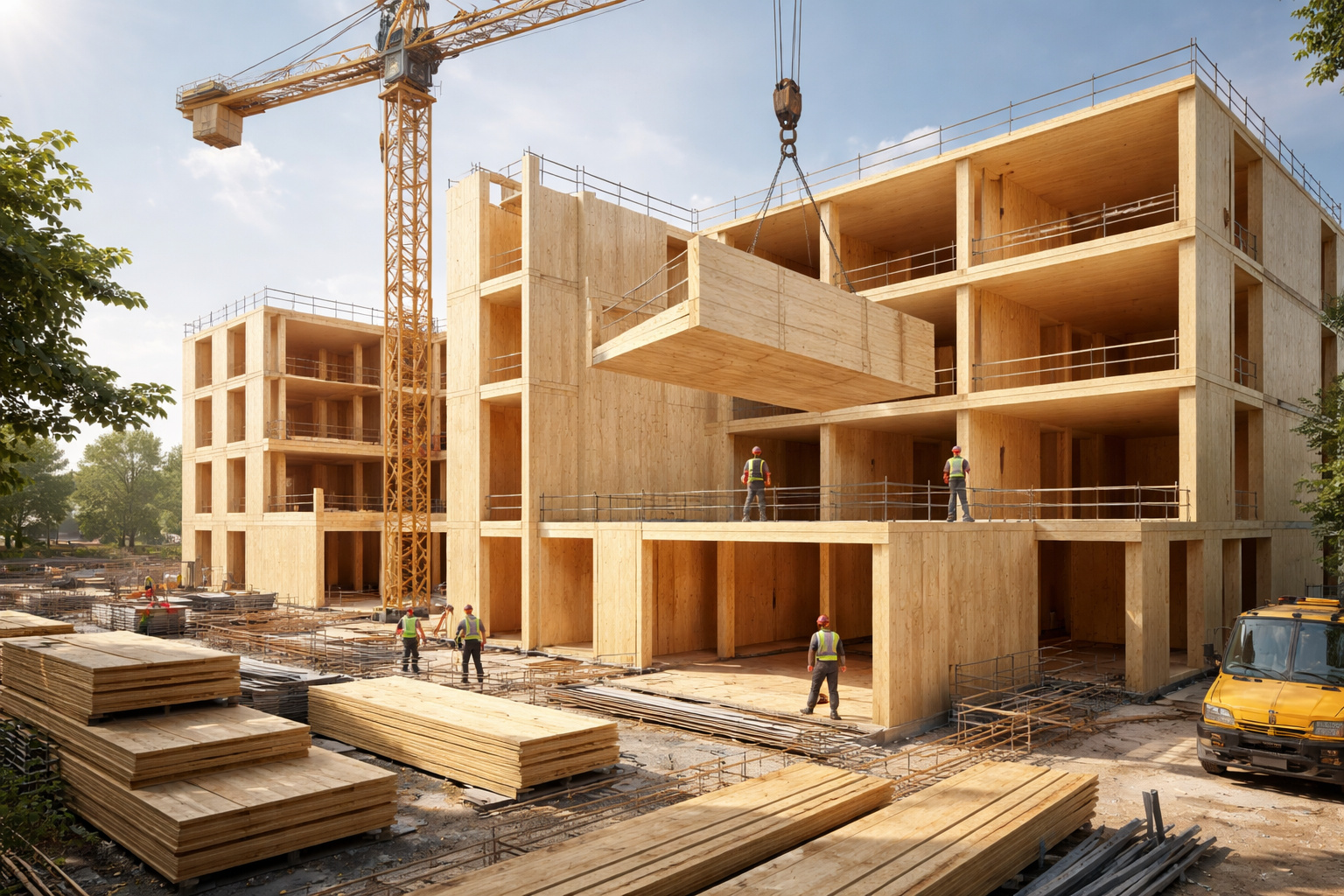
Engineered wood CLT challenges steel and concrete and promises construction that is up to 2x faster with a lower environmental impact in modern civil engineering.

The New Delta Project concentrates a decisive part of the strategy to reinforce Egypt’s food security, but it does so in a context of limited water resources, high energy costs, and climate uncertainties.
The land of the pharaohs is attempting to use desert irrigation on an unprecedented scale to ensure the plates of millions of people and, at the same time, expand its geopolitical influence, in one of the most risky ventures of this century.
Where The New Agricultural Delta Is Emerging And Why It Is So Large

The new agricultural delta is being implemented in the Eldabaa region, in northwest Egypt, in a desert strip just a few kilometers from the Mediterranean and away from the traditional Nile delta, which has always concentrated the country’s agriculture.
Until recently, this area was synonymous with unproductive land, extreme heat, and almost no natural vegetation, a typical desert scenario.
The New Delta Project wants to change this picture with a combination of scale and infrastructure.
The plan envisions irrigating between 1.5 and 2.2 million feddans, equivalent to nearly 1 million hectares, which means transforming thousands of square kilometers of desert into a productive zone. It is not just about opening small isolated farms.
The new agricultural delta has been conceived as a continuous agricultural corridor, with main and secondary canals, roads, power lines, supporting industrial areas, and research centers.
This vision explains why the New Delta Project goes far beyond the idea of a simple irrigation lot in the desert.
The ambition is to create a kind of smart agricultural city focused on export, technology, and job creation, connecting the new agricultural delta to ports, urban centers, and global value chains. This bet, if it works, fundamentally changes how the country occupies the territory.
Why Egypt Decided To Create A New Agricultural Delta
The decision to bet on the new agricultural delta arises from an old problem with a new scale. More than 95 percent of the population lives in a narrow strip along the Nile, in just a fraction of Egyptian territory.
This green corridor, which has sustained civilization for millennia, is now pressured by a rapidly growing population and climate impacts.
In recent years, the country has started to import more than half of the food it consumes, increasing vulnerability to international crises and price shocks. Wars, logistical interruptions, and market fluctuations quickly become internal crises.
The official idea is that the New Delta Project helps alleviate this dependence by expanding the productive base and reinforcing Egypt’s food security, especially in grains, fruits, and vegetables.
At the same time, the ancient Nile delta suffers from soil salinization, rising sea levels, and reduced freshwater due to upstream dams.
In this context, policymakers see the new agricultural delta as an area less vulnerable to these factors, even if it means directly facing water scarcity in Egypt on another scale.
Expanding the agricultural frontier with desert irrigation has become a central strategy to reduce pressure on the old delta and build a new productive hub.
How The New Delta Project Transforms Desert Irrigation Into Mega-Infrastructure
Performing desert irrigation on a small scale is already challenging. In the New Delta Project, the aim is to do this on a continental scale.
The hydraulic heart of the new agricultural delta is a large concrete-lined canal that brings water from a branch of the Nile, supplemented by secondary branches and pumping stations that elevate this flow by dozens of meters in elevation.
This water does not only come from the river. An important part of the new agricultural delta’s supply depends on large treatment plants that recycle sewage and wastewater, transforming volumes previously discarded into a source for desert irrigation.
Another portion is extracted from deep aquifers, which serve as strategic reserves in a naturally dry region.
On the field, desert irrigation is done with high-precision technology. Drip systems, sensors in the soil, remote monitoring, and drones are used to measure moisture, adjust water depth, and monitor plant health.
The official discourse is of a 4.0 agriculture in the middle of the desert, where every drop counts, every pump needs to be calibrated, and every plot is monitored almost in real-time. This technological package is an essential part of the New Delta Project, as any waste aggravates water scarcity in Egypt.
Water Risks, Energy, And Water Scarcity In Egypt

However, all this arrangement comes at a high cost. Pumping water over more than 100 meters of elevation, operating giant treatment plants, and keeping desert irrigation running year-round means consuming a lot of energy.
In some areas, energy costs become one of the main economic risk factors of the new agricultural delta, especially when electricity prices rise or the public budget tightens.
Additionally, part of the water used in the New Delta Project comes from fossil aquifers, which are large but non-renewable, and in many layers, they have high salinity.
The intensive use of this resource raises concerns about the lifespan of the new agricultural delta and the risk of soil degradation over time. The same applies to the permanent use of treated sewage, which requires strict quality control to avoid contamination and salt buildup.
All of this occurs in a context of water scarcity in Egypt that goes far beyond the New Delta Project. The country heavily relies on water that comes from outside its borders, especially from the Blue Nile, controlled by large dams in neighboring countries.
Any significant change in the volume released upstream can reduce the flow available for the new agricultural delta, jeopardizing the very logic of desert irrigation in Eldabaa.
Geopolitics, Egypt’s Food Security, And Internal Disputes
The new agricultural delta is not just an engineering feat. It is also a political and geopolitical tool.
The official narrative of the New Delta Project presents Egypt as an agricultural player capable of exporting food to Europe, the Gulf, and other markets, using the new agricultural delta as a showcase of modernization.
By reinforcing Egypt’s food security, the government also seeks to strengthen its position in regional negotiations, demonstrate execution capacity, and attract investment.
Internally, the New Delta Project is overseen by the armed forces, which control most of the large national enterprises. This speeds up some stages but generates criticism over transparency and cost control.
Part of the investment is made outside traditional public budgets, making it difficult to know exactly how much has already been spent and what the actual return is.
From a social perspective, the benefits of the new agricultural delta still arrive unevenly.
There is an expansion of employment, new productive chains, and opportunities in sectors like logistics and energy, but Egypt’s food security has still not been fully resolved, and many Egyptians continue to face high prices and limited income.
The promise is that as desert irrigation matures and the New Delta Project reaches its full capacity, a greater portion of production will be directed towards domestic consumption, helping to alleviate water scarcity in Egypt and the pressure on the old delta.
Is The New Agricultural Delta A Definitive Solution Or A High-Risk Bet?
Overall, the new agricultural delta is both an impressive technical achievement and an open experiment.
If the New Delta Project can balance costs, ensure a stable water supply, and maintain productivity, it could become one of the strongest symbols of how desert irrigation can support Egypt’s food security.
If, on the other hand, energy costs soar, water scarcity in Egypt worsens due to external factors, or soil management does not keep pace with irrigation intensity, the new agricultural delta risks repeating the trajectory of other megaprojects that promised to transform the desert and ended up delivering less than advertised.
It is this combination of hope and uncertainty that leads many experts to view the New Delta Project as one of the riskiest bets of the century.
In the heart of the desert, however, the image is powerful. Green fields, canals gleaming in the sun, and machines advancing over land that once seemed useless synthesize a country’s attempt to rewrite its own future through water.
And you, looking at all this, do you think the new agricultural delta is a necessary step for Egypt’s food security or a risky use of resources amid water scarcity in Egypt?






-

-

-

10 pessoas reagiram a isso.