





 Portuguese
  English
  Spanish
  5 min of reading
  1 comment


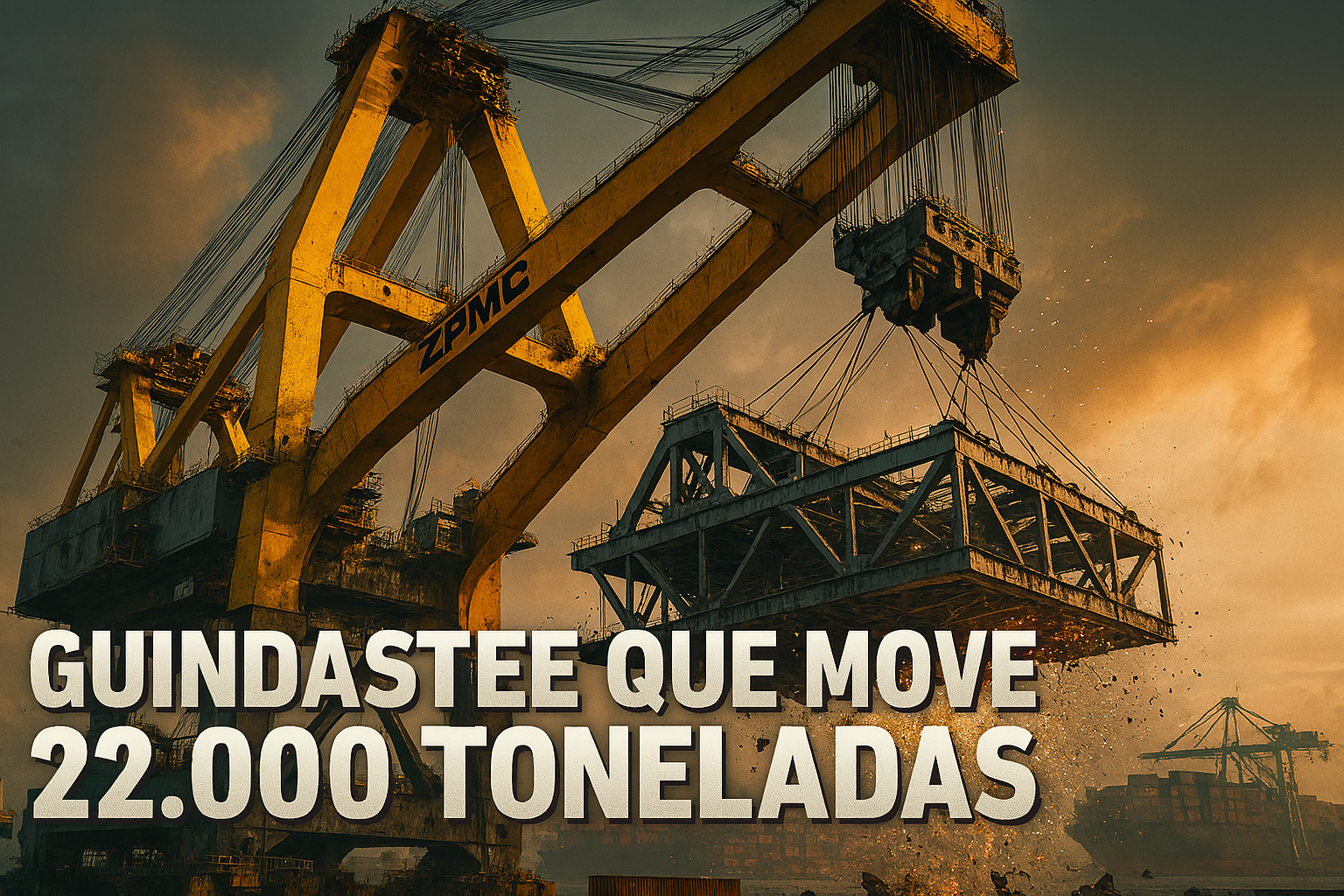


Demolition Crane From ZPMC, With Capacity for 22 Thousand Tons, Takes Apart Giant Ports Without Explosives and Redefines Industrial Demolition Engineering.
In a world where skyscrapers challenge clouds and ships cross oceans carrying billions in goods, few people think about what happens when these gigantic structures need to be dismantled. Ports age. Entire terminals become uncompetitive. Cranes that once moved global trade become obsolete. And then comes the question that defines the boundary between engineering and brute force:
Explosives? In densely packed port areas, next to ships loaded with fuel and chemical containers, that would be industrial suicide. Conventional cranes? They wouldn’t support the weight of such large structures.
So the answer came from China, the cradle of the largest infrastructure works on the planet. There, to cope with the life cycle of megaports and ocean terminals, a titan of steel and precision was born — a machine so strong, so big, and so impressive that it seems to have come straight out of an industrial science fiction.
-
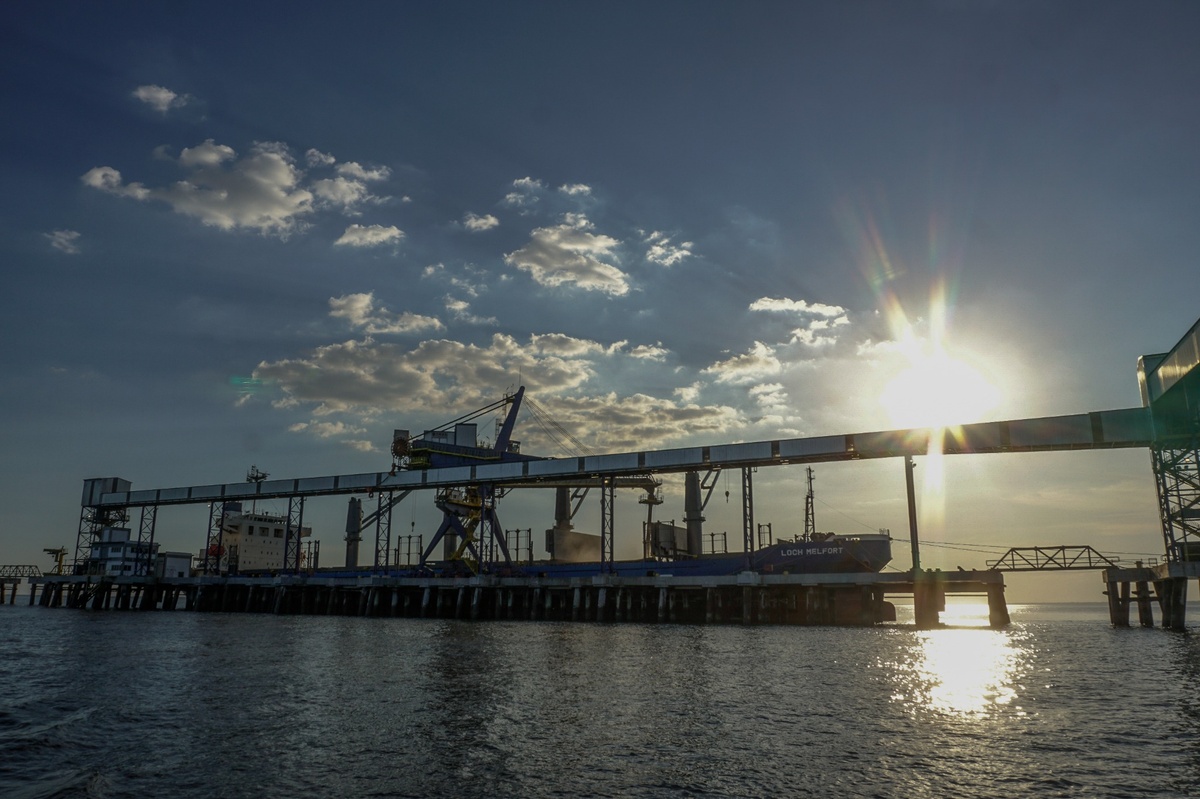
Private ports increased by 14.1% in January 2026 and lead port activity with 66% of the cargo, driven by oil, agribusiness, and exports.
-
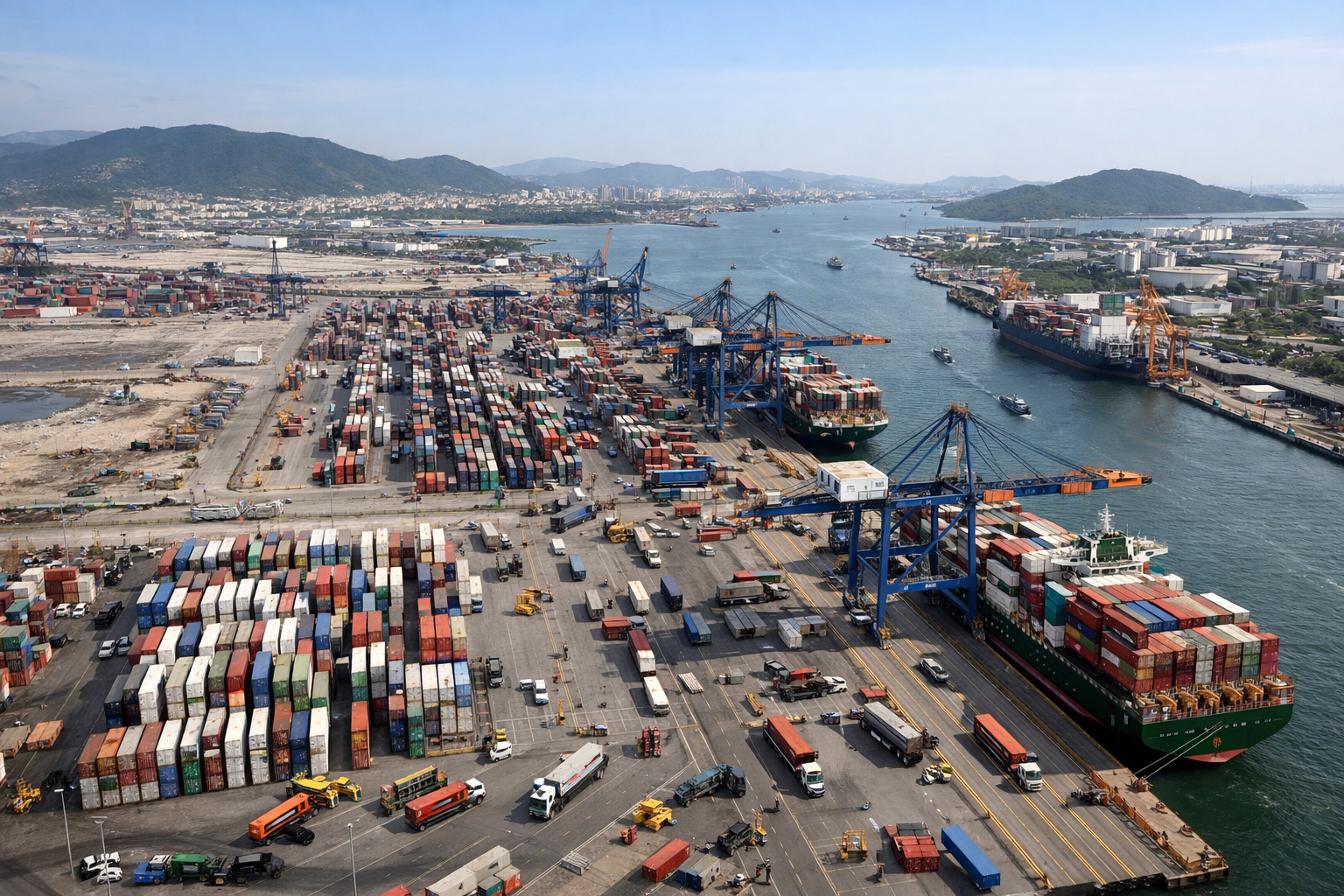
Government Releases R$ 5.1 Billion to Modernize Ports and Generate Over 5,000 Direct Jobs in Brazil
-
Merchant Marine Fund Approves R$ 5.1 Billion for Port Projects Aiming to Accelerate Port Modernization, Expand Logistics Infrastructure, and Generate Over 5,000 Jobs in Brazil
-
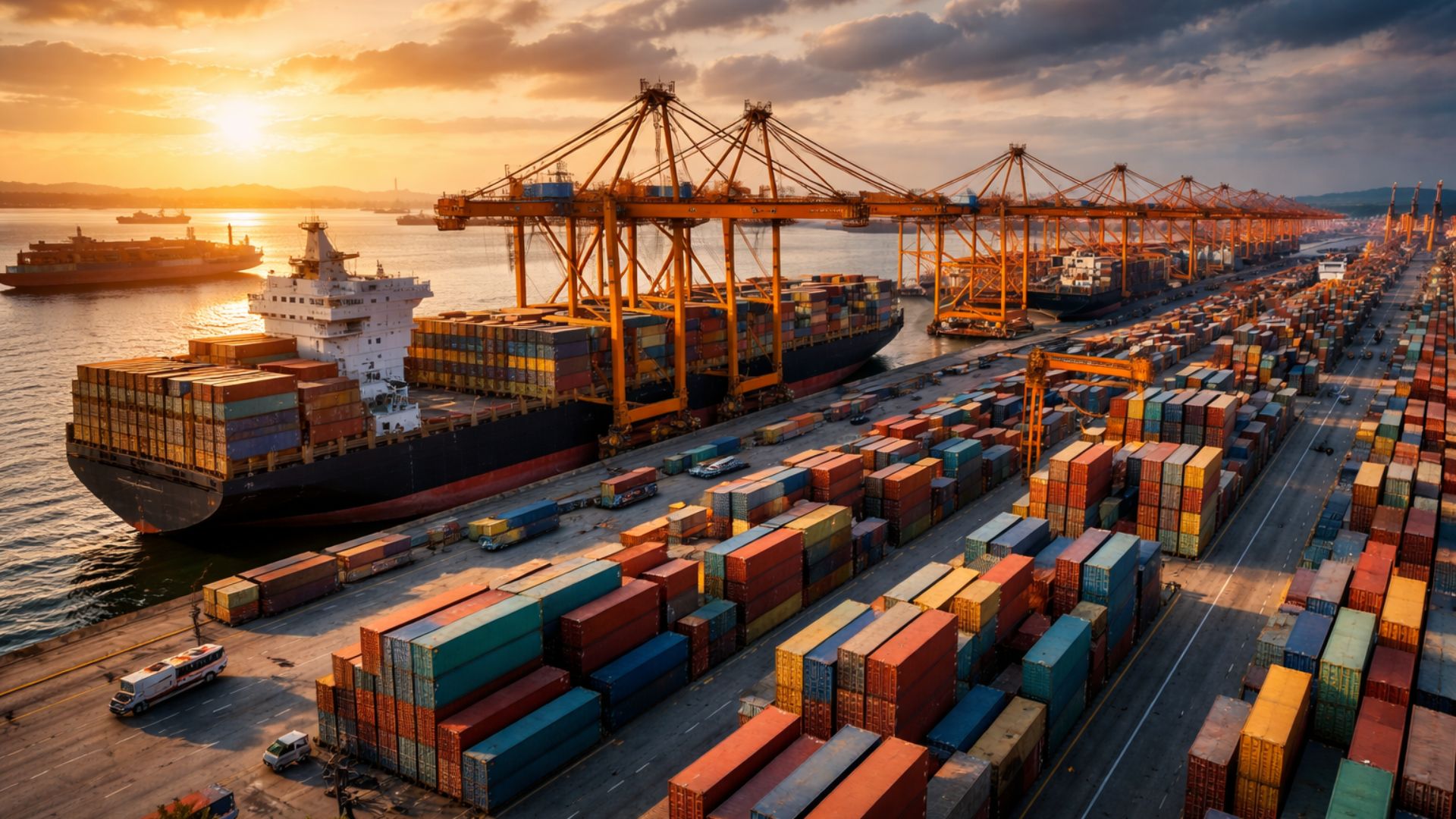
Giant of World Trade: Largest Port in Latin America Is in Brazil, Covers 7.8 Million Sq. Meters on São Paulo Coast, Accounts for 25% of All Exports, and Now May Undergo Historical Expansion That Triples Its Area and Changes the Future of National Logistics
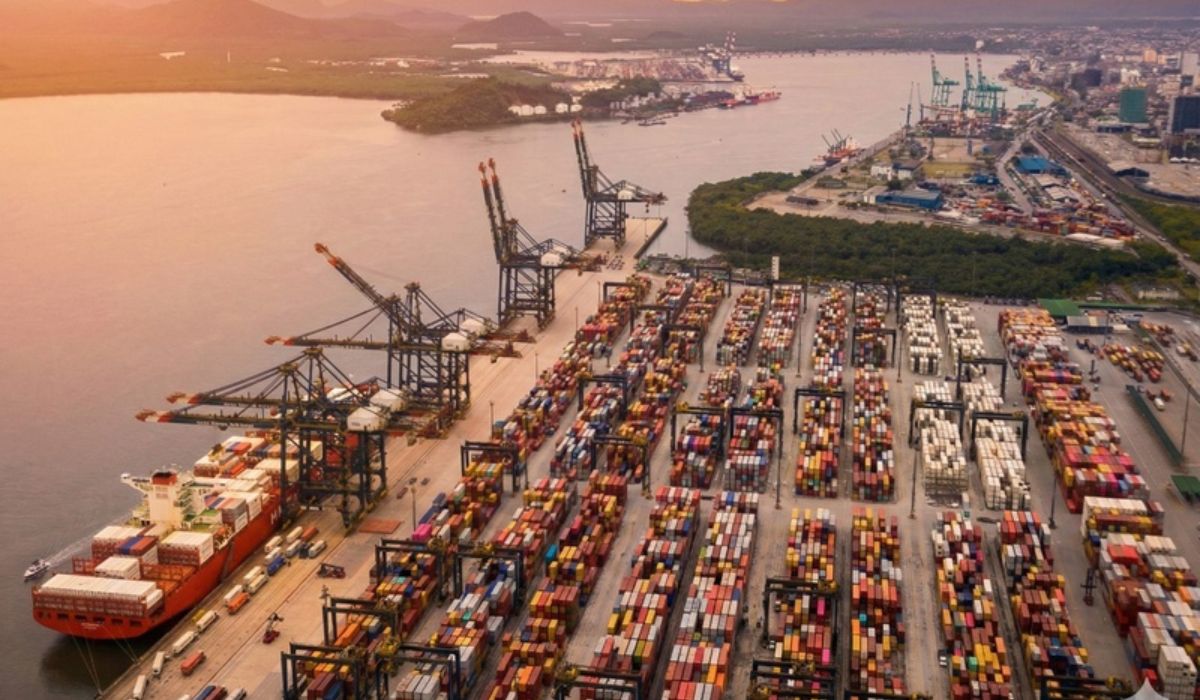

The Emergence of a Machine Made to Dismantle Ports: The Engineering Behind Brute Force
Over the last few decades, China has transformed its coastline into a chain of megaports capable of handling more containers than the combined total of the United States, Europe, and Latin America. Just Shanghai, which is now the largest port in the world, handles more cargo in a year than all the ports in the US combined.
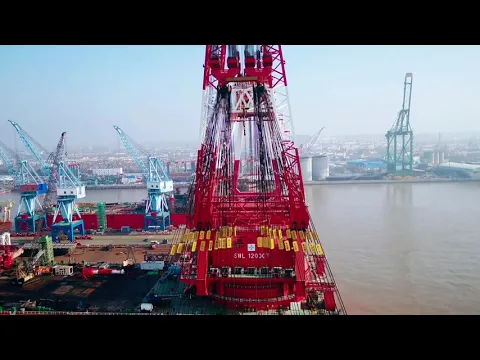

To build all this, the country needed giant machines. And to renew, replace, and dismantle old structures, it needed something even bigger: a machine capable of disassembling complete port cranes, taking apart shipping portals, removing suspended tracks, and internalizing operations that would previously depend on risky implosions.
Thus was born the concept of this demolition superstructure, developed by the Chinese state-owned ZPMC (Shanghai Zhenhua Heavy Industries), the same company that manufactures most of the container cranes on the planet. If ZPMC builds the machines that move global trade, it also knows how to dismantle them when the production cycle demands it.
The solution was not an explosive, it was not a truck, it was not a mining machine: it was a colossal port demolition platform designed to deactivate entire terminals with millimeter precision.
A machine powerful enough to manipulate 22 thousand tons per operation, heavier than the combined weight of ten fully loaded Boeing 747s.
The Beast of Steel: Revealing the Chinese Giant Behind the Operation
Its name is little known outside the world of port engineering: ZPMC Heavy-Lift Demolition Crane, a multifunction crane designed not only to lift colossal structures but to cut, separate, lift, and dismantle entire segments of maritime terminals.
This machine not only takes down; it dismantles with mechanical intelligence. Unlike traditional methods, it allows:
• To separate crane modules and docking berths without the risk of collapse
• To remove walkways and metal portals of dozens of meters with total control
• To perform operations without explosives and without significant structural vibration
• To ensure safety in operation areas with hazardous loads and flammable liquids
• To work without completely disrupting the surrounding port flow
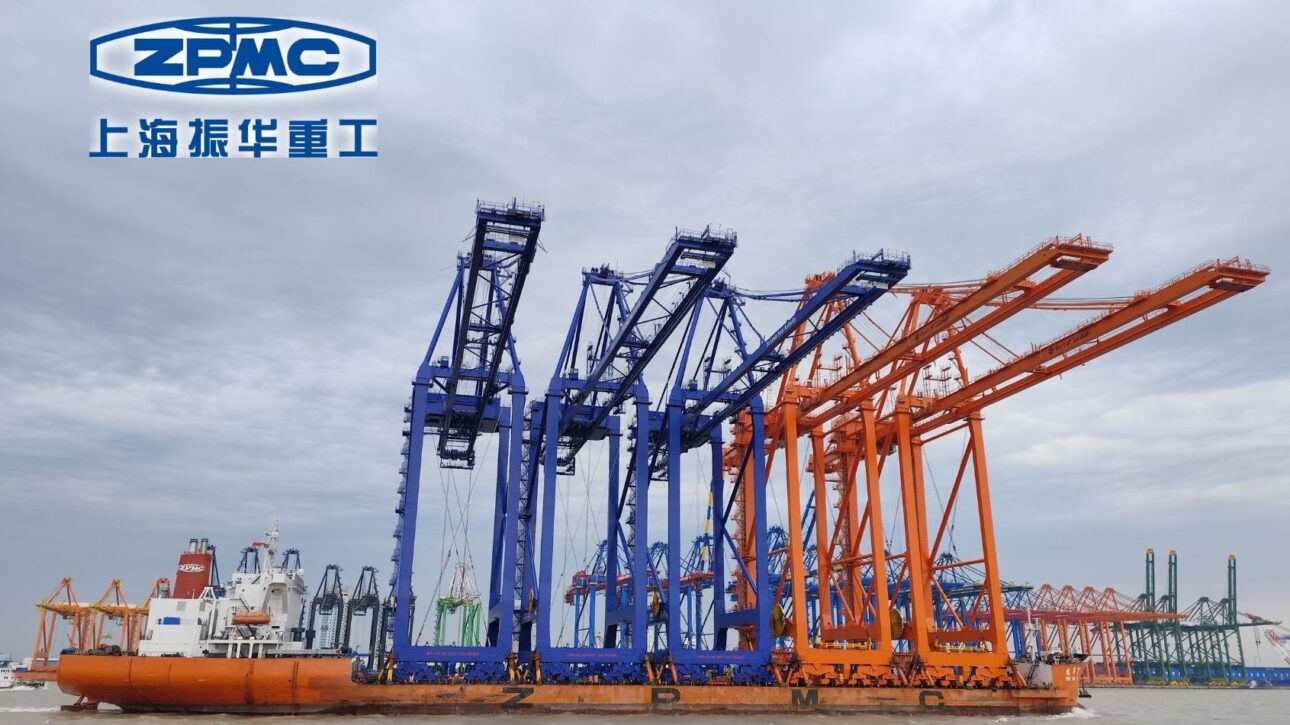
ZPMC created a system that operates like a surgeon operating on a giant, dismantling pieces that would previously fall only with explosions or costly manual dismantling operations.
Extreme Engineering Applied to the Heart of Global Commerce
In Asian ports, every minute of downtime costs millions. There is no room for error. There is no margin for chaotic destruction.
This super machine emerged to allow a port to continue breathing while part of it dies to be reborn. It is the purest industrial cycle: consumption, efficiency, reconstruction.
If a traditional container crane weighs between 1,500 and 2,000 tons, some models of shipping portals exceed 10,000 tons. And the Chinese machine operates with the capacity to handle structures up to 22,000 tons, ensuring operational leeway even for metal monsters.
The process works like this: The machine positions itself as a giant mechanical bodyguard next to the structure to be removed, secures it with hydraulic systems and reinforced cables, and then cuts and separates parts as if they were Lego blocks — steel blocks that weigh more than ships.
Each section descends with precision to floating platforms or reinforced docks, where the steel goes for recycling or relocation.
What This Super Machine Represents for the Future of Infrastructure
There is something deeply symbolic about this equipment. It is the living proof that the world has entered a new industrial era: we are not only building mega-infrastructures; we now need to renew them on an equally monumental scale.
What China does today, the world will do tomorrow:
• Ports will modernize
• Old equipment will be replaced
• Demolition will become technical engineering, not violent destruction
• Port cities will demand silence, precision, and operational continuity
The Chinese machine is the harbinger of this future — a world where dismantling is also building.
Just as robots replaced rooftops, drones replaced inspection towers, and machines dismantle offshore platforms, this demolition crane marks the beginning of a phase where titanic structures will have life cycles guided by mechanical colossi.
When Force and Precision Coexist
The greatest lesson from this machine is simple: Modern engineering is not brute force without purpose; it is directed force with intelligence.
Each arm, each cable, each sensor, each reinforced plate is designed to operate where mistakes are not allowed: at the port, in the heart of global commerce.
While the world discusses artificial intelligence and satellites, machines like this show that progress also lives in steel, concrete, and absolute mastery of physical matter.
An Era of Giants
In the end, this machine is not just a crane. It symbolizes a global industrial cycle that goes far beyond construction: the era of the renewal of giants.
The world built great works in the 20th century. In the 21st, it began to reconstruct them. And for that, it needs monsters like this.
Where dynamite cannot enter, it does. Where humans retreat, it advances.
Where megaprojects come to an end, it prepares the beginning of another.
And the world will inevitably follow in its wake.


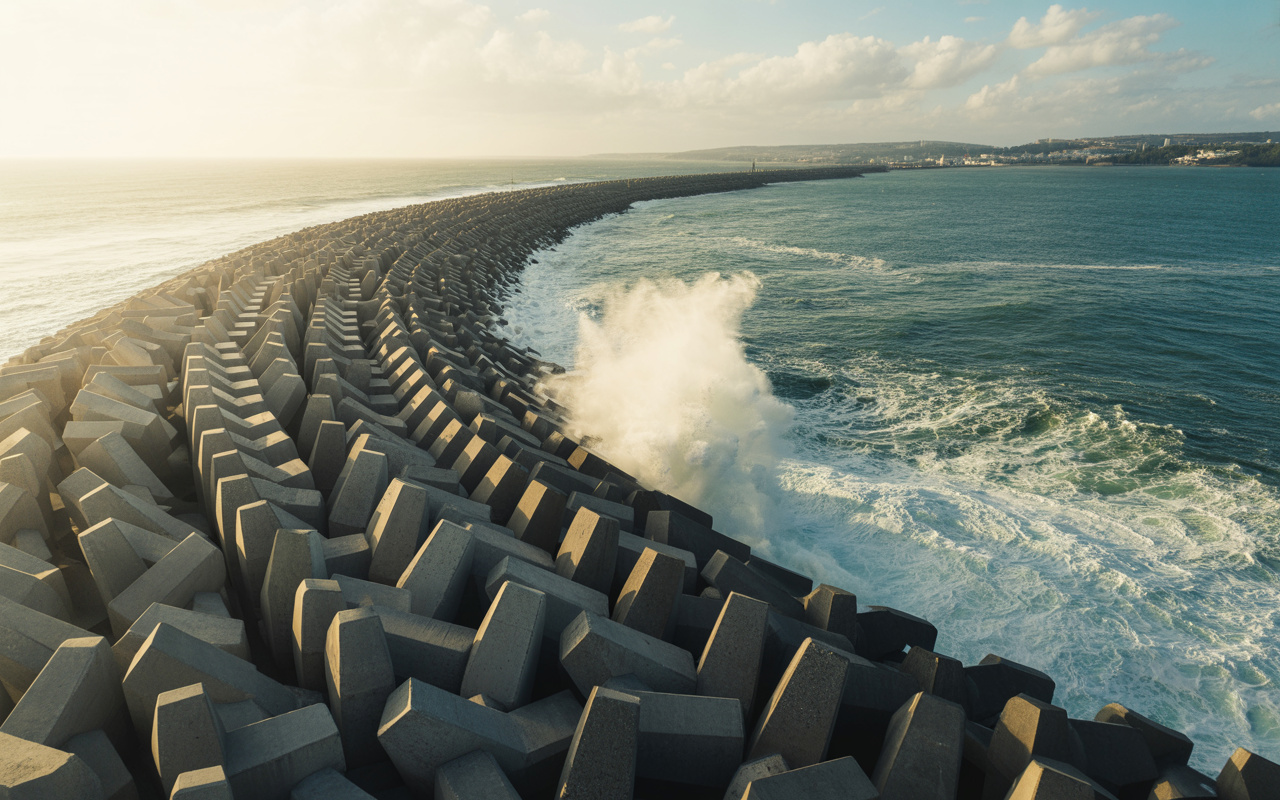







Texto inspirador, mas tecnicamente incorreto.