





 Portuguese
  English
  Spanish
  8 min of reading
  1 comment


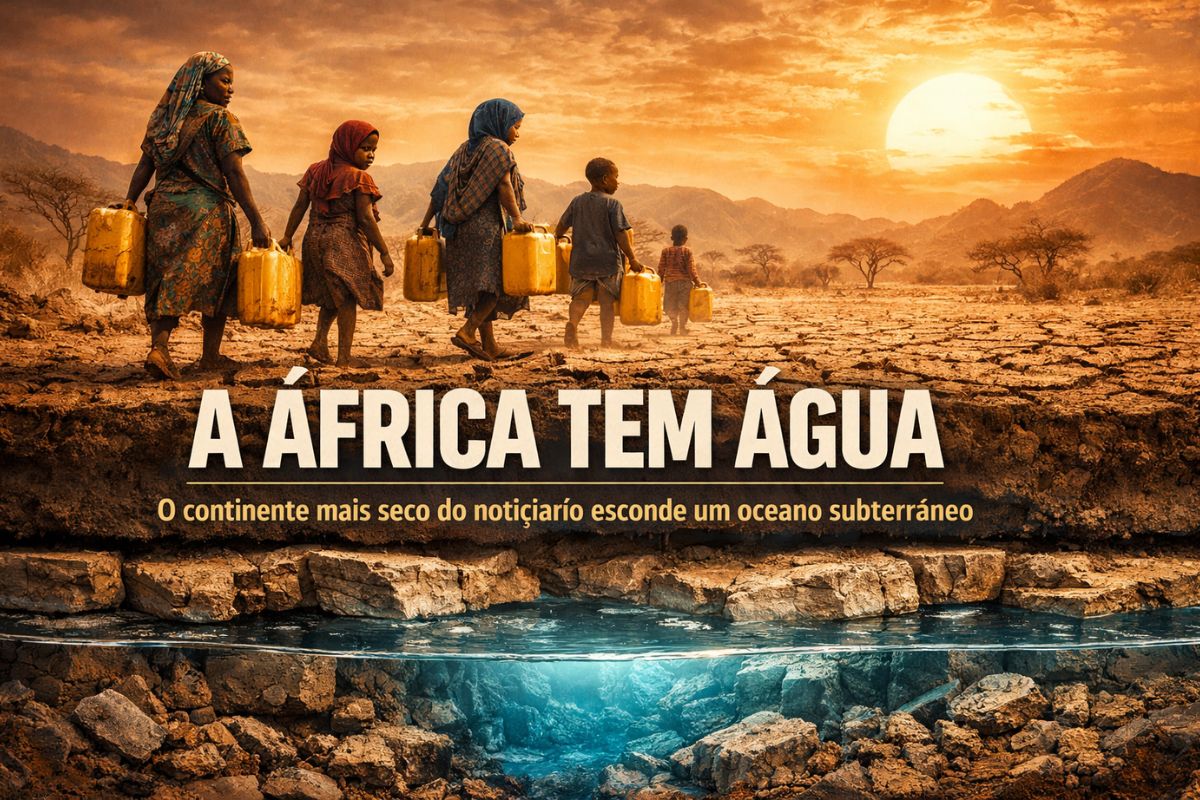


Africa Concentrates Groundwater and Giant Aquifers, but Expensive Deep Wells and Water Scarcity Still Force Millions to Walk for a Few Liters a Day.
In practice, the central problem in Africa is not the lack of water, but the impossibility of accessing it safely and sustainably. Extremely expensive deep wells, hostile geology, contamination, conflicts, local beliefs, and political decisions hinder the use of this “subterranean ocean” while millions of people continue to walk for hours every day to get just a few liters of dirty water.
While a subterranean Africa holds an ocean of fresh water in giant aquifers, visible Africa struggles with inaccessible deep wells, daily water scarcity, and exhausting walks for a few murky liters.
The Image of Extreme Drought Does Not Show the Whole Africa

When talking about Africa, the most common image is still that of cracked soil, thin herds, and women walking kilometers with gallons on their heads. This photograph is real in many regions but does not tell the entire story.
-
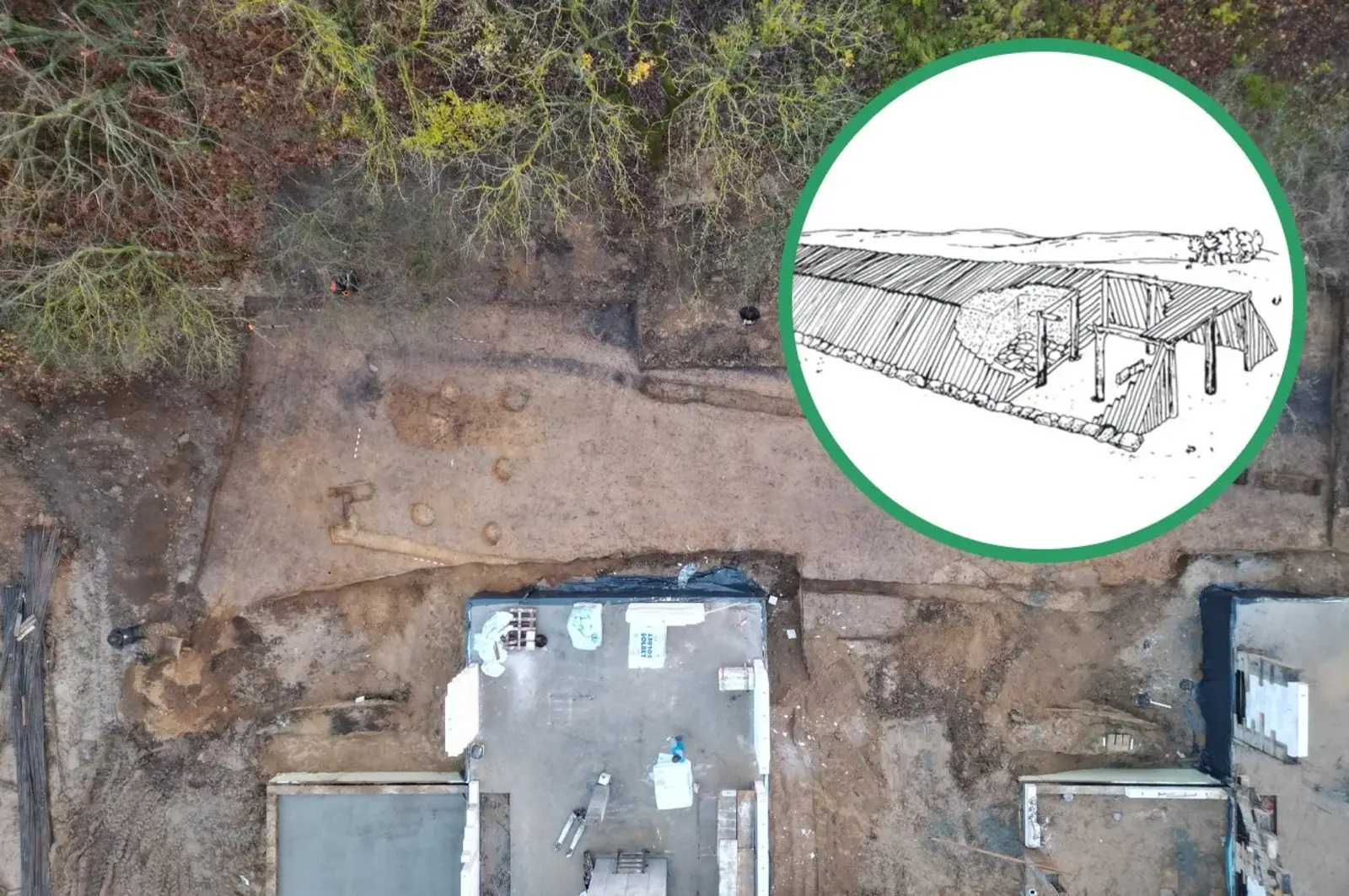
Gigantic megalithic mound of 42 meters emerges during housing construction in Lublin and reveals a Neolithic megadendron with a moat of nearly 30 meters.
-
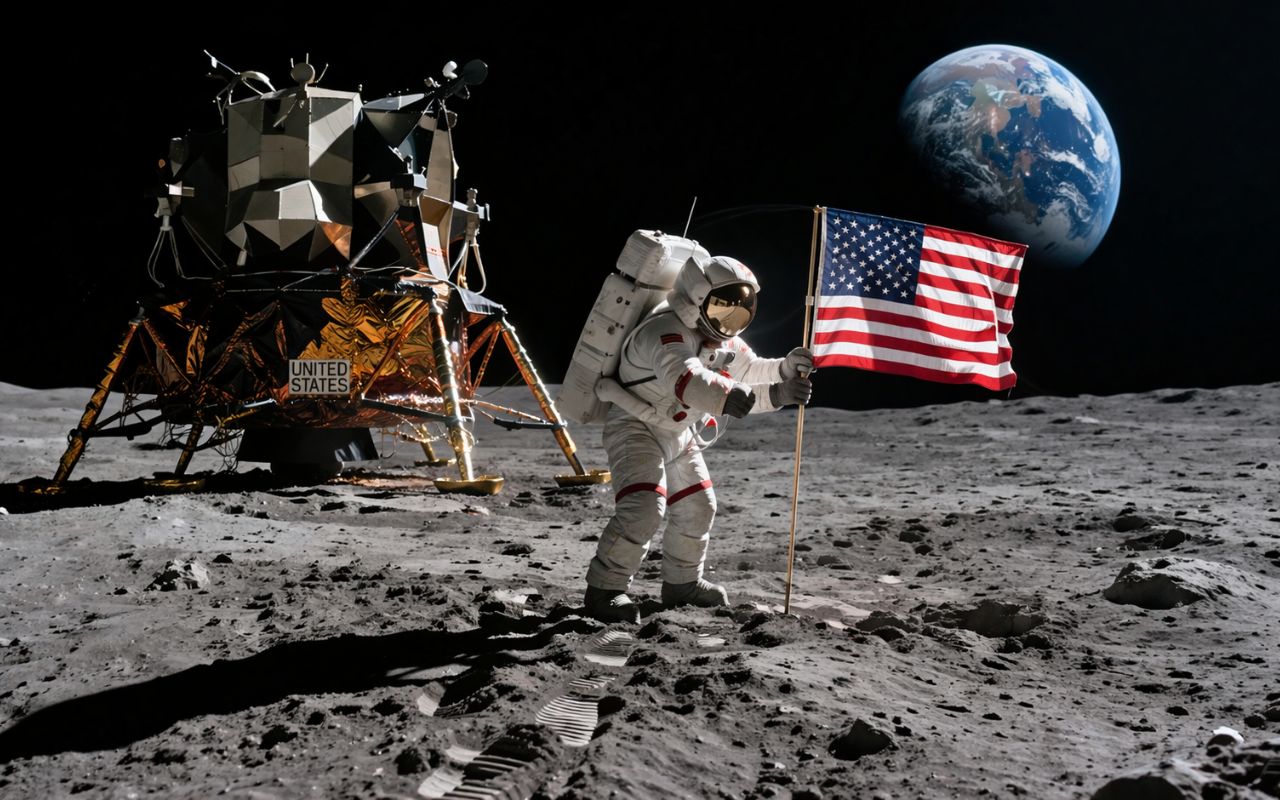
The surprising fact: 1 in 3 Brazilians doubts the arrival of man on the Moon, while the majority still believes in the historic achievement, according to a Datafolha survey with more than 2,000 people.
-
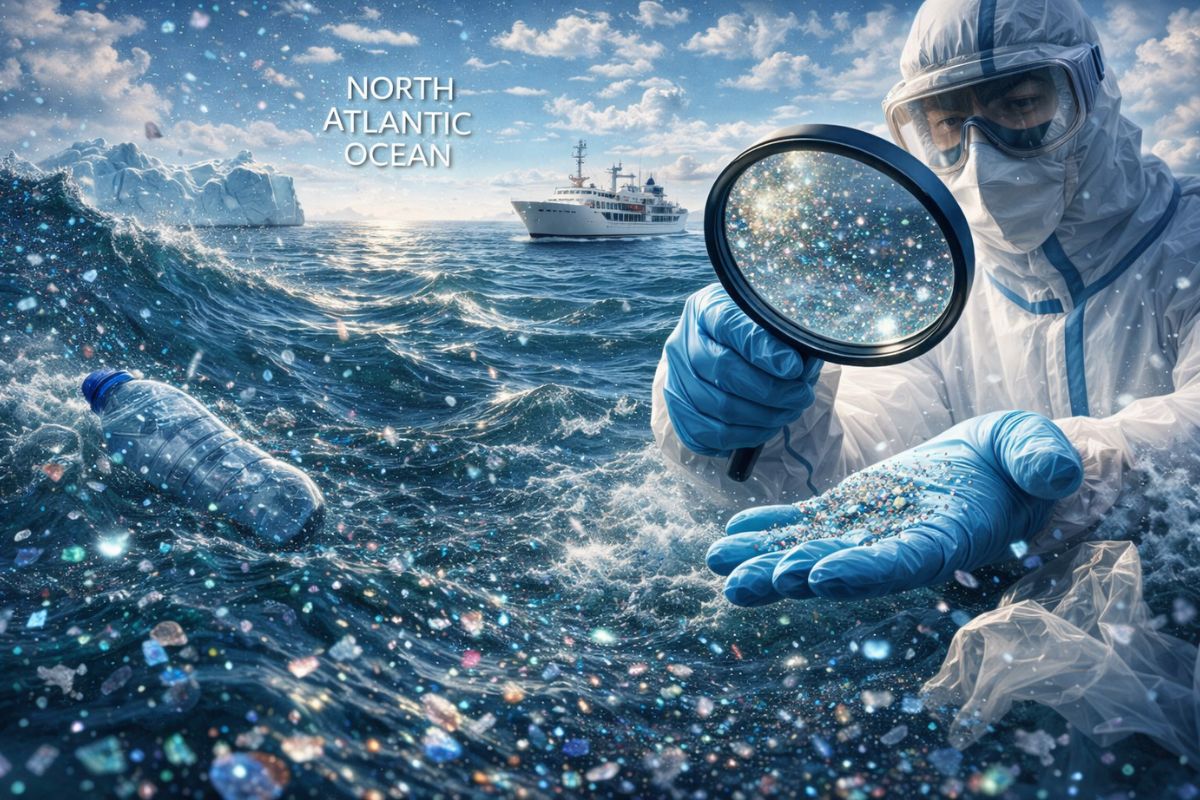
Scientists have finally discovered where the plastic that disappeared from the oceans went, and the answer is frightening: it fragmented into such tiny particles that they became invisible and now there are 27 million tons of nanoplastic just in the North Atlantic.
-
The Artemis II mission will take the Orion capsule back to the vicinity of the Moon with four astronauts, a private bathroom with a curtain, a system adapted for men and women, and a level of comfort that highlights how the Apollo era operated at the rawest limits of space exploration.

According to international estimates, Africa holds about 9% of the world’s fresh water, a higher proportion than that of Europe, distributed in large rivers such as the Nile, Congo, Niger, and Zambezi, as well as dozens of cross-border aquifers beneath the desert and savannas.
In 2013, for instance, drilling in the Turkana Desert in Kenya revealed an aquifer with the potential to supply the country for about 70 years. In Namibia, one of the driest countries in Africa, the Ohangwena I aquifer was estimated to be sufficient to provide water for half of the territory for up to 400 years.
Further north, the Nubian Sandstone Aquifer System, covering an area of approximately 2 million km², holds an estimated volume that exceeds what the Nile River discharges in 500 years.
In other words, Africa has water in abundance, but it is hidden in places that most people cannot reach.
Africa Sitting on Fossil Water That Does Not Recharge
Much of Africa’s groundwater does not resemble crystal-clear underground rivers. They are layers of porous rock and ancient sandstones that act as giant sponges, trapping water that seeped in tens of thousands of years ago.
20,000 to 40,000 years ago, regions that are now desert, like the Sahara, were lush savannas filled with lakes, rivers, and abundant rainfall. The water from that time penetrated the ground and became trapped in deep layers of rock, gravel, and sandstone, almost without moving.
Studies indicate that about 90% of Africa’s groundwater is fossil water, meaning it is not replenished by current rains. Every liter pumped today is a liter that will not return. Hydrologists compare this extraction to withdrawing money from an account without ever receiving a salary: the balance just diminishes.
At the same time, the Sahara is expanding at a rate of thousands of square kilometers per year. With the soil exposed and compacted, under temperatures reaching 50 degrees, up to 90% of the rain runs off the surface without infiltrating, meaning increasingly less-recharged aquifers.
Expensive Wells, Difficult Drilling, and Equipment That Only Comes from Abroad

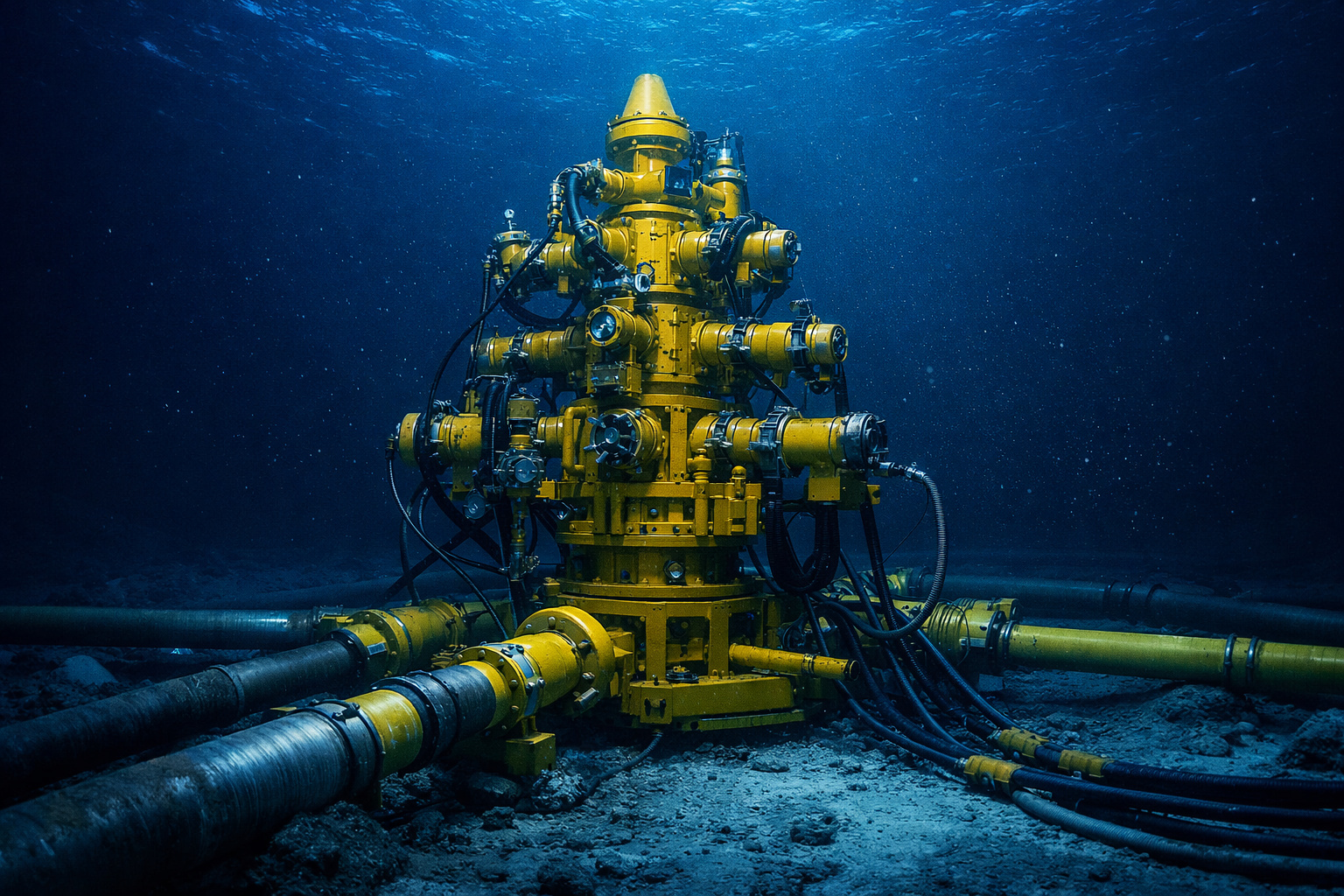
Even when it is known where the water is, accessing this resource is another challenge. Africa is the poorest continent in the world and almost entirely depends on equipment it does not produce.
Much of Africa’s aquifers lie beneath thick layers of basalt rock, volcanic rock as hard as steel, extremely difficult and expensive to drill through. Engineers working in Ethiopia compare the process to “trying to pierce armor with a needle.”
Deep drilling rigs, diamond drills, and geological measuring instruments are mainly imported from China, India, and European countries. In some regions of East Africa, up to 70% of deep drilling equipment is imported, significantly increasing costs.
A wells that are 30 to 100 meters deep can cost the equivalent of building a house in Europe, while families can only afford a few cents for a thousand liters of water.
The math simply doesn’t add up: companies do not recover their investments, and governments cannot maintain a stable network of wells in the long term.
As a result, thousands of potable water projects are interrupted even before functioning or collapse just a few years later. Many villages have drilled wells, but broken pumps, spare parts that never arrive, and no electricity to operate the system.
No wonder, more than 100,000 wells are abandoned in different regions of Africa, and half of them fail within just two or three years.
When Existing Water Is Contaminated or Too Hot
Not all water found underground in Africa is usable. In many cases, the water that exists does more harm than good.
In Turkana, Kenya, the aquifer that was announced as a historical solution revealed another face two years later: about 40% of the water was contaminated with fluoride at dangerous levels, enough to cause bone deformities, permanent dental damage, and liver problems with prolonged use. The project had to be halted.
Similar situations are repeated in parts of Ethiopia, Tanzania, and Sudan, where excess iron, manganese, and mineral salts renders the water unfit for consumption.
There are reports of families seeing their pots corrode within months and pumps rust quickly, while cases of kidney stones and mineral poisoning are increasing.
In other parts of Africa, the groundwater is too hot. At depths between 1,000 and 3,000 meters, temperatures can reach 70 to 120 degrees. Pumping water in this condition requires extensive technical control.
When that fails, there is a risk of burns and well blowouts, which has already led entire communities to abandon deep drilling projects out of fear.
Beliefs, Conflicts, and Borders: When Water Becomes Power in Africa
In Africa, water is not just a physical resource. It is linked to spirituality, community organization, and political power.
In many traditional societies, drilling deeply into the soil is seen as interference in the realm of ancestors. Reports indicate that some Maasai communities in Kenya refuse deep wells due to the belief that tampering with the “water of mother earth” brings illness, drought, and death to livestock.
Any decision regarding water involves councils of elders, and this process can take months. A new well can either save an entire region or spark dangerous tensions among neighboring groups.
In 2019, a dispute between the Pokot and Turkana peoples in Kenya over the right to use a well ended in fatalities. In Ethiopia, borders between the Somali and Oromia regions recorded dozens of conflicts in a single year, almost all linked to wells and grazing areas near water sources.
Geography also weighs in. About 54% of Africa’s freshwater reserves are concentrated in just six countries, while more than twenty others share a tiny fraction of the total.
Moreover, more than 60% of the largest aquifers are located in conflict zones, from Sudan to Chad and Libya, which discourages investment and further raises the costs of any drilling project.
African Cities Between “Day Zero” and Water Blackouts
The lack of safe water in Africa is not an issue exclusive to rural areas. Even the richest cities on the continent have faced the risk of running out of water.
Cape Town, in South Africa, nearly became the first major modern metropolis to literally run dry. Between 2015 and 2018, extreme drought caused reservoirs to drop to critical levels.
The government drafted a “day zero” plan, in which millions of people would have to face armed surveillance to receive a minimum water quota, less than a typical tourist’s shower in a hotel.
About 1,400 km away, Johannesburg, the financial hub of South Africa, suffered a water collapse in a matter of hours due to a single event: a lightning strike hit a pumping station, paralyzing the entire supply system.
Schools closed, hospitals reported a lack of water even for washing hands, and families fought over bottles in the markets.
Meanwhile, in countries like Namibia, Angola, Zimbabwe, and even South Africa, rivers that once sustained entire communities are now nothing more than dry sand valleys.
In these areas, people dig sand wells in riverbeds, extracting murky water, smelling of mud, and often mixed with livestock feces.
Women, Children, and the Physical Burden of Water in Africa

In everyday life, it is primarily women and children who bear the weight of this water crisis in Africa.
Every morning, before the sun reaches its peak, dozens of women and girls walk for hours to water points, often taking three or four hours to go and another three or four to return, carrying gallons over 20 kg.
This continuous effort causes spinal compression, early joint wear, and chronic pain. Doctors in countries like Malawi and South Sudan describe this condition as a “burden that never heals.”
Even after the walk and the queue, the water they get is often murky and contaminated, filled with invisible pathogens.
Yet, it is with this water that they cook, drink, and bathe their children, hoping no one falls ill. And in the process, many girls miss school to fetch water, which traps entire generations in cycles of poverty and vulnerability.
New Solutions to Recharge Africa’s “Subterranean Ocean”
Despite all the obstacles, Africa is not standing still waiting for its fate. Across the continent, solutions are emerging that range from cutting-edge technologies to simple and cheap ideas to protect every drop.
One strategy being tested is Managed Aquifer Recharge (MAR). The logic is simple and powerful: instead of allowing rainwater to runoff and disappear, it is collected, filtered through layers of clean gravel, and re-injected back into the ground, recharging aquifers that took thousands of years to form.
There are also desalination projects that pump seawater into aquifers, where it can be stored for years without evaporation.
The idea is to transform the ocean into an underground reservoir of fresh water, separated from the heat and salinization of the surface. The cost is high and the controversies are many, but some experts see this option as a last line of defense for countries on the brink of desertification.
In parallel, African initiatives are emerging to reduce drilling costs. In Kenya, a local startup has managed to produce low-cost drilling rigs, bringing the price of a 100-meter well down to a fraction of the price charged for imported machines.
Governments are also beginning to treat groundwater as a strategic resource, deserving of monitoring, long-term budgeting, and clear usage rules.
In some countries, there are specific programs to restore aquifers, prevent the extraction of fossil water, and ensure that shallow wells and community systems are technically simple enough to be maintained locally.
Additionally, solar-powered filtration systems have become much cheaper, allowing clean water to reach remote villages without relying on traditional power grids.
What Africa’s Groundwater Reveals About the Future
In the end, the story of water in Africa is not just the story of a dry continent. It is a global alert about how resource availability does not mean real access.
Africa shows that it is possible to have an “ocean” of water beneath one’s feet and, at the same time, millions of people living on just a few liters of dirty water each day.
The distance between this subterranean ocean and a child’s glass of water is made up of geology, technology, culture, politics, and human choices. And this challenge is not only about Africa but about all places where extreme weather, inequality, and mismanagement intersect.
And in your opinion, what blocks access to water in Africa today: nature, technology, politics, or human behavior?






Como está esta situação, todos devem se empenhar. Mas, a gestão e fundamental para esta necessidade de água ao básico necessário. É a natureza em movimento! Hoje, temos água em abundância em quase todo o Brasil. Mas há muito desperdício de água, que um dia poderá fazer falta. Ex : para consertar um cano danificado que transporta água potável, as vezes há grandes demora de organização responsável e em cada também não há economia suficiente.